Booster T1 Dexterous Humanoid Wins RoboCup 2025, Signals Shift Toward Research-Grade Teleoperation Platforms
Robot Details
T1 Dexterous Humanoid • Booster RoboticsPublished
May 13, 2026
Reading Time
3 min read
Author
Origin Of Bots Editorial Team
Championship Performance Reshapes Humanoid Robotics
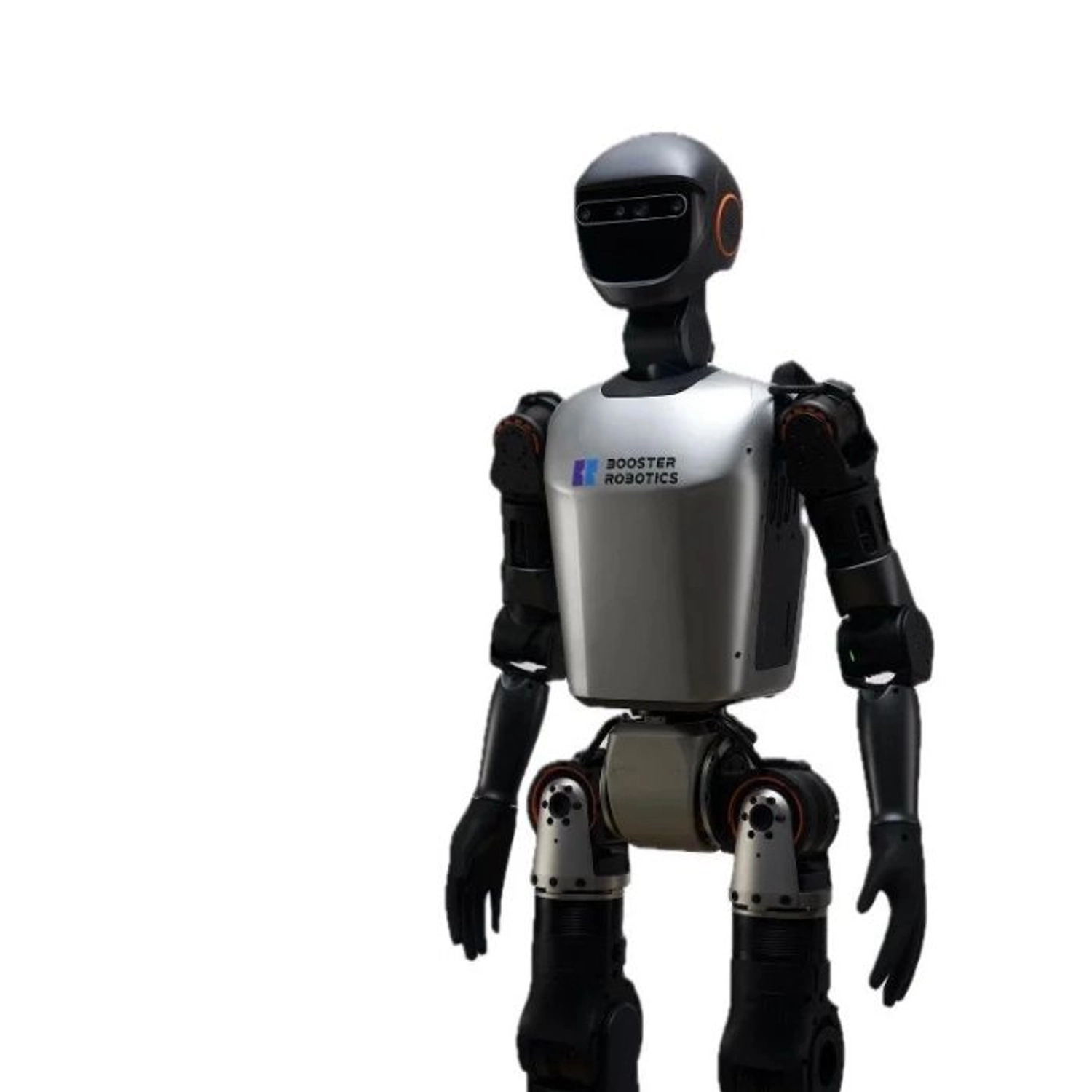
The humanoid robotics field has long struggled to balance real-time motor control, full-body coordination, and practical dexterity in a single platform. Booster Robotics' T1 Dexterous Humanoid recently captured the RoboCup 2025 Adult Size soccer championship, becoming the preferred platform for over 50 global research teams and marking a watershed moment for open-source humanoid development. The victory underscores a fundamental industry shift: teams are moving away from pre-programmed motion libraries toward adaptive, teleoperated systems capable of learning and responding to dynamic environments in real time.
Why Dexterity Matters Now
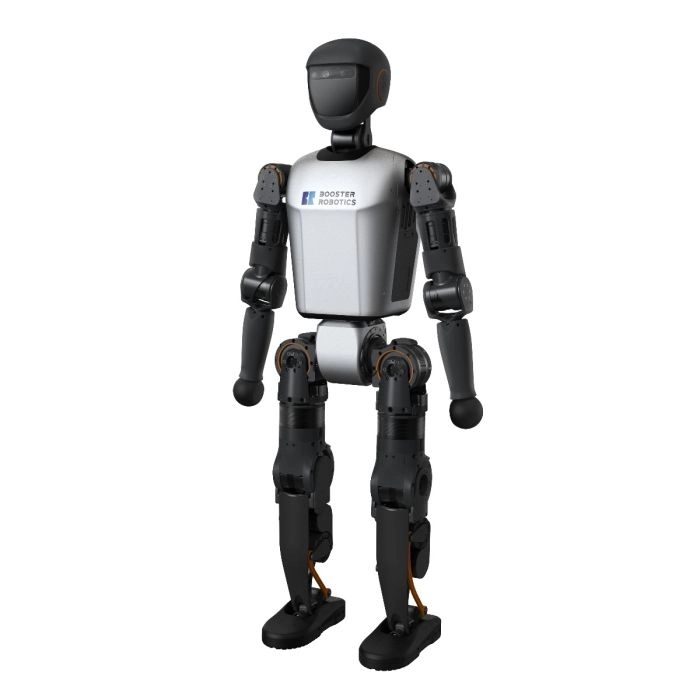
The T1 Dexterous variant stands apart through four core differentiators tailored to research-grade demands: 41 degrees of freedom enable fine-grained hand and full-body manipulation, NVIDIA AGX Orin onboard compute permits real-time perception and motion planning without external servers, force-controlled joints provide precise contact feedback for loco-manipulation tasks like door-opening and load-pulling, and ROS 2 integration with an open SDK eliminates vendor lock-in for secondary development. The platform's validation on loco-manipulation tasks—moving while physically interacting with objects—demonstrates competency in semi-structured environments where humanoids must adapt posture to unexpected forces. T1 redefines humanoid robotics less as autonomous agents and more as responsive tools for embodied AI research.
From Motion Input to Real-World Adaptation
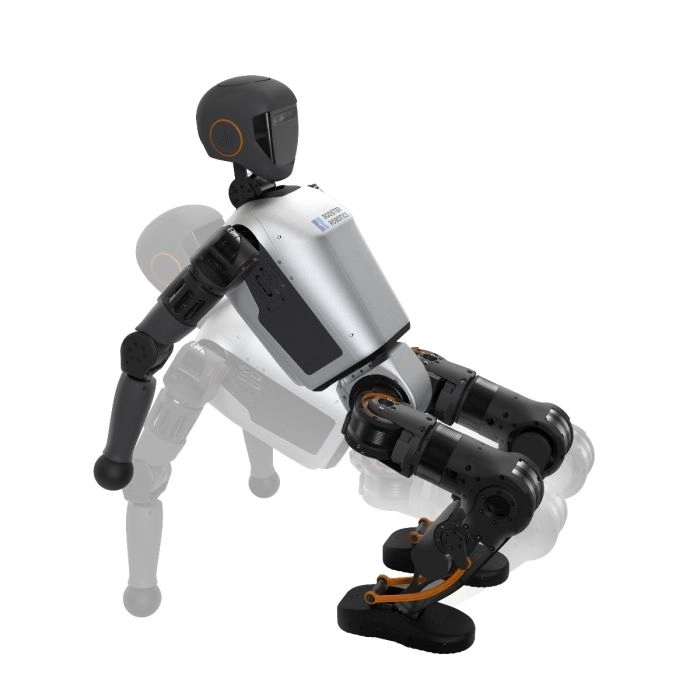
The T1's architecture follows a human-in-the-loop control flow: operator input or AI-generated motion trajectories feed into onboard perception (depth camera, 9-axis IMU, joint force sensors), which the AGX Orin processes in real time to adjust balance, joint stiffness, and contact forces before executing commands through full-body actuation. This tight perception-action coupling enables the robot to recover from falls, open doors against resistance, and carry objects while walking—capabilities that require continuous sensor feedback rather than static motion playback. Visual SLAM and depth-based indoor navigation allow the platform to operate in unstructured spaces, adapting locomotion on the fly.
From Lab to Logistics: A Real Deployment Path
Consider a university logistics task: the T1 must retrieve a package from a shelf, navigate a crowded corridor, and place it on a truck bed. The dexterous hands grasp the package with calibrated force feedback (avoiding damage), the IMU and force sensors detect floor irregularities and adjust gait in real time, and the onboard compute processes depth data to avoid collisions while the operator provides high-level guidance via teleoperation. This scenario—semi-autonomous, operator-assisted, in a human-centric space—represents the near-term deployment sweet spot for humanoids like the T1, where full autonomy remains impractical but remote presence and adaptive control add measurable value.
Compact Design, Enterprise-Grade Compute
At 118 centimeters tall and 30 kilograms, the T1 fits laboratory and classroom environments without requiring industrial infrastructure, yet its integration of force-controlled joints, depth sensing, and AGX Orin-class processing delivers capabilities historically reserved for much larger platforms (Inferred from similar systems · Medium confidence). Battery life reaches 3-5 hours, sufficient for extended research sessions or demonstration tours. The dual-encoder collision detection and force-limiting safety features address real-world deployment concerns, reducing risk during human-robot interaction experiments.
Rivals Edge Check
| Robot | Key Advantage | Where T1 Dexterous Humanoid Wins | Target Use |
|---|---|---|---|
| XiaQi X02 | Established ecosystem and large user base | 41 DoF dexterous hands and force control for manipulation | Advanced hand control and loco-manipulation research |
| VR-M2 | Compact form factor and low cost | Full onboard compute (AGX Orin) for real-time perception-action coupling | Embodied AI and perception-heavy tasks |
| P-73 | High speed and outdoor mobility | Precision force feedback and joint-level control for delicate tasks | Electronics assembly and medical device handling |
| Xia Lan S02 | Specialized bipedal gait algorithms | Open ROS 2 ecosystem and secondary development support | Academic research and multi-team collaboration |
Teleoperation Becomes the Competitive Edge
The T1's championship win and rapid adoption by top-tier research teams signals a decisive industry pivot: the humanoid robotics field is moving from autonomous pre-programmed motion toward operator-guided, sensor-rich systems that blur the line between remote presence and embodied AI. Platforms that combine dexterous manipulation, real-time force feedback, and onboard compute for perception—rather than raw speed or autonomy claims—are now capturing mindshare and research funding. This shift reflects a pragmatic recognition that true humanoid autonomy remains years away, but teleoperated dexterity in human-centric spaces solves immediate problems in logistics, inspection, and research. For robotics companies, the message is clear: invest in force control, perception stacks, and developer ecosystems, not flashy autonomous claims.
Sources
Related Articles
Booster Robotics Launches K1 Geek Humanoid for AI Developers and Students

Booster Robotics Unveils K1 Educational Humanoid for Classrooms and Labs
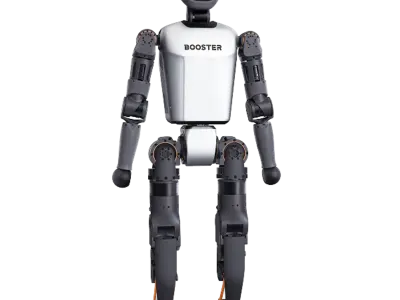
Booster Robotics Unveils T1 Basic Humanoid for Research and Development
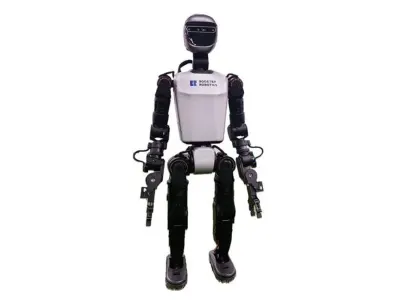
Booster Robotics Launches T1 Gripper Humanoid for Research Manipulation
Related Comparisons
Compare T1 Dexterous Humanoid with similar robots

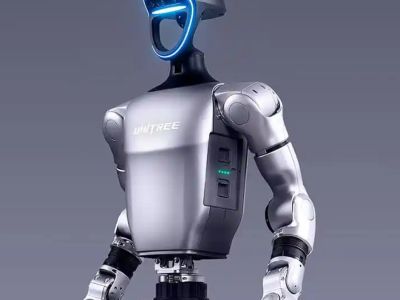
Optimus vs Unitree G1
Compare Optimus vs Unitree G1 for humanoid mobility, dexterity, autonomy, and payload capacity.
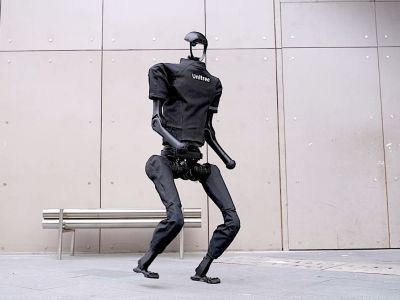
Unitree G1 vs Unitree H1
Head-to-head: Unitree G1 vs Unitree H1 compared on bipedal balance, AI learning, and real-world deployment.
Optimus vs Atlas (Electric Atlas, 2025)
In-depth comparison of Optimus and Atlas (Electric Atlas, 2025), covering hardware capabilities, teleoperation, and enterprise readiness.

Ameca vs Moya
Which humanoid robot is better? Ameca vs Moya compared for dexterity, AI capabilities, and price.
Learn More About This Robot
Discover detailed specifications, reviews, and comparisons for T1 Dexterous Humanoid.
View Robot Details →