
Booster Robotics
Booster Robotics is a Beijing company that makes affordable, developer-friendly humanoid robots used in research, education and robot sport. It was founded in June 2023 by Cheng Hao, a Tsinghua University graduate, with leadership from Tsinghua's robot control lab. Its main products are the full-size T1 and the compact K1, a 95 cm, 19.5 kg humanoid priced from US$4,999 that runs on an NVIDIA Jetson Orin and supports ROS 2 and Isaac Sim. Booster robots dominate humanoid football: at RoboCup 2025 in Brazil, Tsinghua's team won the AdultSize league with the T1 and Germany's HTWK team won the KidSize league with the K1. The K1 has shipped more than 1,000 units to over 400 customers in more than 20 countries. The company reached positive operating cash flow in December 2025 and, in April 2026, raised nearly one billion yuan led by Beijing government-backed funds to build a global delivery network and develop embodied AI.
💡Notable Achievement: Booster Robotics became the official global humanoid partner for RoboCup 2025/2026 with its Booster T1 robot, which demonstrated exceptional impact resistance and dynamic recovery during robot soccer competitions while being priced lower than an iPhone.
What Does Booster Robotics Do?
Booster Robotics is breaking the cost and durability bottlenecks of bipedal humanoid robotics. Born from Tsinghua University's championship robotics teams, Booster builds humanoids that can run, kick, fall, and recover repeatedly without mechanical failure. By open-sourcing simulation assets and providing affordable developer hardware like Booster T1, the company accelerates the global physical AI research cycle across academia and enterprise robotics labs.
“Booster Robotics provides accessible, ultra-durable bipedal humanoids engineered for physical AI researchers and athletic robotics competitions.”
Ultra-Durable QDD Actuation
High-bandwidth quasi-direct drive actuators absorb heavy impacts and enable agile somersaults and sprint gaits.
End-to-End Sim2Real Pipeline
Pre-trained reinforcement learning models transfer seamlessly from NVIDIA Isaac Gym directly to real hardware.
Developer-First Ecosystem
Transparent hardware interfaces and full ROS2 SDK access empower researchers to innovate without restrictions.
What Can Booster Robotics Robots Actually Do?
Cross-portfolio operational capabilities, manipulation tasks, and environmental competencies
Booster Robotics develops full-body bipedal research platforms and agile athletic humanoid models.
Dynamic Athletic Locomotion
High-speed omnidirectional walking, ball kicking, and rapid fall-and-recovery maneuvers.
Sim2Real Algorithm Validation
Open developer workbench designed for training reinforcement learning locomotion policies.
Booster Robotics Robots
Showing 10 Humanoid Robots of 10 total models

Booster T2
By: Booster Robotics
Launched: 2026
Booster T2 is the flagship bipedal embodied AI humanoid platform developed by Booster Robotics (Booster Tech) for universities, developers, and robotics research institutions. Standing 140 cm tall and weighing approximately 42 kg, Booster T2 integrates 31 degrees of freedom across its core frame (with optional 12-DoF dexterous hands), high-torque PMSM actuators outputting 140 Nm peak torque, and crossed roller bearings. Powered by the NVIDIA Jetson Thor T5000 compute architecture delivering over 2,000 TFLOPS of edge AI performance, Booster T2 demonstrates athletic agility—moving at up to 3 m/s, walking stairs, performing full-body backward flips, and executing self-recovery from falls. The robot natively mirrors human operator movements via full-body teleoperation and supports real-world task learning, including sorting, machine loading, and household manipulation.
T1 Dexterous Humanoid
By: Booster Robotics
Launched: 2025
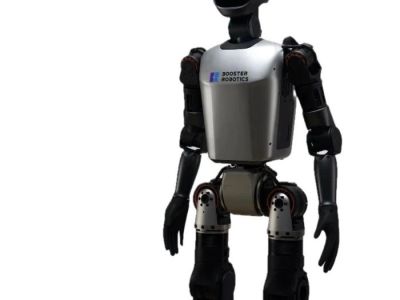
The T1 Dexterous Humanoid by Booster Robotics is a compact, high-performance bipedal robot optimized for research, AI development, and dynamic locomotion tasks. Standing at 118 cm tall and weighing 30 kg, it features 41 degrees of freedom in its dexterous hands configuration, enabling precise manipulation, expressive gestures, and human-like movements such as omnidirectional walking, stair navigation, fall recovery, and sports-like actions including kung fu. Powered by an NVIDIA Jetson AGX Orin with 200 TOPS AI compute and dual Intel i7 processors, it supports onboard perception via depth cameras, IMU, and microphone arrays for object recognition, speech interaction, and real-time control. ROS2-compatible with open SDKs, it excels in embodied AI, whole-body coordination, and VR teleoperation, offering up to 2 hours of walking autonomy on a swappable 10.5 Ah battery. Ideal for labs, competitions like RoboCup, and prototyping in manipulation-heavy applications.
T1 Gripper Humanoid
By: Booster Robotics
Launched: 2023 | (Inferred · Medium confidence · Based on product maturity and market availability)
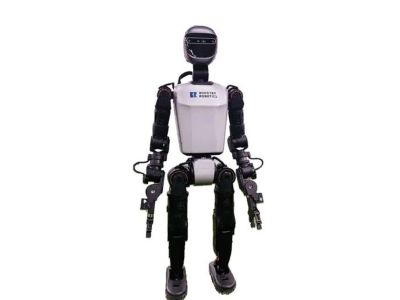
The Booster T1 Gripper Humanoid is a compact, open-source humanoid robot designed for developers and researchers requiring both full-body bipedal locomotion and precision object manipulation. Standing 1.18 meters tall and weighing 30 kg, it combines agile mobility with 31 degrees of freedom across dual arms equipped with high-performance grippers, enabling complex tasks in manufacturing, logistics, and research environments. Powered by an Intel i7-1370P processor and NVIDIA Jetson AGX Orin GPU delivering 200 TOPS of AI performance, the T1 supports advanced perception, autonomous navigation, and dexterous manipulation. Its open-source architecture, ROS2 compatibility, and comprehensive SDK enable rapid prototyping and custom application development across industrial automation, competitive robotics, and academic research.
T1 Basic Humanoid
By: Booster Robotics
Launched: 2024
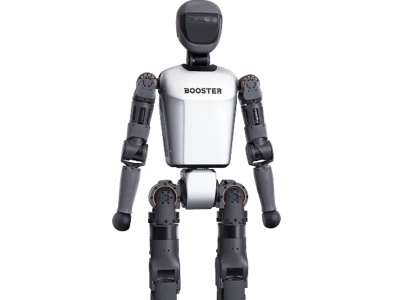
The T1 Basic Humanoid by Booster Robotics is a lightweight, open-source bipedal robot optimized for developers and researchers, standing at 118 cm tall and weighing 30 kg. Featuring 23 degrees of freedom across legs (12 total), arms (8 total), waist (1), and head (2), it excels in omnidirectional walking, dynamic balance recovery, and basic manipulation tasks. Powered by NVIDIA Jetson AGX Orin with 200 TOPS AI performance, it supports ROS2 for custom development, including advanced motion control with large joint ranges like hip pitch ±118° and max torque of 130 N·m. Equipped with RGBD depth camera, 9-axis IMU, and 6-mic array, it enables multimodal interactions such as object recognition and speech processing. Durable design withstands falls, ideal for education, R&D, competitions like RoboCup, and prototyping agile humanoid behaviors in indoor environments.

K1 EDUCATIONAL
By: Booster Robotics
Launched: 2025
The K1 EDUCATIONAL by Booster Robotics is a compact humanoid robot optimized for education, research, and robotics competitions like RoboCup KidSize, where it claimed championship in 2025. Standing at 95 cm tall and weighing 19.5 kg, it features 22 degrees of freedom for agile bipedal locomotion, including human-like walking, balancing, and joint movements. Powered by NVIDIA Jetson Orin NX with up to 200 TOPS AI compute, it supports ROS2, Python/C++ SDKs, and no-code AI platforms for tasks like object recognition, voice interaction, and obstacle avoidance. Equipped with stereo depth cameras, 9-axis IMU, 6-mic array, and speakers, it enables multimodal perception and real-time control. Fully assembled and portable, the K1 offers low-latency edge computing, OTA updates, and open-source tools, making it ideal for students and developers to explore embodied AI, bipedal navigation, and collaborative robotics in classrooms or labs without complex setups.
K1 Geek Humanoid
By: Booster Robotics
Launched: 2025
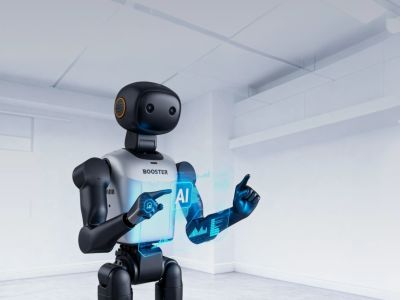
The Booster K1 Geek Humanoid is a compact, agile bipedal robot standing 95 cm tall, optimized for education, research, and competitive robotics like RoboCup KidSize. Featuring 22 degrees of freedom with full force control across 6 DOF legs, 4 DOF arms per side, and 2 DOF head, it delivers human-like walking at up to 1.4 km/h, dynamic balancing via 9-axis IMU, and precise manipulation. Equipped with NVIDIA Jetson processors (48-200 TOPS), stereo depth cameras for visual SLAM, 6-mic array for voice interaction, and ROS2-compatible software with Python/C++ SDKs, it supports no-code AI via Booster Agents, simulation in Isaac Sim and Booster GYM 2.0, and OTA updates. Its lightweight 19.5 kg aluminum alloy frame enables portability, while dual-encoder joints (60 Nm torque) allow hybrid torque/position control for tasks from locomotion to gesture-based interaction, making it ideal for developers exploring embodied AI without complex assembly.
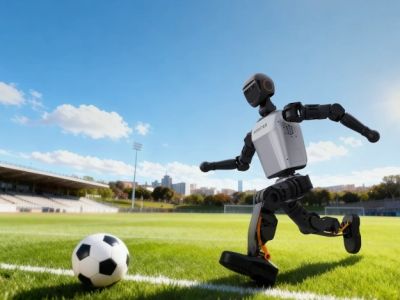
T1 Standard Humanoid
By: Booster Robotics
Launched: 2025
The T1 Standard Humanoid by Booster Robotics is a compact, lightweight platform at 118 cm tall and 30 kg, engineered for researchers and developers in robotics labs, universities, and R&D. Featuring 23 degrees of freedom—6 per leg, 4 per arm, 1 waist, and 2 head—it enables natural bipedal walking, omnidirectional movement, torso rotation, arm gestures, and head tracking for complex behaviors like squatting, turning, and balancing. Powered by NVIDIA Jetson AGX Orin (200 TOPS AI) with Intel i7 CPU, it integrates RGBD depth cameras, 9-axis IMU, 6-mic array, and speakers for multimodal perception and interaction. Large joint ranges (e.g., hip pitch ±118°) and high-torque actuators (130 N·m peak) support agile motion in dynamic environments. ROS2-compatible with SDK for custom development, it excels in sports simulations, kung fu maneuvers, prone-to-stand transitions, and open-source projects, offering durability against falls and extensible arms for grippers or dexterous hands.
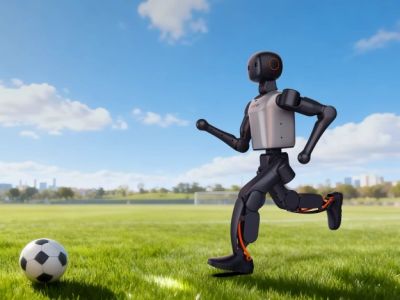
K1 Professional Humanoid
By: Booster Robotics
Launched: 2025
The Booster K1 Professional Humanoid is a compact, research-grade bipedal robot standing 95 cm tall with 22 degrees of freedom, enabling dynamic walking, balancing, and whole-body manipulation. Powered by up to 200 TOPS NVIDIA Jetson AGX Orin compute, it supports advanced AI tasks like object recognition, voice interaction, and reinforcement learning via stereo depth cameras, 9-axis IMU, and 6-mic array. Designed for education, embodied AI development, and competitions, it offers full-force-controlled joints with 60N·m peak torque, ROS2 integration, Python SDK, and multimodal control modes including DAMP, PREP, WALK, and CUSTOM. Lightweight at 19.5 kg with aluminum alloy and engineering plastics construction, it provides smooth human-like motions, low-latency edge processing, and portable deployment in a suitcase, ideal for labs, classrooms, and prototyping interactive robotics applications.
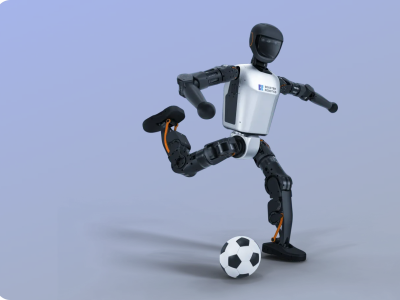
T1 Humanoid
By: Booster Robotics
Launched: 2023
The T1 Humanoid robot by Booster Robotics is a versatile, open-source platform designed for developers and researchers. It features 23 degrees of freedom, allowing for dynamic movements and precise posture control. Equipped with advanced AI capabilities, including an NVIDIA Jetson AGX Orin GPU, it supports omnidirectional walking and complex manipulation tasks. The robot is suitable for various applications, including robotics research, education, and industrial automation.
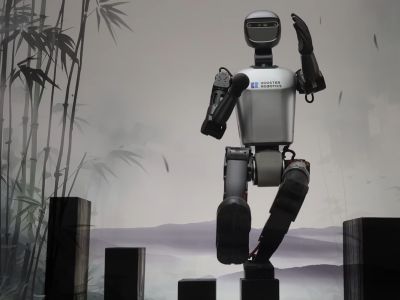
K1 Humanoid
By: Booster Robotics
Launched: 2023
The K1 Humanoid robot is designed for education, research, and exhibitions. It features a compact body with 22 dynamically controlled joints, enabling precise motion control. The robot is equipped with a 3D depth camera, 9-axis IMU, microphone array, and touch sensors. It supports AI-based vision and voice command processing, obstacle avoidance, and real-time autonomous navigation. The K1 is programmable via ROS and Python.
Booster Robotics Software & AI Ecosystem
Developer platforms, fleet management portals, autonomy intelligence, and enterprise integrations
BoosterGym
Simulation Training Framework
GPU-accelerated Isaac Gym training pipeline for bipedal balance and agile athletic behaviors.
BoosterOS
Real-Time Embedded Controller
Low-latency motor control layer running on embedded Ubuntu Linux with real-time PREEMPT_RT patches.
Booster Robotics Timeline & Milestones
Evolutionary history, landmark prototypes, major acquisitions, and commercial roadmap
Booster Robotics founded
Cheng Hao founds Booster Robotics in Beijing, with leadership from Tsinghua University's robot control lab.
Source: humanoidsdaily.com
Funding round led by Source Code Capital
Booster Robotics completes a multi-million yuan funding round led by Source Code Capital.
Source: equalocean.com
RoboCup 2025 AdultSize and KidSize titles
Teams using Booster robots win RoboCup 2025 in Brazil: the T1 in the AdultSize league and the K1 in the KidSize league.
Source: humanoidsdaily.com
Raises more than 100 million yuan
Booster Robotics raises more than 100 million yuan, with backing from Beijing robot and AI industry funds.
Source: caixinglobal.com
K1 humanoid launched from US$4,999
Booster launches the K1, a 95 cm RoboCup-winning humanoid priced at US$4,999 for education, research and exhibitions.
Source: humanoidsdaily.com
Positive operating cash flow
Booster Robotics reaches positive operating cash flow, as orders and shipments of its K1 humanoid grow.
Source: autonews.gasgoo.com
Nearly 1 billion yuan financing
Booster completes a financing round of nearly one billion yuan to build a global delivery network and develop embodied AI, after shipping over 1,000 K1 units.
Source: autonews.gasgoo.com
Booster Robotics Competitors by Category
Direct industry rivals grouped by specific robotics domain
What Makes Booster Robotics Different?
Editorial AnalysisOrigin of Bots objective strategic assessment, engineering moats, and commercial hurdles
Key Strengths & Moats
- ✓Extreme mechanical impact resistance and low bill-of-materials cost
- ✓Official RoboCup league partnership driving global university adoption
- ✓Deep technical pedigree in reinforcement learning from Tsinghua
Core Strategic Focus
Scaling mass assembly of Booster T1, expanding international university sales channels, and introducing dexterous dual-arm variants.
Road Ahead & Challenges
- •Payload capacity limited compared to heavy industrial humanoids
- •Fierce market price competition from larger consumer robotics firms
Booster Robotics vs Key Competitors
Strategic capability matrix across platform categories, commercial readiness, and target markets
Actuator Architecture
- Booster T1
- Quasi-Direct Drive (QDD)
- Unitree G1
- High-Torque Planetary
- Robotis OP3
- Dynamixel Servos
Primary Use
- Booster T1
- Research labs, universities
- Unitree G1
- High-speed bipedal running, 360° ground recovery
- Robotis OP3
- Not listed
Impact Durability
- Booster T1
- High (Soccer-grade)
- Unitree G1
- Moderate
- Robotis OP3
- Moderate
| Strategic Dimension | Booster T1 | Unitree G1 | Robotis OP3 |
|---|---|---|---|
| Actuator Architecture | Quasi-Direct Drive (QDD) | High-Torque Planetary | Dynamixel Servos |
| Primary Use | Research labs, universities | High-speed bipedal running, 360° ground recovery | Not listed |
| Impact Durability | High (Soccer-grade) | Moderate | Moderate |
Corporate Ecosystem & Ownership Structure
Parent company relationships, historical acquisitions, and global operating facilities
Tsinghua University AI Institute
Originating research institution providing technical guidance and talent pipeline.
Ownership & Acquisition History
Originating research institution providing technical guidance and talent pipeline.
Global Facilities & Operating Hubs
Booster Robotics Headquarters
HQHaidian District, Beijing, China
Articles & Industry News
Showing 8 recent articles and news updates about Booster Robotics

Booster Robotics’ T1 Humanoid Targets Teleoperation and Human-Centric Research
News about T1 Humanoid

Booster Robotics K1 targets teleoperation-first humanoids with compact 95 cm body and 22-DoF platform
News about K1 Humanoid

Booster T1 Dexterous Humanoid Wins RoboCup 2025, Signals Shift Toward Research-Grade Teleoperation Platforms
News about T1 Dexterous Humanoid

Booster Robotics Launches T1 Gripper Humanoid for Research Manipulation
News about T1 Gripper Humanoid

Booster Robotics Unveils T1 Basic Humanoid for Research and Development
News about T1 Basic Humanoid

Booster Robotics Unveils K1 Educational Humanoid for Classrooms and Labs
News about K1 EDUCATIONAL

Booster Robotics Launches K1 Geek Humanoid for AI Developers and Students
News about K1 Geek Humanoid

Booster Robotics T1 Standard Emerges as Open-Source Humanoid Platform for Motion Research and Teleoperation
News about T1 Standard Humanoid
Frequently Asked Questions
8 AnswersVerified answers, company specifications, and deployment details about Booster Robotics
What is Booster Robotics?
Booster Robotics is a Beijing company, founded in June 2023, that makes affordable humanoid robots for research, education and robot sport, including the full-size T1 and the compact K1.
Who founded Booster Robotics?
Booster Robotics was founded in June 2023 by Cheng Hao, a Tsinghua University graduate, with leadership from Tsinghua's robot control lab.
How much does the Booster K1 cost?
The Booster K1 is priced from US$4,999. It is a 95 cm, 19.5 kg humanoid with 22 degrees of freedom, powered by an NVIDIA Jetson Orin NX, with a battery life of about 40 minutes.
Did Booster robots win RoboCup?
Yes. At RoboCup 2025 in Brazil, Tsinghua University's team won the AdultSize league with a Booster T1, and Germany's HTWK team won the KidSize league with a Booster K1.
What is the Booster T1?
The T1 is Booster's full-size humanoid for developers and research, and the platform that won the RoboCup 2025 AdultSize league.
Is the Booster K1 programmable?
Yes. The K1 is designed as an entry-level embodied AI development platform. It supports ROS 2 and NVIDIA Isaac Sim, and has an RGBD camera, IMU and microphone array.
How many Booster robots have been sold?
Booster says the K1 has shipped more than 1,000 units to over 400 customers in more than 20 countries, and its first-quarter 2026 shipments rose about 500 percent year on year.
How much funding has Booster Robotics raised?
Booster raised more than 100 million yuan in July 2025 and completed a round of nearly one billion yuan in April 2026, led by Beijing government-backed funds, to build a global delivery network and develop embodied AI.
Verified Data & Editorial Assurance
Compiled from verified corporate filings, official Booster Robotics datasheets, and robotics engineering registries. Information has been verified against official manufacturer documentation. For commercial procurement or proprietary integrations, contact the manufacturer directly.