Booster Robotics T1 Standard Emerges as Open-Source Humanoid Platform for Motion Research and Teleoperation
Robot Details
T1 Standard Humanoid • Booster RoboticsPublished
May 13, 2026
Reading Time
4 min read
Author
Origin Of Bots Editorial Team

A Compact Research Platform Arrives
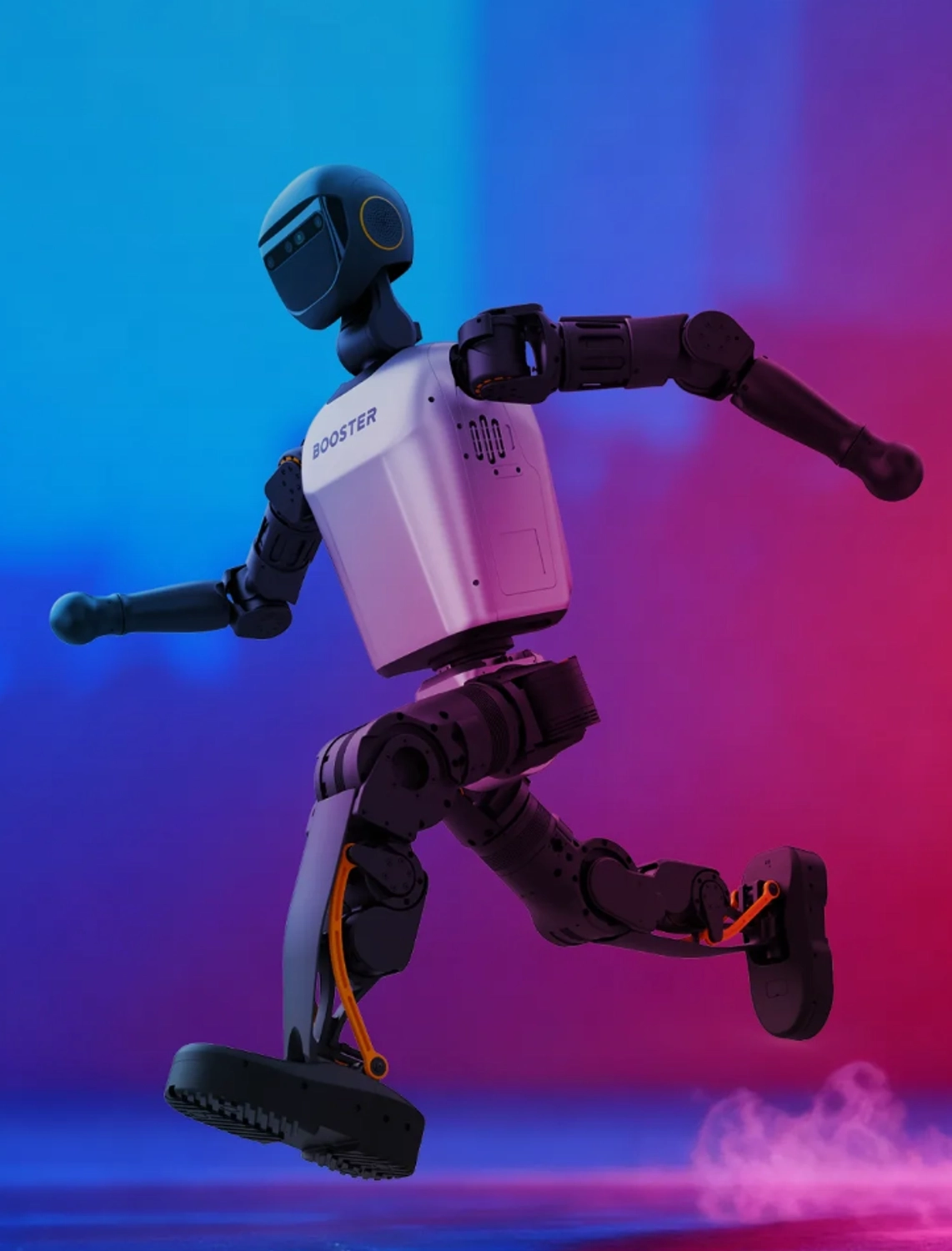
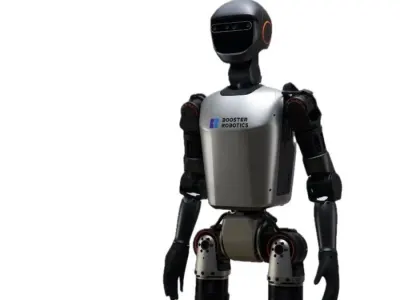
The humanoid robotics industry continues its shift from pre-programmed motion libraries toward teleoperation-first systems, and Booster Robotics' T1 Standard represents a significant step in that direction. Standing 1.2 meters tall and weighing 30 kilograms, the T1 Standard is an open-source humanoid robot designed explicitly for researchers, universities, and development teams seeking a capable yet transportable platform for motion imitation, balance research, and embodied AI experimentation. The robot features 23 degrees of freedom across its head, torso, arms, and legs, paired with NVIDIA's AGX Orin processor delivering 200 TOPS of AI performance, enabling real-time full-body motion coordination and operator control.
Why Real-Time Imitation Matters
The T1 Standard addresses a core limitation in current humanoid robotics: the gap between hardware capability and practical teleoperation fidelity. Four specific differentiators set it apart in this category. First, its full-force-controlled joints with collision detection enable safe, responsive operator feedback during remote manipulation tasks. Second, the integrated RGBD depth camera and 9-axis IMU provide the sensory foundation for real-time balance correction during dynamic movements, crucial for bipedal stability on uneven surfaces. Third, the omnidirectional walking system supports forward, backward, lateral, and rotational movement without pre-programmed gait libraries, allowing operators to guide motion naturally. Fourth, the open-source ROS2 architecture and Python/C++ APIs lower the barrier for custom motion research, particularly for academic teams. The T1 Standard is less about hardware specifications and more about redefining how researchers control and study humanoid movement at scale.

Motion Control Without Pre-Programming
The T1 Standard operates on a human-input-to-actuation pipeline designed for responsive teleoperation. Operator commands flow through the mobile app or remote interface into the onboard AI processor, which continuously processes sensor data from the depth camera and IMU to maintain balance and execute the intended movement. Joint actuation is mediated by force-limiting algorithms that prevent damage to the robot or environment during contact, while collision detection triggers automatic safety responses. This closed-loop system allows the operator to issue high-level movement commands—walk forward, raise arm, rotate torso—without manually controlling each of the 23 joints, making real-time motion imitation practical for non-specialists.
RoboCup Soccer and Motion Capture
One concrete deployment scenario demonstrates the T1 Standard's value: autonomous soccer competition and motion analysis. The robot has already competed in RoboCup environments, where it must interpret field conditions, navigate dynamically, and execute coordinated movements like kicking and balance recovery. In this context, the omnidirectional walking and force-controlled joints enable both autonomous navigation and rapid recovery from impacts or uneven terrain. Beyond competition, the same capabilities support motion-capture research in sports science labs, where the robot can replicate human athletic movements while sensors log joint torque, balance corrections, and energy expenditure—data that would be difficult or impossible to gather from human athletes without invasive instrumentation.
Specifications Built for Endurance
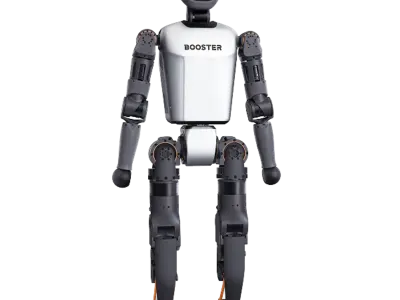
The T1 Standard's technical enablers reflect its research-focused design. The robot delivers up to 2 hours of walking autonomy or 4 hours of standing operation on a single 10.5 Ah battery charge, sufficient for multi-hour laboratory sessions or field testing without frequent recharging. Maximum forward speed exceeds 3.5 km/h (2.2 mph), enabling practical navigation of indoor research spaces. The circular 6-microphone array and integrated speaker support multimodal AI interactions, allowing the robot to receive voice commands or provide audio feedback during experiments. Payload capacity reaches approximately 5 kilograms, adequate for mounting sensors, precision instruments, or small tools during inspection or manipulation tasks. The 118 x 47 x 23 centimeter form factor and 30-kilogram mass make the T1 Standard transportable by a single person, a critical advantage over larger humanoids like the Unitree H1, which require multiple handlers.
Rivals Edge Check
| Robot | Key Advantage | Where T1 Standard Wins | Target Use |
|---|---|---|---|
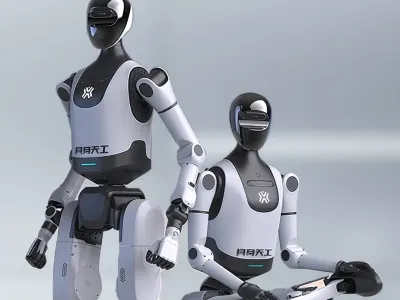
| Embodied Tien Kung 2.0 Pro | Advanced dexterous hand control | Open-source ROS2 ecosystem and lower entry cost | Precision manipulation research |
| Elf-Eridium | Specialized sensor fusion for outdoor terrain | Proven RoboCup performance and teleoperation-first design | Motion research and sports simulation |
| MagicBot Z1 | Compact form factor | Full 23 DoF with extensible arm architecture | Lab-based motion imitation |
| Walker II (02) | High-speed locomotion | Balanced mobility and manipulation with force feedback | Multi-year R&D programs |
The Teleoperation Shift Accelerates
The emergence of the T1 Standard as a RoboCup 2025 champion robot underscores a broader industry transition away from pre-programmed motion libraries toward operator-guided, real-time balance correction. Rather than encoding specific movements in firmware, the T1 Standard's architecture assumes a human operator or AI agent continuously feeding motion commands while onboard sensors and processors handle the mechanical details of balance and joint coordination. This shift reflects growing recognition that true humanoid utility lies not in autonomous task execution but in extending human agency—allowing researchers and operators to control a bipedal body remotely, study its dynamics, and eventually train AI systems to predict and automate movement patterns. As more platforms adopt this model, the competitive advantage will accrue to those with the most transparent, modular software stacks and the lowest barrier to custom development. The T1 Standard's open-source foundation positions it well for this transition, particularly in academic environments where reproducibility and long-term software maintenance are non-negotiable requirements.
Explore Humanoids

Sources
Related Articles
Xiaomi Unveils CyberOne 2026 Version with Redesigned Bionic Hand
Tangible Robots Unveils Eggie, Bipedal Humanoid for Home Dexterity Tasks

DroidUp Unveils Ruina Humanoid with Biomimetic Design for Social Interaction
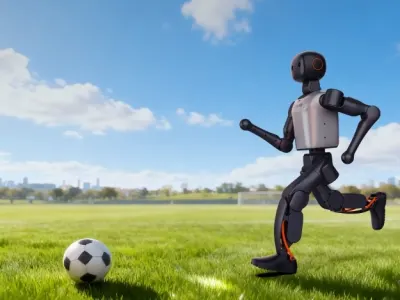
Booster Robotics Positions K1 Professional Humanoid for Research and Competitions
Related Comparisons
Compare T1 Standard Humanoid with similar robots

Optimus vs Unitree G1
Compare Optimus vs Unitree G1 for humanoid mobility, dexterity, autonomy, and payload capacity.
Unitree G1 vs Unitree H1
Head-to-head: Unitree G1 vs Unitree H1 compared on bipedal balance, AI learning, and real-world deployment.
Optimus vs Atlas (Electric Atlas, 2025)
In-depth comparison of Optimus and Atlas (Electric Atlas, 2025), covering hardware capabilities, teleoperation, and enterprise readiness.
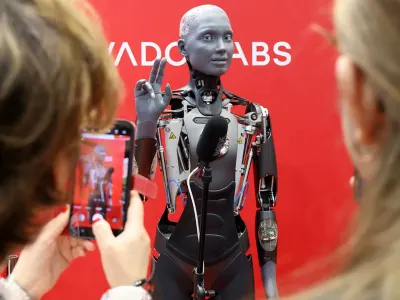
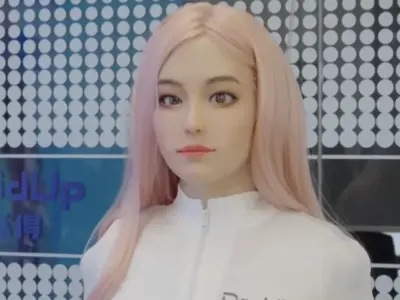
Ameca vs Moya
Which humanoid robot is better? Ameca vs Moya compared for dexterity, AI capabilities, and price.
Learn More About This Robot
Discover detailed specifications, reviews, and comparisons for T1 Standard Humanoid.
View Robot Details →