DroidUp Unveils Ruina Humanoid with Biomimetic Design for Social Interaction
Robot Details
Ruina • DroidUpPublished
April 19, 2026
Reading Time
2 min read
Author
Origin Of Bots Editorial Team

Biomimetic Breakthrough Emerges
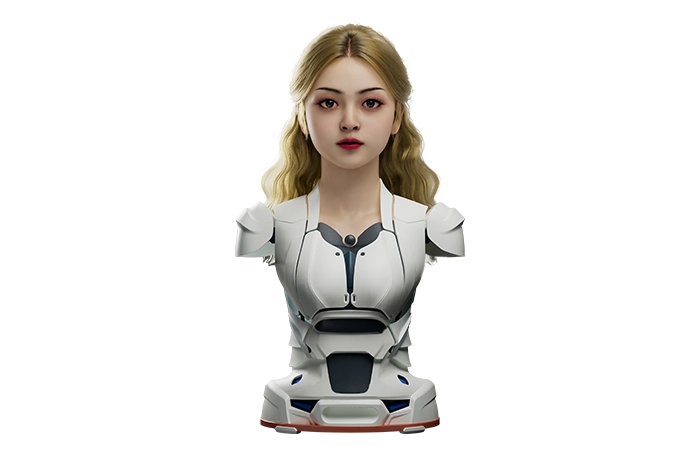
Humanoid robots struggle with real-time full-body motion imitation, balance, and natural manipulation in human-centric spaces. DroidUp has introduced Ruina, a bipedal humanoid designed for patient companionship and social interaction, building on its Moya platform with features like warm skin, thermal regulation, and micro-expressions via eye cameras. The robot demonstrates bipedal walking and emotional expressiveness, targeting teleoperation in service environments.
Natural Interaction Redefined
Ruina stands out through full-body coordination, interaction naturalness, real-time imitation fidelity, and teleoperation capability, enabling subtle facial movements and human-like gaze. These elements address core challenges in making robots feel approachable rather than mechanical. Ruina prioritizes biomimetic presence over raw speed, redefining teleoperated companionship in care settings.
Motion Pipeline Unpacked
Human motion input flows through AI model processing for real-time analysis, then triggers joint actuation with balance correction via reinforcement learning and proprietary embodied AI. Sensors like RGB cameras, stereo cameras, LiDAR, IMU, gyroscope, force sensors, and temperature inputs enable visual SLAM navigation and autonomous path planning. This system supports collaborative mode with force limiting and collision detection for safe operation.
Care Deployment Visualized
In patient companionship, Ruina uses its legged mobility to navigate hospital rooms at 3 km/h (1.9 mph), maintaining eye contact and micro-expressions during extended interactions powered by a 3-5 year battery life (manufacturer claim · not independently verified). Operators remotely guide manipulation of tools or packages via teleoperation, providing emotional support and teaching assistance without physical strain on staff. Safety features like emergency stop ensure seamless human-robot collaboration.

Specs Enable Realism
At 165 x 40 x 25 cm and 32 kg, Ruina's lightweight build supports agile bipedal movement for indoor human spaces. Its sensor suite and ROS2 software facilitate precise people interaction and payload handling for precision instruments. Navigation and safety systems position it for assisted service in controlled environments.
Rivals Edge Check
| Robot | Key Advantage | Where Ruina Wins | Target Use |
|---|---|---|---|
| Embodied Tien Kung 3.0 | High payload capacity | Superior facial expressiveness | Industrial manipulation |
| North | Advanced autonomy | Biomimetic skin warmth | Social companionship |
| Starwalker P01 | Fast locomotion speed | Teleoperation naturalness | Remote inspection |
| Jupiter | Robust outdoor durability | Real-time motion fidelity | Customer service |
Teleop Shift Accelerates
Ruina signals a broader industry pivot toward teleoperation-first humanoids, moving beyond pre-programmed libraries to operator-driven systems for reliable deployment in unpredictable spaces. This approach eases scalability hurdles, prioritizing validated indoor performance over unproven full autonomy. Meanwhile, cost and operator dependency remain key tests for market expansion.
Explore Humanoids
Related Articles
Vulcan Robotics Unveils Sourccey, Open-Source Humanoid for Home Training
Unitree Robotics Unveils H1-2 Humanoid with Enhanced Motion Capabilities
Xiaomi Unveils CyberOne 2026 Version with Redesigned Bionic Hand
Tangible Robots Unveils Eggie, Bipedal Humanoid for Home Dexterity Tasks
Related Comparisons
Compare Ruina with similar robots
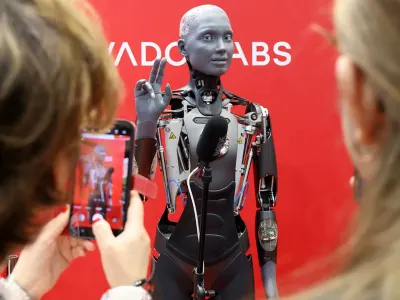

Ameca vs Moya
Which humanoid robot is better? Ameca vs Moya compared for dexterity, AI capabilities, and price.
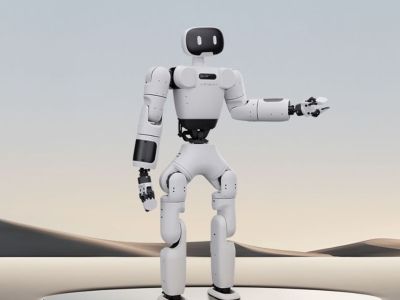
AgiBot X1 vs Moya
In-depth comparison of AgiBot X1 and Moya, covering hardware capabilities, teleoperation, autonomy levels, and enterprise readiness for industrial and social robotics deployment.

Elf-Xuan 2.0 vs Moya
In-depth comparison of Elf-Xuan 2.0 and Moya, covering hardware capabilities, teleoperation, and enterprise readiness.

Aria - Robot Girlfriend vs Moya
In-depth comparison of Aria - Robot Girlfriend and Moya, covering hardware capabilities, teleoperation, and enterprise readiness for companionship and service applications.
Learn More About This Robot
Discover detailed specifications, reviews, and comparisons for Ruina.
View Robot Details →