Waseda University
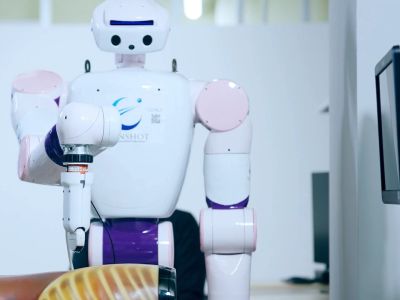
Waseda University is the historic birthplace of humanoid robotics, having created WABOT-1 in 1973 as the world's first full-scale anthropomorphic robot. Led by Professor Shigeki Sugano, the Sugano Laboratory advances elderly nursing and embrace robotics through AIREC (AI-driven Robot for Embrace and Care) under Japan's JST Moonshot R&D Program. AIREC is an advanced 150 kg bimanual caregiving humanoid capable of autonomously executing delicate, tactile physical contact—such as assisting bedridden patients, repositioning limbs, and cooking meals.
💡Notable Achievement: Waseda University marks over 50 years of continuous humanoid leadership; its Moonshot-funded AIREC robot is the world's first humanoid specifically certified to perform intimate physical embrace and caregiving tasks—including dressing patients, preventing bedsores, and conducting autonomous ultrasound scans.
What Does Waseda University Do?
Waseda University is the cradle of modern humanoid robotics. Building upon the iconic legacy of WABOT and TWENDY-ONE, the Sugano Laboratory is tackling Japan's super-aged society through AIREC. Unlike industrial humanoids designed to handle rigid metal, AIREC is engineered specifically to gently touch, embrace, and nurse frail human beings with biological-grade sensitivity and safety.
“Waseda University's AIREC is an AI-powered caregiving humanoid engineered to gently nurse, dress, and support elderly individuals.”
Pioneering 50-Year Heritage
From WABOT-1 in 1973 to AIREC in 2026, Waseda represents the world's deepest academic foundation in anthropomorphic robotics.
Safe Human Embracement (pHRI)
Viscoelastic compliant bodies and joint torque feedback allow direct, comforting physical contact with vulnerable patients.
Brain-Inspired Predictive AI
Utilizes PV-RNN neural architectures that anticipate patient movement and adapt contact pressure dynamically.
What Can Waseda University Robots Actually Do?
Cross-portfolio operational capabilities, manipulation tasks, and environmental competencies
Sugano Laboratory develops caregiving humanoids, compliant manipulators, and medical diagnostic robots.
Elderly Patient Repositioning
Gently lifting and turning bedridden patients to alleviate pressure points and prevent bedsores.
Automated Medical Ultrasound
Applying constant, precise transducer contact pressure on human patients for diagnostic imaging.
Domestic Meal Preparation
Cracking eggs, holding pans, and folding garments in domestic kitchen and living room environments.
Waseda University Robots
Showing 1 Humanoid Robots of 1 total model
AIREC
Manufactured by Waseda University
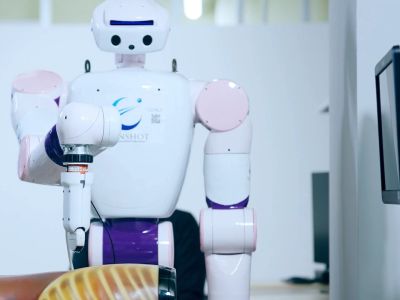
AIREC is a humanoid robot developed by Waseda University under Japan's JST Moonshot Program, specializing in elderly care and medical assistance. Standing 154 cm tall and weighing 150 kg, it features bipedal design with advanced AI for real-time human movement recognition, force adjustment, and adaptive behaviors. Key capabilities include patient repositioning to prevent bedsores, assisting with dressing like putting on socks, joint rehabilitation, biometric data acquisition (heart rate, blood pressure, body temperature), ultrasound examinations, and basic cooking motions. Powered by deep neural networks for predictive joint movements and embodied intelligence, AIREC integrates multimodal learning from human demonstrations, enabling natural physical interactions, emotional expression, and semi-autonomous caregiving tasks in nursing environments. Variants like Dry-AIREC emphasize safe, pain-free support for daily activities, bridging the gap in Japan's aging society.
Waseda UniversitySoftware & AI Ecosystem
Developer platforms, fleet management portals, autonomy intelligence, and enterprise integrations
Software Feature
What Makes Waseda University Different?
Editorial AnalysisOrigin of Bots objective strategic assessment, engineering moats, and commercial hurdles
Key Strengths & Moats
- ✓Unmatched academic credibility and 50+ years of humanoid research history
- ✓Pioneering expertise in compliant human skin contact and geriatric healthcare workflows
Core Strategic Focus
Refining autonomy and lowering production costs under Japan's Moonshot 2030 commercial roadmap.
Road Ahead & Challenges
- •Strict medical regulatory certification required before widespread adoption in clinical care homes
Waseda University vs Key Competitors
Strategic capability matrix across platform categories, commercial readiness, and target markets
| Strategic Dimension | AIREC (Waseda) | aeo (Aeolus) | HSR (Toyota) | Moxi (Diligent) |
|---|---|---|---|---|
| Primary Role | Direct Patient Nursing | Eldercare Facility Patrol | Home Assistive Pickup | Hospital Supply Courier |
| Physical Contact | Intimate Human Embrace | Light Object Handover | Object Fetching | Button Pushing Only |
| Payload | Heavy Patient Reposition | 4 kg per arm | 1.2 kg arm lift | 3 kg arm lift |
| Certification | ISO 13482 Care Standard | ISO 13482 Safety | ISO 13482 Safety | ANSI/RIA R15.08 |
Corporate Ecosystem & Ownership Structure
Parent company relationships, historical acquisitions, and global operating facilities
Articles & Industry News
Showing 1 recent article and news updates about Waseda University
Frequently Asked Questions
10 AnswersVerified answers, company specifications, and deployment details about Waseda University
What is the unit purchase price or commercial model for Waseda AIREC?
Currently developed under the national Moonshot R&D initiative, AIREC is projected for commercial deployment in Japanese nursing homes by 2030 with a target production unit cost of approximately ¥10 million JPY (~$67,000 to $70,000 USD).
What is the development timeline and deployment status of AIREC?
Initiated in 2020 under JST Moonshot Goal 3, AIREC achieved critical task demonstrations between 2024 and 2026, currently undergoing clinical trials in elderly care facilities and medical diagnostic settings in Tokyo.
Where are AIREC robots actively evaluated and tested in Japan?
AIREC is tested inside specialized geriatric simulation wards at Waseda University's Center for Advanced Biomedical Sciences (TWIns), Meijo University, and National Center of Neurology and Psychiatry (NCNP) partner hospitals.
What target caregiving and medical workflows does AIREC perform?
AIREC performs close-contact caregiving tasks: repositioning bedridden elderly individuals to prevent bedsores, dressing socks and garments, preparing simple meals (scrambled eggs), folding laundry, and conducting automated ultrasound scans.
What mechanical drivetrain and actuator architecture powers AIREC?
AIREC stands on a stable omnidirectional mobile base supporting a human-proportioned torso with dual 7-DoF compliant arms, utilizing harmonic drive speed reducers, integrated joint torque sensors, and soft viscoelastic exterior padding.
What end-effector dexterity and tactile sensing are integrated on AIREC?
AIREC features multi-finger anthropomorphic hands with soft silicone skin and high-density tactile sensor arrays, enabling safe human skin contact without causing bruising or discomfort.
What is AIREC's continuous battery runtime and power mechanism?
Operates on internal 48V rechargeable lithium-ion battery packs providing 2 to 4 hours of continuous nursing tasks, with AC tethering options available during clinical bedside training.
What is AIREC's operational autonomy level versus teleoperation?
Features hybrid operation: autonomous predictive-processing AI executes learned nursing routines, while clinical operators can tele-operate via haptic master interfaces for specialized diagnostic procedures.
What sensory perception suite and foundation AI models govern AIREC?
Perception is powered by head-mounted binocular stereo RGB cameras, chest-mounted depth sensors, tactile surface skin, and brain-inspired predictive-processing recurrent neural networks (PV-RNN).
What worker safety mechanisms and compliance standards protect elderly patients?
Certified under rigorous human-interactive robotics safety frameworks (ISO 13482 for personal care robots), featuring passive mechanical compliance, software impedance control, and instant soft-touch motor shutdown.
Verified Data & Editorial Assurance
Compiled from verified corporate filings, official Waseda University datasheets, and robotics engineering registries. Information has been verified against official manufacturer documentation. For commercial procurement or proprietary integrations, contact the manufacturer directly.