Toyota
Toyota Partner Robot Division is the dedicated human-assist and assistive robotics engineering group of Toyota Motor Corporation, developing whole-body torque-controlled telepresence humanoids, mobility aids, and medical rehabilitation systems. Drawing on automotive manufacturing rigor and safety standards, the division engineered the T-HR3 humanoid, which operates via a Master Maneuvering System chair delivering low-latency, bilateral force-feedback telepresence over 5G networks. In addition to advanced behavioral AI research with the Toyota Research Institute, Toyota commercializes the Welwalk WW-2000 stroke gait-rehabilitation system.
💡Notable Achievement: Engineered the Master Maneuvering System (MMS) for T-HR3, enabling 5G-linked remote telepresence with whole-body force-feedback that mirrors fine human balance and arm motions.
What Does Toyota Do?
Toyota Partner Robot Division develops robotic human-assist technologies engineered to support personal mobility, elderly care, and master-to-slave telepresence. Drawing from Toyota's world-renowned production methodologies and safety engineering, platforms like T-HR3 and Welwalk explore how physical machines can safely assist humans at home, in clinics, and in automotive factories.
“Pioneering safe, whole-body torque-controlled telepresence and mobility assistance for society.”
Torque Servo Compliance
Joint-level torque sensing that permits gentle physical human contact while maintaining rigid balance stabilization.
Master Maneuvering Telepresence
Exoskeleton chair interface providing instantaneous force feedback so remote pilots feel the robot's physical environment.
Clinical Rehabilitation Specialization
Medical-grade assistive robotics supporting patient lower-limb motor rehabilitation and elderly physical therapy.
What Can Toyota Robots Actually Do?
Cross-portfolio operational capabilities, manipulation tasks, and environmental competencies
Full-body force-feedback telepresence, dynamic bipedal balancing reflexes, and medical gait rehabilitation assistance.
Master-to-Slave Force Feedback
Transmits physical contact forces from robot hands and limbs directly back to the human operator's wearable exoskeleton.
Robot-Assisted Gait Rehabilitation
Active knee-joint motorized assistance and harness stabilization enabling stroke patients to re-learn natural walking gaits.
Whole-Body Compliant Coordination
Balancing on a single leg while manipulating fragile objects without crushing or dropping them.
Toyota Robots & Robot Hands
Showing 3 Humanoid Robots of 6 total models
Toyota T-HR3
By: Toyota
Launched: 2017
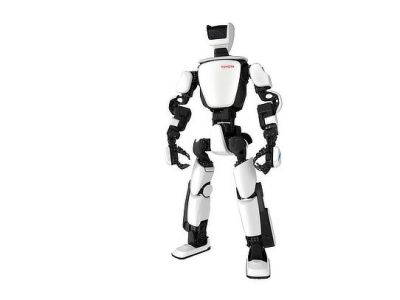
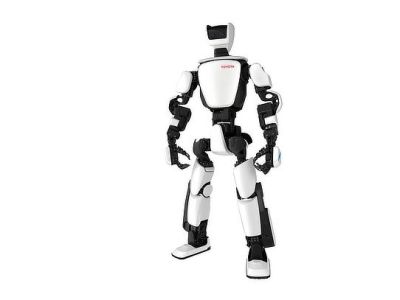
Toyota T-HR3 is a third-generation research humanoid robot developed by Toyota's Frontier Research Center to explore friendly and safe human-robot coexistence, remote medical care, and disaster response. Standing 154 cm tall and weighing 75 kg, T-HR3 is controlled by a synchronized Master Maneuvering System (MMS) chair that mirrors human operator motions in real time via VR headsets and data gloves. It features 32 degrees of freedom across its frame with 29 proprietary Torque Servo Modules developed by Toyota and Tamagawa Seiki, incorporating ultra-thin Cr-N alloy force-torque sensors. The platform provides force feedback so operators can feel contact forces, hold delicate balloons without bursting them, or perform tasks over low-latency 5G wireless networks.
CUE7
By: Toyota
Launched: 2026
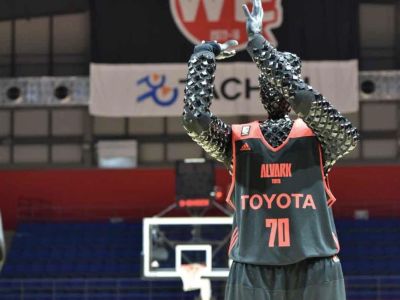
CUE7 is Toyota's advanced research humanoid robot designed to demonstrate precision motion, perception, and AI-driven athletic performance through basketball tasks. Standing 7 feet 2 inches tall and weighing 163 pounds, the robot represents a complete redesign philosophy emphasizing embodied AI over pre-programmed instructions. CUE7 integrates reinforcement learning with model predictive control, enabling dynamic movements including dribbling, shooting, and natural posture transitions. The platform combines real-time visual recognition, distance calculation, and trajectory optimization to execute complex athletic maneuvers with high repeatability. Its lightweight construction, dual-wheel inverted base, and human motion-trained behaviors create surprisingly natural movement patterns that mirror human athletes rather than mechanical systems.

Punyo
By: Toyota
Launched: 2024
Punyo is a soft humanoid robot developed by Toyota Research Institute for whole-body manipulation research, emphasizing safe human-robot interaction in assistive scenarios like aging in place. Its upper body features compliant materials covering hands, arms, and chest, integrated with tactile sensors and air-filled bladders for adaptive stiffness and force sensing during contact-rich tasks. Underneath lies a rigid structure with two precise robot arms, torso frame, and waist actuator, enabling hybrid precision and compliance. Punyo's "paws"—inflatable latex bubbles with internal cameras detecting dot pattern deformations—facilitate gripperless grasping of bulky objects by hugging to the torso or slinging onto shoulders. Trained via teleoperation, diffusion policy learning from demonstrations, and example-guided reinforcement learning, it handles groceries, furniture, dishwashers, and doors. With a wheeled base for mobility, ROS2 support, and focus on household chores, Punyo prioritizes safety, dexterity, and natural movements over rigid manipulation.
ToyotaSoftware & AI Ecosystem
Developer platforms, fleet management portals, autonomy intelligence, and enterprise integrations
Toyota MMS Real-Time Stack
Zero-Latency Bilateral Teleoperation Architecture
High-bandwidth 5G network coordination layer linking wearable Master Maneuvering sensors to slave joint actuators.
TRI Large Diffusion Policies
Multi-Task Visuomotor Skill Transfer
Developed alongside Toyota Research Institute to convert teleoperated training runs into generalizable autonomous manipulation skills.
What Makes Toyota Different?
Editorial AnalysisOrigin of Bots objective strategic assessment, engineering moats, and commercial hurdles
Key Strengths & Moats
- ✓Unmatched corporate capitalization and automotive engineering rigor.
- ✓Industry-leading bilateral force-feedback control eliminating teleoperation lag.
- ✓Welwalk platform demonstrates commercial medical device certification and hospital monetization.
Core Strategic Focus
Advancing embodied foundation models with the Toyota Research Institute (TRI) while exploring factory automation roles.
Road Ahead & Challenges
- •Conservative commercialization pace compared to Silicon Valley and Chinese humanoid venture startups.
- •High cost of master maneuvering hardware limits wide-scale commercial adoption.
Toyota vs Key Competitors
Strategic capability matrix across platform categories, commercial readiness, and target markets
| Strategic Dimension | Toyota (T-HR3) | Sanctuary AI (Phoenix) | Fourier (GR-2) | Boston Dynamics (Atlas) |
|---|---|---|---|---|
| Core Teleoperation Interface | Wearable Force-Reflecting Chair Exoskeleton | VR Headset & Haptic Gloves | Remote VR Operator Console | Autonomous / Limited Tablet Teleop |
| Torque Sensing | Integrated at Every Individual Joint | Hydraulic Pressure Transducers | FSA Actuator Current Sensing | Joint Dynamic Force Estimation |
| Medical Certification | Certified (Welwalk series) | Non-Medical Commercial Focus | Certified Medical Exoskeletons | Non-Medical Industrial Focus |
| Primary Locomotion Mode | Torque-Controlled Compliant Biped | Bipedal / Wheeled Hybrid | Compliant High-Torque Biped | All-Electric Non-Biomimetic Biped |
Corporate Ecosystem & Ownership Structure
Parent company relationships, historical acquisitions, and global operating facilities
Articles & Industry News
Showing 4 recent articles and news updates about Toyota
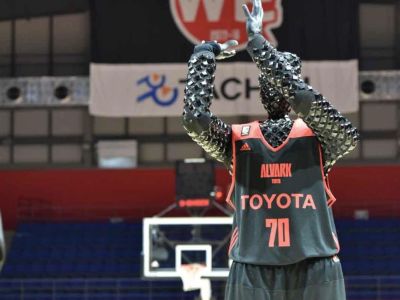
Toyota’s CUE7 shows how humanoid robots are moving from scripted motion to learning-based control
News about CUE7
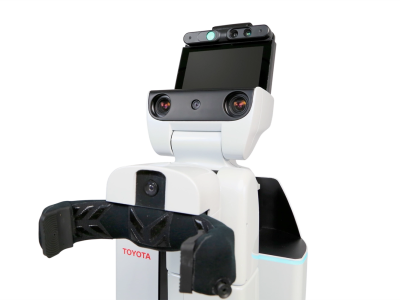
Toyota’s Human Support Robot shows how teleoperation can extend care and home assistance
News about Human Support Robot (HSR)
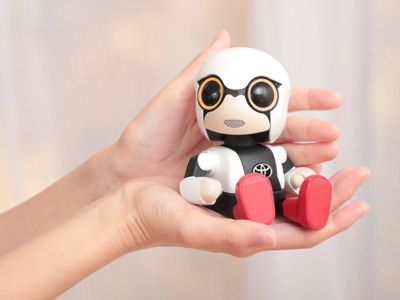
Toyota's Kirobo Mini Pioneered Palm-Sized Emotional Companionship
News about Kirobo Mini

Toyota's Punyo Masters Whole-Body Hugs for Heavy Lifts
News about Punyo
Robot Comparisons
Showing 2 in-depth comparisons featuring Toyota — Explore all comparisons →
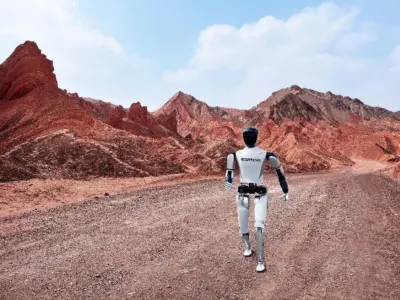
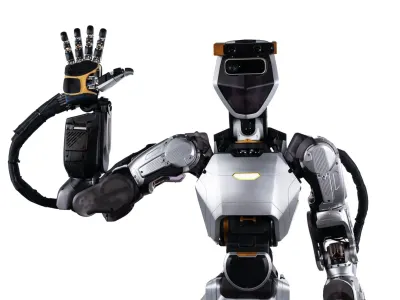
Compare Star1 by Robot Era & Phoenix by Sanctuary AI
Compare Star1 and Phoenix. Detailed analysis of speed, sensors, AI capabilities, and navigation.
Star1 vs Q5 by Robot Era: Review
Head-to-head: Star1 vs Q5. Explore differences in speed, sensors, battery, navigation, and use-case suitability.
Frequently Asked Questions
10 AnswersVerified answers, company specifications, and deployment details about Toyota
Can commercial enterprises purchase Toyota T-HR3 humanoids?
T-HR3 remains a technology demonstration and testbed platform used by Toyota Research Institute (TRI) and medical partners rather than an off-the-shelf retail product.
Is any Toyota robotics system currently commercialized?
Yes, the Welwalk WW-2000 robotic gait-assist system is clinically approved and actively rented to medical clinics and hospitals across Japan.
Where are Toyota robots deployed in real-world facilities?
Deployed across more than 100 Japanese rehabilitation hospitals (Welwalk) and actively piloted inside Toyota automotive manufacturing assembly centers.
What specific tasks does the T-HR3 demonstrate?
T-HR3 executes smooth bipedal balance, single-leg balancing, delicate balloon holding, sheet placement, and low-latency telepresence remote manipulation.
What mechanical drivetrain powers T-HR3's joints?
Utilizes proprietary Torque Servo Modules combining highly sensitive torque sensors, compact reduction gears, and high-output electric motors developed with Tamagawa Seiki.
What are the hand dexterity and end-effector specifications?
Features five-fingered articulated hands driven by tendon linkages capable of exerting gentle grasping forces calibrated via tactile feedback from the human operator.
What is the power source and operational duration?
Operates both via tethered power for continuous stationary tasks and onboard high-voltage lithium battery modules supporting approximately 2 hours of mobile operation.
How autonomous is T-HR3 compared to teleoperated?
Primarily built around the Master Maneuvering System (MMS) for teleoperation, with autonomous dynamic balance reflex loops that prevent the robot from falling when pushed.
What sensory suite and computer vision architecture are utilized?
Equipped with stereo head cameras that relay immersive 3D video to the operator's VR headset, body joint torque transducers, and whole-body collision sensors.
How does Toyota ensure worker safety during direct human interaction?
Employs Flexible Joint Control that softly absorbs external physical impacts, mechanically preventing the robot from applying hazardous pinching forces.
Verified Data & Editorial Assurance
Compiled from verified corporate filings, official Toyota datasheets, and robotics engineering registries. Information has been verified against official manufacturer documentation. For commercial procurement or proprietary integrations, contact the manufacturer directly.