Toyota’s Human Support Robot shows how teleoperation can extend care and home assistance
Robot Details
Human Support Robot (HSR) • ToyotaPublished
May 25, 2026
Reading Time
3 min read
Author
Origin Of Bots Editorial Team
Care Needs, Robot Response
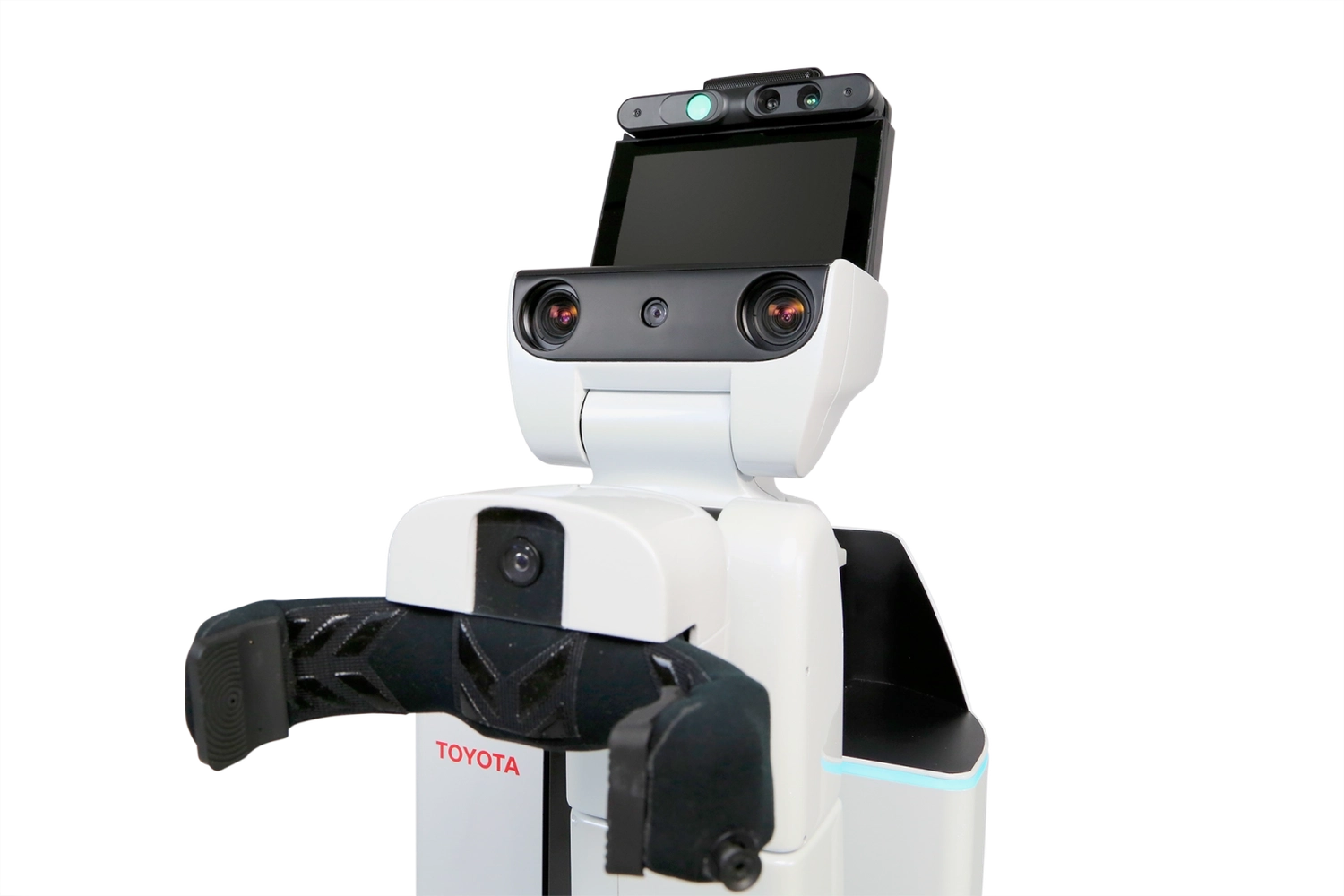
Toyota’s Human Support Robot, or HSR, was built to demonstrate a compact home-assistance robot that can fetch objects, move around indoor spaces, and support remote interaction between an operator and a person at home. In Toyota’s official materials and later research coverage, the robot is presented as a response to long-term care needs, with a design aimed at elderly and disabled users rather than fast, autonomous warehouse work.
Why It Matters
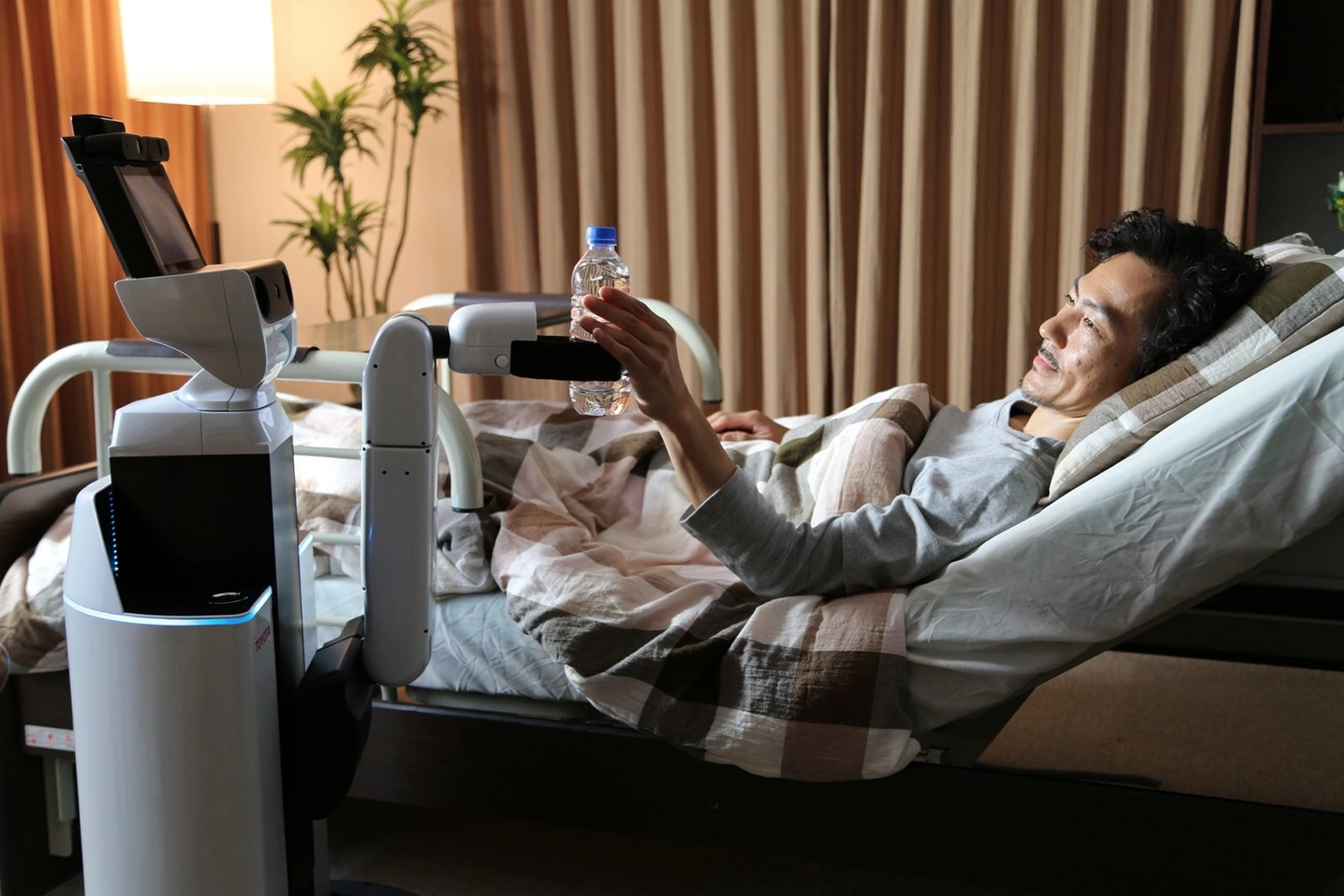
HSR matters because it combines several features that are hard to package together in one service robot: omni-directional mobility, a folding arm with a gripper, remote operation, and sensor-driven indoor navigation. That mix makes it more useful for human-centric environments where the task is not just moving something, but doing it safely and with enough dexterity to feel natural to the person on the other end. Importantly, its value is less about replacing caregivers and more about giving family members or operators a physical presence in the room when they cannot be there in person. HSR is a teleoperation-first care robot, not a fully autonomous substitute for human support.
How It Works
The system flow is straightforward: human motion input or operator commands go into software processing, and the robot then carries out arm movement, base motion, and balance correction in response. Toyota’s documentation and research descriptions show HSR using ROS, with SLAM, an IMU, and a laser rangefinder to help it navigate and avoid obstacles while cameras and force sensing support manipulation. The output is a robot that can move through indoor spaces, retrieve items, and relay video and audio for remote family interaction.
A Home Visit Use Case
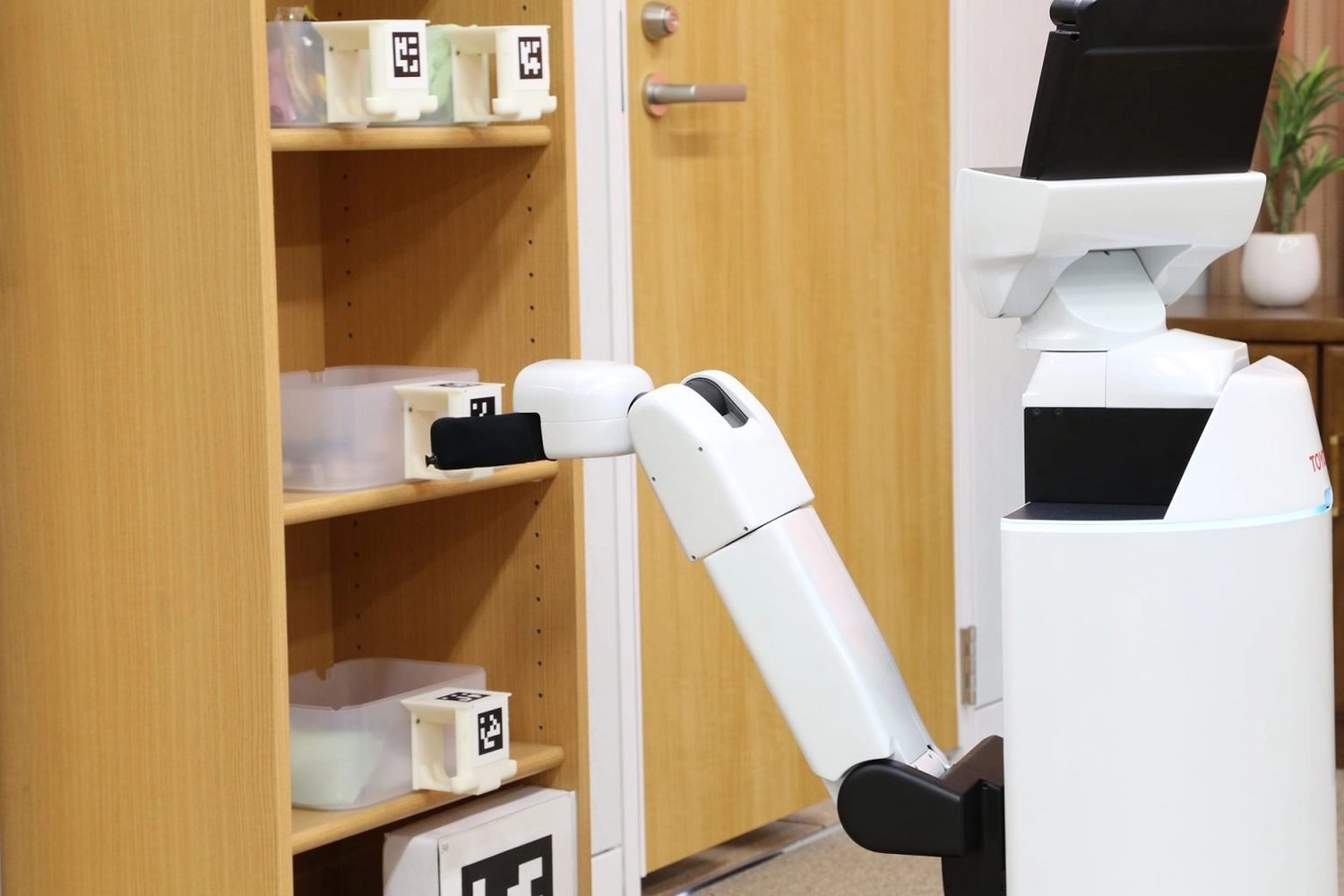
The clearest use case is a remote family check-in inside an elderly person’s home. In that scenario, HSR can be driven to a room, position its camera for a face-to-face call, and use its arm to fetch a light object such as a small box, medication container, or item on a shelf within reach. That makes the robot more than a camera on wheels, because the interaction includes both conversation and a physical task in the same session.
Specs That Matter
HSR’s reported 43 cm / 16.9 inch body diameter and 100.5 to 135 cm / 39.6 to 53.1 inch height range help it fit into domestic spaces while still reaching across a table or shelf. Its 37 kg / 81.6 lb weight and 0.8 km/h / 0.5 mph top speed point to a machine designed for careful indoor movement rather than open-area travel. The sensor set, including RGB-D, wide-angle and stereo cameras, LiDAR, IMU, force-torque sensing, a bumper sensor, and magnetic boundary detection, is what enables indoor navigation, obstacle avoidance, and safer contact handling.
Rivals Edge Check
| Robot | Key Advantage | Where Human Support Robot (HSR) Wins | Target Use |
|---|---|---|---|
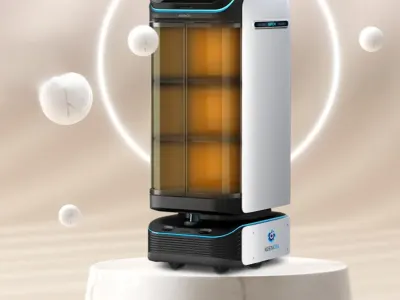
| DINERBOT T10 | Large-screen food delivery and autonomous service routing | Better manipulation and remote human interaction in homes | Hospitality delivery |
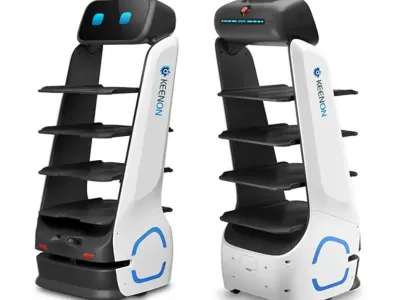
| DINERBOT T3 | Compact restaurant delivery robot with tray handling | Stronger indoor sensing and a real arm for fetching tasks | Table service |
| The K5 ASR | Mobile concierge and autonomous guidance platform | More practical for physical assistance beyond waypoint navigation | Guest interaction |
| DINERBOT T9 | Multi-tray delivery robot for busy venues | Greater value in care-oriented teleoperation and object retrieval | Food and item delivery |
What The Market Signals
HSR points to a broader shift in service robotics toward teleoperation-first systems that rely on human judgment instead of pre-scripted motion alone. That matters because the hardest parts of care and home assistance are often the ones that need adaptability, not just autonomy, especially when a robot has to respond to clutter, personal routines, and unpredictable human behavior. The industry takeaway is that the next wave of service robots may be judged less by how much they automate and more by how well they extend a human operator’s reach.
Explore Humanoids
Sources
Related Articles
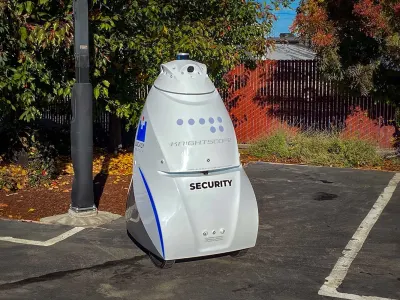
Knightscope’s K5 ASR keeps security patrols autonomous as the market shifts toward monitored, human-facing robots
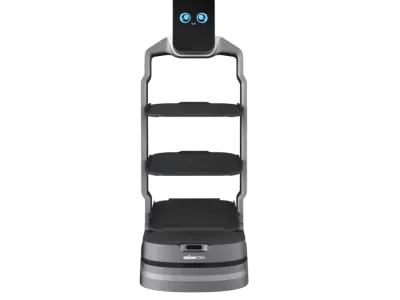
OrionStar’s LuckiBot Pro highlights the next phase of service robots in crowded indoor spaces
OrionStar’s LuckiBot Pro Autodoor adds sealed delivery and access control to service robotics
OrionStar’s GreetingBot Mini pushes reception robotics toward compact, guided front-desk service
Learn More About This Robot
Discover detailed specifications, reviews, and comparisons for Human Support Robot (HSR).
View Robot Details →