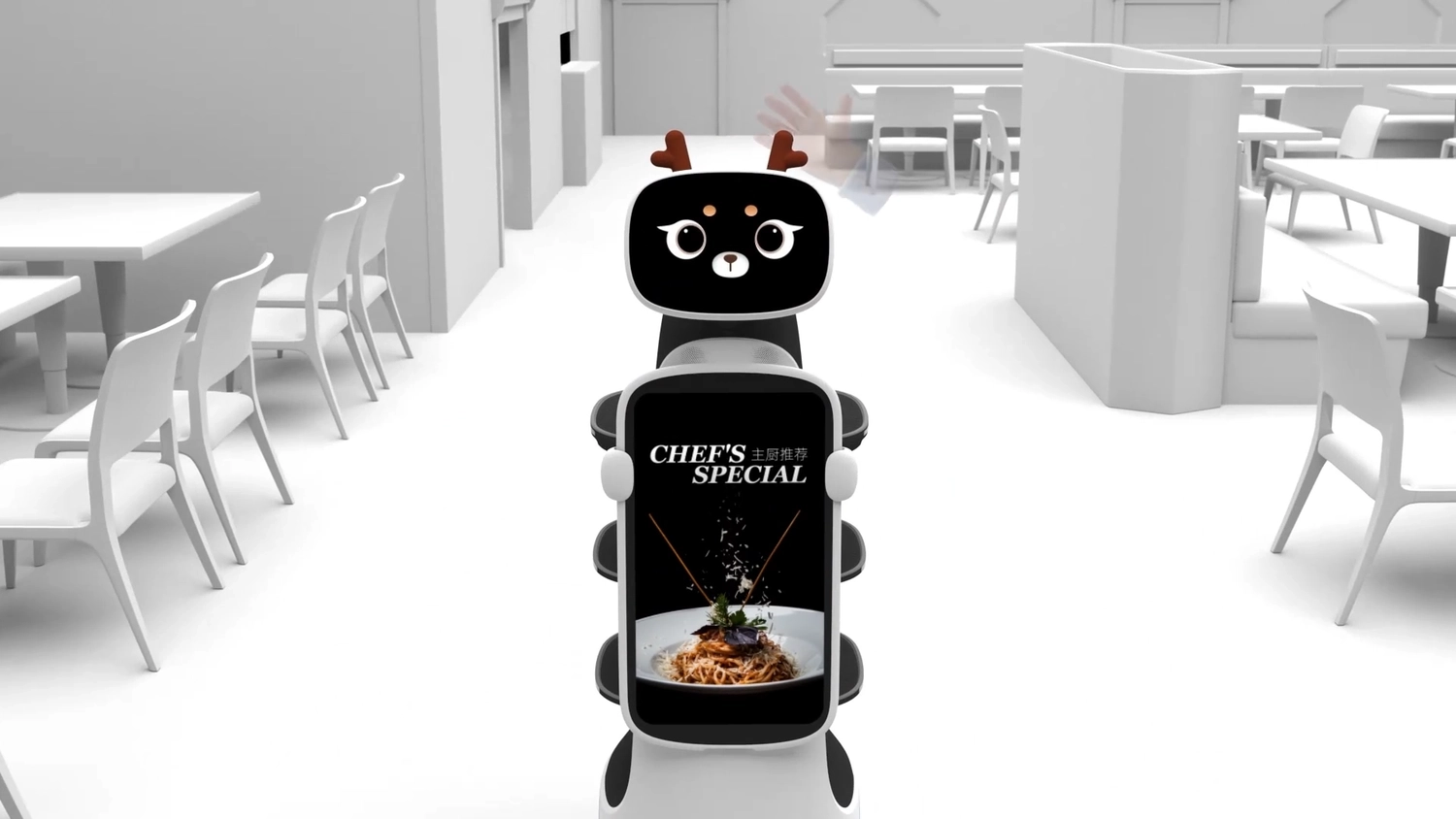
DINERBOT T10
AI ChatLast updated:
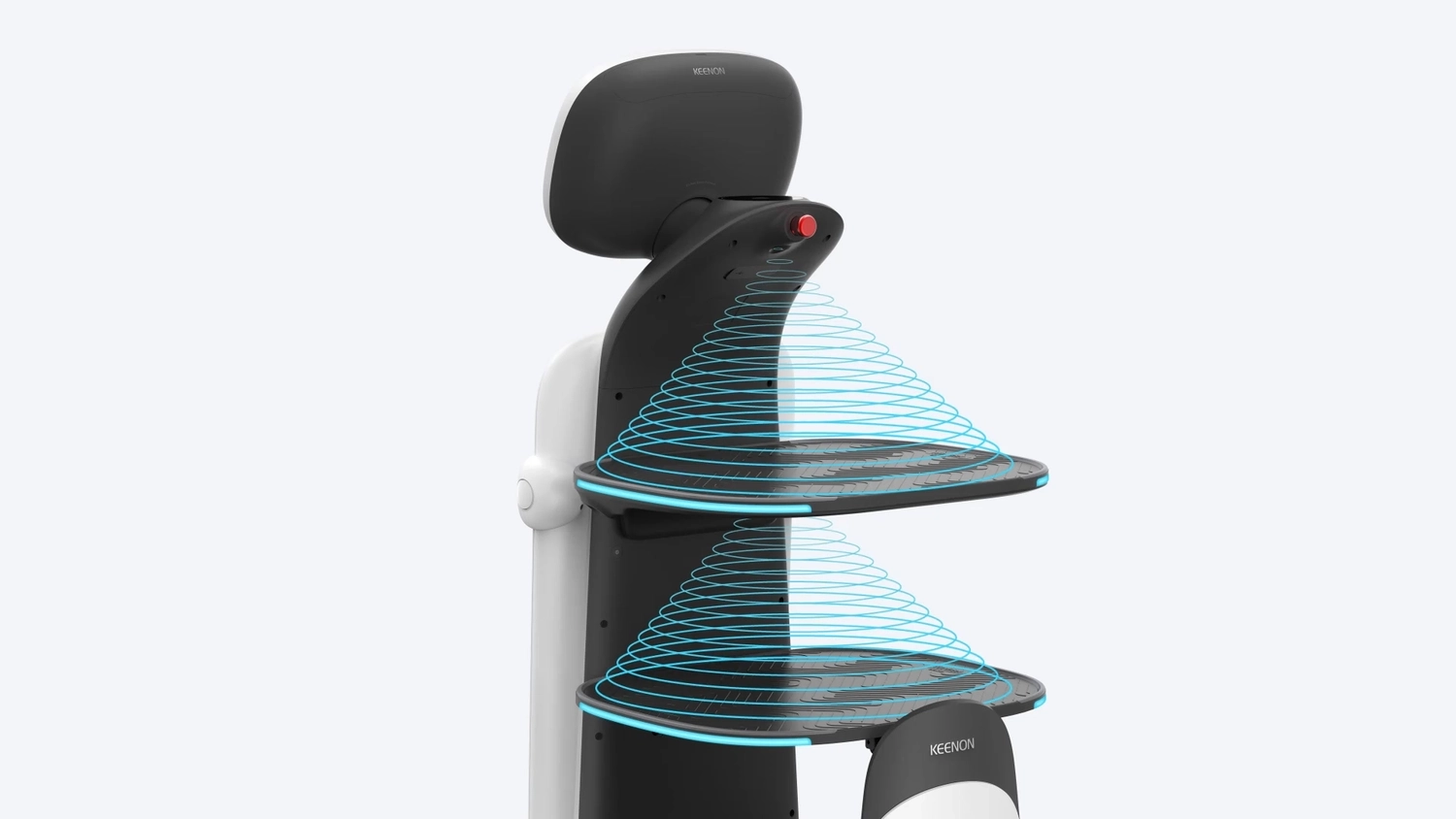
The DINERBOT T10 by KEENON Robotics is an advanced autonomous service robot optimized for hospitality and dining environments, featuring a large 23.8-inch interactive screen for dynamic customer engagement, advertisements, and self-pickup guidance. Equipped with patented AI algorithms for multi-robot dispatching and route optimization, it navigates narrow 59cm passages while carrying up to 40kg across multiple trays with open front/rear access. Its adaptive head movements respond to user interactions like touch and delivery completion, enhanced by 360° recognition via four stereo vision sensors, VSLAM, and RGB camera for precise obstacle avoidance and safe crowd navigation. Multimodal controls include voice commands in 15 languages, touch buttons, and visual cues, supporting functions like food delivery, dish return, greeting, escorting, and celebrations with 9 facial expressions. Ideal for restaurants, hotels, and malls, it boosts efficiency, reduces labor, and elevates guest experiences through reliable autonomy and fleet coordination.
Quick Overview & Key Facts
DINERBOT T10 is a service robot made by KEENON Robotics in China, launched in 2023 and built for restaurants, hotels, and airports. Its estimated price is $30,000-$60,000. Featured in “Keenon Robotics Unveils Dinerbot T10 for Hospitality Delivery”.
- Dimensions
- 48.6 x 55.5 x 139.9 cm
- Weight
- 58kg
- Mobility
- Wheeled
- Top speed
- 1m/s
- Handles
- Customer-facing, delivery, reception, concierge, guiding
- Battery runtime
- 9-12.5h
- Charging time
- 5.5 hours
- Sensors
- 4 stereo vision sensors, VSLAM, 1 RGB camera, ultrasonic
- Operating environment
- Indoor, restaurant, hotel lobby, retail, airport
Image Gallery
Below images are from KEENON Robotics's official sources


Review Videos
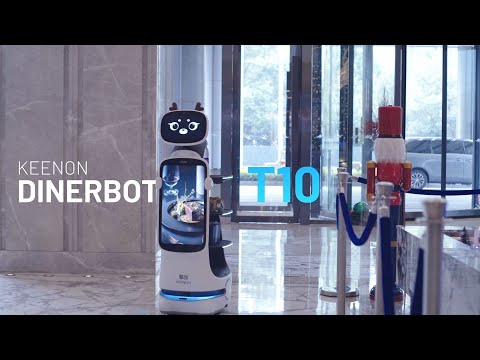
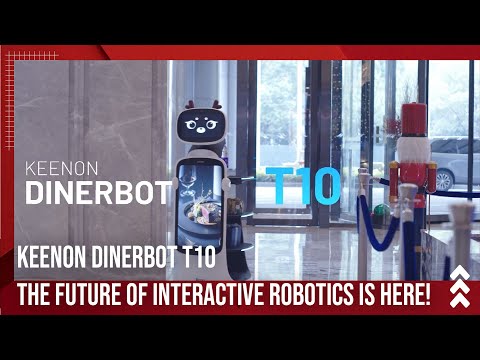
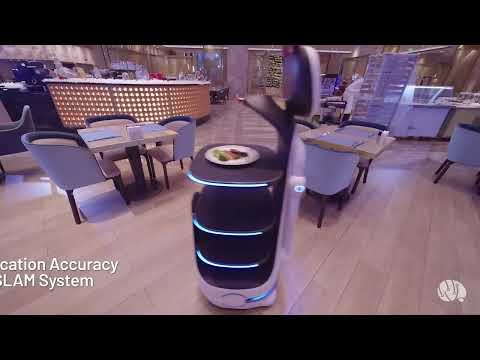
Watch expert reviews and demonstrations of this robot
Robot Specifications
Values without a Confirmed badge are compiled from public sources and may not be manufacturer-verified.
Not yet published by KEENON Robotics: firmware version.
Latest News About DINERBOT T10
Stay updated with the latest articles and developments
More Robots from KEENON Robotics
Explore other robots from this manufacturer


More Robots
Discover more robots in the same category

Robots From Other Categories
Discover complementary robots from different categories that work well together
Frequently Asked Questions
Get answers to common questions about this robot
Q1. What is DINERBOT T10 and what hospitality or service tasks is it designed to perform?
DINERBOT T10 is a service robot developed by KEENON Robotics for indoor environments like restaurants, hotels, and malls. It performs tasks such as food delivery, multi-point delivery, dish return, greeting, escorting, and advertising via its 23.8-inch screen. According to KEENON Robotics, it uses multi-modal interaction including voice, touch, and vision.
Q2. Which hotels, restaurants, or businesses are currently deploying DINERBOT T10?
Specific deployments of DINERBOT T10 in named hotels, restaurants, or businesses are not publicly detailed in available specifications or announcements. KEENON Robotics markets it for general use in restaurants, hotels, shopping malls, and service industries, with capabilities suited to crowded environments.
Q3. How does DINERBOT T10 navigate busy lobbies and avoid guests or obstacles?
DINERBOT T10 uses 360-degree recognition with four stereo vision sensors, VSLAM, and an RGB camera for obstacle detection up to 1.5 meters. It employs patented AI algorithms for route planning, multi-layer distance detection, and speed adjustment from 0.1 to 1.0 m/s. The robot navigates passages as narrow as 59 cm while adapting to complex lighting and dynamic environments.
Q4. What languages does DINERBOT T10 support for guest interactions?
DINERBOT T10 supports interactions in Chinese, English, Japanese, and Korean according to its app specifications. Some sources indicate support for up to 15 languages with 9 facial expressions for communication. It uses multi-modal voice prompts, expressions, and a movable head for engagement.
Q5. How long does DINERBOT T10 operate on a single charge during a hospitality shift?
Battery life for DINERBOT T10 varies by usage, with KEENON Robotics specifying 9 to 12.5 hours under certain conditions. Other sources report up to 8 hours of continuous operation. Charging from 15% to 100% takes 5.5 hours, with actual results depending on factors like load and settings.
Q6. How does DINERBOT T10 integrate with hotel PMS, POS, or room management systems?
Integration details for DINERBOT T10 with hotel PMS, POS, or room management systems are not specified in available product documentation. It runs on Linux for control and Android for interaction, supporting multi-robot collaboration up to 20 units and app functions for delivery tasks. Cloud-based systems handle advertising operations.
Q7. What is the cost or pricing model for deploying DINERBOT T10 in a business?
Public pricing information for DINERBOT T10 is not available from KEENON Robotics or distributors. Deployment costs would depend on factors like quantity, customization, maintenance, and regional resellers. Inquiries are directed to manufacturers for quotes.
Q8. How does DINERBOT T10 handle requests or situations it cannot resolve?
DINERBOT T10 uses voice reminders, on-screen guidance, tray lights, and AI tray detection to assist users. For unresolved situations, it relies on staff notifications via smart alerts and audio cues. According to specifications, it adapts via sensors but escalates complex issues through operational modes.
Q9. How does DINERBOT T10 compare to Keenon, Savioke, BellaBot, or other hospitality robots?
DINERBOT T10 from KEENON Robotics features a 40 kg load capacity, 59 cm passage width, and 23.8-inch screen, distinguishing it within Keenon's lineup. Compared to Savioke's Relay (room delivery focus) or Pudu's BellaBot (smaller tray, multi-robot fleets), T10 emphasizes open trays, plate detection, and advertising. Direct performance comparisons vary by environment and tasks.
Q10. What measurable outcomes or ROI have early adopters reported from using DINERBOT T10?
Specific measurable outcomes or ROI data from early adopters of DINERBOT T10 are not publicly reported. KEENON Robotics highlights efficiency in delivery and navigation for service industries, but quantitative results like cost savings or throughput improvements remain undocumented in available sources.
Rating and Reviews
Share your experience and help others decide!
Loading...
User Reviews
No user reviews. Be the first one to review!
User Comments (No Login needed)
Share your thoughts, experiences, or questions about this robot.
Comments appear after moderator review.