Knightscope’s K5 ASR keeps security patrols autonomous as the market shifts toward monitored, human-facing robots
Robot Details
The K5 ASR • KnightscopePublished
May 17, 2026
Reading Time
3 min read
Author
Origin Of Bots Editorial Team
Patrols Without Pauses
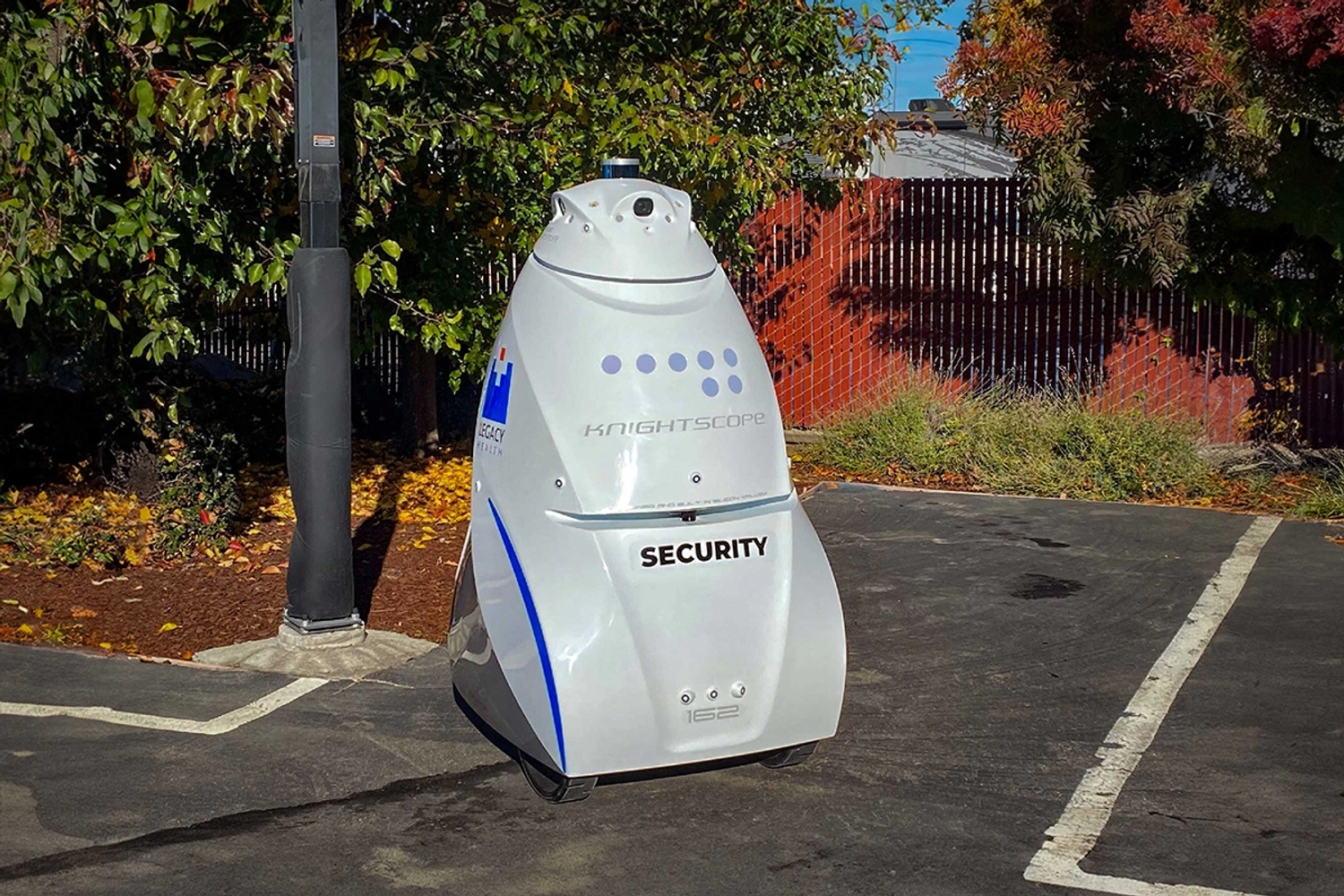
Knightscope built the K5 ASR as an autonomous security robot for commercial and public spaces, and the current product line emphasizes continuous patrol, remote monitoring, and on-site deterrence. The company’s latest materials frame the robot as a wheeled system that can navigate properties on its own, using sensors and the Knightscope Security Operations Center cloud platform to support security teams rather than replace them.
Why It Stands Out
What separates the K5 from many service robots is not food delivery or concierge duty, but the combination of autonomous patrol, persistent presence, and incident reporting in places where visibility matters. Its value comes from 360-degree sensing, spoken warnings, crowd and vehicle avoidance, and a software layer that turns patrol data into alerts and reports for operators. That makes it less of a single-task machine and more of a mobile security presence built for routine observation and deterrence. The K5 is about keeping watch continuously, not just moving from point A to point B.
How It Works
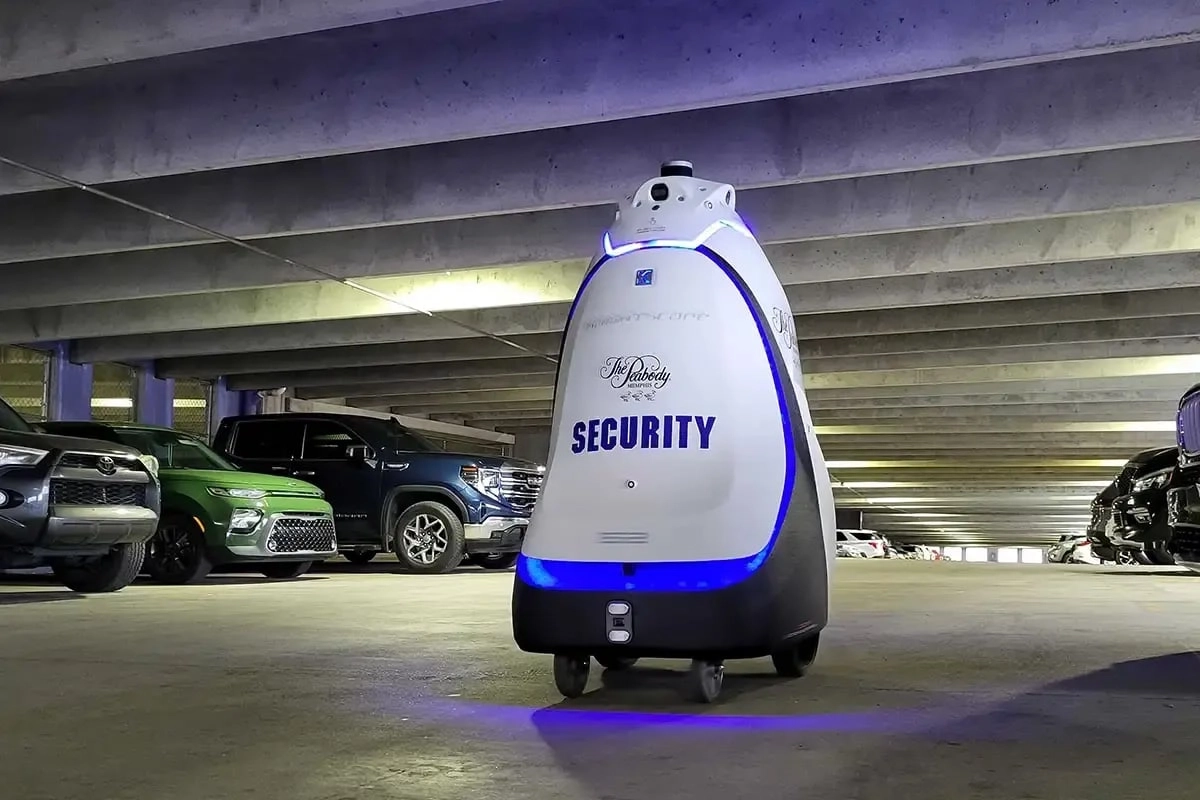
Input starts with LiDAR, four high-resolution 360-degree cameras, ultrasonic sensors, and microphones that feed environmental data into the robot’s navigation stack. Processing relies on SLAM with sensors and algorithms to map surroundings, avoid obstacles, and decide when to stop, reroute, or issue a spoken warning. Output is the robot’s wheeled movement, security patrol behavior, and event data sent to KSOC for monitoring, escalation, and review.
Parking Lot Patrols
A realistic deployment for the K5 is a large parking lot or campus perimeter, where repeated routes, vehicle traffic, and long stretches of open space make human patrols expensive and inconsistent. In that setting, the robot’s job is not to physically intervene, but to create visible security coverage, flag anomalies, and guide people through controlled spaces while security staff respond remotely when needed. This is where its deterrence function matters most: the robot is present long enough to change behavior, then document what happened.
Capability Through Design
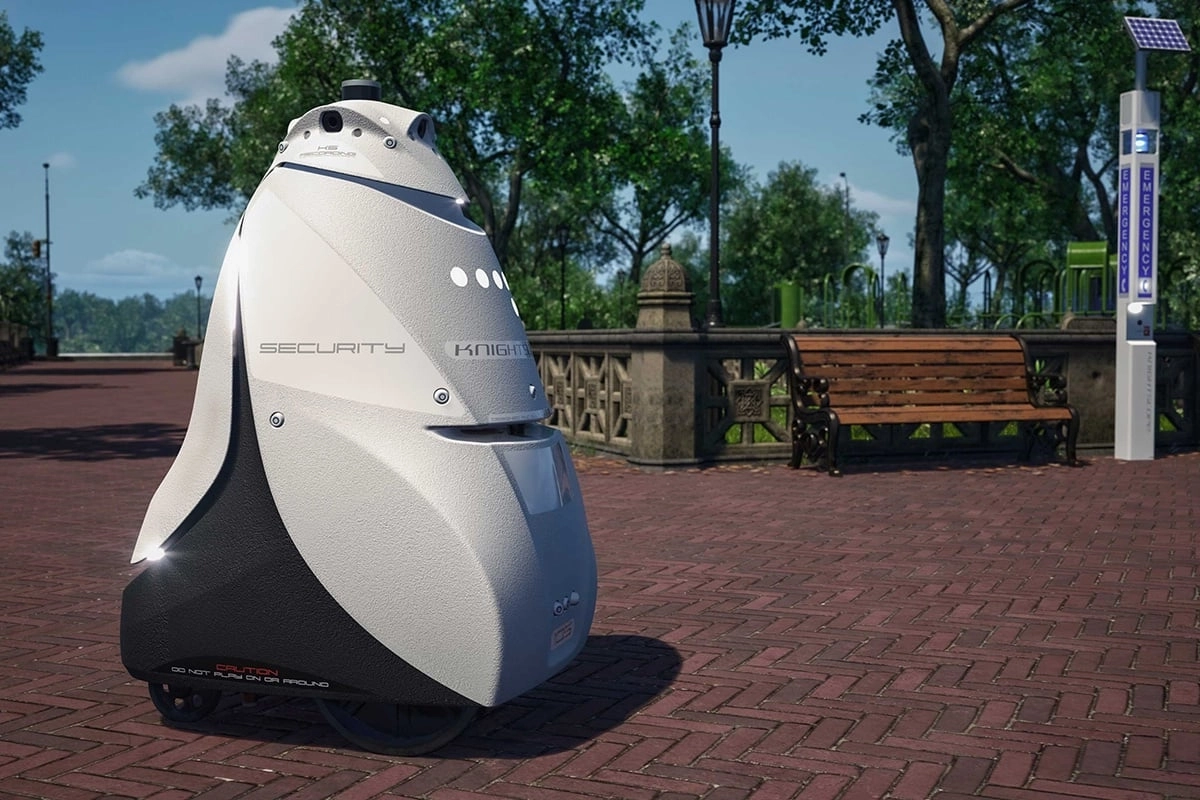
The K5 is reported at 44.6 inches long, 34.9 inches wide, and 64.6 inches tall, with a weight of 190 kg and a top speed of 3 mph, which suits slow, deliberate patrols rather than rapid response. Those constraints are paired with safety features such as obstacle detection, emergency stop, crowd and vehicle avoidance, and spoken warnings, all of which support operation around people. Its battery life is described as 3 to 5 years, which, if sustained in real deployments, would reduce maintenance interruptions for long-duration service.
Rivals Edge Check
| Robot | Key Advantage | Where The K5 ASR Wins | Target Use |
|---|---|---|---|
| Servi Plus | Food-running robot built for repetitive tray transport in restaurants | Persistent patrol, deterrence, and remote security monitoring | Restaurant service and table delivery |
| DINERBOT T3 | Compact hospitality robot for guided delivery in tight indoor spaces | Better suited to open-area monitoring and security visibility | Food and beverage delivery |
| DINERBOT T9 | Larger delivery platform for carrying more items across indoor venues | More aligned with patrol oversight than point-to-point hauling | Hospitality logistics |
| DINERBOT T10 | Higher-capacity delivery robot for busy service floors | Stronger at security observation and incident documentation | Restaurant and hotel service |
Industry Direction
The broader signal is that autonomous service robotics is becoming more specialized, with commercial buyers asking for systems that solve one narrow operational problem very well. For Knightscope, that means the K5’s appeal depends less on novelty and more on whether customers value continuous patrol data, remote oversight, and visible deterrence enough to support a long-term security workflow. In that sense, the robot reflects a market moving toward task-specific autonomy instead of broad claims about general-purpose service machines.
Explore Humanoids
Related Articles
Relay Robotics Passes 1.5 Million Deliveries as Hospital and Hotel Deployments Expand Globally
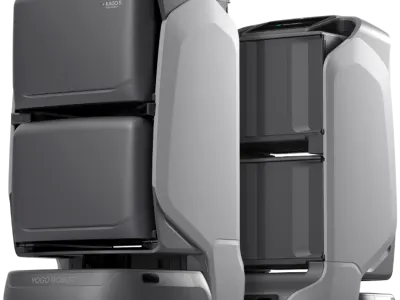
Yogo Robot Unveils KAGO 5 for Autonomous Hospitality Deliveries
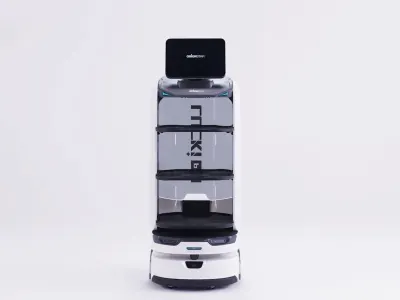
OrionStar’s LuckiBot Pro sharpens the case for service robots built for hotels, restaurants, and public-facing spaces
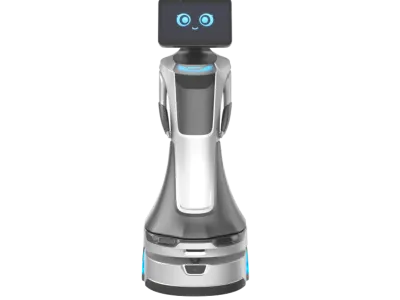
OrionStar’s GreetingBot Nova pushes reception robots toward larger language models and broader front-desk work
Learn More About This Robot
Discover detailed specifications, reviews, and comparisons for The K5 ASR.
View Robot Details →