Relay Robotics Passes 1.5 Million Deliveries as Hospital and Hotel Deployments Expand Globally
Robot Details
Delivery Robots • Relay Delivery RobotsPublished
May 13, 2026
Reading Time
4 min read
Author
Origin Of Bots Editorial Team
Autonomous delivery milestone reshapes indoor logistics
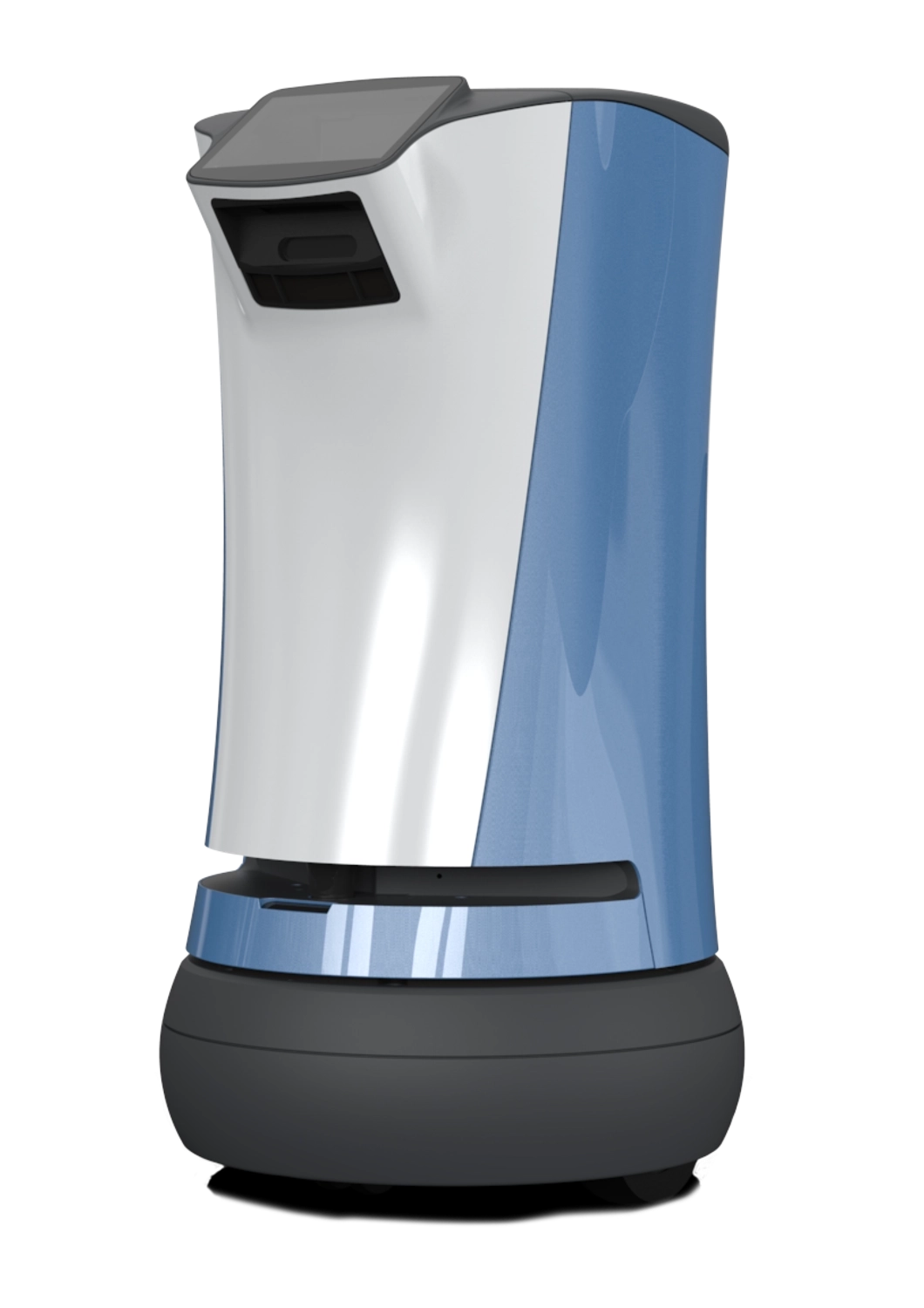
The hospitality and healthcare sectors are increasingly turning to autonomous mobile robots to handle non-clinical and guest-facing deliveries, reducing staff interruptions and improving operational efficiency. Relay Robotics, a San Jose-based manufacturer of autonomous service robots, has announced that its Relay delivery platform has completed more than 1.5 million deliveries across hotels, hospitals, and other public facilities, marking a significant adoption milestone for the indoor delivery robot category. The achievement reflects growing institutional confidence in autonomous systems for routine logistics tasks that traditionally required human staff.
Why hospitals and hotels are adopting Relay
Relay's deployment advantage stems from three core capabilities tailored to service environments. First, the robots operate autonomously around the clock, completing delivery runs in an average of eight minutes per cycle, which directly reduces hallway congestion and frees clinical and hospitality staff to focus on higher-value tasks. Second, the platform integrates seamlessly with building infrastructure, including elevator systems, enabling multi-floor deployments without human intervention. Third, the robots are designed for guest and patient-facing environments, featuring a compact, approachable form factor that encourages interaction rather than anxiety in crowded spaces. Relay's real strength lies not in raw speed but in its ability to operate reliably in human-centric environments where safety and social acceptance matter as much as logistics efficiency.
How Relay navigates complex indoor spaces
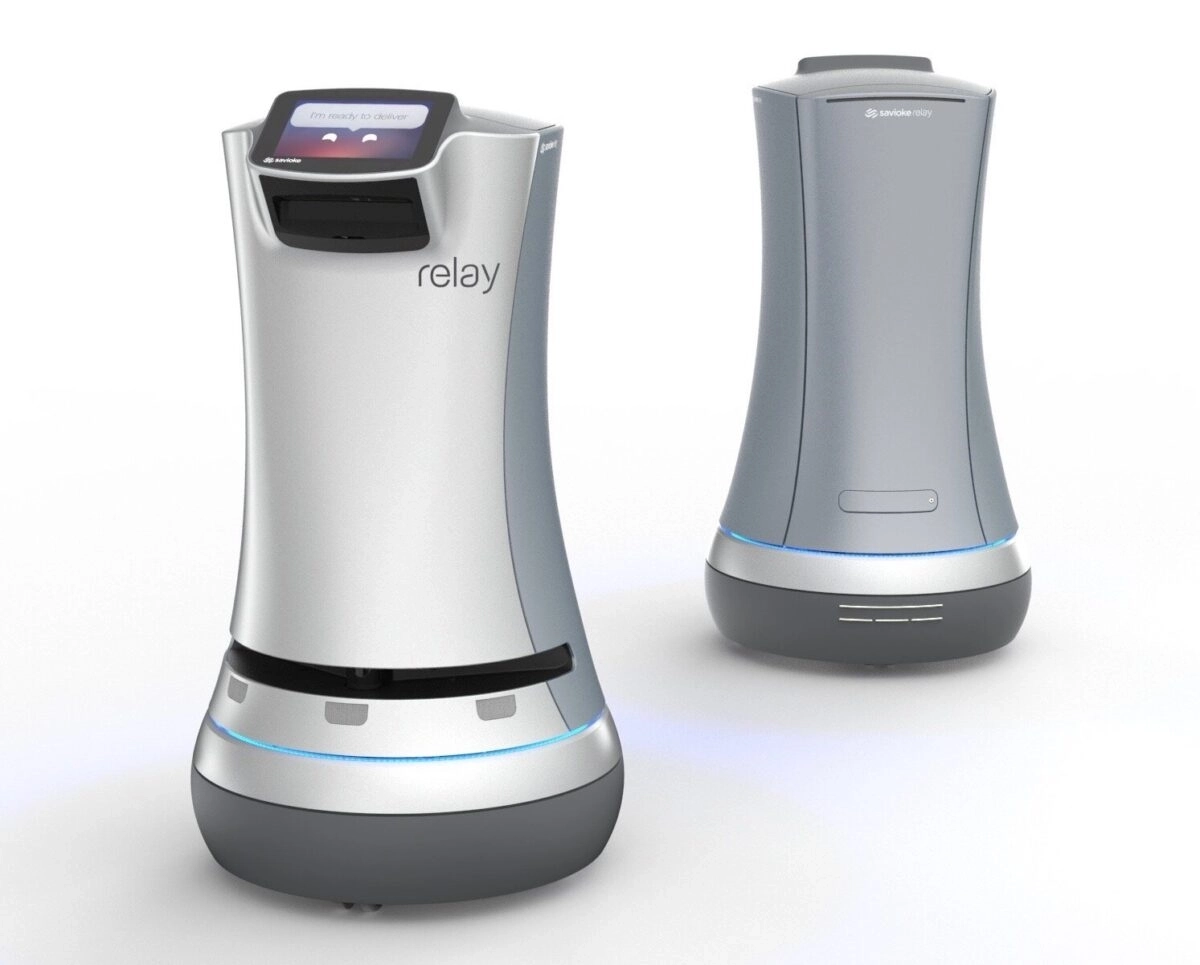
Relay robots are built on the Robot Operating System (ROS) and rely on a sensor suite including cameras, LiDAR, sonar, accelerometers, and gyroscopes to build dynamic maps of their environment in real time. The navigation system uses Simultaneous Localization and Mapping (SLAM) to handle dynamic obstacles, crowds, and changing floor layouts without pre-programmed routes. When an obstacle appears in the robot's path, onboard safety systems detect it and respond within milliseconds, allowing the platform to avoid collisions while maintaining predictable movement patterns that human occupants can anticipate and work around.
Hospital delivery in practice
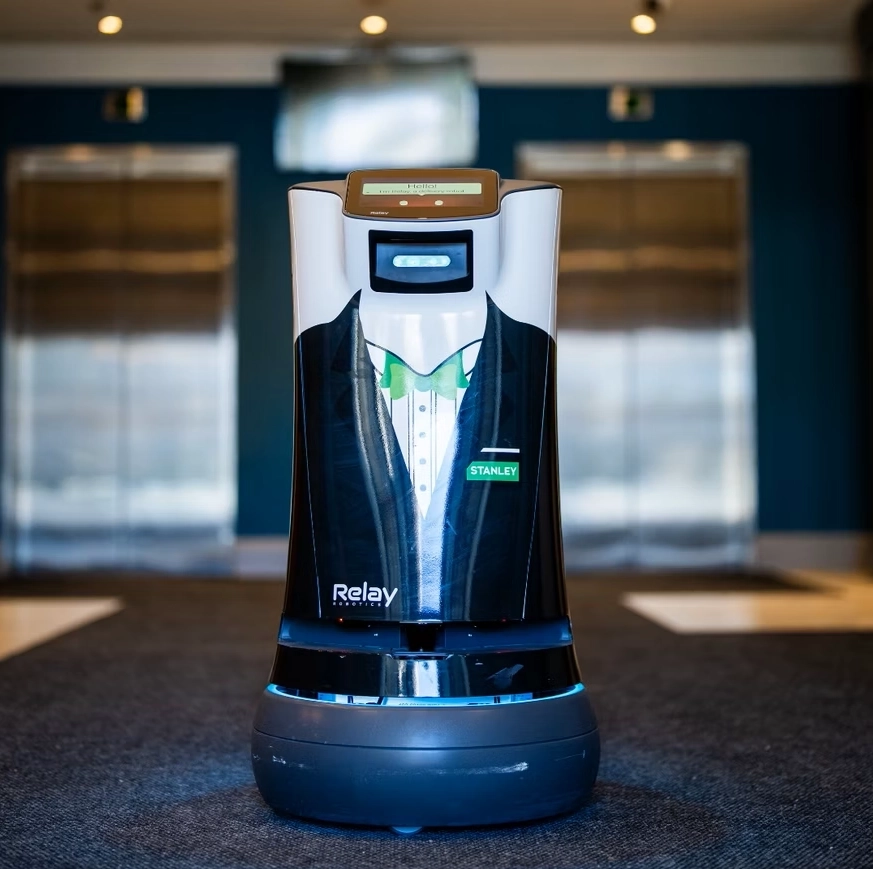
In a typical hospital deployment, Relay robots transport lab specimens, pharmaceuticals, meal trays, and linens between departments and patient floors, tasks that would otherwise require a staff member to leave their station. Consider a mid-sized hospital with 200 beds across four floors. Instead of clinical staff making 15 to 20 manual trips per day to transport specimens to the lab or distribute medications, a fleet of three to four Relay units handles these runs continuously. The result is measurable: staff report fewer interruptions during critical patient care windows, and delivery times become predictable, enabling better scheduling of lab processing and medication administration. Hotels report similar gains, using Relay units to deliver room service, forgotten items, and housekeeping supplies without tying up front-desk or concierge staff.
Specifications enabling real-world deployment
Relay robots operate at a design speed of 2.5 km/h (approximately 1.5 mph), a deliberate choice that prioritizes safety and predictability over speed in crowded indoor spaces. The platform weighs 40.8 kg and carries payloads suitable for typical delivery tasks, with the newer Relay2 model delivering twice the capacity of earlier versions at 10 gallons (41 liters). Battery life is designed to support multi-shift operations, with lithium-ion systems rated for 3 to 5 years of continuous service. The complete system, including hardware and software licensing, is positioned at approximately 26,000 USD per unit plus ongoing software subscription fees, a cost structure that allows hospitals and hotel chains to justify deployment across multiple floors and facilities.
Rivals Edge Check
| Robot | Key Advantage | Where Relay Wins | Target Use |
|---|---|---|---|
| Servi | Compact design optimized for restaurant service | Proven multi-floor hospital logistics at scale | Hospital and hotel deliveries |
| Delivery | Focus on last-mile outdoor package delivery | Indoor navigation, elevator integration, 1.5M+ delivery track record | Hospitals, hotels, airports, retail |
| BUTLERBOT W3 | Advanced manipulation and object handling | Reliability in crowded public spaces, ROS-based flexibility | Guest-facing hospitality tasks |
| AMY A1 | Specialized for pharmaceutical and lab transport | Broad use case flexibility across hospitality and healthcare | Multi-sector deployments |
The institutional robotics inflection point
The healthcare and hospitality sectors are moving past the pilot phase and into standardized deployment, signaling a broader shift in how service organizations approach automation. Rather than replacing human staff, these deployments augment existing teams by removing friction from repetitive, non-value-added tasks. The 1.5 million delivery milestone suggests that the economic case for autonomous indoor logistics is now proven enough to drive multi-unit, multi-facility rollouts rather than isolated trials. As labor shortages persist in hospitality and healthcare, expect to see larger deployments of similar platforms, with Relay's track record positioning it as a reference architecture for future competitors and a benchmark for institutional buyers evaluating autonomous service robots.
Explore Humanoids
Sources
Related Articles
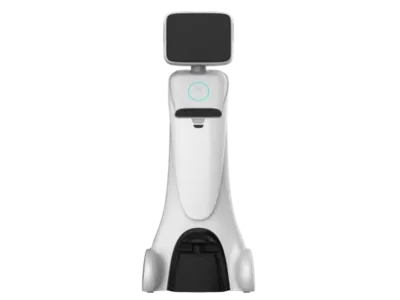
MG Super LABS Deploys AMY A1 Telepresence Robot Across Indian Hospitality and Service Sectors
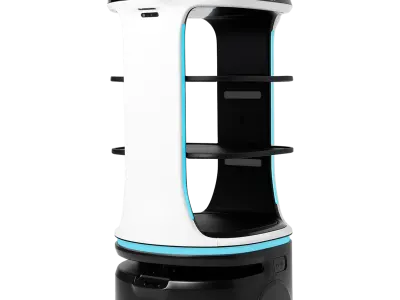
Bear Robotics Unveils Servi Plus High-Capacity Hospitality Robot
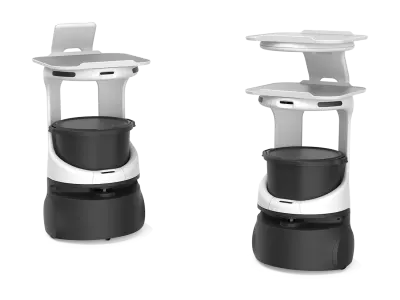
Bear Robotics' Servi Robot Transforms Hospitality with High-Capacity Delivery
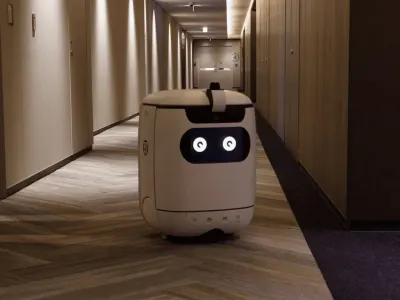
Rice Robotics Delivery Bot Powers SoftBank's Office Logistics
Learn More About This Robot
Discover detailed specifications, reviews, and comparisons for Delivery Robots.
View Robot Details →