OrionStar’s LuckiBot Pro sharpens the case for service robots built for hotels, restaurants, and public-facing spaces
Robot Details
LuckiBot Pro • OrionStar RoboticsPublished
May 17, 2026
Reading Time
3 min read
Author
Origin Of Bots Editorial Team
What OrionStar showed
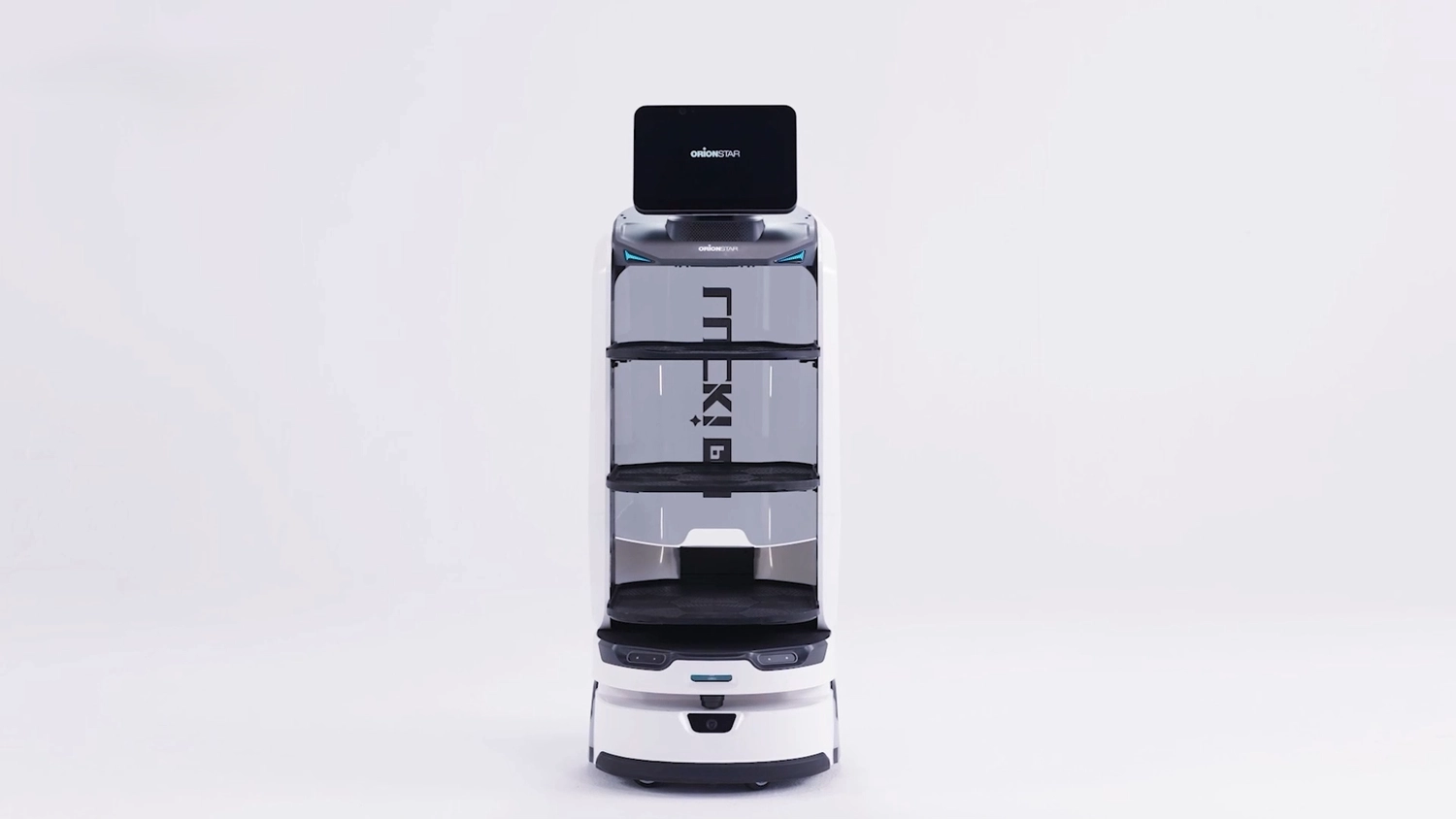
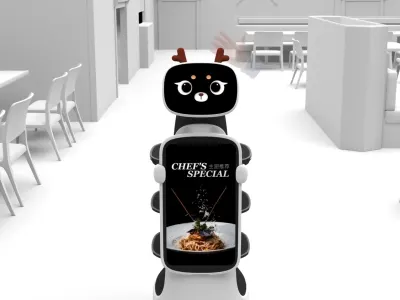
OrionStar Robotics announced LuckiBot Pro as a next-generation delivery robot and presented it as an upgraded platform for customer-facing service work in hotels, restaurants, hospitals, airports, retail, and offices. The company’s materials emphasize visual SLAM navigation, dish recognition, and a larger display, positioning the robot as a tool for delivery, reception, concierge, and guiding tasks rather than a single-purpose carrier.
Why it stands out
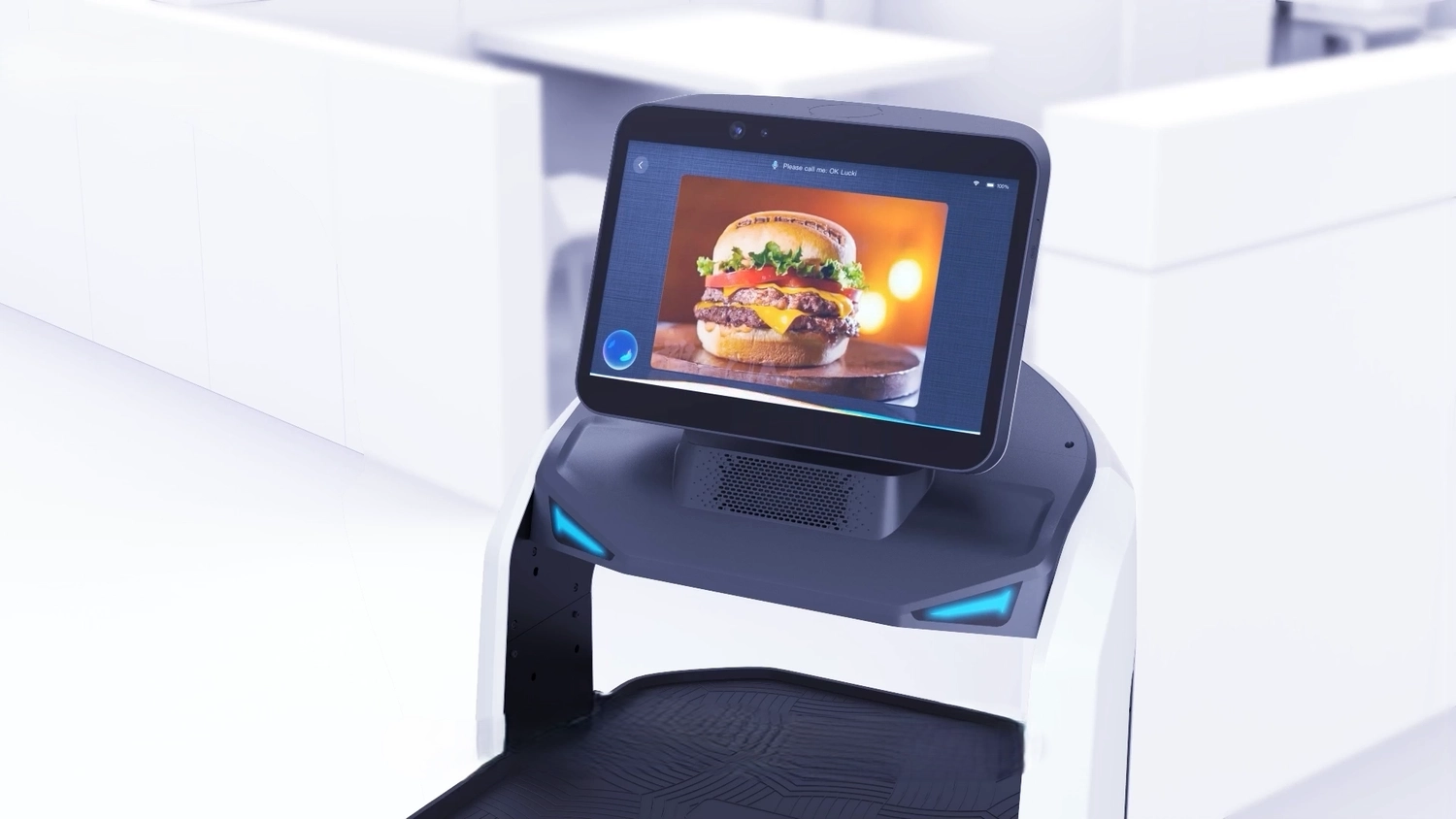
LuckiBot Pro matters because it combines several service-floor features that usually get treated separately: visual SLAM for navigation, LiDAR and RGBD sensing for obstacle awareness, ultrasonic and cliff sensors for added safety, and Android-based RobotOS for customization. That mix is aimed at making interactions more legible to guests and easier for operators to adapt across different venues, especially where the robot must move among people, furniture, and changing layouts. Just as important, OrionStar frames it as a modular platform, which suggests the company is treating service robots less like fixed appliances and more like configurable front-of-house systems. LuckiBot Pro is built to be noticed, but its real value is repeatable service in crowded spaces.
How it works
The technical flow is straightforward: input comes from the robot’s sensors and environment, processing happens through visual SLAM and RobotOS, and output is the robot’s wheeled movement, guidance, and delivery behavior. In practice, that means the robot observes its surroundings, builds a usable map, then adjusts motion to navigate around people and obstacles while keeping tasks like serving, reception, and escorting on track. OrionStar’s emphasis on obstacle detection and crowd avoidance suggests the system is designed to support human-centric spaces where route changes happen constantly.
Hotel floor duty
A realistic deployment is a hotel lobby or restaurant floor, where LuckiBot Pro can move between reception, dining areas, and guest tables without requiring a completely fixed route. In that setting, the robot’s value is not only carrying items but also providing a visible, guided service presence that can welcome visitors, help with deliveries, and reduce routine walking for staff. That is the kind of environment where a service robot’s navigation, sensing, and guest-facing interface matter more than raw speed.
Capability snapshot
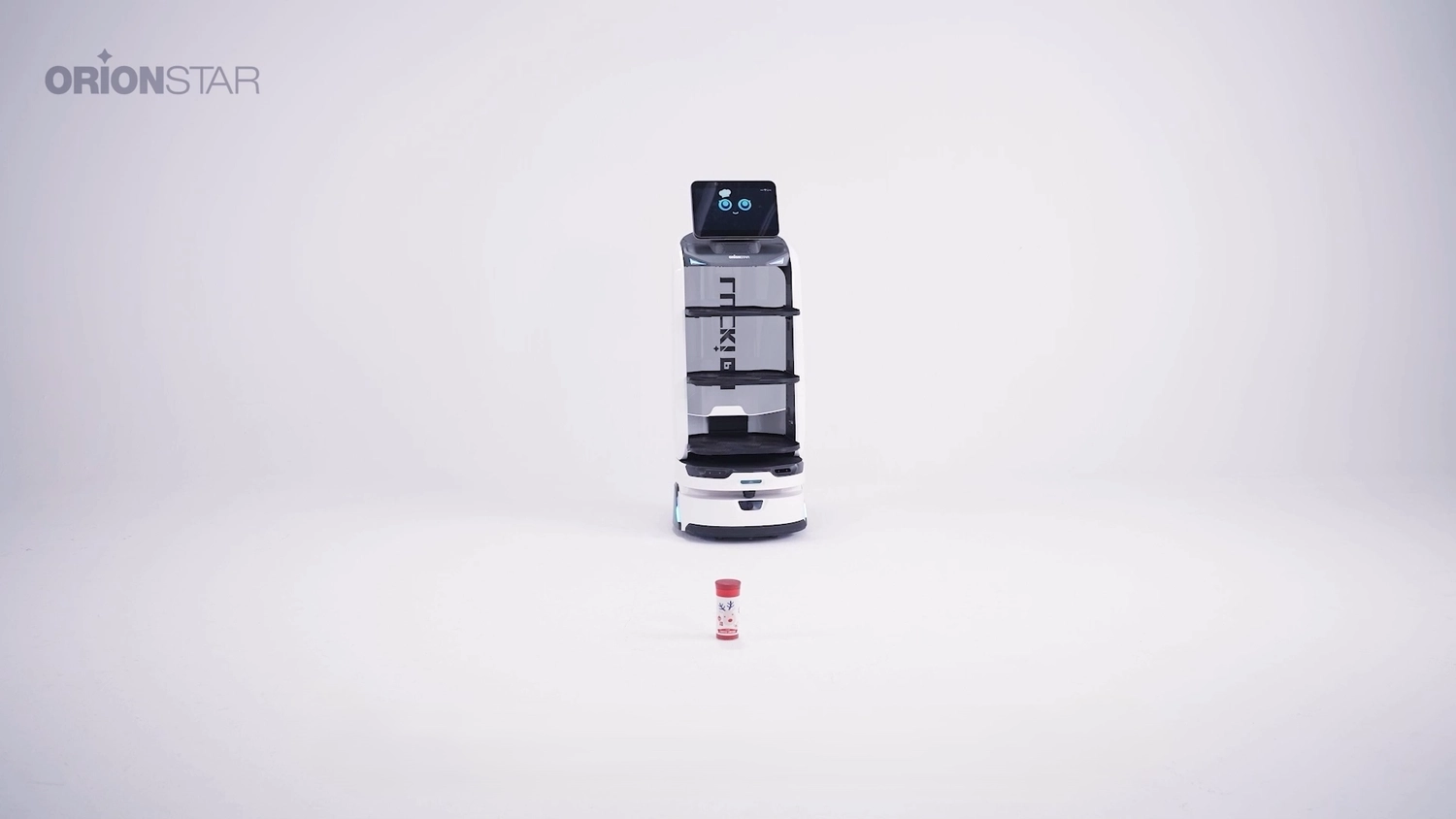
OrionStar’s published specifications describe LuckiBot Pro as a wheeled robot measuring 55 x 45 x 140 cm, with a reported weight of 45 kg and a target speed of 1.2 m/s / 2.7 mph. The company also points to a sensor stack of LiDAR, RGBD cameras, ultrasonic sensors, and cliff sensors, plus an Android-based RobotOS that supports customer-facing and delivery use cases. Taken together, those details suggest a machine sized for indoor corridors and front-of-house work rather than open outdoor transport.
Rivals Edge Check
| Robot | Key Advantage | Where LuckiBot Pro Wins | Target Use |
|---|---|---|---|
| DINERBOT T3 | Compact food delivery focus for restaurant service | Broader sensing stack and more flexible customer-facing roles | Restaurant delivery |
| DINERBOT T10 | Larger capacity for multi-tray transport | Android-based RobotOS and multi-role positioning beyond delivery | Hospitality delivery |
| KAGO 5 | Familiarity in service automation workflows | More explicit reception, concierge, and guiding emphasis | Service support |
| DINERBOT T9 | Efficient indoor food-running operations | Stronger emphasis on guest interaction and configurable front-of-house use | Dining-room delivery |
Market direction
The larger signal is that service robotics is becoming more software-led and venue-specific. OrionStar’s emphasis on RobotOS, modularity, and sensing points to a market where the winning products are those that can be tuned for different indoor workflows without redesigning the entire machine. That also reflects a broader shift in this category: operators want service robots that can be deployed quickly, supervised easily, and adapted to busy human environments with minimal friction.
Explore Humanoids
Sources
Related Articles
Bear Robotics' Servi Robot Transforms Hospitality with High-Capacity Delivery
Rice Robotics Delivery Bot Powers SoftBank's Office Logistics
Relay Robotics Passes 1.5 Million Deliveries as Hospital and Hotel Deployments Expand Globally
Yogo Robot Unveils KAGO 5 for Autonomous Hospitality Deliveries
Learn More About This Robot
Discover detailed specifications, reviews, and comparisons for LuckiBot Pro.
View Robot Details →