OrionStar’s GreetingBot Nova pushes reception robots toward larger language models and broader front-desk work
Robot Details
GreetingBot Nova • OrionStar RoboticsPublished
May 17, 2026
Reading Time
3 min read
Author
Origin Of Bots Editorial Team
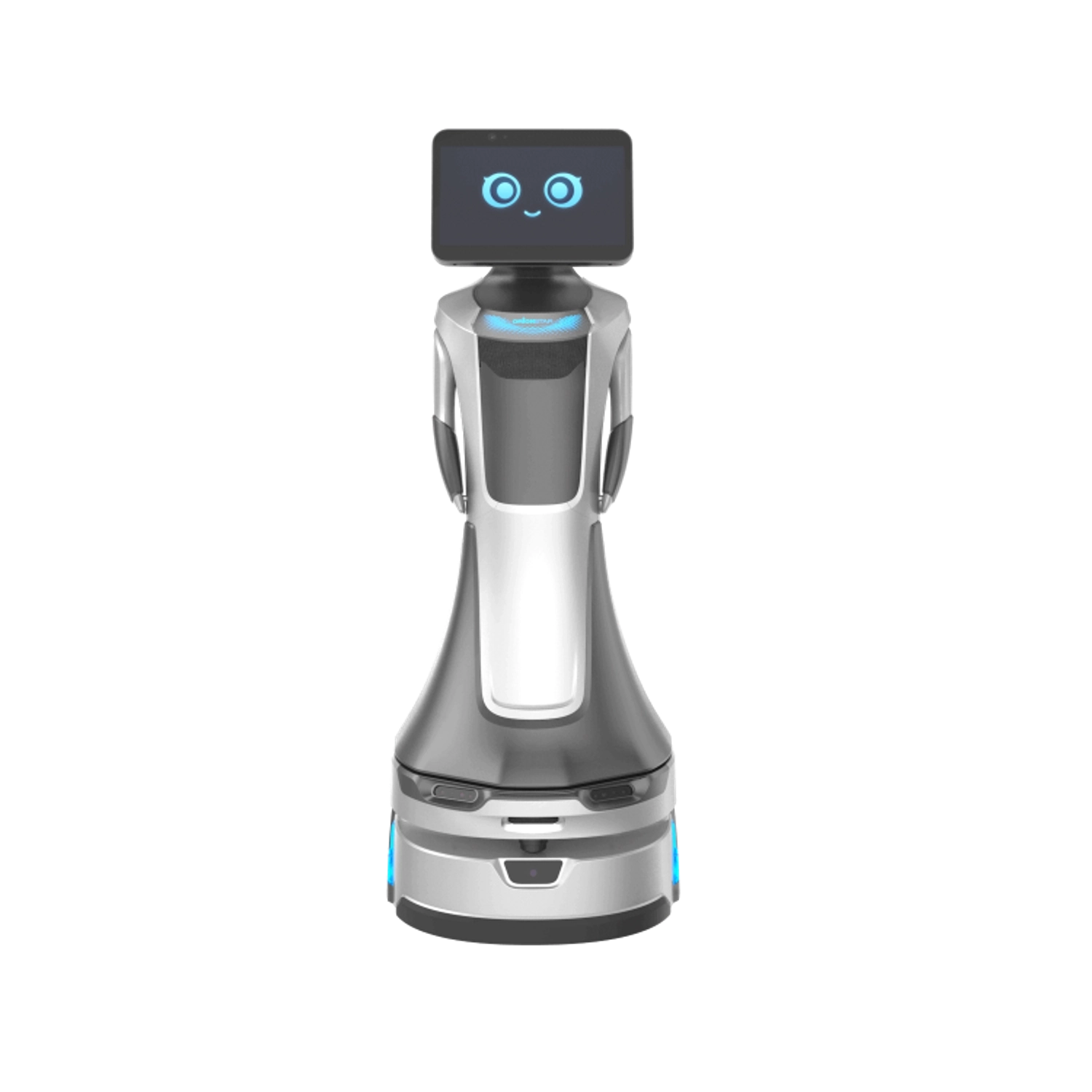
From greetings to guidance
OrionStar Robotics has introduced GreetingBot Nova, a service robot built for reception and visitor assistance, and demonstrated a platform that combines voice interaction, navigation, and customizable front-desk presentation. The company says the robot is aimed at hotels, retail spaces, airports, restaurants, and other human-centric environments where greeting, wayfinding, and basic information handling need to happen in real time.
Why this matters
GreetingBot Nova matters because it is framed less as a fixed-script kiosk and more as a conversational reception robot that can handle multilingual interactions, guided tours, and tailored messaging on a front screen. Its value proposition is built around full visitor flow at the front desk: greeting people, answering routine questions, and adapting the interaction to the setting rather than forcing the setting to adapt to the robot. The robot’s marker-free deployment approach also points to a practical concern in the category, since large open spaces and high-ceiling venues can be harder to map and maintain with older deployment methods. It is a reminder that the service robot market is increasingly defined by usability in real spaces, not just demo-room performance. GreetingBot Nova is about making front-desk automation less scripted and more situational.
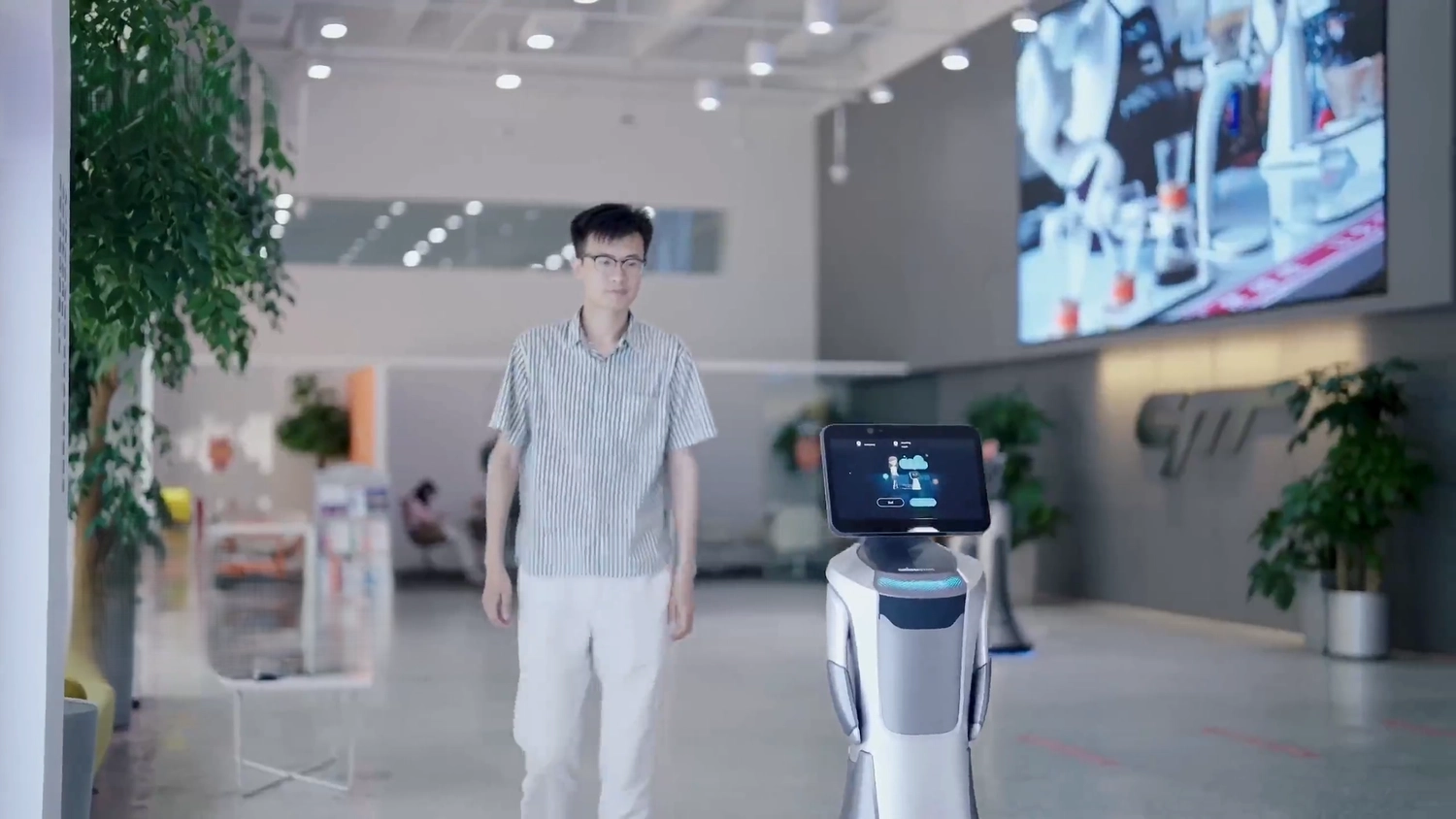
How it works
The system flow is straightforward: visitor input through speech and visual presence goes into AI processing on a Linux-based ROS software stack, then the robot responds through voice, screen content, and wheeled movement. Its navigation is described around Laser SLAM, with sensors including LiDAR, 3D cameras, ultrasonic, IR cliff sensors, and depth cameras supporting obstacle awareness and crowd avoidance. In practical terms, that means the robot is designed to recognize where it is, move through public areas, and adjust its behavior while staying focused on reception, concierge, and guiding tasks.
Front desk in practice
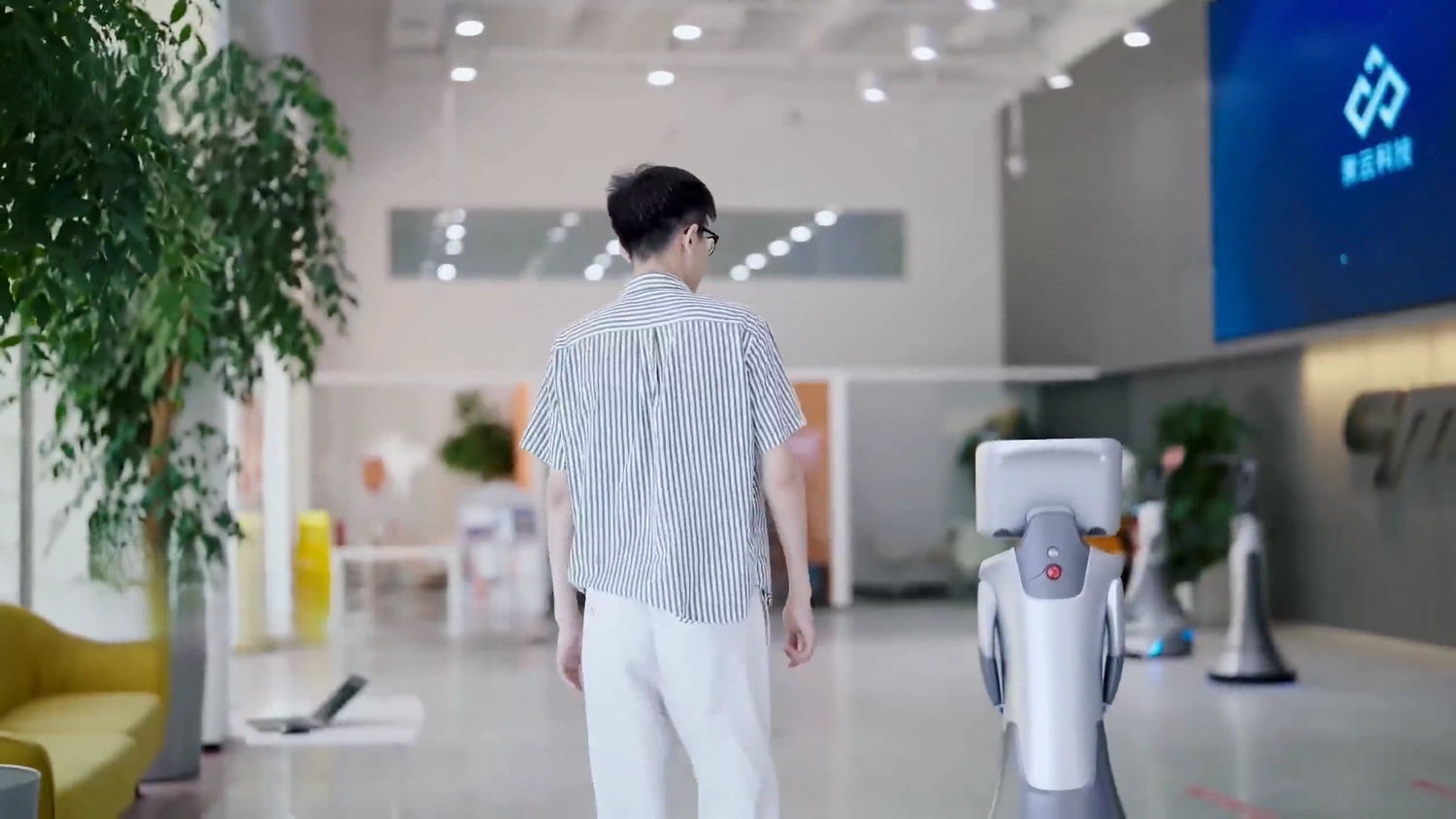
A realistic deployment scenario is a hotel lobby, where staff can use GreetingBot Nova to welcome arriving guests, provide basic directions, and surface customized promotional or informational content on its 14-inch screen. That kind of use case is important because it concentrates the robot’s value in a space where repeated questions, multilingual communication, and light guidance are common. The robot’s wheeled differential-drive mobility and reported 1.2 m/s / 2.7 mph speed support that role by letting it move between the entrance, lobby, and concierge area without trying to replace staff. In that setting, the machine is most useful as a first point of contact, not a substitute for human hospitality.
Capability through design
OrionStar describes GreetingBot Nova as measuring 50 cm x 45 cm x 120 cm, weighing 35 kg, and using a battery platform designed for multi-year service life. It is also reported to support emergency stop, 360-degree obstacle detection, and crowd avoidance, which are the kinds of protections a reception robot needs in public spaces. The hardware package is rounded out by a Linux-based ROS system and a sensor set built around LiDAR, 3D vision, ultrasonic sensing, and depth awareness, all of which support the robot’s reception and guiding role.
Rivals Edge Check
| Robot | Key Advantage | Where GreetingBot Nova Wins | Target Use |
|---|---|---|---|
| BUTLERBOT W3 | Delivery-focused service workflows | Stronger visitor interaction and multilingual reception | Hospitality front desks |
| KAGO 5 | Compact service support in indoor settings | More explicit concierge and guiding positioning | Hotels and public venues |
| Keenon G2 | Broad indoor service automation | More emphasis on conversation and customizable presentation | Retail and reception |
| DINERBOT T8 | Food-service delivery and table-side operations | Better fit for greeting, wayfinding, and visitor assistance | Restaurants and hospitality |
A broader signal
The bigger industry signal is that service robots are being judged less by novelty and more by how well they fit into human spaces without disrupting them. GreetingBot Nova fits a wider shift toward teleoperation-friendly, assisted service systems that can handle routine public-facing work while leaving judgment-heavy interactions to people. That framing is important: in hospitality, the winning robots are likely to be the ones that reduce friction at the front desk, not the ones that promise to replace it.
Explore Humanoids
Related Articles
Rice Robotics Delivery Bot Powers SoftBank's Office Logistics
Relay Robotics Passes 1.5 Million Deliveries as Hospital and Hotel Deployments Expand Globally
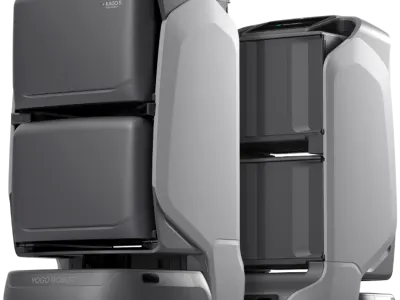
Yogo Robot Unveils KAGO 5 for Autonomous Hospitality Deliveries
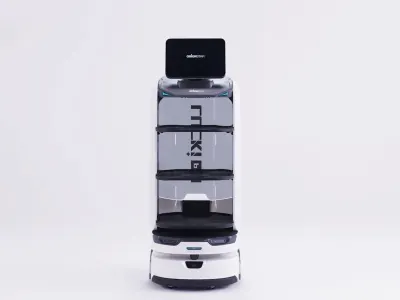
OrionStar’s LuckiBot Pro sharpens the case for service robots built for hotels, restaurants, and public-facing spaces
Learn More About This Robot
Discover detailed specifications, reviews, and comparisons for GreetingBot Nova.
View Robot Details →