Hanson Robotics’ Han remains a study in expressive humanoid teleoperation and social interaction
Robot Details
Han • Hanson RoboticsPublished
May 23, 2026
Reading Time
3 min read
Author
Origin Of Bots Editorial Team

Social robotics in focus
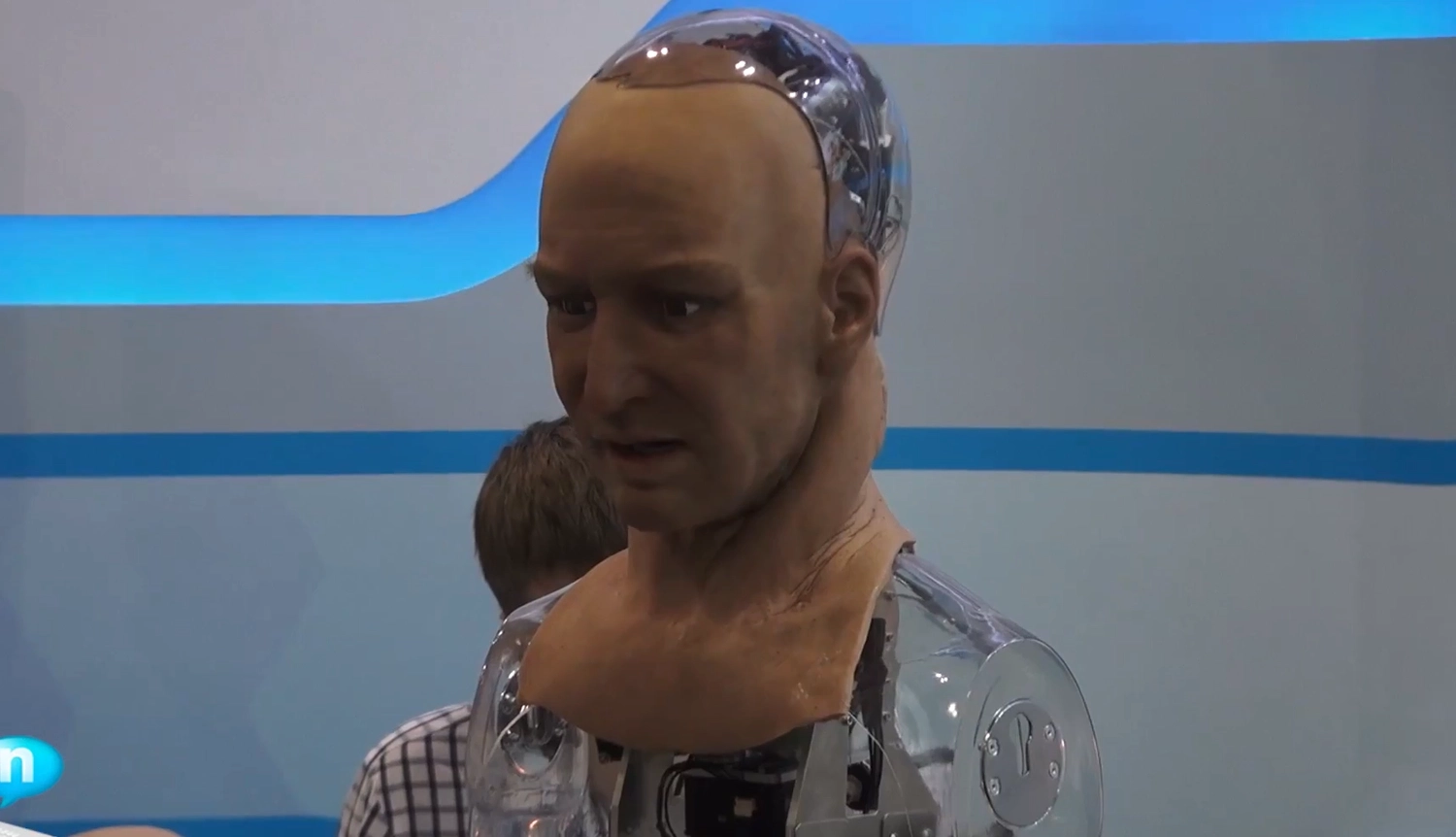
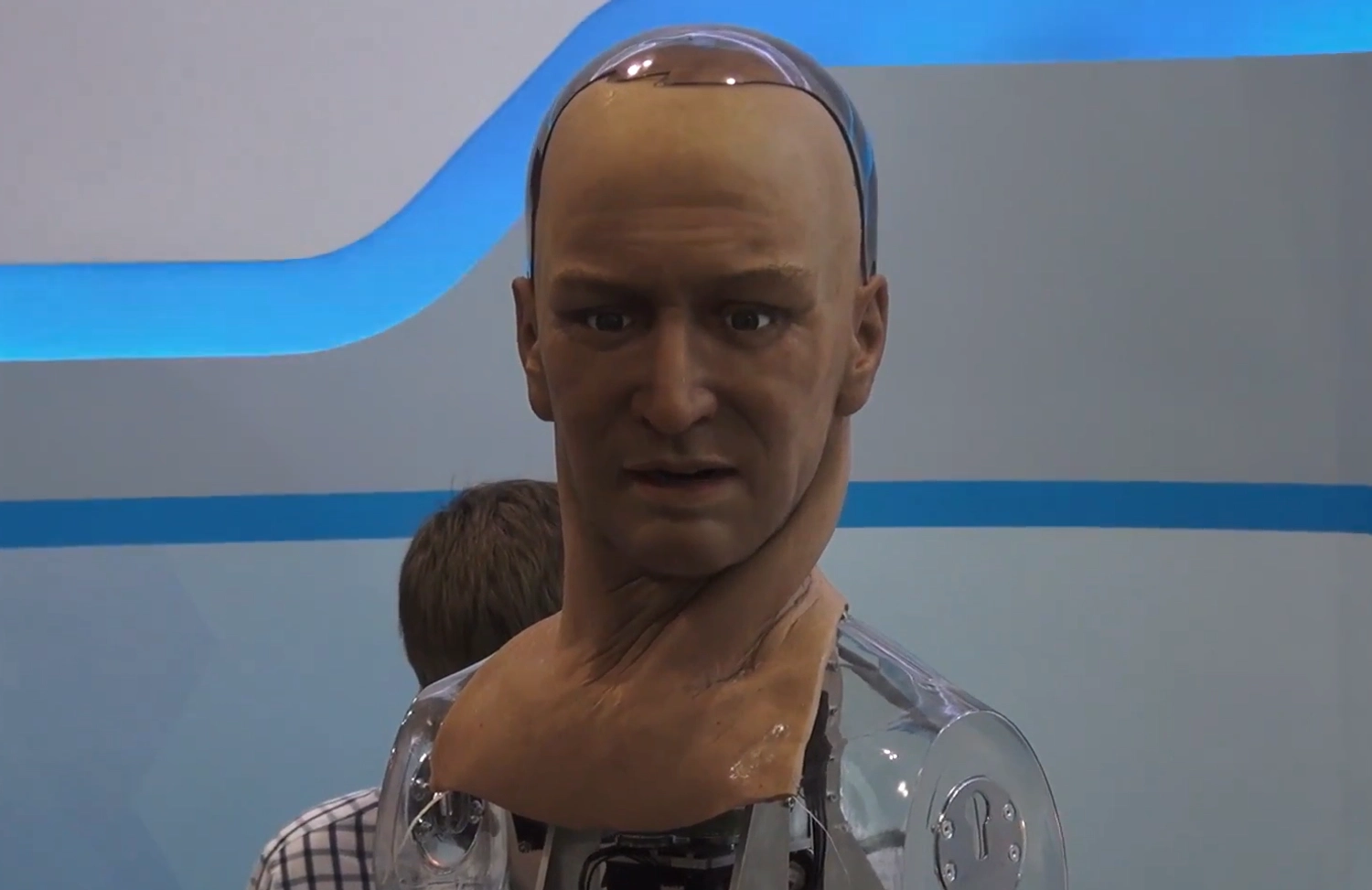
Humanoid robots are still trying to solve the hard part of robotics: making full-body motion, balance, and interaction look natural in human spaces. Hanson Robotics’ Han, first activated in 2015, was introduced as a social humanoid robot built around facial expression, basic conversation, and human face detection, with a transparent body that exposed its circuitry for public demonstrations.
Why Han stands out
Han matters because it showed an early, highly visible version of what teleoperation-first humanoids can be when the goal is not warehouse autonomy but human-facing interaction. Its reported ability to detect people, estimate gender and age, and mirror emotional expression placed emphasis on social cues rather than brute-force mobility, while the mounted head-and-torso format kept the system legible to audiences watching the machine work. Just as important, Han helped frame humanoid robotics as a product of performance, perception, and control, not only mechanical gait. Han’s importance is in how it made social motion look operational, not ornamental.
How it works
Input comes from multiple cameras in the eyes and chest, along with facial and emotion-detection sensing, which feed a proprietary AI conversation and recognition system. Processing turns that stream into expression choices and interaction responses, and output is delivered through the robot’s facial motors, mounted display-like head movements, and basic conversational behavior. In category terms, Han fits the humanoid loop of human motion input, AI model processing, and joint actuation with balance correction, even though the publicly described focus is more on social responsiveness than autonomous locomotion.
Assisted service demo
A realistic deployment for Han is a reception or public-demonstration setting where a human operator or scripted interaction layer can manage the flow while the robot handles greetings, recognition, and visible facial feedback. That use case suits humanoids because it rewards natural interaction more than speed or heavy payload handling, and it avoids the hardest problem for today’s systems: fully independent operation in messy, unpredictable environments. Han’s design makes the robot most credible where the human is still in the loop.
Reported build profile
Publicly available descriptions place Han at roughly 170 cm tall, with a relatively narrow 55 cm by 38 cm footprint, which helps explain why it reads more like a life-size social platform than a heavy industrial machine. The reported sensor suite, including multiple RGB cameras and facial-expression sensing, is what enables the robot to track people and respond in ways that feel directed at a nearby audience. Its proprietary AI conversation stack and force-limited, collision-aware safety approach point to a machine intended for close human contact rather than open-world autonomy.
Rivals Edge Check
| Robot | Key Advantage | Where Han Wins | Target Use |
|---|---|---|---|
| Walker S1 | Broader industrial-task positioning and bipedal mobility | More recognizable social expression and audience-facing interaction | Human-centric demos and service interaction |
| Kaleido 8.0 | Modular task flexibility for varied environments | Stronger facial presence and clearer social signaling | Assisted service and inspection support |
| KUAVO-MY | Teleoperation-oriented manipulation focus | Better public-facing emotional feedback and identity | Remote operation in shared spaces |
| Green | General-purpose humanoid framing | Earlier social-robot visibility and expressive character | Research, outreach, and demonstrations |
What the market signals
Han’s continued relevance points to a broader shift in humanoid robotics: systems are being judged less by abstract promises of autonomy and more by how well they can be supervised, guided, and understood by people. That favors robots with strong sensing, expressive motion, and clear operator-in-the-loop behavior, especially in environments where full autonomy remains expensive and fragile. For the category, Han is a reminder that the path to useful humanoids may run through controlled human collaboration before it reaches independence.
Explore Humanoids

Related Articles
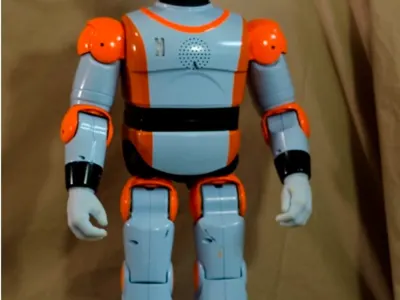
Hanson Robotics’ Zeno returns as a social humanoid built for interaction, therapy studies and classroom use

Hanson Robotics’ Professor Einstein shows how desktop humanoids are being packaged for education and interaction
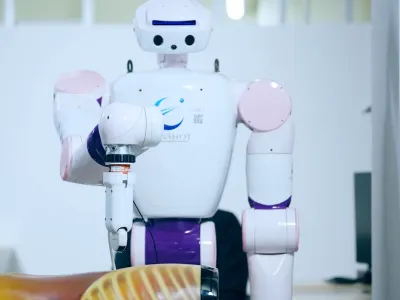
Waseda’s AIREC pushes humanoid care robots toward teleoperation-first nursing tasks

Hanson Robotics’ Grace remains a landmark humanoid nursing robot as healthcare adoption stays uneven
Related Comparisons
Compare Han with similar robots
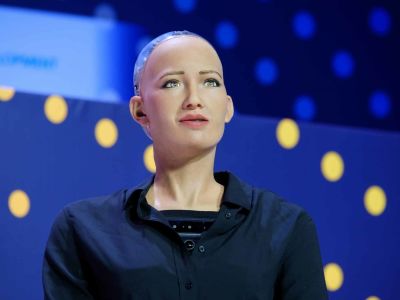

Sophia vs Aria - Robot Girlfriend
Head-to-head: Sophia vs Aria - Robot Girlfriend compared on bipedal balance, AI learning, and real-world deployment.

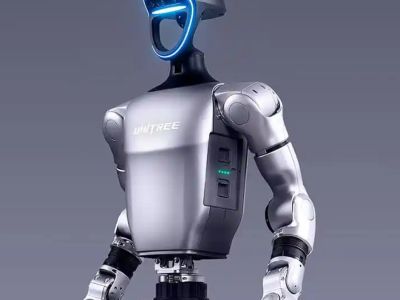
Optimus vs Unitree G1
Compare Optimus vs Unitree G1 for humanoid mobility, dexterity, autonomy, and payload capacity.
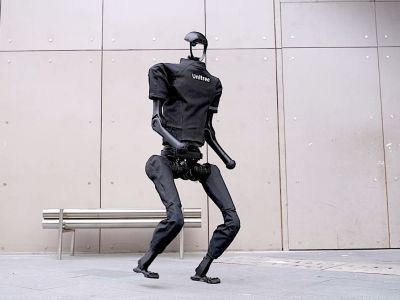
Unitree G1 vs Unitree H1
Head-to-head: Unitree G1 vs Unitree H1 compared on bipedal balance, AI learning, and real-world deployment.
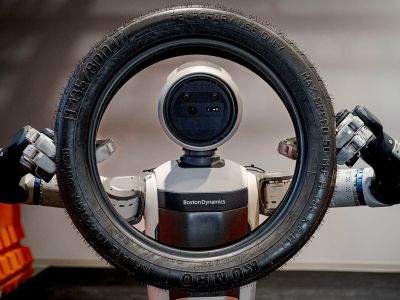
Optimus vs Atlas (Electric Atlas, 2025)
In-depth comparison of Optimus and Atlas (Electric Atlas, 2025), covering hardware capabilities, teleoperation, and enterprise readiness.
Learn More About This Robot
Discover detailed specifications, reviews, and comparisons for Han.
View Robot Details →