Feather Robotics
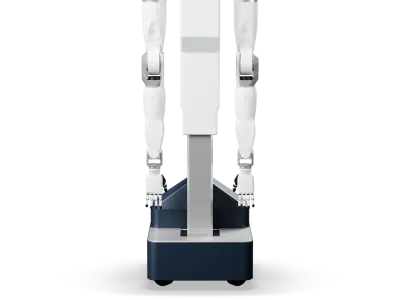
Feather Robotics is a California startup, founded in 2025 by Hoa Mai and Parsa Bakhtiari, that sells an open, modular humanoid platform to developers instead of trying to build a complete robot brain itself. It describes Feather as the "Android of robotics": affordable hardware with an open Python and ROS 2 software kit, on which customers can run their own AI or models from other companies. The robot has two arms on a wheeled, holonomic base for stability and efficiency, a reach of about one metre, a torso that rises from 1.2 to 1.8 metres and a battery that lasts about 10 hours. It costs $29,990, which the company says is a half to a third of the price of rivals. Mai previously co-founded Kind Humanoid, which was acquired by 1X, and Bakhtiari worked on the Tesla Model 3 production ramp. In September 2026 Feather announced a $7.6 million pre-seed round led by Gradient Ventures and said it had passed $1 million in revenue, with robots working in restaurants and laboratories.
💡Notable Achievement: Sells its open humanoid platform for $29,990 and reports more than $1 million in revenue, with robots cooking in Japanese restaurants.
What Does Feather Robotics Do?
Feather sells a $29,990 open, modular wheeled humanoid so developers can run their own robot AI on affordable hardware.
“The Android of robotics.”
Open Platform
Python and ROS 2 SDK; bring your own model.
Affordable
A half to a third of rival prices.
Practical Design
Holonomic base, 1 m reach, 10-hour battery.
What Can Feather Robotics Robots Actually Do?
Cross-portfolio operational capabilities, manipulation tasks, and environmental competencies
Developer humanoid platform.
Developer Platform
Modular bimanual robot with an open SDK.
Service Work
Deployed as a restaurant cook and lab cleaner.
Feather Robotics Robots
Showing 1 Humanoid Robots of 1 total model
Feather
Manufactured by Feather Robotics
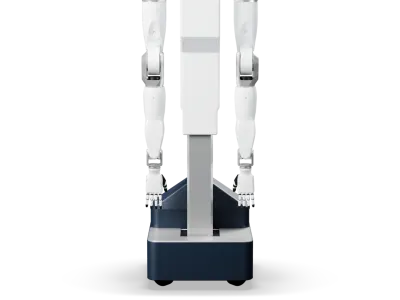
Feather is an open, modular, wheeled bimanual humanoid platform from US startup Feather Robotics, built for physical-AI companies, manufacturing integrators and researchers. Two 7-degree-of-freedom, 1 m arms sit on a torso that raises and lowers 600 mm, mounted on a holonomic base that moves in any direction at up to 1.3 m/s, with dual hot-swappable batteries for about 10 hours of work and an open Python and ROS 2 SDK. It ships now from $29,990 (launch price, regular $32,990), and its makers say it is already working as a cook in restaurants and cleaning science labs.
Feather Robotics Software & AI Ecosystem
Developer platforms, fleet management portals, autonomy intelligence, and enterprise integrations
Feather SDK
Open Python and ROS 2
Lets customers run their own or third-party models and use built-in teleoperation.
Feather Robotics Timeline & Milestones
Evolutionary history, landmark prototypes, major acquisitions, and commercial roadmap
Feather Robotics founded
Hoa Mai and Parsa Bakhtiari found Feather to build an open, modular humanoid platform for physical-AI developers.
Source: theaiinsider.tech
$7.6 million pre-seed round
Feather raises a $7.6 million pre-seed round led by Gradient Ventures, with Builder Capital, Geometry, Virgo VC and SEED Innovations participating.
Source: theaiinsider.tech
Feather Robotics Competitors by Category
Direct industry rivals grouped by specific robotics domain
What Makes Feather Robotics Different?
Editorial AnalysisOrigin of Bots objective strategic assessment, engineering moats, and commercial hurdles
Key Strengths & Moats
- ✓Low price with published specs.
- ✓Early revenue and paying customers.
- ✓Experienced founders.
Core Strategic Focus
Open wheeled humanoid for developers.
Road Ahead & Challenges
- •Pre-seed scale.
- •Platform play depends on third-party AI.
- •Wheeled design limits terrain.
Feather Robotics vs Key Competitors
Strategic capability matrix across platform categories, commercial readiness, and target markets
Category / Focus
- Feather
- Open wheeled humanoid
- RB-Y1
- Wheeled bimanual robot
- Reachy 2
- Open-source bimanual robot
- Galbot G1
- Wheeled dual-arm humanoid
Primary Use
- Feather
- Developer platform, food service
- RB-Y1
- Industrial automation, manufacturing
- Reachy 2
- Academic research
- Galbot G1
- Shelf restocking
Weight
- Feather
- 105 kg fully configured (published)
- RB-Y1
- 131 kg (Config A); 170 kg (Config M)
- Reachy 2
- 50 kg
- Galbot G1
- 92.5 kg
Release Year
- Feather
- 2026
- RB-Y1
- 2025
- Reachy 2
- 2024
- Galbot G1
- 2024
| Strategic Dimension | Feather | RB-Y1 | Reachy 2 | Galbot G1 |
|---|---|---|---|---|
| Category / Focus | Open wheeled humanoid | Wheeled bimanual robot | Open-source bimanual robot | Wheeled dual-arm humanoid |
| Primary Use | Developer platform, food service | Industrial automation, manufacturing | Academic research | Shelf restocking |
| Weight | 105 kg fully configured (published) | 131 kg (Config A); 170 kg (Config M) | 50 kg | 92.5 kg |
| Release Year | 2026 | 2025 | 2024 | 2024 |
Corporate Ecosystem & Ownership Structure
Parent company relationships, historical acquisitions, and global operating facilities
Gradient Ventures
Google's AI fund; led the $7.6 million pre-seed round.
Ownership & Acquisition History
Google's AI fund; led the $7.6 million pre-seed round.
Global Facilities & Operating Hubs
Feather Robotics Headquarters
HQCalifornia, United States
Frequently Asked Questions
8 AnswersVerified answers, company specifications, and deployment details about Feather Robotics
What is Feather Robotics?
Feather Robotics is a California startup founded in 2025 that sells an open, modular, wheeled humanoid platform for developers, integrators and researchers who want to run their own AI on capable hardware.
How much does the Feather robot cost?
Feather sells its robot for $29,990. The company says this is about half to a third of the price of comparable humanoid platforms, and each system ships with a software development kit.
What are the Feather robot's main specifications?
Feather has two arms on a holonomic wheeled base, about one metre of reach, a torso that adjusts from 1.2 to 1.8 metres, a published weight of 105 kg fully configured and up to 10 hours of battery life.
Why is Feather called the Android of robotics?
Like Android for phones, Feather wants to be a common open platform. Its Python and ROS 2 SDK lets customers run their own models or third-party robot AI rather than being locked into one vendor's brain.
Who founded Feather Robotics?
CEO Hoa Mai previously co-founded Kind Humanoid, which 1X acquired, and Parsa Bakhtiari worked on Tesla's Model 3 production ramp. They built the first Feather prototype in about two months.
Who invested in Feather Robotics?
Gradient Ventures, Google's AI-focused fund, led Feather's $7.6 million pre-seed round in September 2026. Builder Capital, Geometry, Virgo VC and London-listed SEED Innovations also took part.
Where are Feather robots used?
Feather says it has passed $1 million in revenue, with robots working as restaurant cooks in Japan and as laboratory cleaners. Its customers include a manufacturer with about $4 billion in annual revenue.
Why does Feather use wheels instead of legs?
A wheeled holonomic base is more stable and energy-efficient than legs, which helps Feather keep its price down and run for about 10 hours on a charge in indoor workplaces.
Verified Data & Editorial Assurance
Compiled from verified corporate filings, official Feather Robotics datasheets, and robotics engineering registries. Data is monitored and audited on an ongoing basis for accuracy. For commercial procurement or proprietary integrations, contact the manufacturer directly.