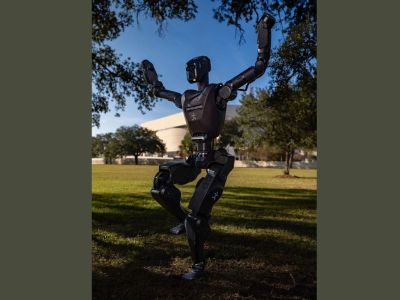
IHMC Robotics
IHMC Robotics is the robotics lab of the Florida Institute for Human and Machine Cognition (IHMC), a not-for-profit research institute with campuses in Pensacola and Ocala, Florida. The lab is known for humanoid control software and for designing its own humanoids: Nadia, built for human range of motion, and Alex, a fully electric, outdoor-capable humanoid funded by the Office of Naval Research and US Army research programs. Its work targets robots that can take over dangerous jobs such as disaster response and military missions, and it publishes much of its control software as open source.
💡Notable Achievement: IHMC's Alex won the US Army's xTechHumanoid competition in 2026, and its predecessor Nadia became known for playing ping pong and boxing.
What Does IHMC Robotics Do?
IHMC Robotics, the robotics lab of the Florida Institute for Human and Machine Cognition, designs full-size humanoids such as Nadia and the fully electric Alex to take over dangerous jobs like disaster response and military missions.
“A not-for-profit lab building humanoids for the jobs too dangerous for people.”
Whole-Body Control
Walking, balance and push-recovery software refined from the DARPA Robotics Challenge through Nadia and Alex.
Torque-Dense Actuators
Custom quasi-direct-drive actuators with cycloidal transmissions keep Alex light and fast.
Human in the Loop
VR and mixed-reality teleoperation let a person direct the robot as a teammate or avatar.
What Can IHMC Robotics Robots Actually Do?
Cross-portfolio operational capabilities, manipulation tasks, and environmental competencies
Full-size humanoids for dangerous work, from hybrid hydraulic Nadia to the fully electric, outdoor-capable Alex.
Outdoor Bipedal Walking
Alex walks across brick paving, gravel and sidewalks and is designed for stairs, ladders and debris.
Human-Like Range of Motion
Nadia has 29 joints and a wide range of motion for working in buildings with stairs, ladders and debris.
VR Teleoperation
Operators drive the robots through virtual reality; Nadia became known for teleoperated boxing and ping pong.
Defense & Disaster Response
Alex won the US Army xTechHumanoid competition in 2026 with ballistic protection and hybrid AI-plus-human autonomy.
IHMC Robotics Robots
Showing 2 Humanoid Robots of 2 total models
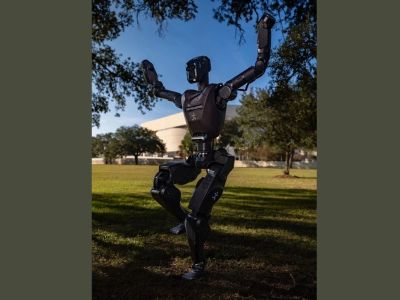
Alex
By: IHMC Robotics
Launched: 2025
Alex is a fully electric, full-size bipedal humanoid research robot built by IHMC Robotics at the Florida Institute for Human and Machine Cognition and unveiled in November 2025 as the successor to Nadia. Funded by the Office of Naval Research with the Army Research Laboratory and Army Data Analysis Center, it is designed to leave the lab: onboard computation, perception and power let it walk outdoors and in urban buildings with stairs, ladders and debris. Alex has 29 joints driven by custom, highly backdrivable quasi-direct-drive actuators with cycloidal transmissions, and weighs about 85 kg with its battery (Nadia weighed about 100 kg). IHMC targets dangerous work such as disaster response and military missions, with Alex acting as a human teammate or avatar. In 2026 Alex won the US Army's xTechHumanoid competition. Note: this is IHMC's legged Alex, not the upper-body robot of the same name from spin-off Boardwalk Robotics.
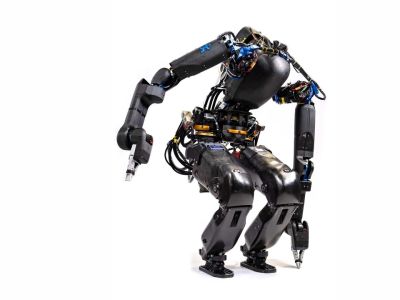
Nadia
By: IHMC Robotics
Launched: 2022
Nadia is a full-size research humanoid built by IHMC Robotics at the Florida Institute for Human and Machine Cognition with collaborators Boardwalk Robotics, Morfey Ltd and H4 Labs. Named after gymnast Nadia Comăneci, it was designed for a human-like range of motion so that it can work in buildings with stairs, ladders and debris, for jobs such as firefighting, disaster response and explosive ordnance disposal. It has 29 joints driven by a mix of Moog hydraulic Integrated Smart Actuators in the legs, custom electric actuators in the pelvis and electric arms (later replaced by an IHMC-designed arm), uses composite materials for a high power-to-weight ratio, and weighs about 100 kg. Nadia became known for push recovery, VR-teleoperated boxing and autonomous ping-pong. It is tethered to off-board power and is now IHMC's legacy platform, succeeded in 2025 by the fully electric Alex.
IHMC Robotics Software & AI Ecosystem
Developer platforms, fleet management portals, autonomy intelligence, and enterprise integrations
IHMC Open Robotics Software
Walking & whole-body control
IHMC publishes much of its humanoid walking and control software as open source, reused across its own robots and other labs' platforms.
VR & Mixed-Reality Interface
Human-in-the-loop control
Operators command the humanoids through virtual and mixed reality, taking over manipulation tasks the robot cannot yet do alone.
Affordance-Template Behaviors
Runtime-editable behaviors
Researchers author and edit loco-manipulation behaviors at runtime, demonstrated on Alex and the Unitree H1-2.
IHMC Robotics Timeline & Milestones
Evolutionary history, landmark prototypes, major acquisitions, and commercial roadmap
IHMC is founded
Kenneth Ford, Alberto Cañas and Bruce Dunn found the Institute for Human and Machine Cognition, a not-for-profit research institute created at the University of West Florida.
Source: en.wikipedia.org
Downtown Pensacola campus opens
IHMC opens its main campus in downtown Pensacola, Florida, which remains the home of its robotics laboratory.
Source: ihmc.us
Ocala campus opens
IHMC opens a second research campus in Ocala, Florida, expanding the institute beyond Pensacola.
Source: en.wikipedia.org
Second place at the DARPA Robotics Challenge
The IHMC team takes second place in the DARPA Robotics Challenge Finals with an Atlas robot, recovering from falls on the first day that left the robot with major structural damage.
Source: en.wikipedia.org
Nadia humanoid revealed as a working robot
After 16 experimental plastic versions since 2019, IHMC shows Nadia, a gymnast-inspired humanoid with hybrid electric and hydraulic actuators funded by the Office of Naval Research.
Source: spectrum.ieee.org
Alex fully electric humanoid introduced
IHMC introduces Alex, a fully electric humanoid funded by the Office of Naval Research and built to work outside the lab, as the successor to Nadia.
Source: ihmc.us
Alex walks outdoors on campus
IHMC Robotics releases footage of Alex walking outdoors across brick paving, gravel and sidewalks on its Pensacola campus.
Source: youtube.com
Runtime-editable behavior system published
IHMC researchers publish a loco-manipulation behavior system that can be edited at runtime, demonstrated on Alex and the Unitree H1-2 including fast door traversal under disturbance.
Source: arxiv.org
Alex wins the US Army xTechHumanoid competition
Alex wins the US Army's xTechHumanoid competition, with impact-resilient actuators, ballistic protection plating and a hybrid autonomy system that combines AI with human control.
Source: thedefensepost.com
IHMC Robotics Competitors by Category
Direct industry rivals grouped by specific robotics domain
What Makes IHMC Robotics Different?
Editorial AnalysisOrigin of Bots objective strategic assessment, engineering moats, and commercial hurdles
Key Strengths & Moats
- ✓Decades of walking and balance control research, including second place at the 2015 DARPA Robotics Challenge Finals.
- ✓Alex won the US Army xTechHumanoid competition in 2026 with Office of Naval Research and Army backing.
- ✓Publishes much of its control software as open source.
Core Strategic Focus
Taking Alex from the lab to outdoor and field testing for defense and disaster-response missions.
Road Ahead & Challenges
- •Research platforms that are not sold commercially.
- •Funding depends on government research programs.
- •Little public detail on pricing, availability or commercial licensing.
IHMC Robotics vs Key Competitors
Strategic capability matrix across platform categories, commercial readiness, and target markets
Category / Focus
- Alex
- Electric research humanoid
- Atlas (2025)
- Electric humanoid
- Apollo
- Industrial humanoid
- TALOS
- Research humanoid
- Unitree H1
- Research humanoid
Primary Use
- Alex
- Disaster response, defense research
- Atlas (2025)
- Industrial work
- Apollo
- Logistics and manufacturing
- TALOS
- Research and force-controlled manipulation
- Unitree H1
- Low-cost research platform
Weight
- Alex
- 85 kg
- Atlas (2025)
- 90 kg
- Apollo
- 72.6 kg
- TALOS
- 95 kg
- Unitree H1
- 47 kg
Battery Runtime
- Alex
- 2 h
- Atlas (2025)
- 4 h
- Apollo
- 4 h
- TALOS
- 1.5 h
- Unitree H1
- 2 h
Release Year
- Alex
- 2025
- Atlas (2025)
- 2025
- Apollo
- 2023
- TALOS
- 2017
- Unitree H1
- 2023
| Strategic Dimension | Alex | Atlas (2025) | Apollo | TALOS | Unitree H1 |
|---|---|---|---|---|---|
| Category / Focus | Electric research humanoid | Electric humanoid | Industrial humanoid | Research humanoid | Research humanoid |
| Primary Use | Disaster response, defense research | Industrial work | Logistics and manufacturing | Research and force-controlled manipulation | Low-cost research platform |
| Weight | 85 kg | 90 kg | 72.6 kg | 95 kg | 47 kg |
| Battery Runtime | 2 h | 4 h | 4 h | 1.5 h | 2 h |
| Release Year | 2025 | 2025 | 2023 | 2017 | 2023 |
Corporate Ecosystem & Ownership Structure
Parent company relationships, historical acquisitions, and global operating facilities
State University System of Florida
IHMC is a not-for-profit research institute of the Florida University System, created at the University of West Florida.
Ownership & Acquisition History
IHMC is a not-for-profit research institute of the Florida University System, created at the University of West Florida.
Funds Alex and funded Nadia.
Co-funds Alex alongside the Army Data Analysis Center.
Commercial partner that built Nadia with IHMC, Morfey Ltd and H4 Labs.
Global Facilities & Operating Hubs
IHMC Headquarters
HQ40 S Alcaniz Street, Pensacola, Florida, United States
IHMC Ocala Campus
R&DOcala, Florida, United States
Branch research campus opened in January 2010.
Frequently Asked Questions
10 AnswersVerified answers, company specifications, and deployment details about IHMC Robotics
What is IHMC Robotics?
IHMC Robotics is the robotics laboratory of the Florida Institute for Human and Machine Cognition, a not-for-profit research institute in Pensacola, Florida. It designs full-scale humanoid robots and the control software that makes them walk and balance.
Who founded IHMC?
Kenneth Ford, Alberto Cañas and Bruce Dunn founded the Institute for Human and Machine Cognition in 1990. Kenneth Ford remains its director, and the institute has campuses in Pensacola and Ocala, Florida.
What is Alex by IHMC?
Alex is IHMC's fully electric, full-size bipedal humanoid, introduced on November 19, 2025. It has 29 joints driven by custom quasi-direct-drive actuators and carries its own computers, sensors and power so it can walk outdoors.
What is Nadia, the IHMC humanoid?
Nadia is IHMC's earlier humanoid, named after gymnast Nadia Comăneci and built for a human-like range of motion. It uses hybrid electric and hydraulic actuators, weighs about 100 kg, and became known for VR-teleoperated boxing and playing ping pong.
Who funds IHMC's humanoid robots?
Alex is funded by the Office of Naval Research, with the Army Research Laboratory and the Army Data Analysis Center. IHMC's robotics work has also been supported by NASA Johnson Space Center and TARDEC.
How did IHMC do in the DARPA Robotics Challenge?
The IHMC team took second place in the DARPA Robotics Challenge Finals on June 8, 2015, using an Atlas robot. It had also won the Virtual Robotics Challenge in 2012 and placed second in the December 2012 Trials.
What did Alex win in 2026?
Alex won the US Army's xTechHumanoid competition, reported on October 1, 2026. The robot weighs 85 kg with its battery and offers impact-resilient actuators, ballistic protection plating and hybrid AI-plus-human autonomy.
Is IHMC's Alex for sale?
No. Alex is a research platform and IHMC does not sell it or publish a price. Organizations interested in collaborating can contact IHMC's robotics team through the lab's website.
What jobs is IHMC building humanoids for?
IHMC targets dangerous work such as disaster response, firefighting and military missions, where a humanoid can act as a human teammate or avatar. Alex is designed to climb stairs and work in urban buildings and outdoor terrain.
Is IHMC's Alex the same as Boardwalk Robotics' Alex?
No. IHMC's Alex is a legged, fully electric humanoid. Boardwalk Robotics, a commercial partner on IHMC's Nadia project, has its own robot also named Alex, which is an upper-body humanoid.
Verified Data & Editorial Assurance
Compiled from verified corporate filings, official IHMC Robotics datasheets, and robotics engineering registries. Data is monitored and audited on an ongoing basis for accuracy. For commercial procurement or proprietary integrations, contact the manufacturer directly.