Laser Robotics
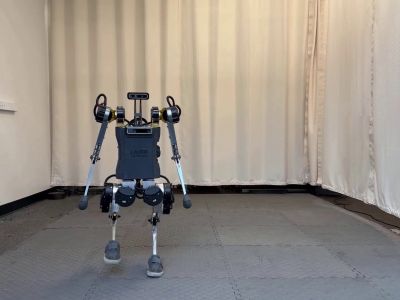
LASER Robotics is a Los Angeles robotics company spun off from the Dynamics Robotics and Control Laboratory (DRCL) at the University of Southern California, led by Professor Quan Nguyen. It commercialises HECTOR (Humanoid for Enhanced ConTrol and Open-source Research), a small, dynamic humanoid research platform designed to push the limits of agile legged motion. HECTOR V2 is a roughly 15 kg mini-humanoid that can switch between biped and full humanoid configurations, with five-degree-of-freedom legs, four-degree-of-freedom arms and a topology-optimised frame for rigidity. Its simulation and control software, including force-and-moment-based model predictive control, is open source, so researchers can reproduce and extend its behaviours. HECTOR has been demonstrated at IROS 2023, the Humanoids 2023 conference in Austin and ICRA 2024 in Yokohama, and in November 2024 completed a six-hour continuous test in the Mojave Desert. LASER Robotics delivered its first HECTOR robot to Georgia Tech, its first sale to another research institution.
💡Notable Achievement: LASER Robotics is a USC spin-off; HECTOR V2 was shown at ICRA 2024 and completed a six-hour Mojave Desert test in November 2024.
What Does Laser Robotics Do?
LASER Robotics is a Los Angeles USC spin-off that sells HECTOR, an open-source mini-humanoid for dynamic locomotion research.
“An open mini-humanoid testbed for dynamic motion research.”
Open Source
Simulation and control software is published for researchers.
HECTOR V2
About 15 kg, five-degree-of-freedom legs and four-degree-of-freedom arms.
Field Tested
Six hours continuously in the Mojave Desert in 2024.
What Can Laser Robotics Robots Actually Do?
Cross-portfolio operational capabilities, manipulation tasks, and environmental competencies
Dynamic bipedal research platform.
Dynamic Locomotion
Testbed for agile legged control.
Modular Configuration
Switches between biped and humanoid topologies.
Laser Robotics Robots
Showing 1 Humanoid Robots of 1 total model
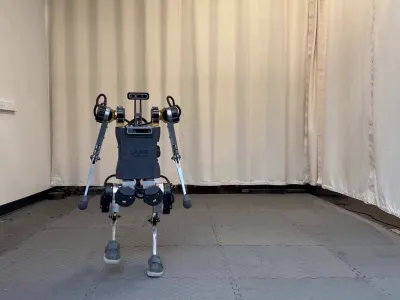
HECTOR V2
Manufactured by Laser Robotics
HECTOR V2 (Humanoid for Enhanced ConTrol and Open-source Research) is a compact, dynamic mini-humanoid testbed developed by Laser Robotics to push the limits of extreme dynamic locomotion and open-source robotics research. Standing 0.85 meters (85 cm) tall and weighing just 15 kg, HECTOR V2 features 20 actuated degrees of freedom (5 DoF per leg, 4 DoF per arm, plus actuated ankle joints). Built using topology-optimized CNC aluminum and engineering plastics, the robot achieves exceptional structural rigidity and ease of servicing. Validated under extreme real-world stress tests (including sprints across the rugged Mojave Desert), HECTOR V2 provides fully open-sourced simulation software, reinforcement learning controllers, and a modular architecture that easily switches between biped and humanoid configurations.
Laser Robotics Software & AI Ecosystem
Developer platforms, fleet management portals, autonomy intelligence, and enterprise integrations
HECTOR Simulation
Simulation and Control
Open-source simulation and control software for HECTOR.
Laser Robotics Timeline & Milestones
Evolutionary history, landmark prototypes, major acquisitions, and commercial roadmap
HECTOR presented at IROS 2023
HECTOR's bipedal experiments using force-and-moment-based model predictive control are presented at IROS 2023.
Source: laser-robotics.com
HECTOR loco-manipulation research published
USC researchers publish dynamic loco-manipulation results on the open-source HECTOR humanoid.
Source: arxiv.org
First HECTOR delivered to Georgia Tech
LASER Robotics delivers its first HECTOR robot to Georgia Tech, its first sale to another institution.
Source: laser-robotics.com
HECTOR V2 shown at ICRA 2024
LASER Robotics demonstrates HECTOR V2 at the ICRA 2024 robotics conference in Yokohama, Japan.
Source: laser-robotics.com
Six-hour Mojave Desert test
HECTOR V2 completes a six-hour continuous test in the Mojave Desert without protective covers.
Source: laser-robotics.com
Laser Robotics Competitors by Category
Direct industry rivals grouped by specific robotics domain
What Makes Laser Robotics Different?
Editorial AnalysisOrigin of Bots objective strategic assessment, engineering moats, and commercial hurdles
Key Strengths & Moats
- ✓Open-source approach.
- ✓Delivered to Georgia Tech as first outside customer.
Core Strategic Focus
Serving research labs.
Road Ahead & Challenges
- •Small research market.
- •Limited public company information.
Laser Robotics vs Key Competitors
Strategic capability matrix across platform categories, commercial readiness, and target markets
Robot Height & Weight
- HECTOR V2
- 0.85 m / 15 kg
- Booster T1 (Noetix)
- 1.10 m / 18 kg
- BRUCE (Westwood)
- 1.00 m / 16 kg
- Unitree G1
- 1.32 m / 35 kg
Primary Use
- HECTOR V2
- Reinforcement-learning research
- Booster T1 (Noetix)
- Research labs, universities
- BRUCE (Westwood)
- Locomotion research, dynamic control
- Unitree G1
- High-speed bipedal running, 360° ground recovery
Leg Degrees of Freedom
- HECTOR V2
- 5 DoF per leg
- Booster T1 (Noetix)
- 5 DoF per leg
- BRUCE (Westwood)
- 5 DoF per leg
- Unitree G1
- 6 DoF per leg
Actuator Architecture
- HECTOR V2
- Quasi-Direct Drive (QDD)
- Booster T1 (Noetix)
- QDD Planetary
- BRUCE (Westwood)
- QDD BEAR Actuators
- Unitree G1
- Planetary High-Torque
| Strategic Dimension | HECTOR V2 | Booster T1 (Noetix) | BRUCE (Westwood) | Unitree G1 |
|---|---|---|---|---|
| Robot Height & Weight | 0.85 m / 15 kg | 1.10 m / 18 kg | 1.00 m / 16 kg | 1.32 m / 35 kg |
| Primary Use | Reinforcement-learning research | Research labs, universities | Locomotion research, dynamic control | High-speed bipedal running, 360° ground recovery |
| Leg Degrees of Freedom | 5 DoF per leg | 5 DoF per leg | 5 DoF per leg | 6 DoF per leg |
| Actuator Architecture | Quasi-Direct Drive (QDD) | QDD Planetary | QDD BEAR Actuators | Planetary High-Torque |
Corporate Ecosystem & Ownership Structure
Parent company relationships, historical acquisitions, and global operating facilities
USC DRCL
Spun out of the Dynamics Robotics and Control Laboratory at USC.
Ownership & Acquisition History
Spun out of the Dynamics Robotics and Control Laboratory at USC.
Global Facilities & Operating Hubs
Laser Robotics Headquarters
HQLos Angeles, California, United States
Frequently Asked Questions
8 AnswersVerified answers, company specifications, and deployment details about Laser Robotics
What is LASER Robotics?
LASER Robotics is a Los Angeles company spun off from USC's Dynamics Robotics and Control Laboratory that builds the HECTOR open-source humanoid research robot.
What is the HECTOR V2 robot?
HECTOR V2 is a small, dynamic humanoid of about 15 kg that can switch between biped and humanoid configurations, with five-degree-of-freedom legs and four-degree-of-freedom arms.
Is HECTOR open source?
Yes. HECTOR's simulation and control software, including its force-and-moment-based model predictive control, is published openly so researchers can reproduce and extend its work.
Who is behind LASER Robotics?
LASER Robotics grew out of the Dynamics Robotics and Control Laboratory at the University of Southern California, led by Professor Quan Nguyen.
Who uses HECTOR robots?
LASER Robotics delivered its first HECTOR robot to Georgia Tech, and the platform is aimed at university and research labs studying dynamic humanoid control.
How much does HECTOR V2 cost?
LASER Robotics does not publish a list price for HECTOR V2. Research institutions need to contact the company for a quote.
What does HECTOR stand for?
HECTOR stands for Humanoid for Enhanced ConTrol and Open-source Research, reflecting its role as an open platform for dynamic humanoid control research.
Has HECTOR been tested outdoors?
Yes. In November 2024 HECTOR V2 completed a six-hour continuous test in the Mojave Desert without protective covers, showing its durability in harsh conditions.
Verified Data & Editorial Assurance
Compiled from verified corporate filings, official Laser Robotics datasheets, and robotics engineering registries. Information has been verified against official manufacturer documentation. For commercial procurement or proprietary integrations, contact the manufacturer directly.