Westwood Robotics
Westwood Robotics develops highly agile dynamic-walking research humanoids and proprietary quasi-direct-drive (QDD) robotic actuators spun out of UCLA's RoMeLa (Robotics & Mechanisms Laboratory). Its flagship research humanoid, BRUCE (Bipedal Robot Unit with Compliance Enhanced), and the Themis humanoid series utilize custom BEAR modular actuators to achieve dynamic running, jumping, and compliant push recovery on rugged terrain.
💡Notable Achievement: Westwood Robotics engineered BRUCE, one of the world's most agile compact research humanoids, utilizing proprietary BEAR (Backdrivable Efficient Actuator for Robotics) motors developed in partnership with Dr. Dennis Hong's RoMeLa lab at UCLA.
What Does Westwood Robotics Do?
Westwood Robotics is unlocking biological agility in humanoid robots through cutting-edge quasi-direct-drive actuation. Spun out of UCLA's world-famous RoMeLa lab, the company bridges academic breakthrough with commercial-grade robotics hardware, building motors and humanoid platforms that can take a punch, absorb sudden impacts, and sprint across uneven terrain. Its flagship humanoid BRUCE provides the global research community with an affordable, robust dynamic testbed. By pairing open-source control architectures with proprietary BEAR actuators, Westwood Robotics gives roboticists the exact physical tools needed to master the hardest challenge in robotics: fast, robust, biological-grade bipedal locomotion.
“Westwood Robotics builds exceptionally agile, compliant bipedal research humanoids and high-performance quasi-direct-drive actuators for dynamic robotics.”
BEAR Quasi-Direct Actuation
Engineers proprietary backdrivable actuators that deliver transparent force control and absorb shock impacts without gearbox failure.
Biological Locomotion Agility
Develops bipedal kinematic architectures capable of dynamic running, jumping, and real-time push recovery.
Open Research Collaboration
Provides researchers with open hardware access, ROS 2 packages, and direct firmware configurability to accelerate scientific discovery.
What Can Westwood Robotics Robots Actually Do?
Cross-portfolio operational capabilities, manipulation tasks, and environmental competencies
Westwood Robotics provides research humanoid bipedal robots, modular robotic actuators, and sensor interface electronics.
High-Speed Dynamic Bipedal Running
Capable of dynamic running, reactive balance recovery, and dynamic jump landings with compliant ankles.
Proprietary BEAR Actuators
Integrated quasi-direct drive motor modules with embedded controllers, absolute encoders, and CAN/EtherCAT buses.
Sim2Real RL Research Platform
Direct hardware interface for validating simulation-trained reinforcement learning gait policies on real hardware.
Westwood Robotics Robots
Showing 2 Humanoid Robots of 2 total models
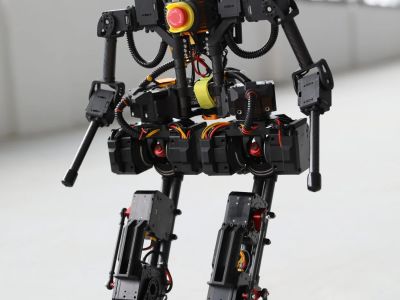
Bruce
By: Westwood Robotics
Launched: 2022
Bruce is a compact, kid-sized humanoid robot designed as an open-platform for advanced robotics research and education. Standing at 70cm tall and weighing just 4.8kg, it features a lightweight carbon fiber composite structure for durability and agility. With 16 degrees of freedom, including 5 DOF per leg and 3 DOF per arm, Bruce excels in dynamic bipedal locomotion such as walking, running, jumping, and even advanced maneuvers like single-leg hopping or yaw rotations. Powered by proprietary Koala BEAR proprioceptive actuators with liquid cooling, it delivers explosive power and real-time compliance for unstructured environments. Equipped with a high-frequency 6-DOF IMU, 4 contact sensors, and a 6TOPS onboard computer supporting deep learning frameworks, Bruce enables autonomous navigation, whole-body control, and sensor-based adaptation. Its modular, repairable design and open-source software/hardware foster rapid prototyping in locomotion, perception, and human-robot interaction, making it ideal for testing algorithms in real-world scenarios.
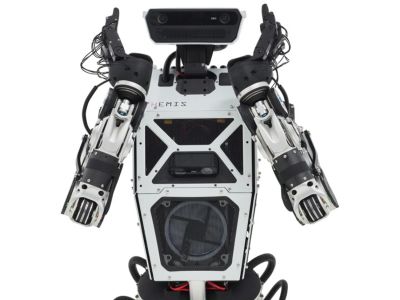
Themis V2
By: Westwood Robotics
Launched: 2024
Themis V2 is a full-sized humanoid robot engineered for industrial, service, and research applications, standing 1.6 meters tall with 40 degrees of freedom for human-like agility. It features proprietary BEAR actuators that deliver compliant, back-drivable motion, enabling smooth walking at human speeds and running up to 10 km/h across uneven terrain. Equipped with 6-DoF arms and 7-DoF dexterous hands supporting 15 kg payloads, it excels in two-handed manipulation tasks like logistics handling, light assembly, and precise inspection. Onboard 200 TOPS AI processing powers real-time perception via stereo cameras and high-frequency IMU, facilitating autonomous navigation, balance recovery, and adaptive grasping without cloud dependency. Hot-swappable batteries ensure continuous operation, while ROS-based Humanoid OS integrates LLMs for intelligent task execution and safe human collaboration, positioning Themis V2 as a versatile platform for dynamic real-world deployment.
Westwood RoboticsSoftware & AI Ecosystem
Developer platforms, fleet management portals, autonomy intelligence, and enterprise integrations
Software Feature
What Makes Westwood Robotics Different?
Editorial AnalysisOrigin of Bots objective strategic assessment, engineering moats, and commercial hurdles
Key Strengths & Moats
- ✓Exceptional actuator engineering with high backdrivability and impact resilience
- ✓Direct scientific heritage from Dr. Dennis Hong and UCLA RoMeLa
- ✓High agility-to-cost ratio for academic robotics researchers
Core Strategic Focus
Expanding BEAR actuator manufacturing volume and releasing standardized BRUCE SDK packages.
Road Ahead & Challenges
- •Niche focus on academic research rather than immediate high-volume commercial automation
- •Compact company size with limited international support infrastructure
Westwood Robotics vs Key Competitors
Strategic capability matrix across platform categories, commercial readiness, and target markets
| Strategic Dimension | BRUCE (Westwood) | Unitree G1 | Robotis OP3 | Berkeley Humanoid Lite |
|---|---|---|---|---|
| Actuator Type | BEAR Quasi-Direct Drive | Planetary Actuators | Dynamixel Servos | Quasi-Direct Drive |
| Dynamic Locomotion | High Dynamic (Running/Jumping) | Dynamic Walking/Jogging | Kinematic Step Walking | Dynamic Walking |
| Primary Audience | Academic R&D Labs | Commercial & Developers | RoboCup Education | Open Research Community |
| Price Bracket | $35k–$50k USD | $16k–$25k USD | $12k–$15k USD | DIY Open-Source (~$10k) |
Corporate Ecosystem & Ownership Structure
Parent company relationships, historical acquisitions, and global operating facilities
Articles & Industry News
Showing 2 recent articles and news updates about Westwood Robotics
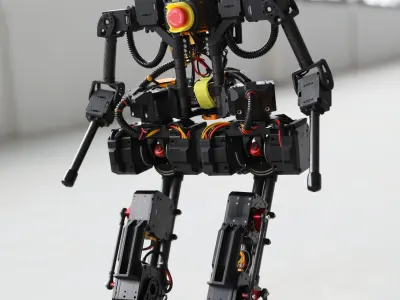
Westwood Robotics Spotlights Bruce at Robotics Summit
News about Bruce
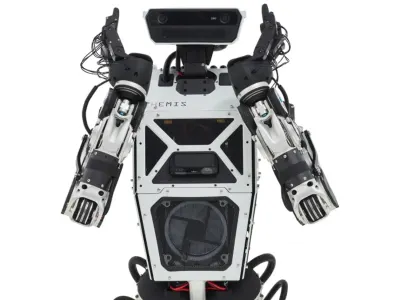
Westwood's Themis V2 Redefines Humanoid Work: Walking, Manipulating, and Learning Simultaneously
News about Themis V2
Frequently Asked Questions
10 AnswersVerified answers, company specifications, and deployment details about Westwood Robotics
What is the unit purchase price or RaaS lease pricing model for BRUCE and BEAR actuators?
Westwood Robotics sells its humanoid platforms directly to research institutions. A complete BRUCE bipedal research humanoid costs approximately $35,000 to $50,000 USD depending on configuration, while individual BEAR modular quasi-direct-drive actuators retail between $800 and $2,200 USD per unit.
What is the commercial timeline and availability status of BRUCE?
Originated from UCLA RoMeLa research in 2020, BRUCE was refined by Westwood Robotics and unveiled publicly at IEEE ICRA 2024. The platform and its BEAR modular actuators are currently in low-rate production and shipping to university laboratories worldwide.
Where are Westwood Robotics platforms deployed in research labs?
BRUCE and BEAR actuator modules are deployed in academic research laboratories across the US, Japan, and South Korea, including UCLA RoMeLa, UC Berkeley, Seoul National University, and teams competing in the international RoboCup Humanoid AdultSize/KidSize leagues.
What target research workflows is BRUCE designed for?
BRUCE is built as an open benchmark platform for testing dynamic bipedal running controllers, Sim2Real reinforcement learning algorithms, extreme push-recovery balance stabilization, and high-impact agile footfalls.
What mechanical drivetrain and actuator architecture powers BRUCE?
BRUCE is driven by 16 to 20 custom BEAR brushless quasi-direct-drive actuators featuring low gear ratios (typically 1:6 to 1:10), ultra-low rotor inertia, and embedded high-bandwidth motor controllers delivering instantaneous force transparency and backdrivability.
What end-effector dexterity and sensing does BRUCE feature?
As a dynamic locomotion specialist, BRUCE features point feet or compliant rubber footpads equipped with multi-axis force/torque contact sensors, while its upper arms are configured with modular end-points for balance counterweights or basic grippers.
What is BRUCE's continuous battery runtime, capacity, and charging mechanism?
BRUCE is powered by an onboard 48V 350Wh high-discharge lithium-polymer battery pack mounted in its torso, providing 45 minutes to 1.5 hours of active running and hopping. Batteries are easily swappable in the laboratory.
What is BRUCE's operational autonomy level versus teleoperation dependency?
BRUCE operates with full real-time onboard autonomy for dynamic balance and gait generation. High-level velocity commands are sent via wireless gamepad or algorithmic state-machines from host computers running ROS 2.
What sensory perception suite and AI models govern BRUCE?
BRUCE utilizes high-rate IMUs (running at 1 kHz), absolute joint encoders on every actuator, and torso-mounted depth cameras (Intel RealSense). Its control stack runs reinforcement learning gait policies and model predictive control (MPC).
What safety mechanisms and physical compliance protect the robot and operators?
Due to its quasi-direct-drive actuators, BRUCE possesses inherent mechanical compliance. The motors absorb drop impacts without gear tooth shearing, and the software maintains strict current and temperature safety limits.
Verified Data & Editorial Assurance
Compiled from verified corporate filings, official Westwood Robotics datasheets, and robotics engineering registries. Information has been verified against official manufacturer documentation. For commercial procurement or proprietary integrations, contact the manufacturer directly.