
Menlo Research
Menlo Research is an applied research lab in embodied AI that builds Asimov, an open-source humanoid robot. The company lists its headquarters at 117 University Avenue in Palo Alto, California, and has teams in Singapore and Vietnam. Menlo says it started building its own humanoid after a robot it had bought was held up for weeks waiting for replacement parts, and it developed Asimov step by step, starting with the legs before adding a torso and full body. Asimov 1 is about 1.2 metres tall, weighs about 35 kg and has more than 25 actuated degrees of freedom, with parallel ankle mechanisms and passive toes. Many of its parts are 3D printed, and Menlo publishes the code, documentation and full bill of materials on GitHub so builders can source components and print replacement parts themselves. In May 2026 Menlo offered Asimov as an unassembled DIY kit for about US$15,000, aimed at hobbyists, researchers and robotics developers. Asimov 2 is in development.
💡Notable Achievement: Menlo offered Asimov as an unassembled kit for about US$15,000 in May 2026, publishing its code, documentation and bill of materials on GitHub.
What Does Menlo Research Do?
Menlo Research is an embodied AI lab that builds Asimov, an open-source humanoid sold as a DIY kit.
“An open humanoid anyone can build.”
Open Source
Code, documentation and BOM on GitHub.
Asimov 1
1.2 metres, 35 kg, more than 25 degrees of freedom.
DIY Kit
About US$15,000 unassembled.
What Can Menlo Research Robots Actually Do?
Cross-portfolio operational capabilities, manipulation tasks, and environmental competencies
Bipedal research and development.
DIY Assembly
Ships unassembled for builders.
Bipedal Walking
Bipedal humanoid platform.
Menlo Research Robots
Showing 1 Humanoid Robots of 1 total model
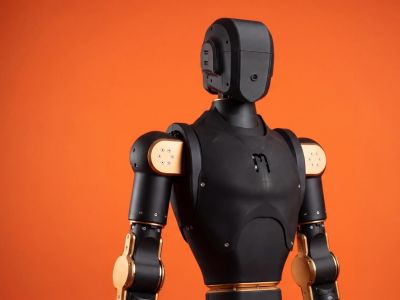
Asimov v1
Manufactured by Menlo Research
The Asimov v1 is Menlo Research’s first open-source humanoid robot, designed as a DIY kit for developers, researchers, and educators. Standing 1.2 meters tall and weighing 35 kg, it features 25 actuated joints plus 2 passive toe joints for bipedal locomotion. Powered by 120 N·m electric actuators, it supports zero-shot simulation-to-real transfer via MuJoCo. The robot includes a 2MP monocular camera, 4-channel microphone array, embedded speakers, and dual processors (Radxa CM5 for control, Raspberry Pi 5 for networking). Its open hardware (CERN-OHL-S-2.0) and software (GPL-2.0) enable full customization, making it a cost-effective alternative to proprietary humanoid platforms.
Menlo Research Timeline & Milestones
Evolutionary history, landmark prototypes, major acquisitions, and commercial roadmap
Asimov 2 in development
Menlo Research lists Asimov 2, the next version of its open-source humanoid, as in progress.
Source: menlo.ai
Asimov DIY humanoid kit offered
Menlo Research offers Asimov as an unassembled open-source humanoid kit for about US$15,000, aimed at developers and researchers.
Source: voxelmatters.com
Menlo Research Competitors by Category
Direct industry rivals grouped by specific robotics domain
What Makes Menlo Research Different?
Editorial AnalysisOrigin of Bots objective strategic assessment, engineering moats, and commercial hurdles
Key Strengths & Moats
- ✓Open approach builds a community.
- ✓Low kit price.
Core Strategic Focus
Asimov 2 development.
Road Ahead & Challenges
- •Small team.
- •Kit assembly needs skill.
Menlo Research vs Key Competitors
Strategic capability matrix across platform categories, commercial readiness, and target markets
Commercial Model
- Asimov v1 (Menlo)
- Open-Source DIY Kit
- Booster T1 (Noetix)
- Commercial Developer Kit
- HECTOR V2 (Laser)
- Research Platform
- Unitree G1
- Commercial Off-the-Shelf
Degrees of Freedom
- Asimov v1 (Menlo)
- 23 DoF
- Booster T1 (Noetix)
- 23 DoF
- HECTOR V2 (Laser)
- 18 DoF
- Unitree G1
- 23–43 DoF
Hardware Modularity
- Asimov v1 (Menlo)
- Fully Hackable & 3D Printable
- Booster T1 (Noetix)
- Semi-Modular
- HECTOR V2 (Laser)
- Modular Chassis
- Unitree G1
- Closed Commercial
| Strategic Dimension | Asimov v1 (Menlo) | Booster T1 (Noetix) | HECTOR V2 (Laser) | Unitree G1 |
|---|---|---|---|---|
| Commercial Model | Open-Source DIY Kit | Commercial Developer Kit | Research Platform | Commercial Off-the-Shelf |
| Degrees of Freedom | 23 DoF | 23 DoF | 18 DoF | 23–43 DoF |
| Hardware Modularity | Fully Hackable & 3D Printable | Semi-Modular | Modular Chassis | Closed Commercial |
Corporate Ecosystem & Ownership Structure
Parent company relationships, historical acquisitions, and global operating facilities
Global Facilities & Operating Hubs
Menlo Research Headquarters
HQPalo Alto, California, United States
Articles & Industry News
Showing 1 recent article and news updates about Menlo Research
Frequently Asked Questions
8 AnswersVerified answers, company specifications, and deployment details about Menlo Research
What is Menlo Research?
Menlo Research is an embodied AI research lab that builds Asimov, an open-source humanoid robot, with its headquarters in Palo Alto and teams in Singapore and Vietnam.
What is the Asimov humanoid robot?
Asimov is Menlo Research's open-source humanoid. Asimov 1 is about 1.2 metres tall, weighs about 35 kg and has more than 25 actuated degrees of freedom.
How much does the Asimov robot kit cost?
Menlo Research offers Asimov as an unassembled DIY kit for about US$15,000, aimed at hobbyists, researchers and robotics developers, with a full bill of materials published on GitHub.
Is Asimov open source?
Yes. Menlo publishes Asimov's code, documentation and full bill of materials on GitHub, so builders can source parts and 3D print replacements themselves.
Why did Menlo Research build its own humanoid?
Menlo says it built Asimov after a humanoid it had bought was stuck waiting for replacement parts, so it decided to make a robot it could repair and improve itself.
Where is Menlo Research based?
Menlo Research lists its headquarters at 117 University Avenue in Palo Alto, California, with teams in Singapore and Vietnam working on its open-source Asimov humanoid.
How is the Asimov robot built?
Asimov uses many 3D-printed parts, parallel ankle mechanisms and passive toes. Menlo developed it step by step, starting with the legs before adding the torso and full body.
Is there an Asimov 2?
Yes. Menlo Research lists Asimov 2 as in development as the next version of its open-source humanoid, though it has not announced a launch date or specifications yet.
Verified Data & Editorial Assurance
Compiled from verified corporate filings, official Menlo Research datasheets, and robotics engineering registries. Information has been verified against official manufacturer documentation. For commercial procurement or proprietary integrations, contact the manufacturer directly.