Menlo Research’s Asimov v1 pushes humanoid teleoperation into open-source territory
Robot Details
Asimov v1 • Menlo ResearchPublished
August 10, 2026
Reading Time
3 min read
Author
Origin Of Bots Editorial Team
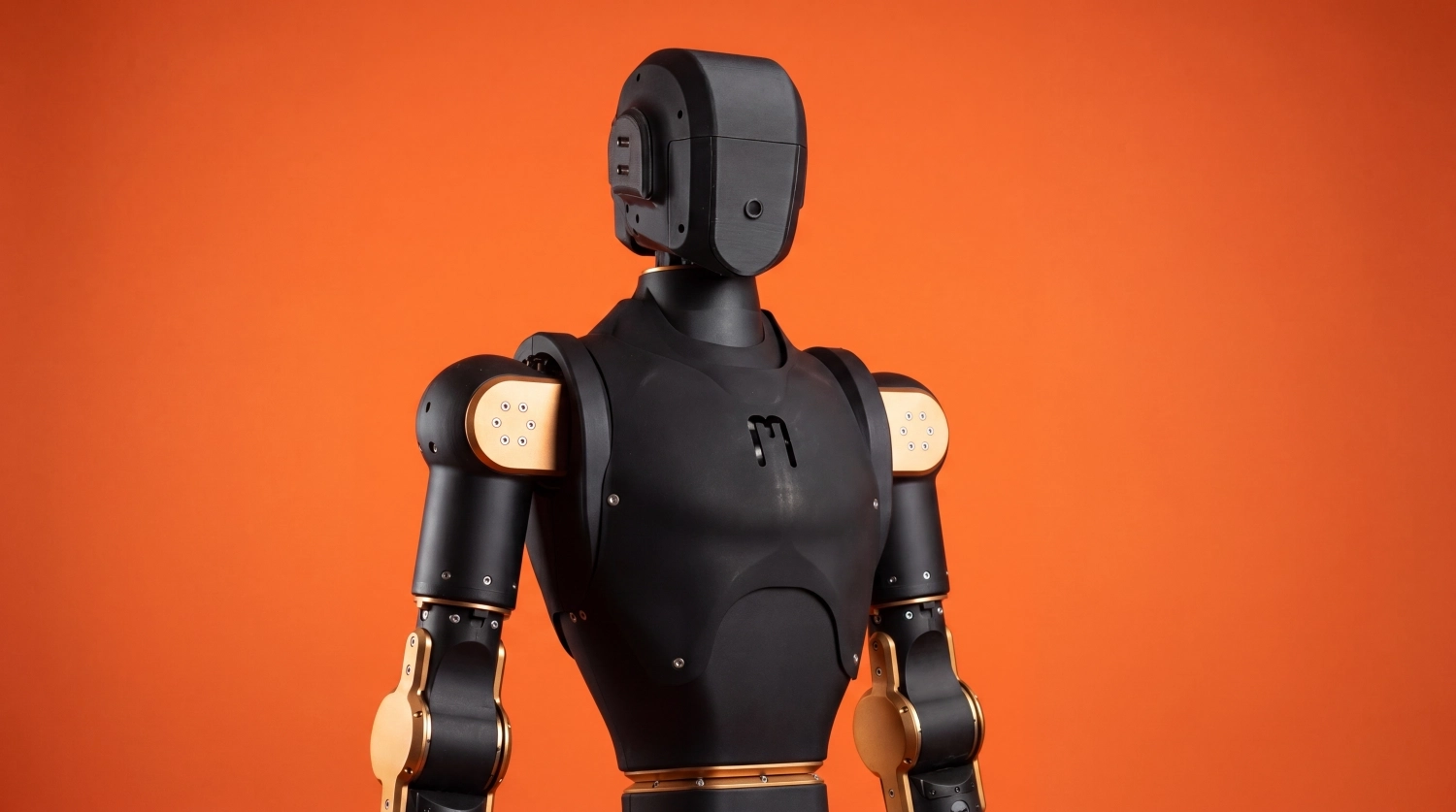
A compact humanoid appears
Humanoid robots are still being shaped around a hard set of problems: balancing on two legs, coordinating whole-body motion, and making manipulation feel responsive in human spaces. Menlo Research has now brought Asimov v1 into that conversation as an open humanoid kit, with official documentation and third-party coverage describing a 1.2-meter, 35-kilogram biped designed for research, demos, and teleoperation-first development.
Why it stands out
What makes Asimov v1 notable is not a single high-end spec, but the way its design centers on full-body coordination rather than isolated arm motion. The platform combines visual sensing, balance correction, and simulation-backed locomotion in a form factor intended for human-centric environments, while its open hardware and software stack lowers the barrier for labs that want to test teleoperation, imitation, and manipulation workflows. It also arrives as the industry continues to favor humanoids that can be operated and trained in real time instead of relying only on pre-scripted motion libraries. Asimov v1 is less about a polished consumer robot than about making human-guided humanoid control easier to study.
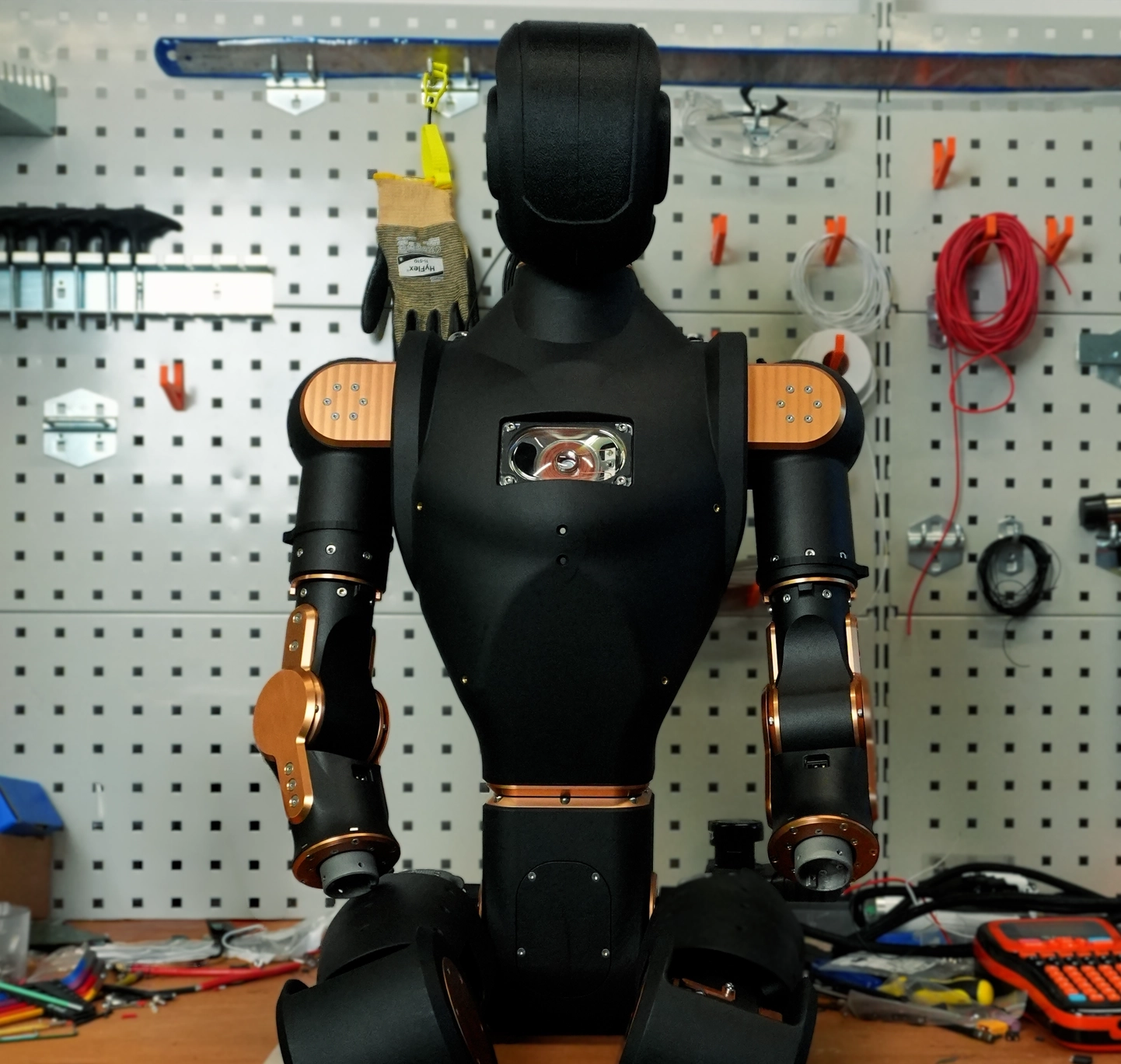
Motion from input
Menlo’s technical flow for Asimov v1 is straightforward: human motion input is processed by the robot’s AI and control stack, which then drives joint actuation while balance corrections keep the biped upright. The official documentation points to visual SLAM and MuJoCo-based simulation as core parts of that pipeline, with ROS2, Python, C++, and MuJoCo forming the software layer that connects perception, planning, and locomotion. In practical terms, the system is built to translate what a person does or demonstrates into controlled whole-body movement.
Remote task practice
A realistic deployment scenario is remote inspection or assistance inside a human environment, where a teleoperator needs a robot that can move through standard spaces, handle tools, and interact with objects at close range. Asimov v1’s compact bipedal build and reported payload focus on tools, packages, precision instruments, and person-to-person interaction make it better suited to that kind of structured indoor work than to rough outdoor labor. That focus matters because the category is increasingly being evaluated on how naturally a human can guide the robot, not just on whether it can walk.
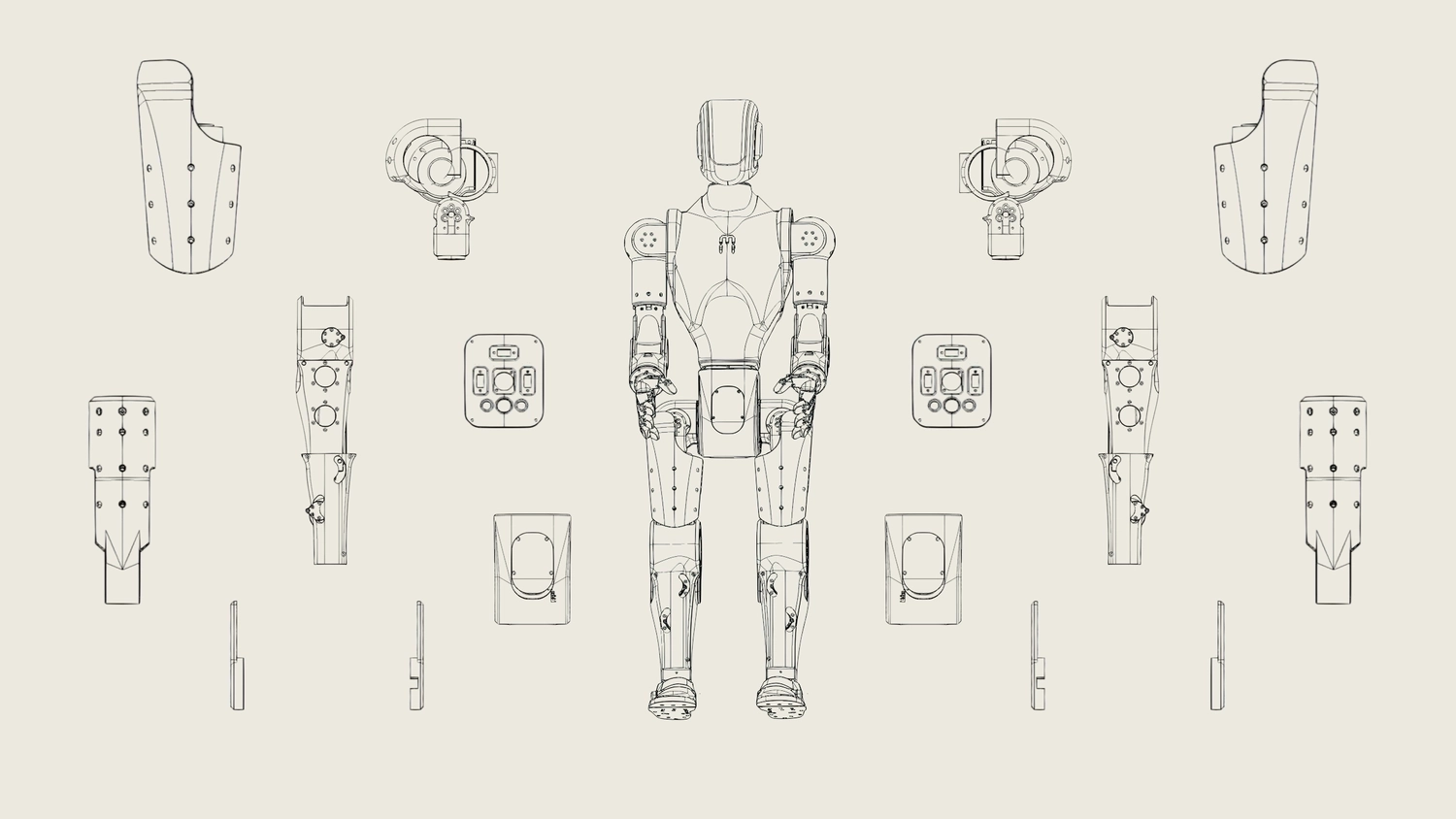
What the hardware enables
The reported 120 cm x 45 cm x 30 cm footprint and 35 kg weight make Asimov v1 a comparatively manageable humanoid for labs that need to move and set up hardware without industrial infrastructure. Its sensor package, including a 2MP monocular RGB camera, four microphones, an IMU, gyroscope, force sensors in the joints, and temperature sensors, supports the kind of perception and feedback loop needed for balance, teleoperation, and interaction experiments. Menlo’s official specs also describe ROS2, Python, C++, and MuJoCo as the software backbone, which makes the platform more accessible to robotics teams already working in those ecosystems.
Rivals Edge Check
| Robot | Key Advantage | Where Asimov v1 Wins | Target Use |
|---|---|---|---|
| FF Master | Stronger emphasis on advanced humanoid capability and commercial positioning | Open documentation and a more research-friendly stack for teleoperation experiments | Commercial humanoid deployment |
| 4NE-1 Mini | Compact form factor aimed at smaller-scale humanoid tasks | Broader open-source accessibility for motion control and simulation workflows | Education and compact lab testing |
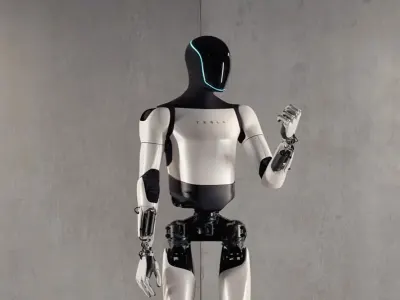
| Optimus Gen 3 | Large-scale platform backed by major industrial resources | Lower barrier to entry for researchers who want to modify hardware and software directly | General-purpose humanoid labor |
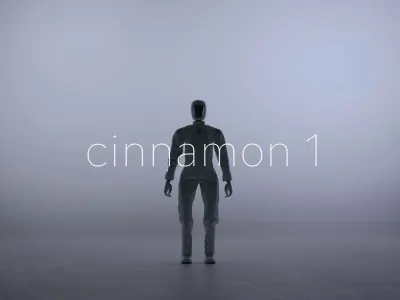
| Cinnamon 1 | Focus on humanoid interaction and platform development | Better fit for open development around whole-body imitation and balance studies | Human interaction research |
The market signal
Asimov v1 points to a more practical phase in humanoid robotics, where the near-term value proposition is not full autonomy but reliable human-in-the-loop control in spaces built for people. That shift matters because it favors platforms that can be taught, inspected, and iterated on quickly by researchers and integrators, rather than systems that depend on closed motion libraries and tightly managed deployments. If that trend holds, the next round of humanoid competition will be decided as much by software openness and teleoperation fidelity as by mechanical design.
Explore Humanoids
Sources
Related Articles
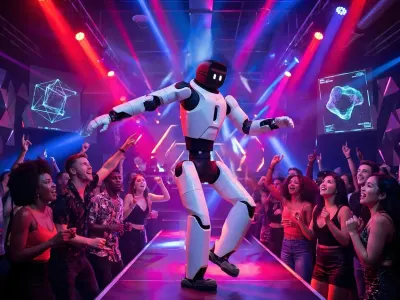
Faraday Future’s FF Master enters the humanoid race with a compact teleoperation-first design
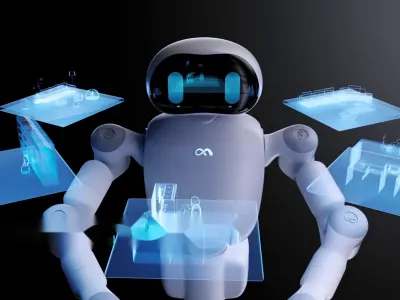
Flexiv’s MICO Plus pushes humanoid robotics toward teleoperation-first industrial work
Elite Robots’ Centaur G1 brings wheeled humanoid teleoperation into precision industrial work
Apptronik’s Apollo 2 targets teleoperation-first humanoid work as industrial pilots expand
Related Comparisons
Compare Asimov v1 with similar robots

Optimus vs Unitree G1
Compare Optimus vs Unitree G1 for humanoid mobility, dexterity, autonomy, and payload capacity.
Unitree G1 vs Unitree H1
Head-to-head: Unitree G1 vs Unitree H1 compared on bipedal balance, AI learning, and real-world deployment.
Optimus vs Atlas (Electric Atlas, 2025)
In-depth comparison of Optimus and Atlas (Electric Atlas, 2025), covering hardware capabilities, teleoperation, and enterprise readiness.
Ameca vs Moya
Which humanoid robot is better? Ameca vs Moya compared for dexterity, AI capabilities, and price.
Learn More About This Robot
Discover detailed specifications, reviews, and comparisons for Asimov v1.
View Robot Details →