Faraday Future’s FF Master enters the humanoid race with a compact teleoperation-first design
Robot Details
FF Master • Faraday FuturePublished
August 10, 2026
Reading Time
3 min read
Author
Origin Of Bots Editorial Team

Humanoid work, remapped
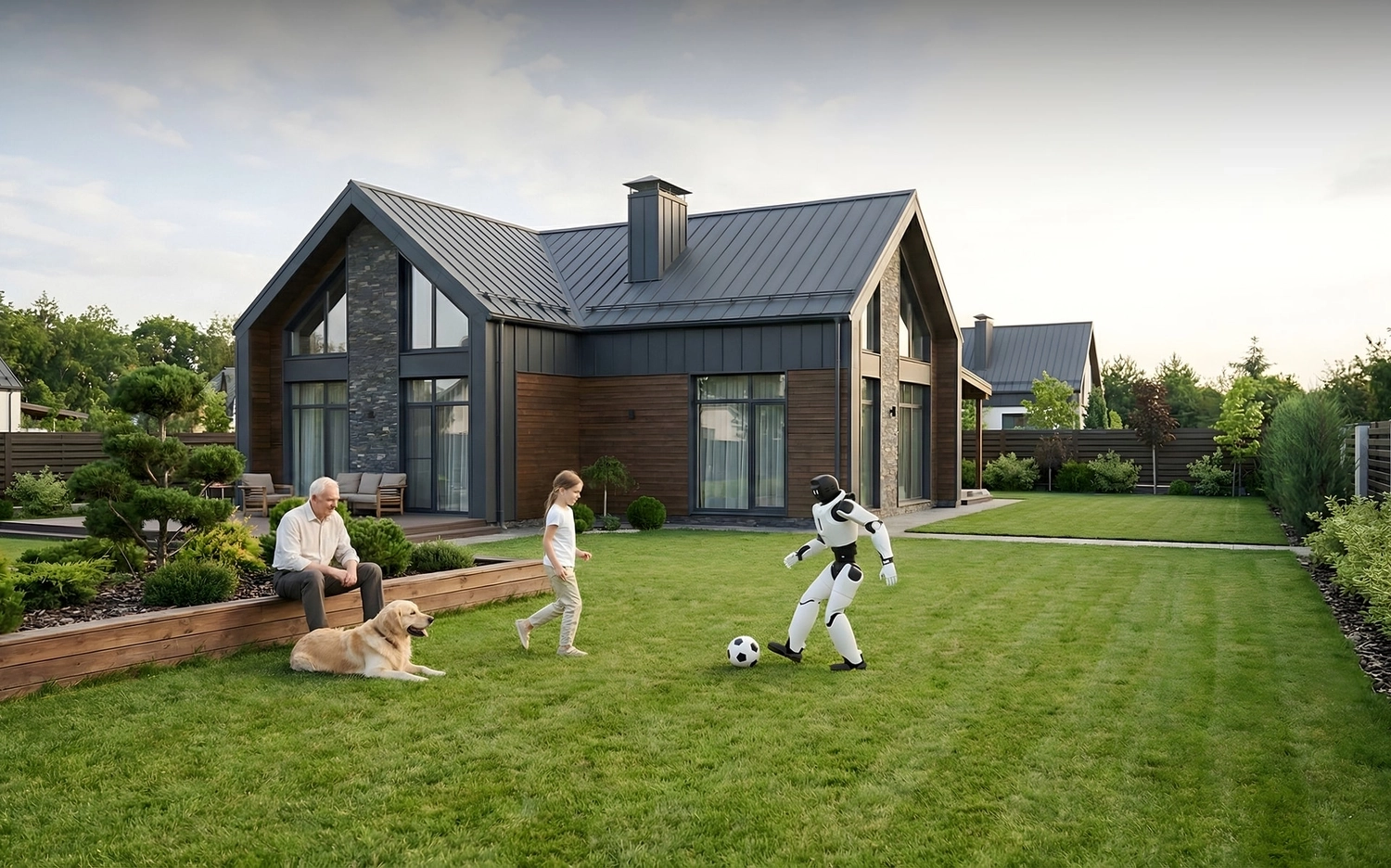
Faraday Future says the FF Master is its humanoid platform for real-time motion imitation, balance, and manipulation, with the robot presented as part of the company’s broader robotics push. In the latest public materials, the compact biped is framed for human-centric spaces where teleoperation, interaction, and supervised learning matter more than autonomous roaming.
Why it matters now
The FF Master stands out less for sheer size than for the role it is designed to play: translating human motion into a controlled full-body robot response. Its reported combination of visual sensing, balance correction, and collaborative-mode safety points to a platform meant to be operated alongside people rather than separated from them. That positioning matters because humanoid robotics is moving from demo choreography toward systems that can be supervised in classrooms, labs, and service settings without demanding industrial-scale floors or fully autonomous behavior. FF Master is a bet on usable teleoperation, not theatrical walking.
How it works
The core flow is straightforward: human motion input, AI model processing, then joint actuation with balance correction. In practice, the robot’s camera and inertial sensor suite feeds a control stack that interprets movement and keeps the body stable while the legs and arms execute the action. That architecture is consistent with a humanoid built for imitation, guided manipulation, and responsive interaction rather than pre-scripted motions.
A classroom testbed
A realistic deployment for FF Master is educational support, where instructors can use the robot as a live platform for motion teaching, robotics labs, and interactive learning demonstrations. In that setting, its value comes from letting students observe how sensing, balance, and actuation work together on a human-shaped machine that can be controlled and studied in real time. The robot is better suited to controlled indoor environments than to open-ended field work, which makes classrooms and research labs the clearest near-term fit.

Compact capability set
Reported specifications put FF Master at 131 × 46 × 21 cm and 35 kg, a size that supports indoor handling and closer human proximity. Its listed top speed of 1.8 m/s / 6.48 km/h, along with RGB cameras, stereo cameras, IMU, gyroscope, force sensors, ultrasonic sensors, and Visual SLAM navigation, suggests a system designed to see, stabilize, and move through structured environments. The software stack is reported to include ROS2, a proprietary OS, Python, and C++, which makes the platform easier to integrate into research and developer workflows. The battery life is described as 3 to 5 years, indicating a long service-cycle component rather than a short-term lab device.
Rivals Edge Check
| Robot | Key Advantage | Where FF Master Wins | Target Use |
|---|---|---|---|
| 4NE-1 Mini | Compact form factor for tight indoor environments | Broader humanoid interaction focus and teleoperation-ready use case | Education and research |
| AI Sapiens K0 | Emphasis on adaptive interaction and learning | Reported Visual SLAM and fuller sensor stack for guided motion tasks | Interactive learning |
| Unitree H2 Plus | Higher-mobility positioning in humanoid demos | Smaller footprint for closer indoor deployment | Assisted service |
| CyberOne 2026 Version | Strong public-facing performance orientation | More practical framing around supervised human-centric tasks | Robot performance and demos |
Industry direction shift
FF Master reflects a broader industry shift toward teleoperation-first humanoids that can be useful before they are fully autonomous. That matters because the near-term market is likely to reward robots that can demonstrate safe balance, responsive control, and operator-assisted manipulation in real settings, not just in staged demos. For humanoids, the commercial question is increasingly whether they can be taught and supervised reliably enough to become part of daily human workflows.
Explore Humanoids
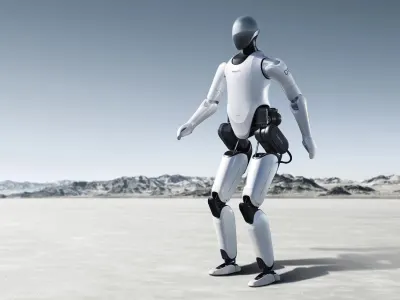
Sources
Related Articles
Galaxea Dynamics’ Kengo brings bipedal humanoid teleoperation into sharper focus
Weave Robotics launches Isaac 1, a wheeled humanoid designed for home manipulation and remote operation
Eden Robotics unveils Eden-1 as a humanoid work robot for warehouses and factories
Kinisi Robotics’ Kinsi 01 pushes humanoids toward teleoperation-first warehouse work
Related Comparisons
Compare FF Master with similar robots

Optimus vs Unitree G1
Compare Optimus vs Unitree G1 for humanoid mobility, dexterity, autonomy, and payload capacity.
Unitree G1 vs Unitree H1
Head-to-head: Unitree G1 vs Unitree H1 compared on bipedal balance, AI learning, and real-world deployment.
Optimus vs Atlas (Electric Atlas, 2025)
In-depth comparison of Optimus and Atlas (Electric Atlas, 2025), covering hardware capabilities, teleoperation, and enterprise readiness.

Ameca vs Moya
Which humanoid robot is better? Ameca vs Moya compared for dexterity, AI capabilities, and price.
Learn More About This Robot
Discover detailed specifications, reviews, and comparisons for FF Master.
View Robot Details →