Eden Robotics unveils Eden-1 as a humanoid work robot for warehouses and factories
Robot Details
Eden-1 • Eden RoboticsPublished
August 10, 2026
Reading Time
3 min read
Author
Origin Of Bots Editorial Team
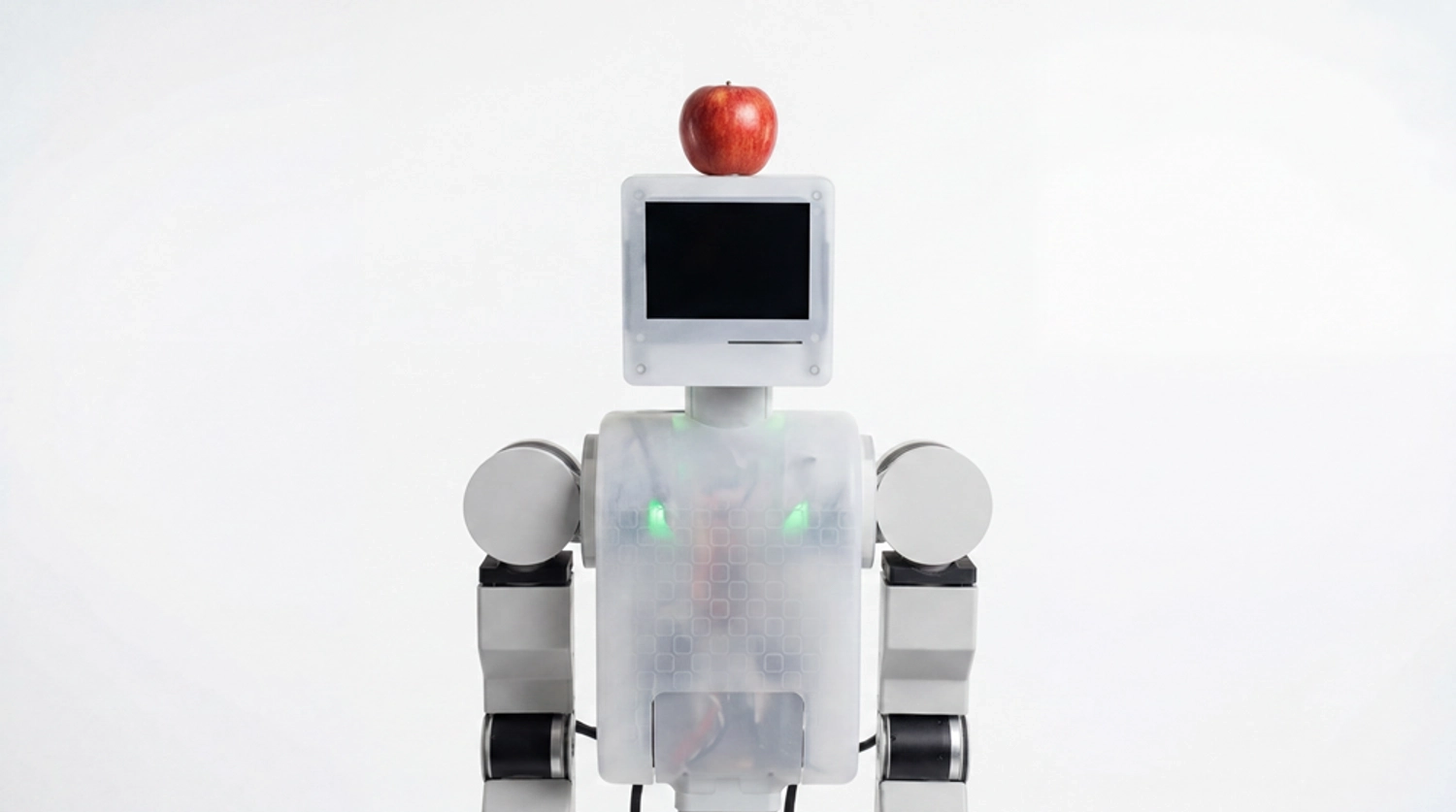
Labor Where People Work
Eden Robotics has introduced Eden-1, a humanoid robot aimed at warehouse and factory tasks, with a launch centered on teleoperation, shared autonomy, and human-in-the-loop labor support. The company presented it as a robot built to fit into human workspaces and take on repetitive physical jobs without the long integration cycles that usually slow industrial automation.
Why It Lands
For the humanoid category, the important detail is not just that Eden-1 walks on two legs, but that it is being positioned around real-time human motion imitation, balance correction, and manipulation in spaces designed for people. Eden Robotics has also framed the platform around teleoperation and remote expert intervention, which matches a broader industry shift away from rigid motion libraries and toward systems that can be guided when the robot gets stuck. That makes Eden-1 less a standalone machine than a test of whether humanoids can be deployed as labor services instead of fixed automation assets. If that model works, the economics of hiring robots could matter as much as the hardware itself. Eden-1 is about operational control, not just walking.
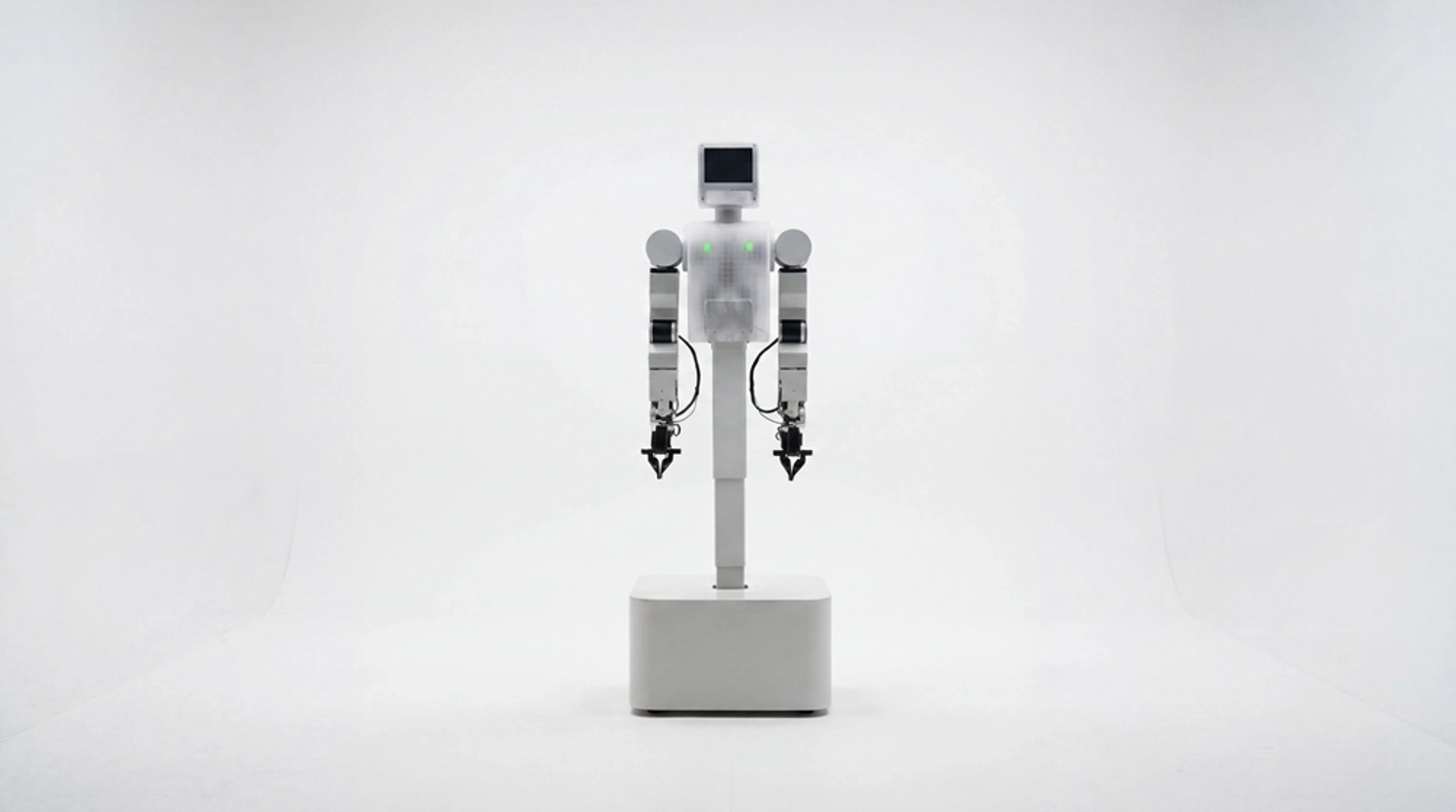
How It Works
Eden Robotics’ launch materials point to a simple control flow: human motion input, AI model processing, then joint actuation with balance correction. In practical terms, that means the robot is designed to watch, interpret, and reproduce tasks while continuously adjusting posture and force so it can handle movement and manipulation in human-centric spaces. The same setup also explains why shared autonomy matters here. When the robot encounters uncertainty, a remote operator can intervene, and the system can use that correction to improve future behavior rather than treating every task as a fixed script.
Warehouse Fit
The clearest deployment scenario is warehouse handling, especially repetitive pick, pack, and sorting work that requires a robot to move through aisles, handle packages, and cooperate with nearby workers. In that setting, a humanoid form is useful because it can work around shelves, carts, and stations built for human bodies instead of requiring a full redesign of the facility. That also makes teleoperation more practical than in fully autonomous systems, because remote assistance can cover edge cases without stopping the line. For a warehouse operator, the value proposition is faster deployment into existing workflows, not a clean-slate automation project.
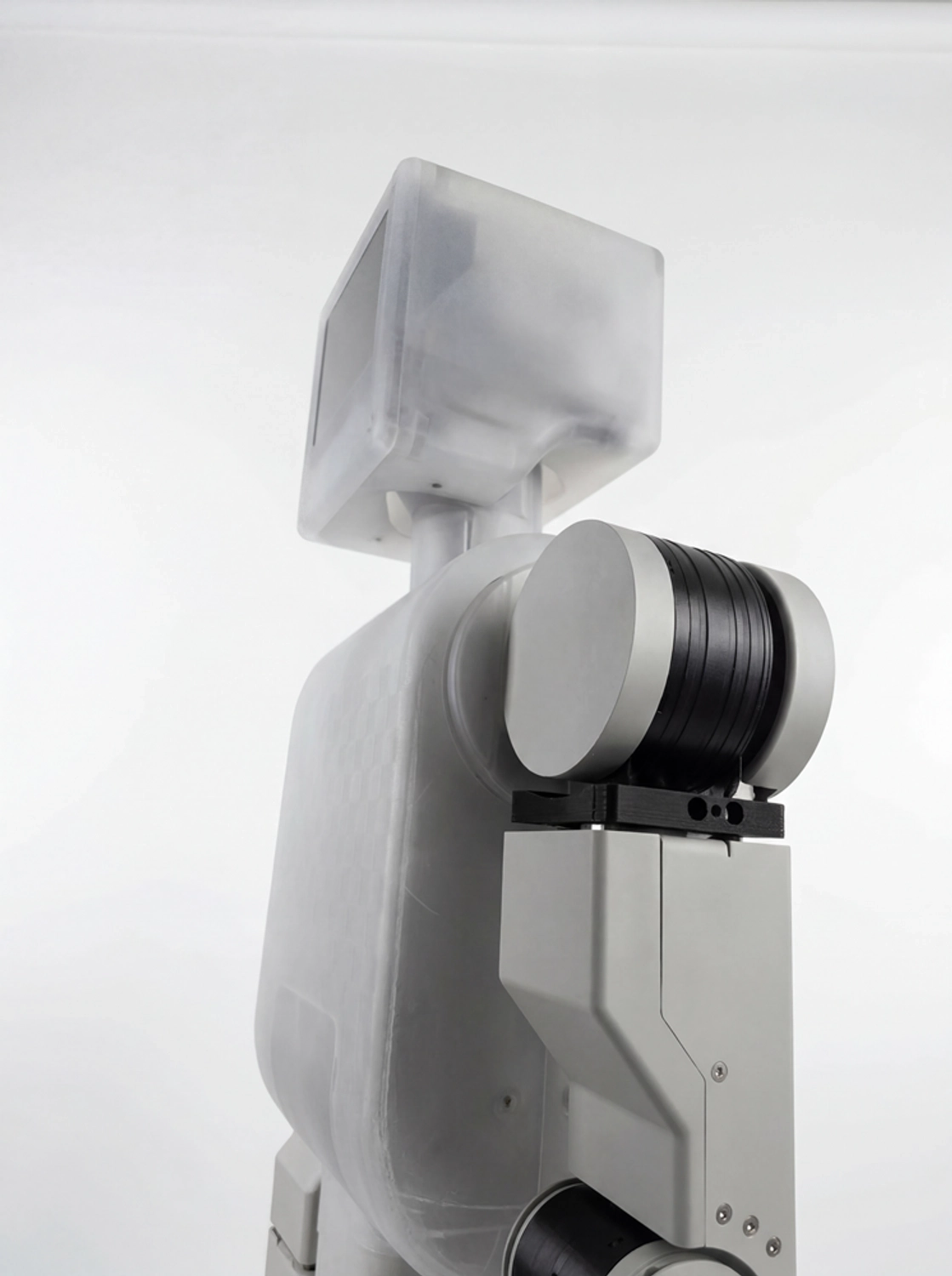
Capability By Design
The reported dimensions of 168 x 45 x 35 cm and a 28 kg weight suggest a compact humanoid profile that is easier to place in dense industrial spaces than larger service robots.[user-provided specs] Its listed 4.5 km/h / 1.25 m/s speed is consistent with short-range movement between workstations, while the sensor package, including RGB and stereo cameras, IMU, gyroscope, force sensors, ultrasonic sensing, and joint torque sensors, points to continuous posture awareness and manipulation feedback.[user-provided specs] The navigation stack, combining visual SLAM with LiDAR mapping, is aimed at moving through structured indoor environments, and the ROS2, Python, C++, and proprietary API software stack indicates a robot meant to be integrated into custom industrial workflows.[user-provided specs]
Rivals Edge Check
| Robot | Key Advantage | Where Eden-1 Wins | Target Use |
|---|---|---|---|
| Unitree H2 Plus | Stronger emphasis on dynamic humanoid mobility and physical performance | More work-focused framing for warehouse and factory tasks | Human-centric industrial labor |
| Eggie | Service-oriented humanoid positioning | Eden-1 appears more directly tied to labor workflows and teleoperation | Assisted service and task support |
| T800 | Industrial-style humanoid branding | Eden-1 is more explicitly positioned around deployment into existing workstations | Manufacturing and logistics support |
| NEO Home Robot | Home-first assistant framing | Eden-1 is aimed at enterprise workflows rather than domestic assistance | Industrial and warehouse operations |
What The Market Signals
Eden-1 also signals that humanoid robotics is moving toward a teleoperation-first business model, where the product is not only the robot body but the remote labor system around it. That shift matters because it lowers the burden of autonomy, even if it does not eliminate the practical limits of cost, scale, and outdoor performance that still constrain humanoids in the real world. If this approach gains traction, the industry may be judged less by how independently a humanoid moves and more by how reliably it can be directed, corrected, and paid for as a service.
Explore Humanoids

Related Articles
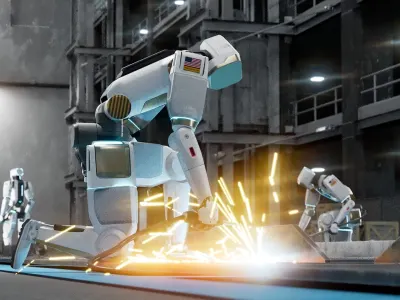
Persona AI Unveils Persona Humanoid for Shipyard Welding and Industrial Tasks
Rotaku’s Domo pushes teleoperation-first humanoid research into a smaller, cheaper platform

Galaxea Dynamics’ Kengo brings bipedal humanoid teleoperation into sharper focus
Weave Robotics launches Isaac 1, a wheeled humanoid designed for home manipulation and remote operation
Related Comparisons
Compare Eden-1 with similar robots

Optimus vs Unitree G1
Compare Optimus vs Unitree G1 for humanoid mobility, dexterity, autonomy, and payload capacity.
Unitree G1 vs Unitree H1
Head-to-head: Unitree G1 vs Unitree H1 compared on bipedal balance, AI learning, and real-world deployment.
Optimus vs Atlas (Electric Atlas, 2025)
In-depth comparison of Optimus and Atlas (Electric Atlas, 2025), covering hardware capabilities, teleoperation, and enterprise readiness.

Ameca vs Moya
Which humanoid robot is better? Ameca vs Moya compared for dexterity, AI capabilities, and price.
Learn More About This Robot
Discover detailed specifications, reviews, and comparisons for Eden-1.
View Robot Details →