Walden Robotics
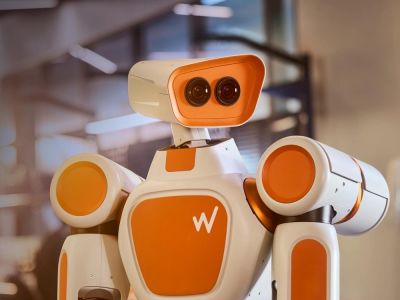
Walden Robotics is a Cambridge, Massachusetts company that spun out of the Toyota Research Institute in January 2026 to put general-purpose robots to work in factories and warehouses. It is led by co-founder and CEO Russ Tedrake, an MIT robotics professor who headed TRI's research on large behavior models, AI systems that learn manipulation skills from human demonstrations instead of being programmed task by task. Walden's thesis is that the hard problem in robotics has moved from research to deployment. Its robots have a humanoid upper body with two arms, cameras and two-finger grippers mounted on a heavy, statically stable wheeled base, a design it argues suits factory work better than legs. The robots have been working eight-hour shifts in a Toyota plant in North America, loading and unloading car parts, cleaning machinery and kitting components alongside employees. Walden came out of stealth on July 15, 2026 with a $300 million seed round co-led by Toyota and Deviation Capital at a $1.1 billion valuation, with Nvidia, Boeing and Samsung Ventures among the investors.
💡Notable Achievement: Reached a $1.1 billion valuation with a $300 million seed round six months after spinning out of the Toyota Research Institute.
What Does Walden Robotics Do?
Walden, a Toyota Research Institute spinout led by Russ Tedrake, puts wheeled humanoids trained with large behavior models to work in factories.
“From TRI lab to factory floor.”
LBMs
Robots learn from demonstrations.
Wheeled Design
Stable, efficient factory platform.
Toyota Plant
Working eight-hour shifts.
What Can Walden Robotics Robots Actually Do?
Cross-portfolio operational capabilities, manipulation tasks, and environmental competencies
Factory and logistics humanoids.
Factory Work
Loading parts, cleaning machines and kitting.
Walden Robotics Robots
Showing 1 Humanoid Robots of 1 total model
Walden
Manufactured by Walden Robotics
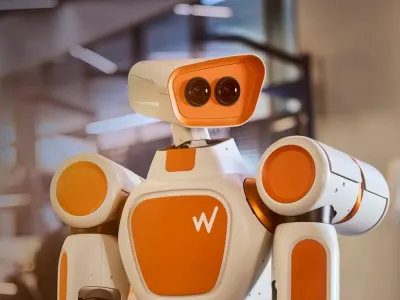
Walden is the wheeled semi-humanoid factory robot from Walden Robotics, the Toyota Research Institute spin-out that came out of stealth on July 15, 2026 with $300 million at a $1.1 billion valuation. A humanoid torso with two arms and two-finger grippers sits on a statically stable wheeled base with a lift column, so it can work at benches and machines without the fall risk of legged robots. Powered by Large Behavior Models and diffusion-policy learning from TRI, it has worked eight-hour shifts in a Toyota plant in North America since February 2026, doing machine tending, tool setting, parts kitting and assembly tasks.
Walden Robotics Software & AI Ecosystem
Developer platforms, fleet management portals, autonomy intelligence, and enterprise integrations
Large Behavior Models
Learning from demonstration
Foundation models trained on human demonstrations.
Walden Robotics Timeline & Milestones
Evolutionary history, landmark prototypes, major acquisitions, and commercial roadmap
Walden spins out of TRI
Walden Robotics is founded as a spinout of the Toyota Research Institute, led by Russ Tedrake, to deploy general-purpose robots.
Source: techfundingnews.com
$300 million seed at $1.1 billion valuation
Walden emerges from stealth with a $300 million seed round co-led by Toyota and Deviation Capital, with Nvidia and Boeing participating.
Source: aibusiness.com
Walden Robotics Competitors by Category
Direct industry rivals grouped by specific robotics domain
What Makes Walden Robotics Different?
Editorial AnalysisOrigin of Bots objective strategic assessment, engineering moats, and commercial hurdles
Key Strengths & Moats
- ✓Massive seed funding and Toyota backing.
- ✓Live deployment in a Toyota plant.
- ✓World-class research leadership.
Core Strategic Focus
Factory humanoids with learned skills.
Road Ahead & Challenges
- •Very young company.
- •Wheels limit some sites.
- •High expectations at a $1.1 billion valuation.
Walden Robotics vs Key Competitors
Strategic capability matrix across platform categories, commercial readiness, and target markets
Category / Focus
- Walden
- Wheeled factory humanoid
- Figure 03
- General-purpose humanoid
- Apollo
- Industrial humanoid
- Galbot G1
- Wheeled dual-arm humanoid
Primary Use
- Walden
- Machine tending, tool setting
- Figure 03
- Laundry handling, dish handling
- Apollo
- Warehousing, manufacturing
- Galbot G1
- Shelf restocking
Weight
- Walden
- 80–120 kg
- Figure 03
- 61 kg
- Apollo
- 72.6 kg
- Galbot G1
- 92.5 kg
Release Year
- Walden
- 2026
- Figure 03
- 2025
- Apollo
- 2023
- Galbot G1
- 2024
| Strategic Dimension | Walden | Figure 03 | Apollo | Galbot G1 |
|---|---|---|---|---|
| Category / Focus | Wheeled factory humanoid | General-purpose humanoid | Industrial humanoid | Wheeled dual-arm humanoid |
| Primary Use | Machine tending, tool setting | Laundry handling, dish handling | Warehousing, manufacturing | Shelf restocking |
| Weight | 80–120 kg | 61 kg | 72.6 kg | 92.5 kg |
| Release Year | 2026 | 2025 | 2023 | 2024 |
Corporate Ecosystem & Ownership Structure
Parent company relationships, historical acquisitions, and global operating facilities
Toyota
Co-led the seed round; Walden robots work in a Toyota plant.
Ownership & Acquisition History
Co-led the seed round; Walden robots work in a Toyota plant.
Co-led the $300 million seed.
Walden spun out of TRI in January 2026.
Global Facilities & Operating Hubs
Walden Robotics Headquarters
HQCambridge, Massachusetts, United States
Frequently Asked Questions
8 AnswersVerified answers, company specifications, and deployment details about Walden Robotics
What is Walden Robotics?
Walden Robotics is a Cambridge, Massachusetts company that spun out of the Toyota Research Institute in January 2026. It builds general-purpose robots and AI models for factories and logistics.
Who leads Walden Robotics?
Co-founder and CEO Russ Tedrake is an MIT robotics professor who led the Toyota Research Institute's work on large behavior models before Walden spun out.
How much has Walden Robotics raised?
Walden came out of stealth on July 15, 2026 with a $300 million seed round at a $1.1 billion valuation, co-led by Toyota and Deviation Capital, with Nvidia, Boeing and Samsung Ventures also investing.
What are large behavior models?
Large behavior models are AI systems that learn manipulation skills from human demonstrations, much as language models learn from text. Workers show a task and the robot learns to do it and similar jobs.
What does the Walden robot look like?
Walden's robot has a humanoid upper body with two arms, sensor eyes and two-finger grippers, mounted on a heavy wheeled base that keeps it statically stable and carries large batteries.
Where are Walden robots working?
Walden robots work eight-hour shifts in a Toyota plant in North America, loading and unloading car parts, cleaning machinery and kitting components for assembly alongside employees.
Why does Walden use wheels instead of legs?
Walden argues that wheels give a statically stable, efficient platform for factory floors. Tedrake says the robots must work in high-utilization jobs, ideally around the clock, to make economic sense.
Which industries does Walden target?
Walden targets automotive, aerospace and defense, semiconductors and electronics, logistics and life sciences, starting with repetitive tasks in plants that already use some automation.
Verified Data & Editorial Assurance
Compiled from verified corporate filings, official Walden Robotics datasheets, and robotics engineering registries. Data is monitored and audited on an ongoing basis for accuracy. For commercial procurement or proprietary integrations, contact the manufacturer directly.