AgiBot Unveils A2 Ultra Humanoid Redefining Service Robotics
Robot Details
AgiBot A2 Ultra • AgiBotPublished
December 3, 2025
Reading Time
4 min read
Author
Origin Of Bots
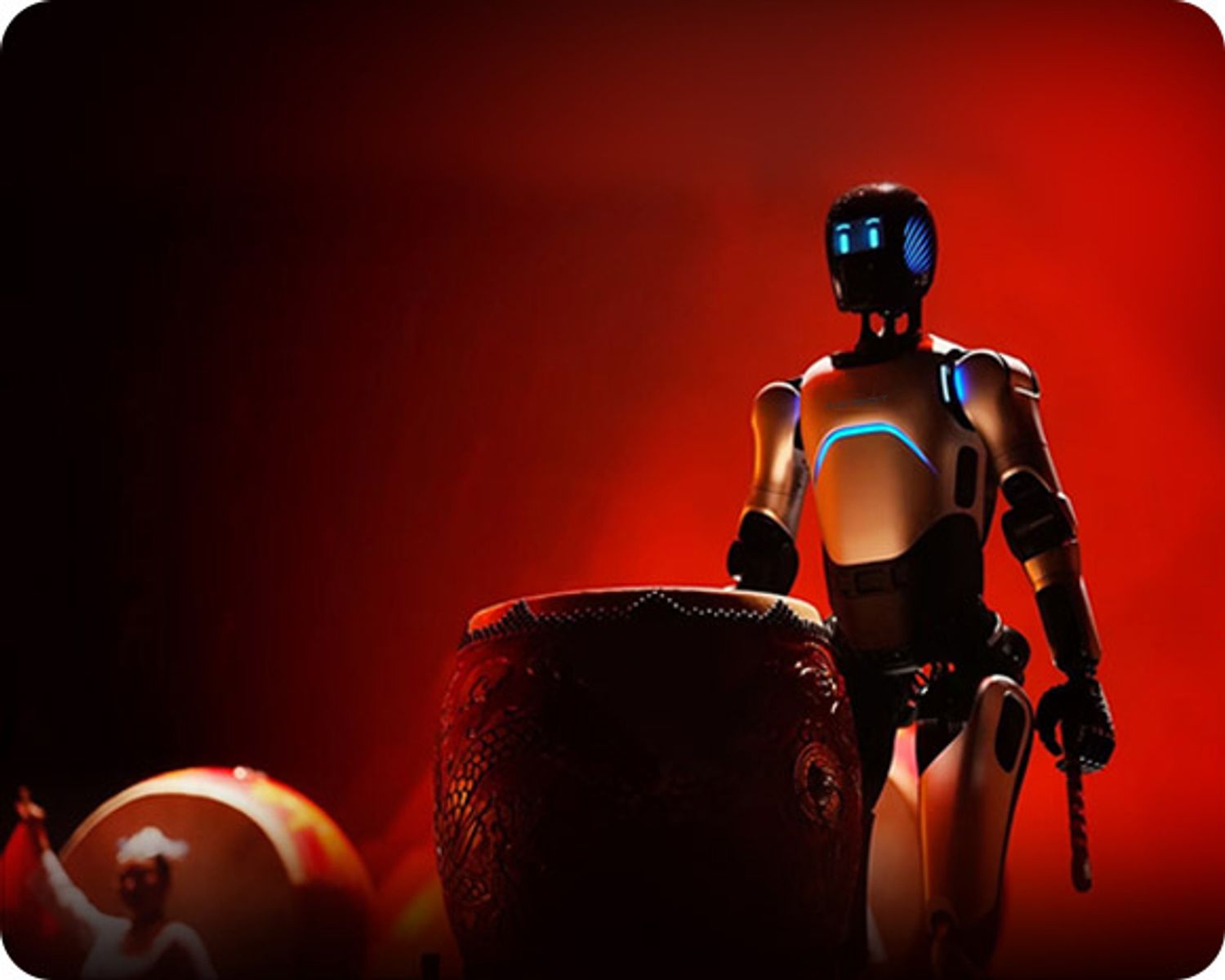
Next-Gen Humanoid Arrives
AgiBot has introduced the A2 Ultra, a sophisticated humanoid robot engineered to transform enterprise service operations across hospitality, logistics, and customer-facing environments. Standing 169 centimeters tall and weighing 69 kilograms, this next-generation platform represents a significant leap forward in autonomous service delivery, combining human-like proportions with industrial-grade capabilities. The A2 Ultra's arrival signals a pivotal moment for the robotics sector, as organizations increasingly seek intelligent machines capable of seamless interaction with human teams while executing complex, precision-dependent tasks that previously required dedicated personnel.
Dexterity Meets Intelligence
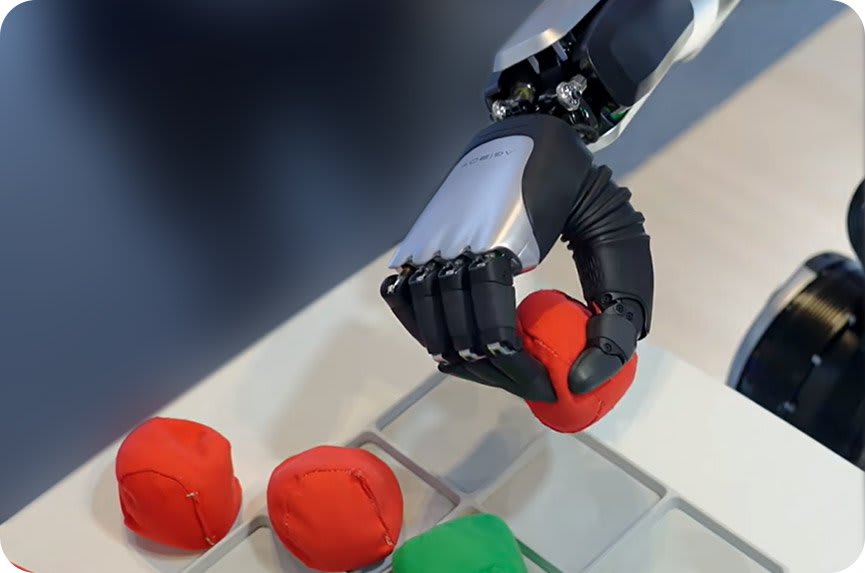
The A2 Ultra distinguishes itself through its 40 degrees of freedom, including 6-DoF dexterous hands, enabling movements that mirror human agility with remarkable precision. Its proprietary "skill-hand" technology incorporates visual-based fingertip sensors supporting both active and passive manipulation, allowing the robot to handle everything from delicate threading operations to robust material handling. Powered by a 200 TOPS AI computing system running WorkGPT—AgiBot's multimodal artificial intelligence—the machine processes text, audio, and visual inputs simultaneously with 96% accuracy, even within acoustically challenging environments. This convergence of mechanical sophistication and cognitive capability creates a machine genuinely capable of contextual understanding rather than mere task execution.
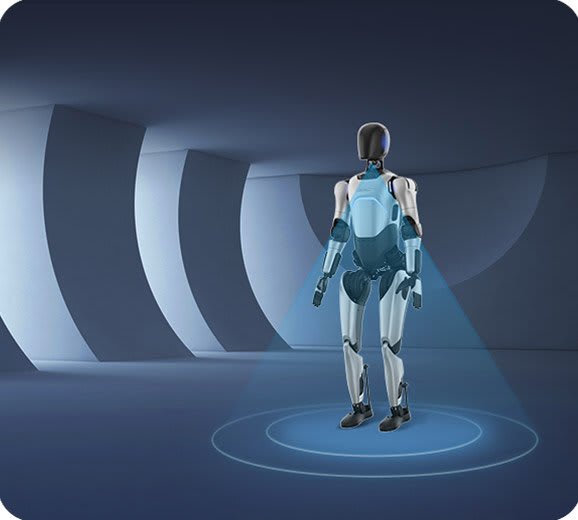
Engineering Breakthrough Unveiled
The A2 Ultra's engineering foundation rests on the PowerFlow propulsion system, delivering peak torque of 350 Newton-meters through quasi-direct drive architecture and high-torque planetary reducers. This technical approach eliminates traditional backlash limitations, enabling the robot to execute movements with submillimeter precision while maintaining exceptional responsiveness. The integration of distributed computing across the robot's frame allows real-time sensor fusion from multiple input sources, creating an embodied intelligence system that learns and adapts to novel situations without requiring constant cloud connectivity. The bionic architecture fundamentally rethinks humanoid design by prioritizing practical dexterity over aesthetic mimicry.
Enterprise Applications Expand
Organizations deploying the A2 Ultra are discovering applications far beyond initial design parameters. In hospitality settings, the robot manages front-desk operations, guest information delivery, and facility navigation with genuine personality. Manufacturing environments leverage its manipulation capabilities for quality inspection, component assembly, and material sorting tasks requiring both speed and accuracy. Research institutions utilize the platform as a testbed for embodied AI algorithms, while entertainment venues employ it for interactive exhibitions and customer engagement. This versatility stems from the robot's modular architecture and cloud integration, enabling rapid reconfiguration for emerging use cases without hardware modifications.
Performance Metrics Detailed
The A2 Ultra operates across dimensions of 169 by 75 by 30 centimeters, delivering a maximum speed of 1.2 meters per second (about 4.3 kilometers per hour) with impressive stability across uneven surfaces. Its comprehensive sensor array includes LiDAR for environmental mapping, RGB-D cameras for spatial understanding, fisheye cameras for peripheral awareness, inertial measurement units for balance correction, gyroscopes for orientation, and distributed force sensors enabling collaborative interaction. The robot navigates indoor environments through simultaneous localization and mapping protocols, combining LiDAR-based mapping with visual SLAM for redundant positioning accuracy. Battery life extends between three and five years, while the 2-3 hour runtime supports multi-shift deployment with strategic charging intervals. The A2 Ultra accepts diverse payloads including precision instruments, packages, and interactive elements while maintaining force-limiting safety protocols and collision detection systems that enable genuine collaborative operation alongside human workers.
Competitive Standing Assessed
Against competing platforms, the A2 Ultra occupies a distinctive market position. Compared to Martian's focus on industrial manipulation, the A2 Ultra prioritizes versatile service applications with superior conversational capabilities. Astribot S1 emphasizes raw dexterity in specialized tasks, whereas the A2 Ultra balances precision manipulation with genuine mobility and environmental navigation. The Dex platform targets manufacturing specificity, while the A2 Ultra's modular approach supports rapid deployment across diverse sectors. Annie focuses on specific hospitality functions, but the A2 Ultra's 40 degrees of freedom and multimodal AI create broader applicability. The A2 Ultra's primary weakness lies in payload capacity—3 kilograms per hand versus competitors' heavier lifting capabilities—yet this trade-off enables the lightweight, agile platform that distinguishes it in service-oriented markets where dexterity and interaction quality outweigh raw strength requirements.
Industry Transformation Begins
The A2 Ultra's emergence signals accelerating convergence between artificial intelligence and mechanical sophistication, reshaping expectations for autonomous systems across enterprise sectors. As organizations move beyond experimental robotics toward production deployment, platforms combining genuine dexterity, adaptive intelligence, and human-compatible interaction become economically compelling alternatives to traditional staffing models. The robotics market is transitioning from specialized single-purpose machines toward versatile platforms like the A2 Ultra that justify investment through multi-application flexibility. Industry analysts project this segment will expand substantially as manufacturing costs decline and software ecosystems mature, with the A2 Ultra positioned as a foundational platform for this transformation. The next eighteen months will prove decisive—successful real-world deployments will either validate this humanoid service model or reveal practical limitations requiring architectural rethinking.
Related Articles
XMAN-F1 Partners Johnnie Walker, M104 for AI Bartending Breakthrough
RobotEra L7 Racing Into Warehouses: 14.4 km/h Humanoid Cuts Picking Costs with ERA‑42 Deal

Clone’s Protoclone V1 Mirrors Human Muscles with 1,000 Myofibers, 500 Sensors
Samsung Bot Handy 2 Integrates Google Gemini, Boosts Dexterity with 3kg Dual-Arm Grip
Related Comparisons
Compare AgiBot A2 Ultra with similar robots
AgiBot A2 Ultra vs Phantom MK1
Which humanoid robot is better? AgiBot A2 Ultra vs Phantom MK1 compared for dexterity, AI capabilities, payload, and defense use cases.
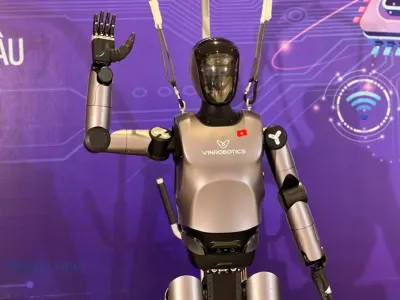
AgiBot A2 Ultra vs VR-H3
Which humanoid robot is better? AgiBot A2 Ultra vs VR-H3 compared for dexterity, AI autonomy, payload capacity, and industrial deployment readiness.
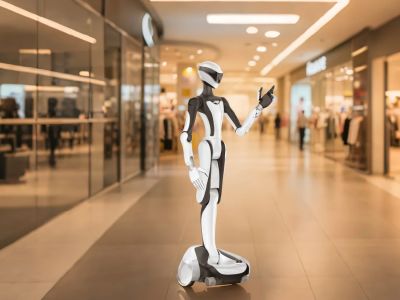
RobotEra Q5 vs AgiBot A2 Ultra
In-depth comparison of Q5 by Robot Era and AgiBot A2 Ultra by AgiBot. Analyze sensors, navigation, battery life, and mobility differences.
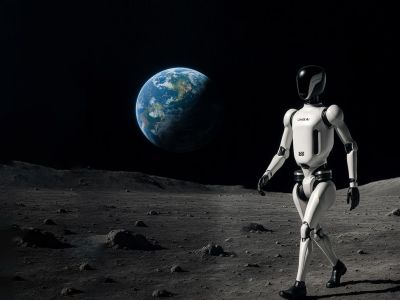
Martian vs AgiBot A2 Ultra
Head-to-head: Martian vs AgiBot A2 Ultra. Explore differences in navigation, battery, sensors, mobility, and software.
Learn More About This Robot
Discover detailed specifications, reviews, and comparisons for AgiBot A2 Ultra.
View Robot Details →