EngineAI PM01 Revolutionizes Affordable Humanoid Robotics
Robot Details
EngineAI PM01 • EngineAIPublished
December 11, 2025
Reading Time
3 min read
Author
Origin Of Bots

Fresh Frontier Unveiled
EngineAI Robotics has launched the PM01, a groundbreaking humanoid robot debuting at an accessible price point of $12,000. Its release targets researchers, educators, and industry professionals eager to explore humanoid robotics without prohibitive costs.
Setting New Standards in Agility
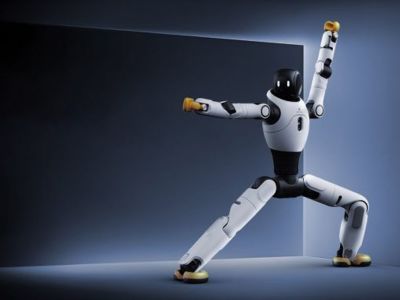
What distinguishes the PM01 is its remarkable agility and human-like fluidity in movement, enabled by 24 degrees of freedom and a unique 320-degree waist rotation. Unlike many humanoids constrained by rigid motions, the PM01 mimics natural walking with mechanical and dynamic gait modes, facilitating seamless adaptation across terrains. Its interactive chest touchscreen enhances user engagement, while a multi-array microphone system supports nuanced voice commands. These features combine to create a robot that’s not only responsive but intuitively interactive, pushing boundaries in human-robot collaboration.

Engineering Smart, Inside and Out
The PM01 integrates cutting-edge technology with a dual-chip architecture harnessing Intel N97 and NVIDIA Jetson Orin processors, delivering robust AI processing power. Its sensory suite includes the Intel RealSense D435i depth camera, optional LiDAR, ultrasonic radar, force sensors, and inertial measurement units (IMU), enabling precise spatial awareness and obstacle navigation. The robot’s software backbone runs on ROS 2 within a Linux environment, supplemented by a flexible SDK and API support for developers. This blend of hardware and software innovation equips the PM01 to handle complex tasks with remarkable efficiency and stability.
Diverse Roles, Real Impact
The PM01’s versatility shines across a spectrum of applications—from academic research laboratories exploring AI and human-robot interaction to industrial automation environments requiring precise, reliable bipedal mobility. Its payload capacity supports light tools and educational modules, making it ideal for both learning and practical tasks. In logistics, the PM01’s agile navigation and obstacle detection contribute to efficient material handling, while its safety features like emergency stop and fall recovery ensure dependable operation in dynamic settings.

Compact Powerhouse Specs
Measuring a sleek 138 x 49 x 22 centimeters and weighing 40 kilograms, the PM01 balances portability with performance. It achieves a top speed of 7.2 km/h (2 m/s), allowing swift movement in varied environments. Impressive battery life spans up to five years, ensuring longevity for sustained deployments. Advanced sensors—including Intel RealSense D435i, optional LiDAR, ultrasonic radar, force sensors, and gyroscope—combine with SLAM and IMU navigation systems to maintain spatial accuracy and stability. Running on ROS 2 and Linux, its open software ecosystem invites customization and innovation.
How PM01 Measures Up
Compared to competitors like AgiBot X1, AgiBot A2, DR01, and AgiBot X2, the PM01 stands out for its impressive agility and affordability. While the AgiBot series offers specialized configurations, the PM01’s open-source platform and dual-processor design provide a unique blend of flexibility and computational power. Its 320-degree waist rotation surpasses most rivals, enhancing manipulability. However, some competitors may offer higher payload capacities or extended degrees of freedom, positioning the PM01 as a balanced option excelling in dynamic movement and research adaptability rather than heavy-duty industrial tasks.
Shaping Robotics’ Tomorrow
The PM01 is poised to disrupt traditional barriers in humanoid robotics, accelerating innovation by making advanced bipedal robots accessible to more users globally. Its robust design and open software framework foster collaborative development, potentially igniting breakthroughs in AI-driven mobility and human-machine synergy. As industries increasingly integrate robotics, the PM01’s debut could catalyze new standards in service robots, education, and automation, signaling a transformative era where versatile humanoids become everyday collaborators rather than distant technological curiosities.

Related Articles
KEENON Shows XMAN-F1 Pouring Johnnie Walker in a Bartending Demo at WAIC 2025
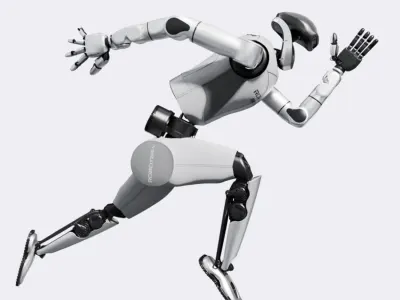
RobotEra L7 Runs at 14.4 km/h as the Humanoid Targets Warehouse Picking

Clone’s Protoclone V1 Mirrors Human Muscles with 1,000 Myofibers, 500 Sensors
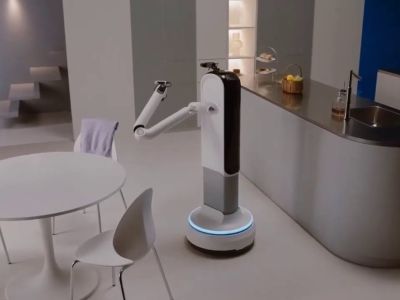
Samsung's Bot Handy Is Still a CES 2021 Concept: What It Showed and What Samsung Has Not Said
Related Comparisons
Compare EngineAI PM01 with similar robots
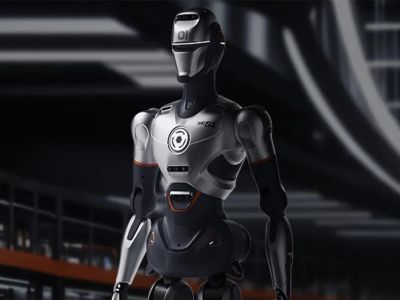
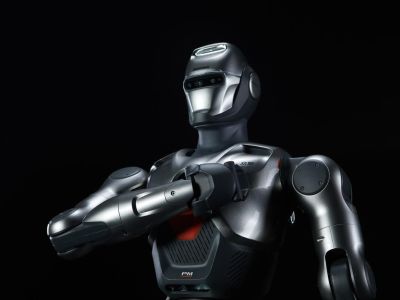
EngineAI SE01 vs EngineAI PM01
EngineAI SE01 vs PM01: joint strength, payload, hands, battery and software compared, with a clear pick for factory work and for research labs.

T800 vs Atlas (Electric 2025)
EngineAI T800 vs Boston Dynamics Atlas compared on size, strength, battery, joints, software and safety, with a clear pick for each buyer.
T800 vs Phantom MK1
Compare T800 by EngineAI vs Phantom MK1 by Foundation for humanoid mobility, dexterity, autonomy, payload, and industrial vs defense use cases.
T800 vs 4NE-1 Mini
T800 or 4NE-1 Mini? See which humanoid robot performs better for manufacturing, logistics, and research with comparisons on dexterity, autonomy, and payload.
Learn More About This Robot
Discover detailed specifications, reviews, and comparisons for EngineAI PM01.
View Robot Details →