Keenon's ButlerBot W3 Expands Cross-Floor Delivery Capacity for Hotels and Hospitals with Multi-Compartment Design
Robot Details
BUTLERBOT W3 • KEENON RoboticsPublished
May 8, 2026
Reading Time
4 min read
Author
Origin Of Bots Editorial Team
Autonomous delivery gains traction in hospitality
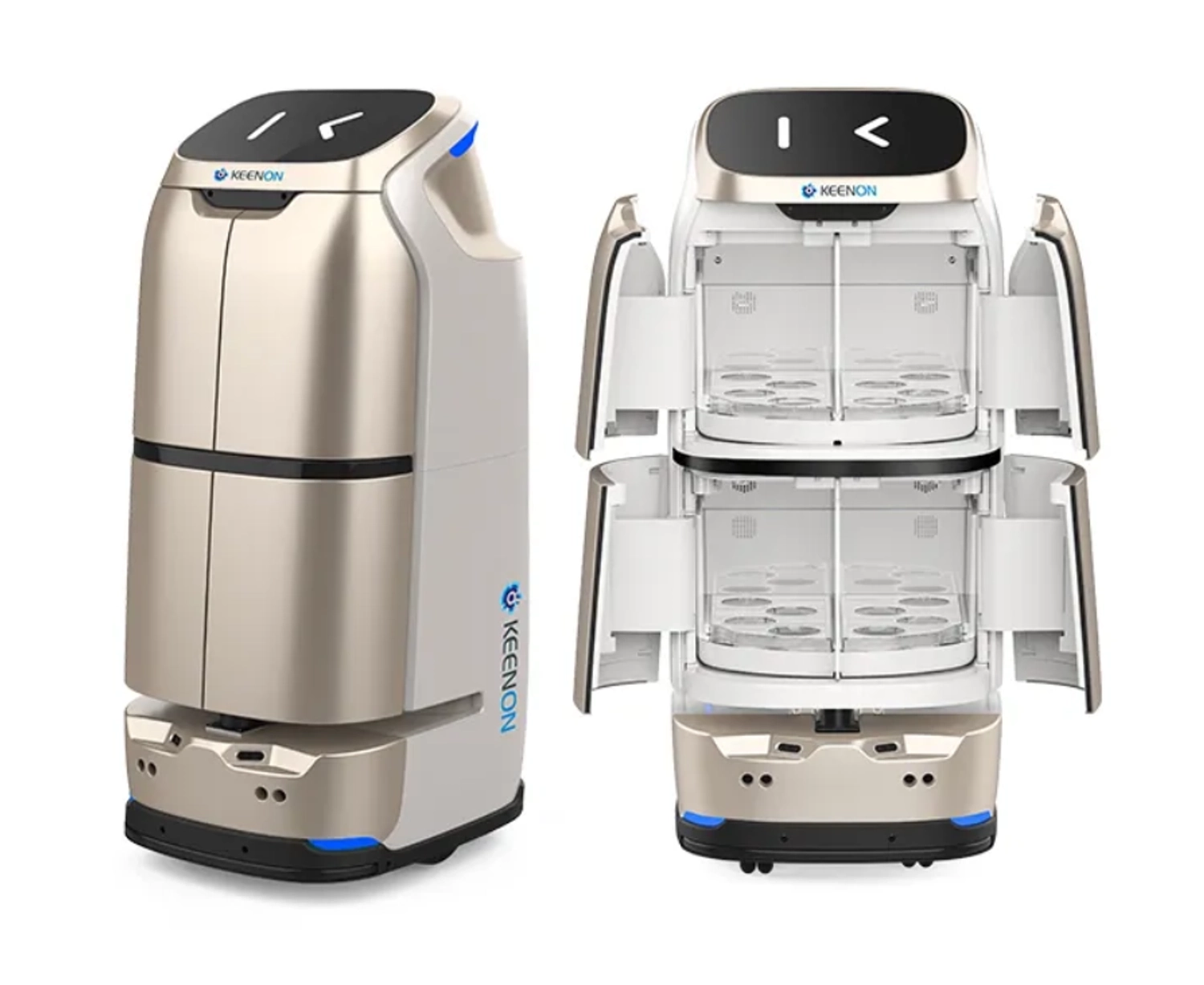
Service robots are increasingly handling last-mile logistics in controlled indoor environments, where autonomous navigation and contactless delivery reduce labor costs while maintaining service quality. Keenon Robotics has refined its ButlerBot W3 platform to address this demand, offering a wheeled delivery robot engineered for multi-floor operations in hotels, hospitals, nursing homes, and commercial offices. The robot features a modular four-compartment design, autonomous elevator integration, and AI-driven obstacle avoidance, positioning it as a practical alternative to manual room service and inter-departmental transport in high-traffic environments.
What sets it apart
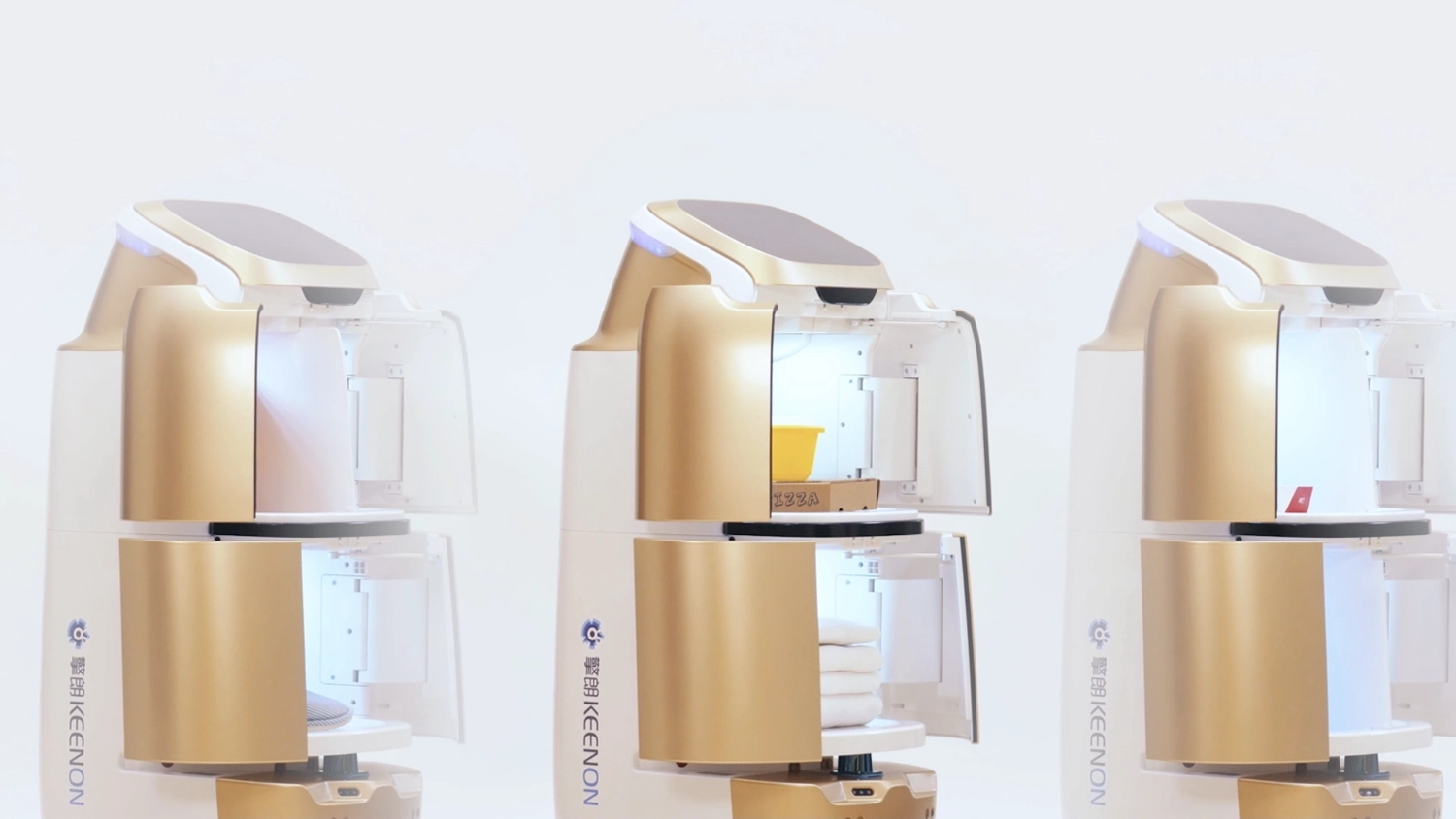
The ButlerBot W3 differentiates itself through four key capabilities: adjustable compartment configurations (2, 3, or 4 independent drawers) that enable simultaneous delivery to multiple locations from a single dispatch, autonomous cross-floor navigation via elevator control without human intervention, a 270-degree LiDAR and dual stereo vision sensor suite for real-time crowd avoidance in dynamic spaces, and a total payload capacity of 20 kilograms distributed across compartments to prevent load imbalance during transit. The robot's contactless door system and sealed compartments address hygiene concerns critical to healthcare and hospitality sectors. The W3's strength lies not in raw speed but in logistical efficiency, enabling up to 120 deliveries per day through intelligent batching and autonomous recharging, fundamentally shifting how facilities manage internal distribution networks.
How the system operates
The ButlerBot W3 uses a sensor-fusion approach to navigate autonomously: environmental input from LiDAR, stereo cameras, and encoder data feeds into a SLAM (Simultaneous Localization and Mapping) algorithm that builds real-time maps and identifies obstacles, while an AI-based path planner routes the robot around crowds and through hallways as narrow as 70 centimeters. The robot's onboard processor handles emergency stop commands, collision detection via sensing strips, and dynamic speed adjustment (0.1 to 0.8 meters per second) based on corridor density. Operators monitor fleet status through Keenon's Intelligent Robot Management Platform, which logs delivery trajectories and IoT data but does not require constant human control, allowing one operator to manage multiple units simultaneously.
Real-world deployment in practice
Consider a mid-scale hotel with 150 rooms across five floors. Traditionally, room service requires staff to manually transport trays, linens, and packages, with delivery times averaging 8-12 minutes per floor. With two ButlerBot W3 units, the hotel can batch requests into four simultaneous compartments, dispatching one robot to floors 2-3 while another handles floors 4-5, with each unit autonomously calling elevators and navigating corridors. A nurse call system integrates dispatch requests, and the robot's sealed compartments ensure food temperature retention and package security. Staff are freed from transport duties to focus on guest interaction, while delivery time drops to 3-5 minutes per batch, reducing operational overhead by an estimated 30-40 percent depending on facility layout and traffic patterns.
Specifications enabling real-world use
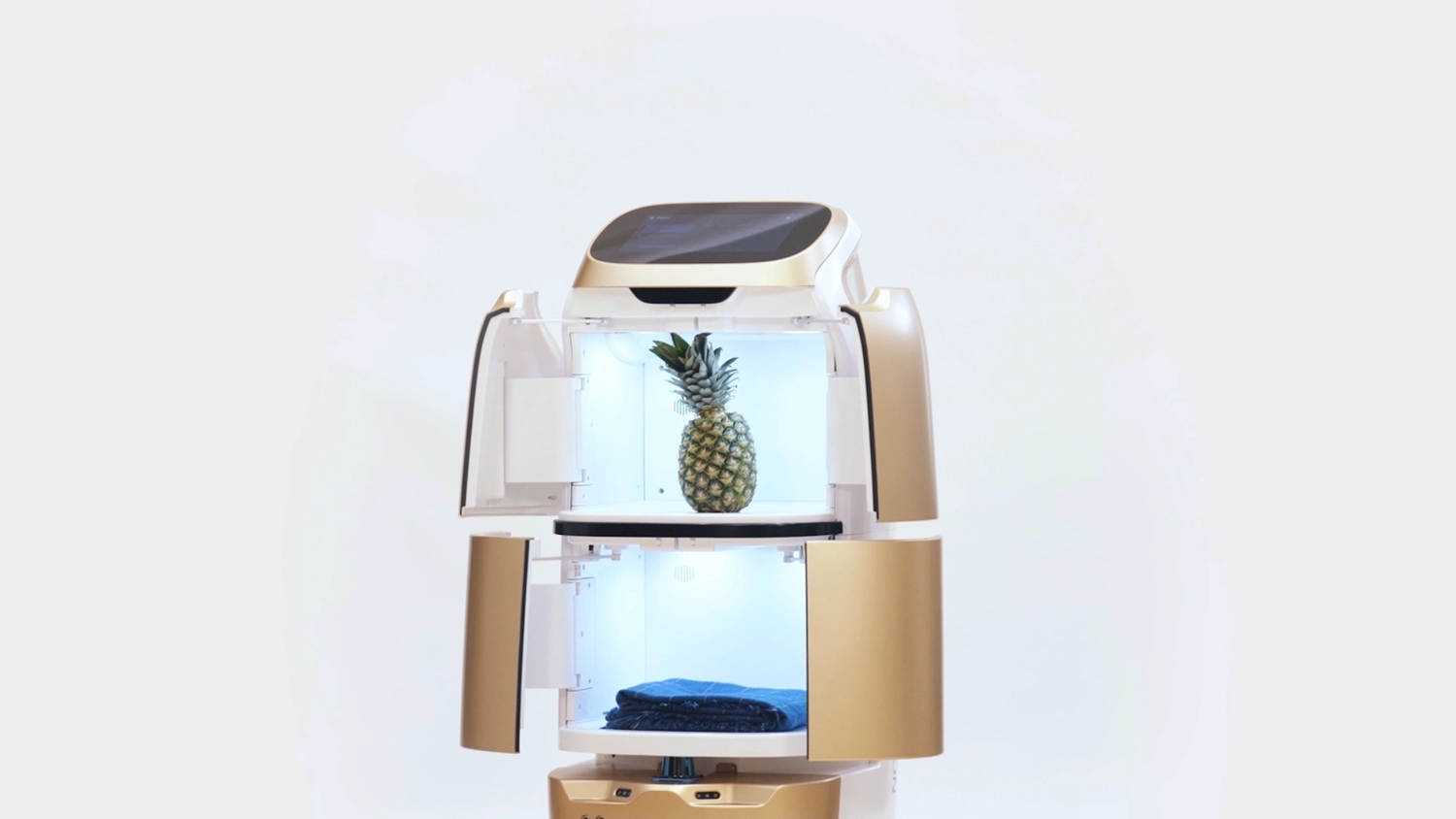
The robot measures 45.9 by 54.9 by 108.1 centimeters (18.07 by 21.61 by 42.56 inches) and weighs 48 kilograms, allowing it to fit standard doorways and navigate tight service corridors without modification. Its 20-kilogram payload translates to approximately 66 bottles of water or mixed room-service items per trip; each compartment holds 390 by 385 by 300 millimeters, accommodating standard hotel service trays. Battery life extends 9 to 12 hours under typical deployment (three deliveries per hour), and the robot recharges in 6.5 hours using either a docking station or standard charging pile. Maximum gradeability of 7 degrees and step-over capability of 15 millimeters enable navigation of minor ramps and doorsills common in older facility layouts.
Rivals Edge Check
| Robot | Key Advantage | Where BUTLERBOT W3 Wins | Target Use |
|---|---|---|---|
| DINERBOT T8 | Specialized food delivery thermal management | Multi-compartment flexibility for mixed-item delivery across departments | Restaurants and room service |
| Keenon G2 | Compact footprint for ultra-tight spaces | Larger payload and four-compartment configuration for high-volume batching | Hospitals and multi-floor hotels |
| DINERBOT T9 | High-speed corridor performance | Autonomous elevator integration without manual calls or supervision | Cross-floor healthcare logistics |
| DINERBOT T3 | Entry-level cost efficiency | Modular scalability and fleet management via unified platform | Mid-market hospitality |
Industry trajectory for autonomous logistics
The ButlerBot W3's adoption signals a maturing service-robot market where autonomous delivery is transitioning from pilot projects to standard operations infrastructure. Facilities are investing in robots not as novelty items but as labor-cost mitigation tools, with ROI calculations now factoring in staff reallocation, reduced delivery time, and improved guest satisfaction metrics. The trend toward fleet management platforms and elevator integration indicates that future competitive advantage will depend on seamless facility integration rather than individual robot performance, suggesting vendors must prioritize software ecosystems and facility APIs over hardware specifications alone. This shift is accelerating adoption in regulated environments like hospitals, where contactless delivery and audit trails are increasingly non-negotiable compliance requirements.
Explore Humanoids
Sources
Related Articles
Keenon Robotics Unveils Dinerbot T11 for Narrow-Aisle Service Delivery
Keenon Robotics DINERBOT T9 Delivers High-Capacity Service in Hospitality
KEENON Robotics Unveils DINERBOT T8 for Tight-Space Service Delivery
KEENON's DINERBOT T3 Targets Private Dining and Long-Distance Hotel Delivery With Enclosed Cabin Design
Learn More About This Robot
Discover detailed specifications, reviews, and comparisons for BUTLERBOT W3.
View Robot Details →