Seegrid’s Tow Tractor S7 AMR targets heavy horizontal material moves in manufacturing
Robot Details
Tow Tractor S7 AMR • SeegridPublished
June 7, 2026
Reading Time
3 min read
Author
Origin Of Bots Editorial Team
Heavy moves, tighter flow
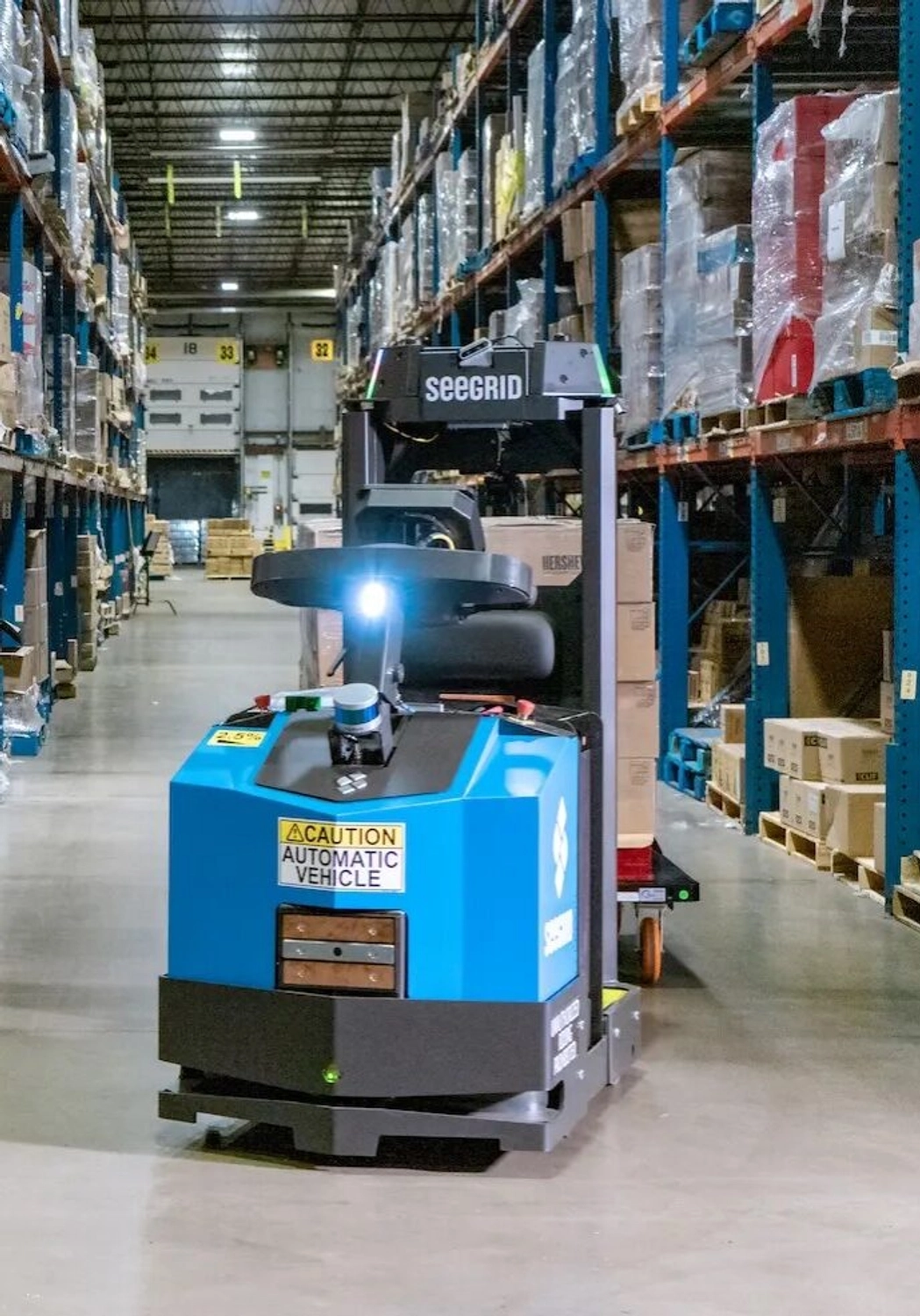
Industrial plants are still spending time and labor moving cart trains, racks, and bins across predictable routes where precision and safety matter as much as speed. Seegrid’s Tow Tractor S7 AMR is positioned in that lane: the company has unveiled and promoted the system as an autonomous tow tractor for manufacturing and material handling, with 10,000-lb capacity and a 4 mph top speed on the product page and safety materials.
Why the tow format matters
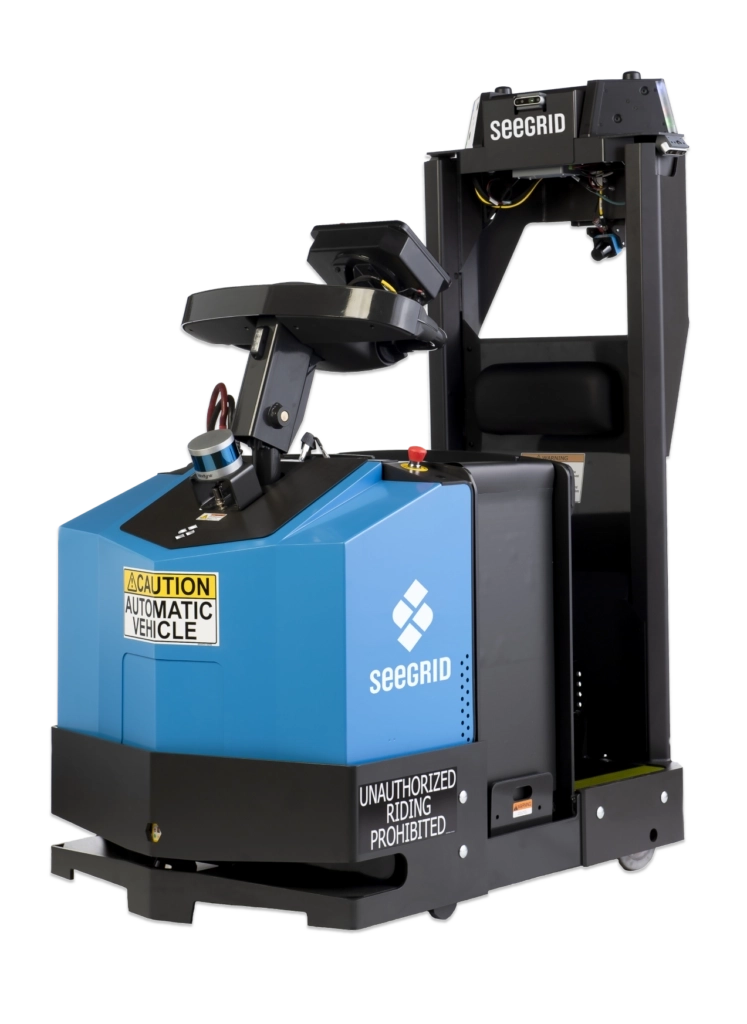
The S7 matters because tow tractors solve a narrower but high-value problem than general-purpose robots: repeatable horizontal transport with less variability than manual towing. Seegrid says the platform is built around 360° sensing, redundant safety systems, immediate stop behavior, and infrastructure-free 3D SLAM, which directly fits industrial needs for repeatability, cycle time, payload handling, and safety integration. The company also says the system has logged nearly 15 million autonomous miles across more than 200 production facilities, which frames the S7 as an evolution of an established industrial AMR line rather than a first-time experiment. The S7 is about dependable throughput, not broad-purpose autonomy.
How the system works
Seegrid describes the operating flow as a task input to Fleet Central and Grid Engine AI, which then coordinates motion planning through its stereo-vision-based navigation stack. In practical terms, the system takes a transport job, uses 3D probabilistic mapping and 3D SLAM with stereo vision and laser fusion to localize itself, and then drives the wheeled platform to deliver the load with feedback from its safety sensors. That Input → Processing → Output sequence is designed for a structured factory floor, where routes are known and validation matters more than improvisation.
A line-side use case
The clearest deployment scenario is parts transfer on an assembly line, where the robot can move multiple cart trains between storage, kitting, and the line without requiring fixed guidance infrastructure. In that setting, the value is not just removing a drive task; it is reducing variability in delivery timing and keeping material flow synchronized with production demand. Seegrid’s own manufacturing demo featuring the Tow Tractor alongside other AMRs reinforces that this is meant to work as part of a broader factory workflow, not as a stand-alone vehicle.
Specs as capability
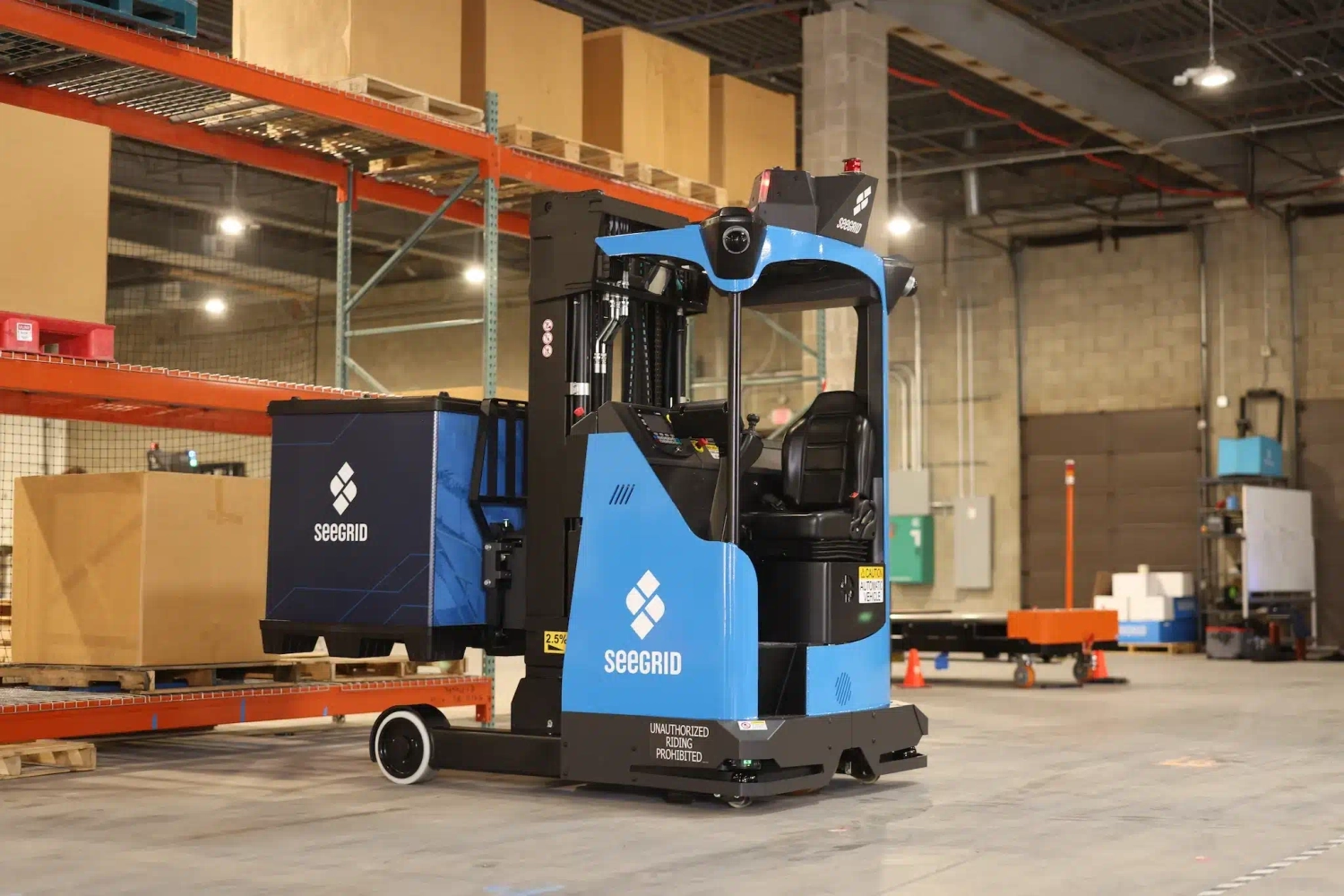
The reported dimensions of 109 x 36 x 76 inches, or about 277 x 91 x 193 cm, suggest a form factor sized for indoor industrial aisles and tugging duty rather than compact goods movement. Its 4.0 mph forward speed, 0.7 mph reverse speed, and 5-year battery life are framed by Seegrid as enablers of sustained shift work and controlled maneuvering around carts and heavy racks. The published safety materials also say the platform is designed to exceed ANSI B56.5 and R15.08 expectations, while the sensor set includes stereo vision cameras, 360° safety sensing, and floor-to-ceiling coverage for industrial obstacle detection.
Rivals Edge Check
| Robot | Key Advantage | Where Tow Tractor S7 AMR Wins | Target Use |
|---|---|---|---|
| Lift RS1 AMR | Compact transport focus for mixed indoor routes | Better suited to heavy cart trains and tow-heavy workflows | Factory material movement |
| Lift CR1 AMR | Cart-handling flexibility in constrained spaces | Higher towing emphasis and stronger industrial tugger positioning | Cart and rack transport |
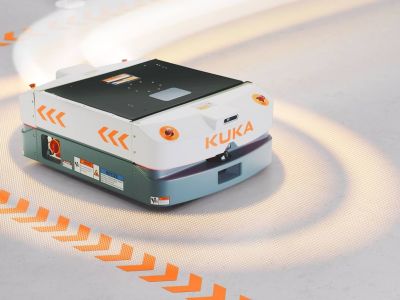
| KUKA KMP 600-S diffDrive | Precision omnidirectional movement for line-side positioning | Tow-specific payload handling and established tow-tractor form factor | Assembly and intralogistics |
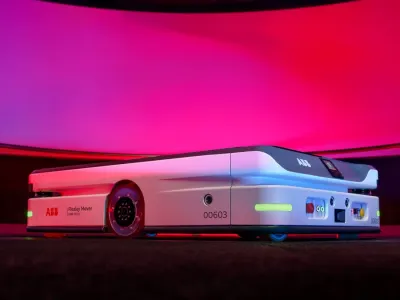
| ABB Flexley Mover P603 | Flexible autonomous transport in production environments | Heavy horizontal movement focus and multi-load towing | Production logistics |
Industry signal
This launch signals that industrial automation is still moving toward narrower, task-specific robots rather than one platform trying to do everything. It also fits the broader factory trend in which cobots and AMRs are reducing the boundary between manual material handling and automated production support, especially where uptime and predictable flow are more valuable than general autonomy. For Seegrid, the message is that industrial buyers are still paying for reliability, not novelty.
Explore Humanoids
Sources
Related Articles
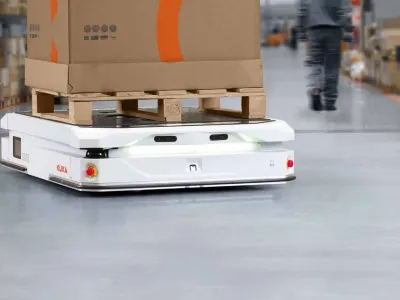
KUKA’s KMP 1500P pushes heavy-load autonomy deeper into factory logistics
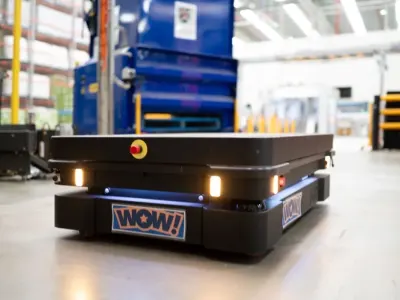
Mobile Industrial Robots’ MiR1350 sharpens the case for heavy-load autonomy in manufacturing
Seegrid’s Lift CR1 AMR pushes vertical material handling higher in manufacturing
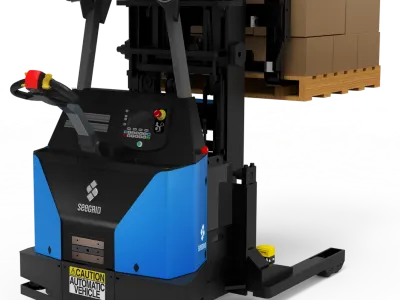
Seegrid’s Lift RS1 AMR targets the repetitive middle of manufacturing material flow
Related Comparisons
Compare Tow Tractor S7 AMR with similar robots
Learn More About This Robot
Discover detailed specifications, reviews, and comparisons for Tow Tractor S7 AMR.
View Robot Details →