Xinhua and UBTECH Unveil Xinyan and Xinyu, Humanoid Robot News Anchors Designed by Zhang Yimou
Category
humanoidPublished
November 5, 2026
Reading Time
5 min read
Author
Origin Of Bots Editorial Team
Two New Faces in the Newsroom
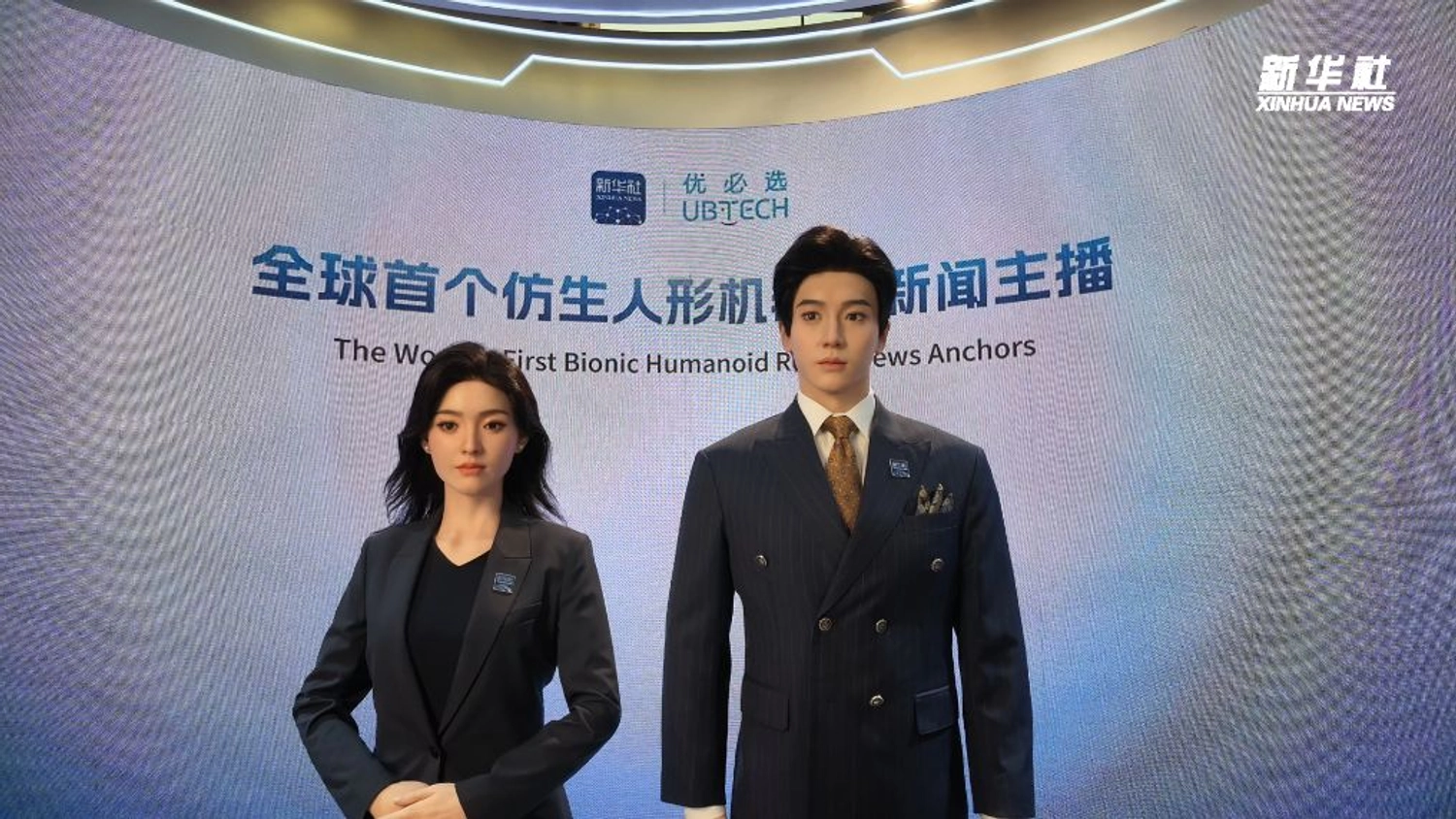
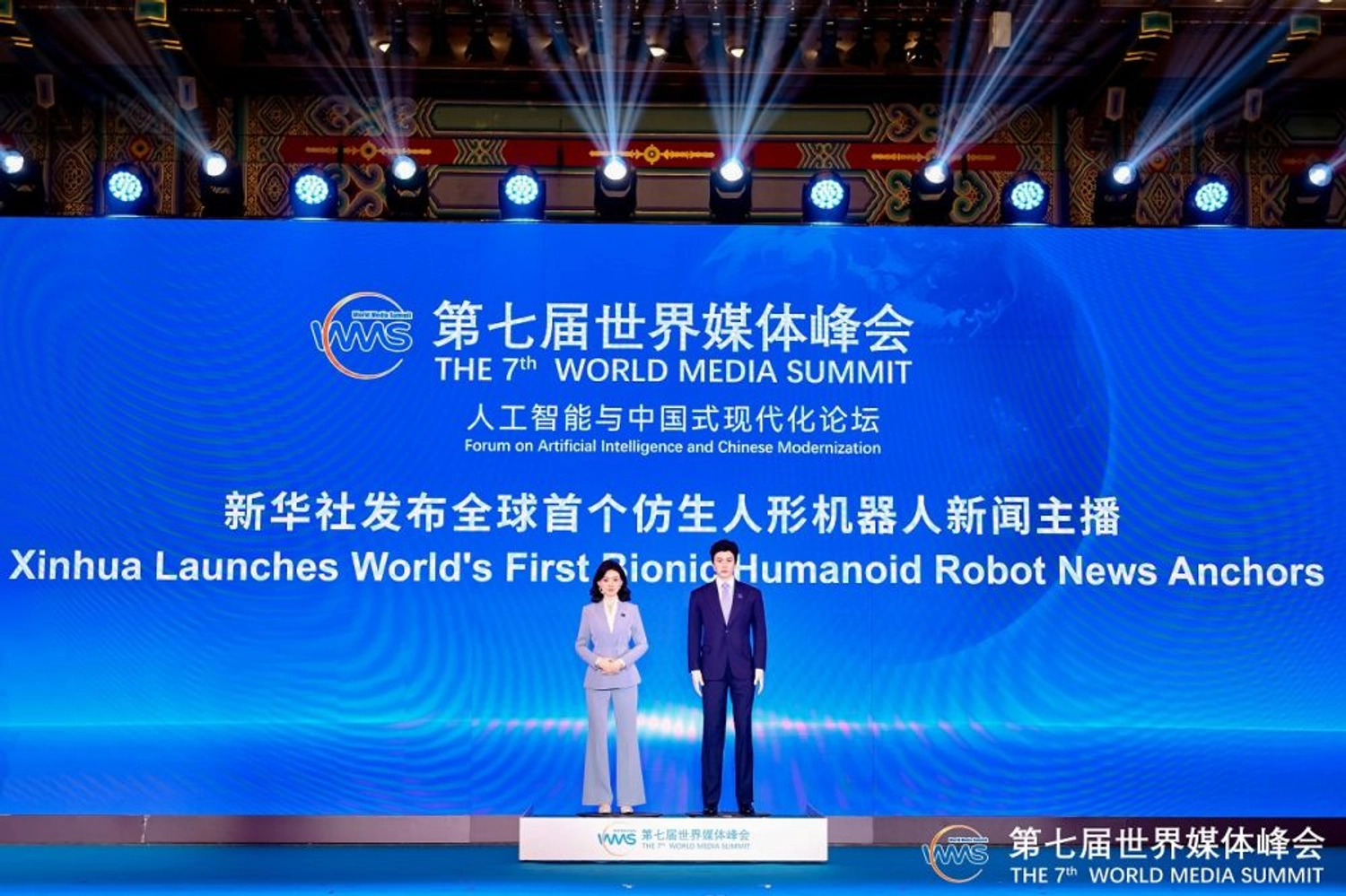
On November 5 in Beijing, China's state news agency Xinhua introduced two humanoid robots built to present the news. Named Xinyan, the female anchor, and Xinyu, the male anchor, they were developed with the Chinese robot maker UBTECH and shown at the seventh World Media Summit, a gathering of media organizations from around the world.
Xinhua calls them the world's first bionic humanoid robot news anchors, meaning lifelike robots made to look and move like people. For ordinary viewers, it is a glimpse of a future in which the person reading headlines on stage or at a museum might not be a person at all.
Built at Human Scale
Both robots are made at a one-to-one scale with real human proportions, so they stand and look like adults rather than toy-sized machines. UBTECH supplied what Xinhua describes as its full in-house technology chain: lifelike artificial skin, the robot hardware, the operating system and the factory capacity to build such machines.
UBTECH also provided an emotion-driven large language model, an AI system trained on huge amounts of text that helps the anchors choose fitting facial expressions and tone. Xinhua has not published height, weight or detailed technical specifications, so it is not yet clear how much the robots can move beyond presenting from a fixed spot.
A Film Director Shapes Their Look
The visual design was led by Zhang Yimou, the celebrated Chinese film director behind the Beijing 2008 Olympics opening ceremony. Speaking at the launch, he said he approached the work through camera aesthetics and character, aiming to balance the seriousness that news delivery demands with natural, finely detailed realism.
Bringing in a filmmaker reflects a real problem in humanoid design. Robots that look almost, but not quite, human can feel unsettling to viewers. Xinhua says Zhang's team guided the entire visual identity of the anchors, which sets the standard for how they will appear in future videos and public appearances.
A Brain Fed Only Checked Facts
What the anchors say comes from Xinhua Yudian, the agency's AI system for current affairs, which draws on a database of vetted Xinhua reporting and official information. UBTECH founder and chief executive Zhou Jian described a chain linking the robots' brain, expression and movement, pulling approved news in real time.
The goal, he said, is to avoid AI hallucinations, the made-up facts that chatbots sometimes produce with total confidence. Because every answer is meant to trace back to a checked source, Xinhua says the content can be verified and controlled. That also means the robots repeat the agency's editorial line rather than offering independent views.
Coworkers, Not Stars
Xinhua insists the robots will not replace its journalists. Qian Tong, head of the agency's New Media Center, described them as a new kind of newsroom role rather than the main act. They are meant to help reporters and editors with reading bulletins, delivering news in several languages and talking with people on site.
Chinese coverage of the launch joked that the tireless anchors could finally take over the night shift. Xinhua's own framing is more cautious: in-depth reporting and human storytelling remain jobs for people, while the robots handle round-the-clock presentation and live interaction at events.
Is It Really a World First?
The label deserves some care. Xinhua itself made headlines in 2018 with AI news anchors, but those were digital video avatars with no physical body. In Japan, a lifelike android called Kodomoroid read news aloud at a Tokyo science museum back in 2014, though it was remotely operated and built for exhibition.
What is new here is the pairing of a lifelike physical humanoid with a news agency's own verified information system, created for regular newsroom use. Xinhua has not defined exactly what its world-first claim covers, and independent testing of how accurately the robots answer live questions has not been published.
What We Still Do Not Know
Several practical questions remain open. Xinhua has not said which languages the anchors speak, how quickly they respond to questions, whether humans can take over remotely, or how long they can operate before needing a recharge. Price and the number of units built have not been disclosed either.
There is also a broader question about trust. A robot drawing only on approved sources may avoid invented facts, but it can still pick the wrong material or lose nuance when it summarizes or translates. How audiences react to hearing news from a human-looking machine will be just as important as the technology.
From Summit Stage to Deep Space
Zhou Jian outlined where the anchors could appear next: study centers for students, city reception halls, cultural exchanges abroad and even reporting on deep space exploration. These are stated ambitions rather than announced deployments, and no timeline was given for any of them.
Xinhua is also building a wider ecosystem around the idea. Qian Tong announced plans for a Xinhua artificial intelligence industry alliance base in Beijing, linking government, media, technology companies and think tanks. The summit itself runs until November 9 and drew around 500 delegates from nearly 330 organizations in 112 countries and regions.
Related Articles
Meet Sagi, PHYMI's Centaur-Style Robot With Four Wheeled Legs and a Cargo Box on Its Back
AiMOGA Unveils MOBO, a Home Companion Robot Linked to LUXEED Cars
South Korea's ETRI Unveils Its Own Humanoid Robot Brain at a Physical AI Showcase