Meet Sagi, PHYMI's Centaur-Style Robot With Four Wheeled Legs and a Cargo Box on Its Back
Robot Details
Sagi • PHYMIPublished
November 2, 2026
Reading Time
4 min read
Author
Origin Of Bots Editorial Team
A Robot Built Like a Centaur
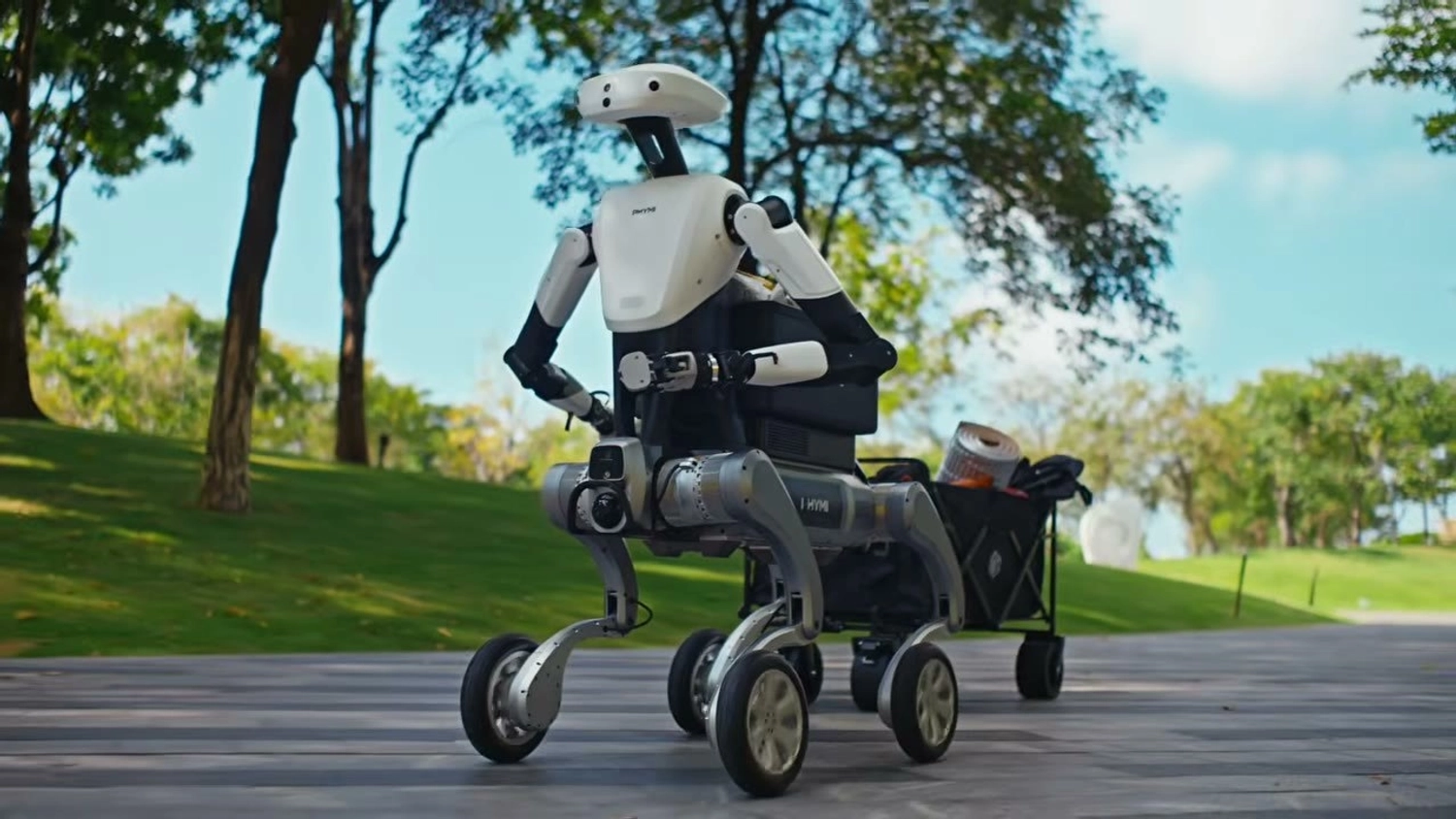
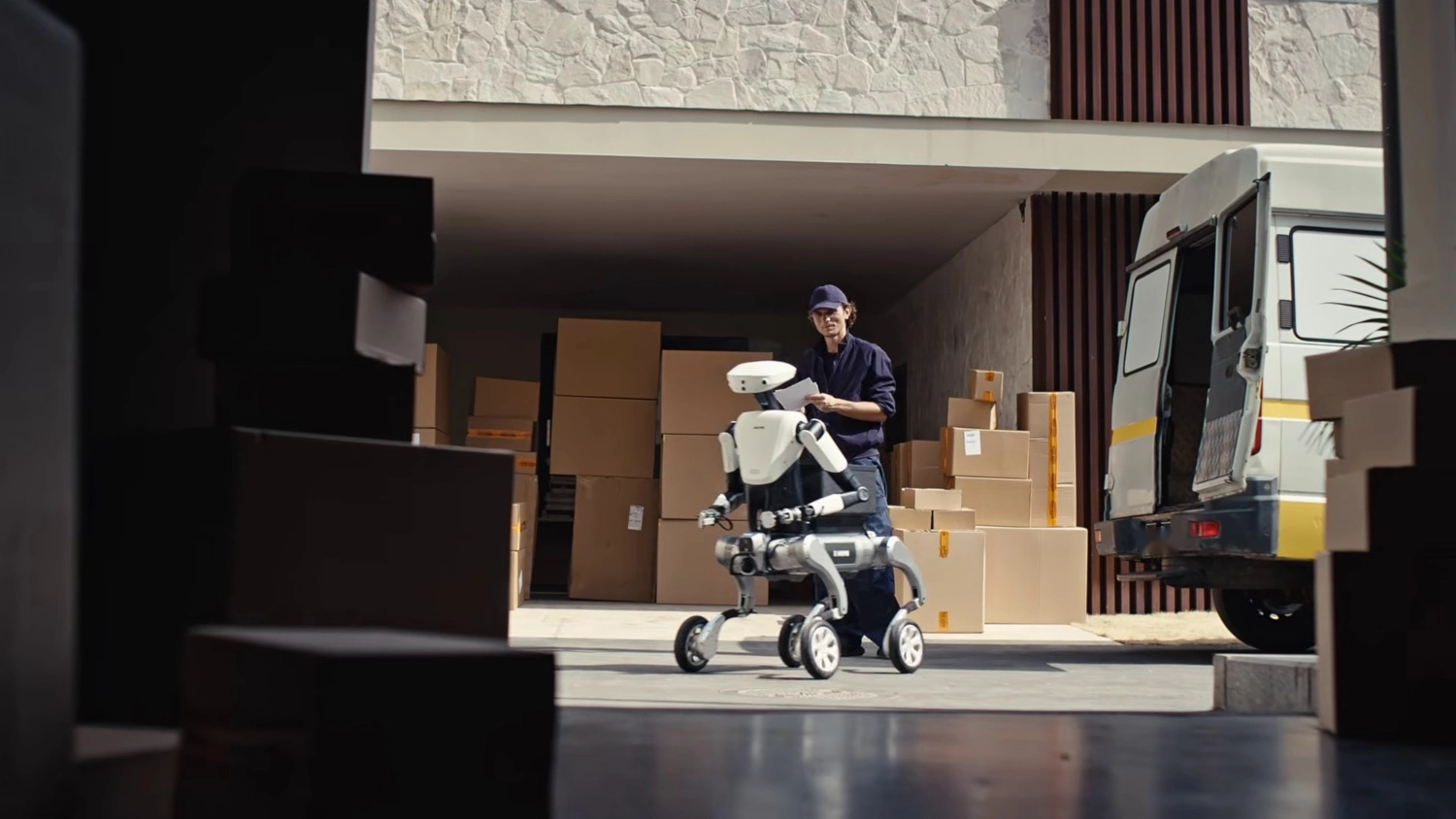
On October 28, 2026, a Chinese start-up called PHYMI showed the world Sagi, a robot that looks like nothing else on the street. It has the head, torso and arms of a humanoid, but instead of two legs it rolls on four wheeled legs, and a box sits on its back. Think of a mythical centaur that went to work as a delivery partner.
PHYMI calls Sagi its first Physical Agent, and it describes the robot as an action partner rather than a gadget. The idea is simple to say: you tell it what you need, and it goes and does it in the real world, the way a helpful colleague would.

Why the Name Points at the Stars
The Chinese name for Sagi is Saqima, and the name is tied to Sagittarius, the constellation of the centaur. It is a cheerful choice for a machine whose body plan borrows from that very creature, with a human-like upper half joined to a four-legged lower half.
In PHYMI's launch film the robot is introduced with a tagline that works out to something like: with a partner, you have more time. The message is that Sagi is meant to give people back small slices of their day, not to impress anyone with acrobatics.
Four Wheeled Legs, Two Free Arms
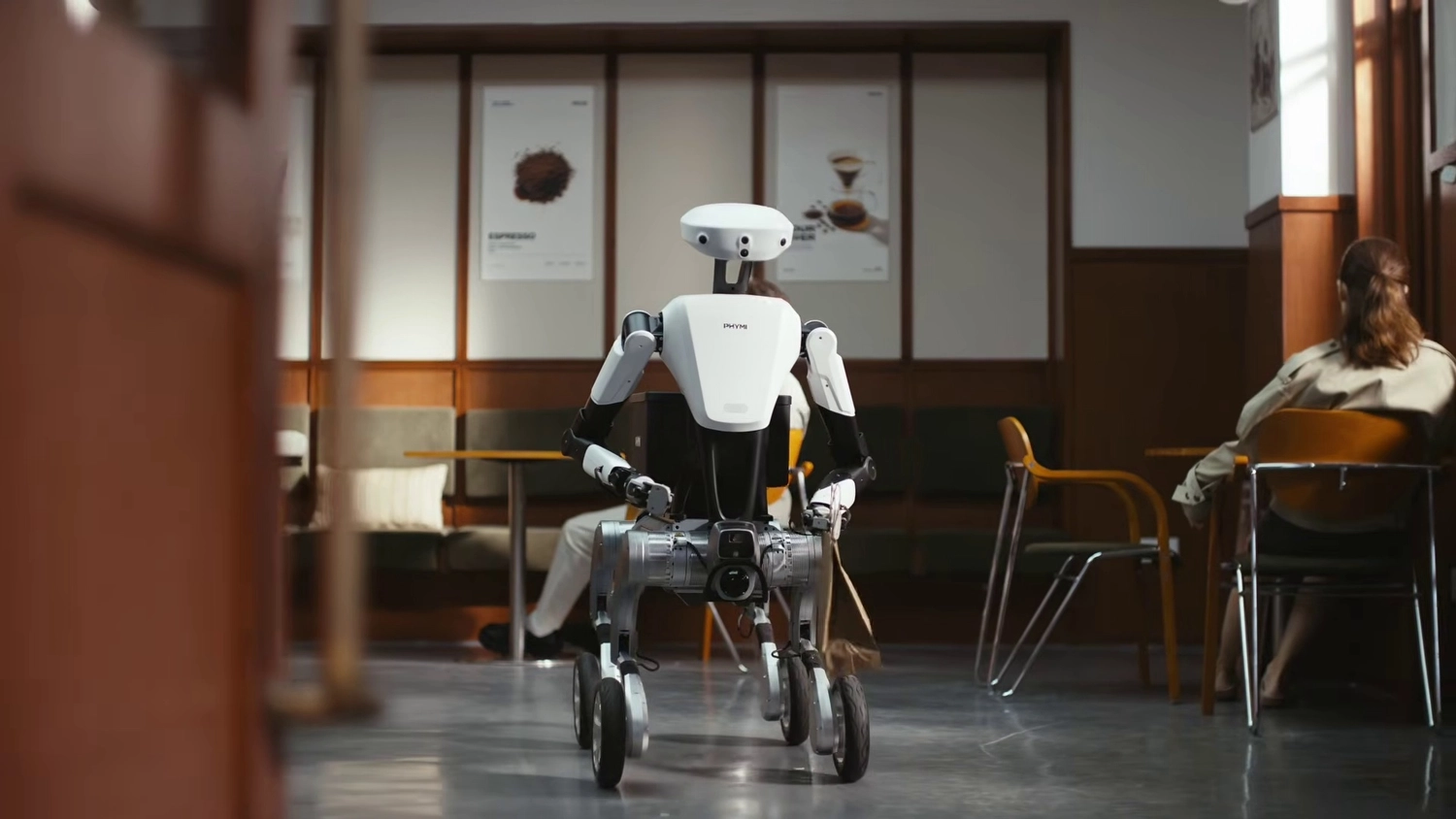
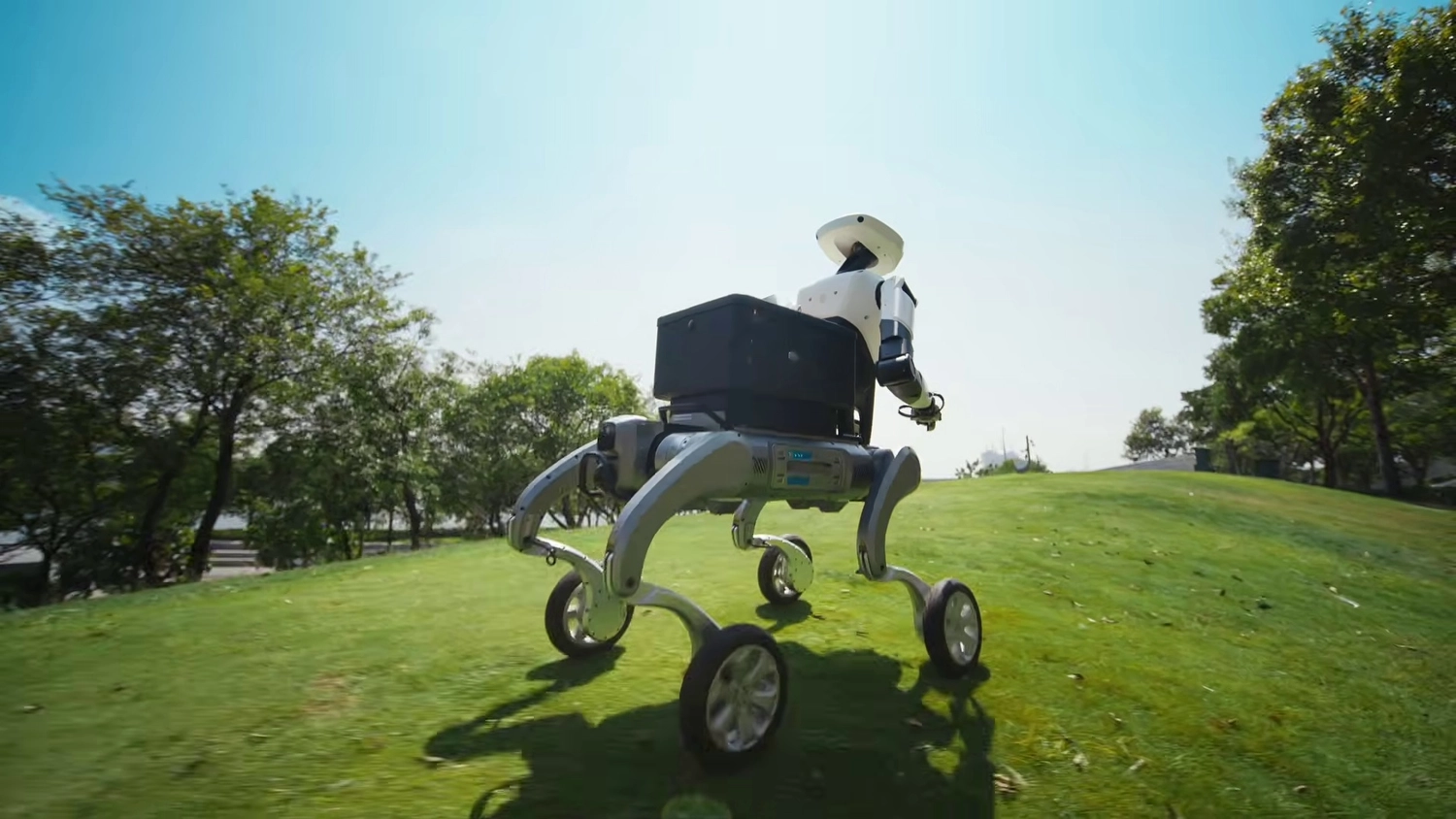
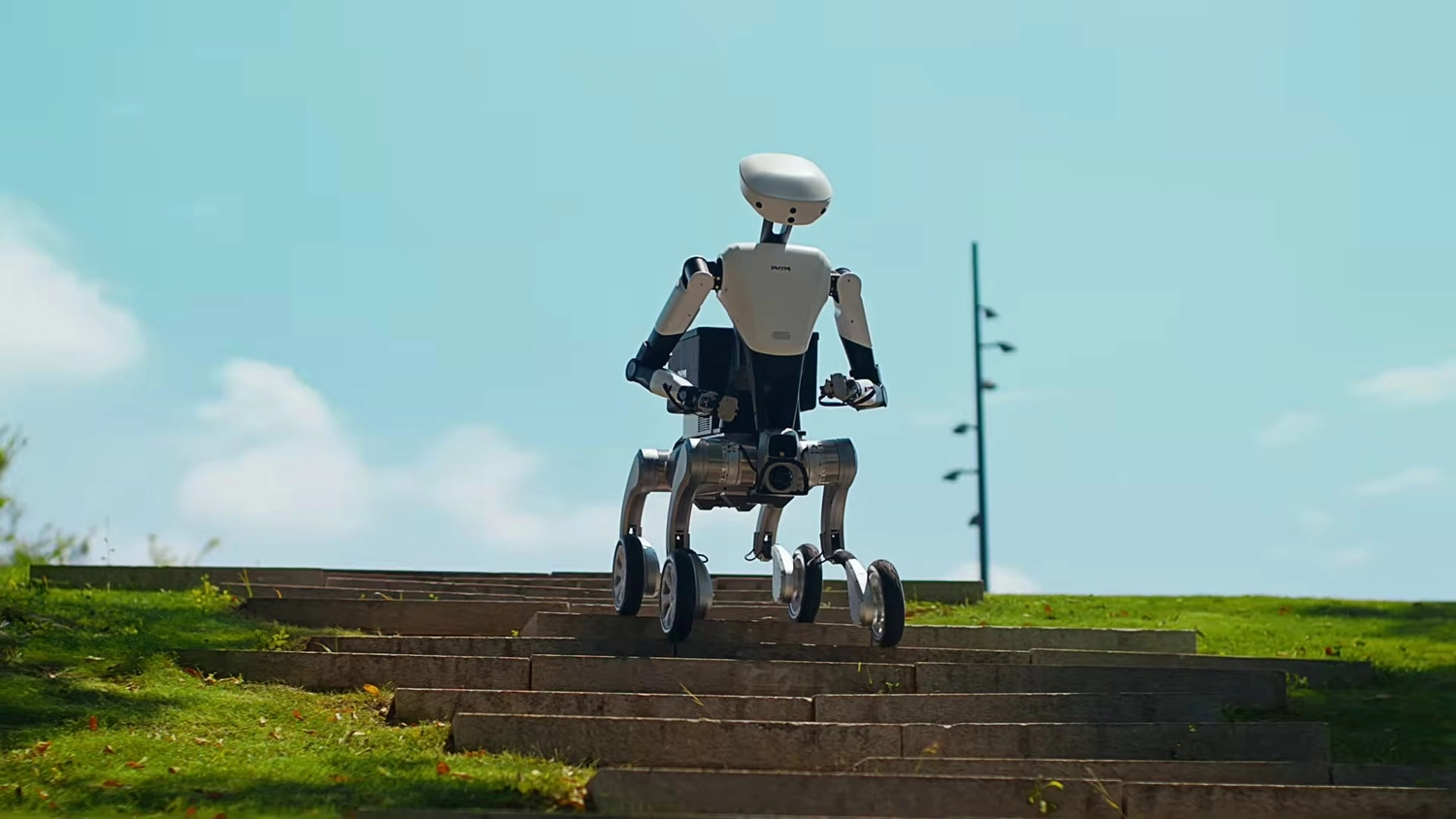
The body is the clever part. Each of Sagi's four legs ends in a wheel, so it can glide quickly across flat ground and still adapt its stance for rougher terrain. The launch video shows it using those wheeled legs to climb stairs, something ordinary wheeled robots usually cannot do.
The cargo box on its back is just as important. Because the load rides on the back, between stops, the humanoid arms stay free to press buttons, hand over parcels and pick things up. PHYMI has not published the robot's size, weight or how much the box can carry.
A Day in the Life: Camping, Office and Neighborhood
PHYMI's film puts Sagi to work in three everyday places. On a camping trip it hauls supplies over uneven grass, follows the group and fetches items. In an office park it carries documents and drinks, rides the elevator and helps get ready for meetings.
In a residential community it works beside a courier, picking up and sorting parcels and taking the elevator to deliver one to a resident's door. These are staged demonstrations from the launch film, so they show what PHYMI is aiming for rather than proven daily performance.
The Brain Behind the Body
Sagi runs on PHYMI Brain 1.0, a model that PHYMI says works across several kinds of input at once and runs its different jobs at different speeds. It splits the work into three spaces: one for planning a task and understanding what you want, one for turning what it sees into movement, and one for feeling contact, such as force and touch.
That last part matters for a robot that hands people drinks and parcels. Sensing how firmly it is gripping something, and reacting to it, is what separates a gentle helper from a clumsy one. PHYMI has not said which sensors or computers it uses.
LINK: Asking a Human for Help
No robot gets every decision right, so PHYMI built in a safety valve called LINK. When Sagi reaches a choice it cannot make alone, you can see what the robot sees, clarify what you want and let it carry on with the errand.
In one example from PHYMI's material, a requested drink is unavailable, so the robot asks for help, and the user picks a substitute and pays. LINK also works as a regional dispatch center that can coordinate several robots in the same area, and it lets users set goals, give permission and follow progress.
Learning From People, Not Just Code
To teach Sagi how humans do things, PHYMI developed its own 360-degree capture headset with wide-angle and telephoto lenses. A person wears it while doing a task, and the recording becomes a demonstration the robot can learn from.
PHYMI says the data and feedback gathered as robots work are fed back into later training and testing. The company's stated plan is to serve one real situation really well first, then widen the range of tasks and places as the model improves.
Money, Founder and What We Still Do Not Know
PHYMI has raised nearly 100 million US dollars in a seed round led by IDG Capital, with Yunqi Capital, Didi, Fosun RZ Capital, Yaotu Capital and lidar maker Hesai also taking part. The company's founder, Liu Nianqiu, previously worked on self-driving cars as a technical partner at DeepRoute.ai and earlier worked as an engineer at Intel.
What PHYMI has not said is just as telling. There is no price, no on-sale date, and no published figures for Sagi's speed, battery life, payload or size. For now Sagi is a convincing concept on film, and the real test will be how it performs outside a carefully shot demo.
Explore Humanoids

Sources
Related Articles
GXO Sends Agility Robotics' Digit Humanoid to Two More US Warehouses
Agile Robots Launches Agile ONE SN Research Humanoid and Pilots Humanoid Parts Picking at Audi

Realbotix Launches Echo TableTop, a $11,950 Lifelike Desktop Humanoid That Speaks Over 100 Languages

Meet Echo FullBody, Realbotix's Life-Size, $59,950 Humanoid With 39 Moving Joints and Articulated Fingers
Related Comparisons
Compare Sagi with similar robots
Pepper vs AIREC
Pepper or AIREC? Compare these two humanoid robots on purpose, sensors, AI, arms and battery, from customer service to elderly care research.

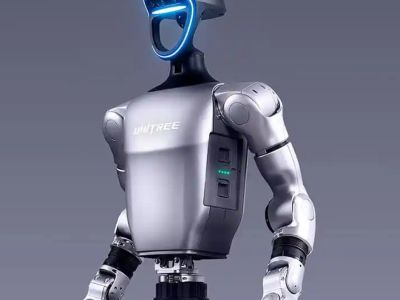
Optimus vs Unitree G1
Compare Optimus vs Unitree G1 for humanoid mobility, dexterity, autonomy, and payload capacity.
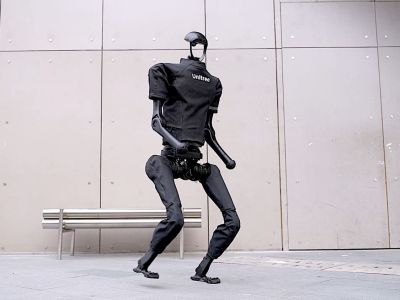
Unitree G1 vs Unitree H1
Head-to-head: Unitree G1 vs Unitree H1 compared on bipedal balance, AI learning, and real-world deployment.
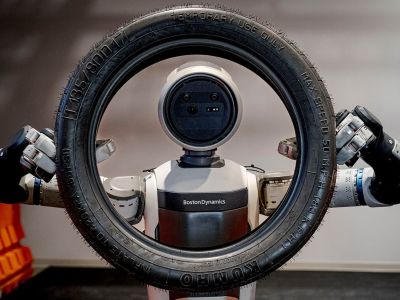
Optimus vs Atlas (Electric 2025)
In-depth comparison of Optimus and Atlas (Electric Atlas, 2025), covering hardware capabilities, teleoperation, and enterprise readiness.
Learn More About This Robot
Discover detailed specifications, reviews, and comparisons for Sagi.
View Robot Details →