Optimus vs Atlas (Electric 2025) at a glance
Optimus is not for sale, while Atlas (Electric 2025) is sold through a sales quote. Optimus is lighter at 57 kg, compared with 90 kg for Atlas (Electric 2025). Atlas (Electric 2025) has more degrees of freedom (56 against 40 for Optimus), which allows finer movement. Atlas (Electric 2025) is quicker, with a top speed of 2.5 m/s versus 2.2 m/s for Optimus. Atlas (Electric 2025) is the taller of the two at 190 cm, against 173 cm for Optimus.
| Key specs | Optimus | Atlas (Electric 2025) |
|---|---|---|
| Price | $20,000–$50,000 | — |
| Height | 173 cm | 190 cm |
| Weight | 57 kg | 90 kg |
| Top speed | 2.2 m/s | 2.5 m/s (stronger) |
| Runtime | — | 4 hours |
| Degrees of freedom | 40 | 56 (stronger) |
| Payload | 20 kg | 30 kg (stronger) |
| Availability | Not for sale | Order via sales quote |
Last updated:
Which one fits your use?
Based on the uses each robot is built and marketed for. Open a use to see the specs that matter for it.
| Comparing for… | Optimus | Atlas (Electric 2025) |
|---|---|---|
| Suited | Suited | |
| Suited | Suited | |
| Not marketed | Suited | |
| Not marketed | Suited |
- Only Atlas (Electric 2025) is marketed for research labs and hazardous or high-risk work.
- Both suit warehouse and logistics work and factory and manufacturing work, so compare the specs for that use.
Optimus by Tesla is positioned as a general-purpose humanoid designed to work across manufacturing, logistics, research, infrastructure inspection, and remote operations. Its smaller frame, lower weight, and 40+ degrees of freedom make it a strong candidate for tasks that need reach, balance, and dexterous manipulation in human-built environments. The platform’s AI and FSD integration also suggest a broad software-first approach to autonomy and task execution.
Atlas (Electric Atlas, 2025) by Boston Dynamics is positioned as an enterprise humanoid built for industrial factory workflows such as part sequencing, palletizing, machine tending, and autonomous sorting. Its larger body, higher total degrees of freedom, and teleoperation-supervised autonomy emphasize strength, reach, and controlled deployment in demanding production settings. The platform is more specialized for heavy-duty repetitive work than broad general-purpose use. Compared with Optimus, Atlas is the more industrially targeted humanoid and the one designed around structured enterprise integration.
Detailed Analysis
How do bipedal mobility and balance compare?

Optimus
Optimus is lighter at 57 kg and is specified with a maximum speed of 8 km/h, which supports agile movement in tighter human workspaces. Atlas is heavier at 90 kg and reaches 9 km/h maximum running speed, indicating stronger dynamic capability but with a more industrial deployment profile. Both are humanoid bipedal systems, but Atlas’s larger frame and 56 DoF suggest a more complex balance-and-control stack for forceful motion. Optimus is better aligned to lighter, flexible movement, while Atlas appears optimized for robust factory locomotion.
Which robot is more capable for complex manipulation tasks?
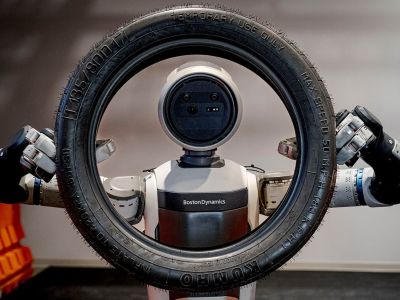
Atlas (Electric 2025)
Optimus has 40+ DoF with full-body dexterity including hands, which supports fine manipulation across varied tasks. Atlas has 56 DoF with full 360° joint rotation, giving it a higher articulation count and broader pose range for industrial handling. Optimus is likely better suited to diverse human-scale interactions, while Atlas is built for heavier structured manipulation in production workflows. For complex manipulation under industrial constraints, Atlas has the advantage; for generalized hand-centric tasks, Optimus is the more versatile platform. Optimus carries 20 kg and can deadlift 68 kg.
Which humanoid robot offers stronger autonomy and learning?
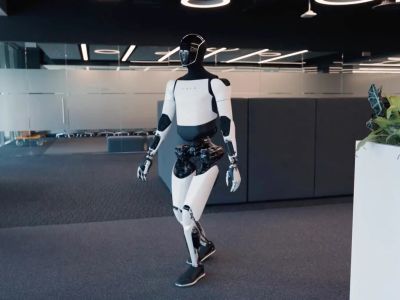
Optimus
Optimus is described as semi-autonomous to fully autonomous and integrates Tesla custom OS with AI and FSD capabilities, suggesting a strong focus on software-driven autonomy. Atlas is semi-autonomous with Orbit fleet management and teleoperation supervision, which makes its deployments more controlled and operator-in-the-loop. Optimus appears aimed at broader autonomy scaling, while Atlas prioritizes supervised enterprise reliability. Buyers seeking higher independence may lean toward Optimus, while structured industrial operations may prefer Atlas’s managed autonomy model. Optimus's control method is listed as fully autonomous with optional remote supervision.
How do payload and lifting capacities differ?
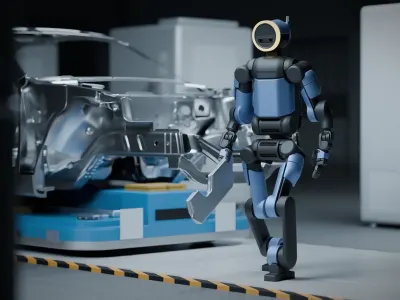
Atlas (Electric 2025)
Optimus can carry 20 kg and is listed with a 68 kg deadlift capacity, which is solid for a lighter humanoid designed around general utility. Atlas carries 30 kg sustained and deadlifts 50 kg, which favors continuous industrial handling over peak lifting strength. That means Atlas has the better sustained payload figure, while Optimus shows a higher deadlift specification. For repeated enterprise lifting, Atlas is the stronger fit; for broader general-purpose manipulation, Optimus offers a useful balance of capacity and agility.
How long can each robot operate on power?
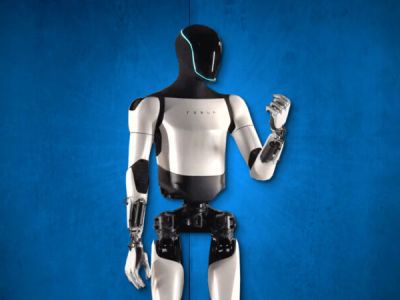
Optimus
Optimus is specified at approximately 8 hours of operational use, which supports a full work shift in many service and deployment scenarios. Atlas uses high-cycle industrial lithium packs. Optimus has the clearer runtime spec for daily operations, while Atlas emphasizes battery longevity under industrial cycling. For shift-based runtime planning, Optimus is easier to benchmark; for fleet lifecycle planning, Atlas provides the stronger durability signal. Atlas (Electric 2025) recharges in about 2 hours. Atlas (Electric 2025) has 56 degrees of freedom, carries 30 kg and can deadlift 50 kg.
Which robot is better for industrial manufacturing?
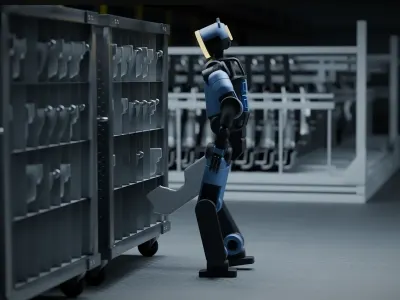
Atlas (Electric 2025)
Atlas is better aligned with industrial manufacturing because its use cases explicitly include heavy automotive part sequencing, damper strut lifting, palletizing, machine tending, and autonomous sorting. Optimus is broader and more general-purpose, with manufacturing as one of several target sectors alongside research, logistics, infrastructure inspection, and remote operations. Atlas’s teleoperation supervision, larger frame, and higher sustained payload make it more production-ready for repetitive factory roles. For enterprise manufacturing deployment, Atlas is the safer recommendation. Optimus stands 173 cm tall and weighs 57 kg. Atlas (Electric 2025) stands 190 cm tall and weighs 90 kg.
Which robot fits general-purpose deployment better?
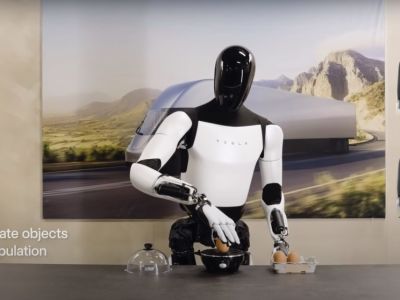
Optimus
Optimus is better positioned for general-purpose deployment because it targets a wider mix of environments and tasks, including research, logistics, and remote operations. Atlas is more specialized for factory workflows and continuous industrial handling, so it is less broad in mission scope. Optimus also has a lighter body and a runtime spec that fits mixed operational environments more naturally. For organizations needing a flexible humanoid across multiple workstreams, Optimus is the better recommendation. Atlas (Electric 2025)'s listed uses include heavy automotive part sequencing, damper strut lifting, continuous palletizing and machine tending.
What do their software ecosystems and control models offer?
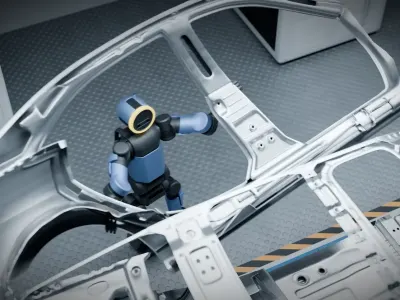
Atlas (Electric 2025)
Optimus runs Tesla custom OS with AI and FSD integration, which suggests a vertically integrated software stack centered on autonomy and perception. Atlas uses a custom Boston Dynamics OS based on Linux, with ROS compatibility and APIs for Python and C++, which is more open for engineering integration. Atlas also includes Orbit fleet management and teleoperation supervision, making it easier to fit into industrial operations. Optimus appears more closed and vertically integrated, while Atlas offers a more conventional enterprise robotics software model.
How safe are these humanoids around humans?
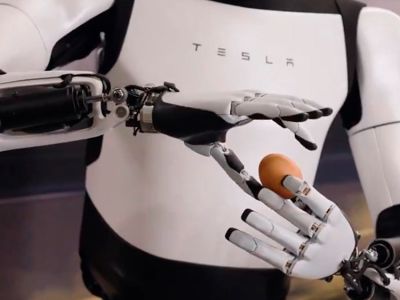
Optimus
Optimus includes emergency stop, obstacle detection, and compliant actuators, which are standard but important safeguards for human-adjacent work. Atlas adds emergency stop buttons, obstacle avoidance sensors, compliant actuators, and real-time environment monitoring, indicating a more layered industrial safety approach. Both are designed for human environments, but Atlas provides more explicit supervision-oriented safety tooling. For controlled enterprise deployment, Atlas offers the stronger safety instrumentation package. Optimus runs for about 8 hours per charge and recharges in 1–2 hours. Optimus's sensors include vision cameras and tactile sensing on the fingers. Atlas (Electric 2025)'s sensors include RGB cameras, stereo cameras, depth sensors and force/torque sensors at joints.
Capabilities & Operational Tasks
Head-to-head comparison of what Optimus and Atlas (Electric 2025) can do, their applications, and capabilities.
What Can Optimus & Atlas (Electric 2025) Do?
159 tasks listed for both, 0 only for Optimus, 6 only for Atlas (Electric 2025).
Both Optimus and Atlas (Electric 2025)
9Only Atlas (Electric 2025)
6Technical Specifications
Optimus and Atlas (Electric 2025) differ on 35 of the 37 specifications listed for both.
Manipulation & Load Capacity
4 Comparative Metrics
Kinematic Architecture & Dexterity
3 Comparative Metrics
Energy & Power Management
7 Comparative Metrics
Frequently Asked Questions
Can I buy Optimus or Atlas (Electric 2025) today?
Optimus is not for sale, while Atlas (Electric 2025) is sold through a sales quote.
Which is lighter, Optimus or Atlas (Electric 2025)?
Optimus is lighter at 57 kg, compared with 90 kg for Atlas (Electric 2025). Atlas (Electric 2025) is also taller, at 190 cm against 173 cm for Optimus.
Which uses is each robot marketed for, Optimus or Atlas (Electric 2025)?
Only Atlas (Electric 2025) is marketed for research labs and hazardous or high-risk work. Both suit warehouse and logistics work and factory and manufacturing work, so compare the specs for that use.
How much does Optimus cost?
Optimus is listed at $20,000–$50,000.
Where can I buy Optimus?
Optimus is not for sale.
Where can I buy Atlas (Electric 2025)?
Atlas (Electric 2025) is sold through Boston Dynamics's sales team; request a quote.
Related Comparisons
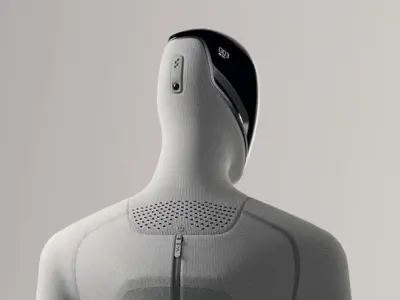
Figure 03 vs Atlas (Electric 2025)
Figure 03 from Figure AI vs Atlas from Boston Dynamics: runtime, charging, lifting, hands and safety compared, with a clear pick by job.
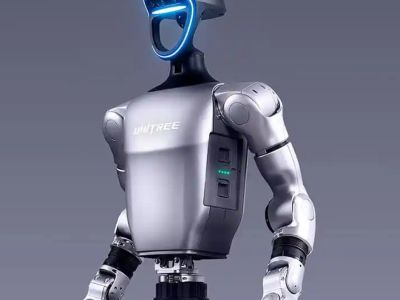
Optimus vs Unitree G1
Compare Optimus vs Unitree G1 for humanoid mobility, dexterity, autonomy, and payload capacity.
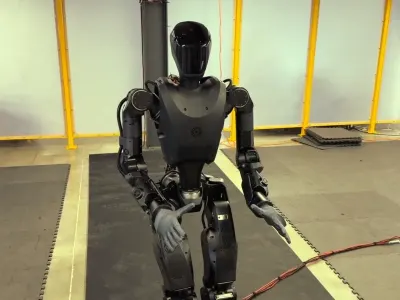
Optimus vs Phantom MK1
Optimus or Phantom MK1? See which humanoid robot performs better for manufacturing, logistics, defense, dexterity, autonomy, and payload in enterprise deployments.
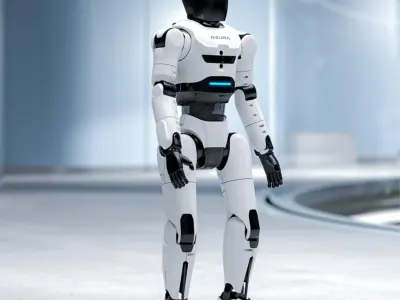
Optimus vs 4NE-1 Mini
Which humanoid robot is better? Optimus vs 4NE-1 Mini compared for dexterity, AI capabilities, payload, and industrial vs research use cases.
Verdicts reflect our research and opinion. Confirm specifications with the manufacturer before buying.