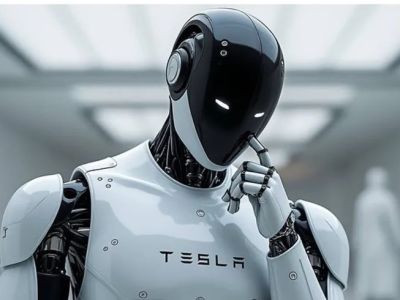
Optimus by Tesla is positioned as a general-purpose humanoid designed to work across manufacturing, logistics, research, infrastructure inspection, and remote operations. Its smaller frame, lower weight, and 40+ degrees of freedom make it a strong candidate for tasks that need reach, balance, and dexterous manipulation in human-built environments. The platform’s AI and FSD integration also suggest a broad software-first approach to autonomy and task execution. Compared with Atlas, Optimus is framed more as a flexible multipurpose humanoid than a heavy industrial specialist.
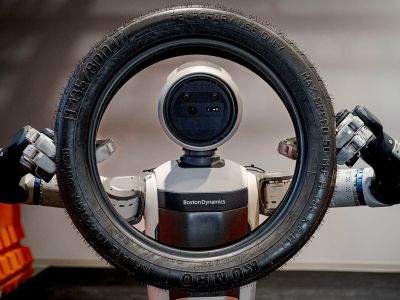
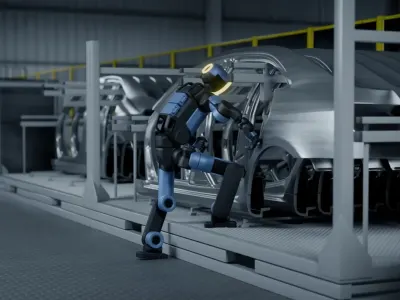
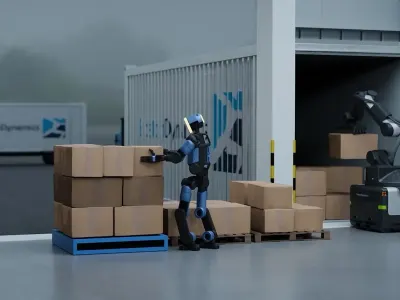
Atlas (Electric Atlas, 2025) by Boston Dynamics is positioned as an enterprise humanoid built for industrial factory workflows such as part sequencing, palletizing, machine tending, and autonomous sorting. Its larger body, higher total degrees of freedom, and teleoperation-supervised autonomy emphasize strength, reach, and controlled deployment in demanding production settings. The platform is more specialized for heavy-duty repetitive work than broad general-purpose use. Compared with Optimus, Atlas is the more industrially targeted humanoid and the one designed around structured enterprise integration.
Detailed Analysis
How do bipedal mobility and balance compare?
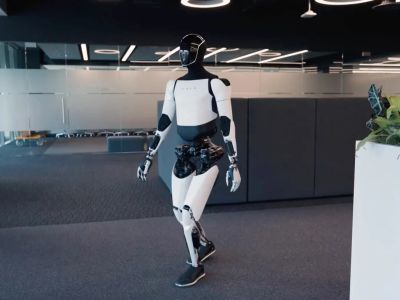
Optimus is lighter at 57 kg and is specified with a maximum speed of 8 km/h, which supports agile movement in tighter human workspaces. Atlas is heavier at 90 kg and reaches 9 km/h maximum running speed, indicating stronger dynamic capability but with a more industrial deployment profile. Both are humanoid bipedal systems, but Atlas’s larger frame and 56 DoF suggest a more complex balance-and-control stack for forceful motion. Optimus is better aligned to lighter, flexible movement, while Atlas appears optimized for robust factory locomotion.
Which robot is more capable for complex manipulation tasks?
Optimus has 40+ DoF with full-body dexterity including hands, which supports fine manipulation across varied tasks. Atlas has 56 DoF with full 360° joint rotation, giving it a higher articulation count and broader pose range for industrial handling. Optimus is likely better suited to diverse human-scale interactions, while Atlas is built for heavier structured manipulation in production workflows. For complex manipulation under industrial constraints, Atlas has the advantage; for generalized hand-centric tasks, Optimus is the more versatile platform.
Which humanoid robot offers stronger autonomy and learning?
Optimus is described as semi-autonomous to fully autonomous and integrates Tesla custom OS with AI and FSD capabilities, suggesting a strong focus on software-driven autonomy. Atlas is semi-autonomous with Orbit fleet management and teleoperation supervision, which makes its deployments more controlled and operator-in-the-loop. Optimus appears aimed at broader autonomy scaling, while Atlas prioritizes supervised enterprise reliability. Buyers seeking higher independence may lean toward Optimus, while structured industrial operations may prefer Atlas’s managed autonomy model.
How do payload and lifting capacities differ?
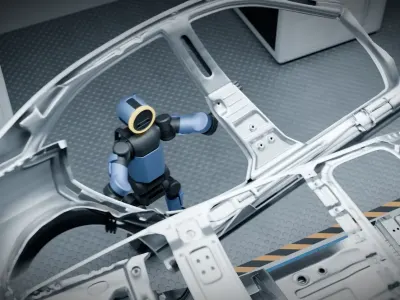
Optimus can carry 20 kg and is listed with a 68 kg deadlift capacity, which is solid for a lighter humanoid designed around general utility. Atlas carries 30 kg sustained and deadlifts 50 kg, which favors continuous industrial handling over peak lifting strength. That means Atlas has the better sustained payload figure, while Optimus shows a higher deadlift specification. For repeated enterprise lifting, Atlas is the stronger fit; for broader general-purpose manipulation, Optimus offers a useful balance of capacity and agility.
How long can each robot operate on power?
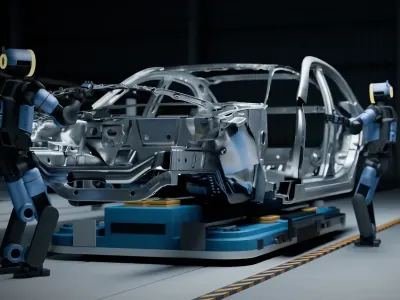
Optimus is specified at approximately 8 hours of operational use, which supports a full work shift in many service and deployment scenarios. Atlas uses high-cycle industrial lithium packs with an expected 5–7 year battery lifecycle, which speaks more to long-term pack durability than single-charge runtime. Optimus has the clearer runtime spec for daily operations, while Atlas emphasizes battery longevity under industrial cycling. For shift-based runtime planning, Optimus is easier to benchmark; for fleet lifecycle planning, Atlas provides the stronger durability signal.
Which robot is better for industrial manufacturing?
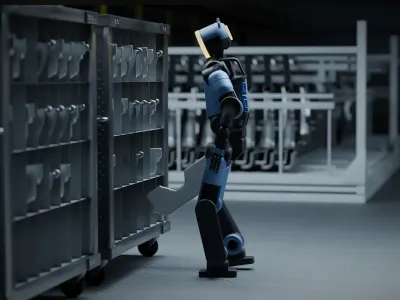
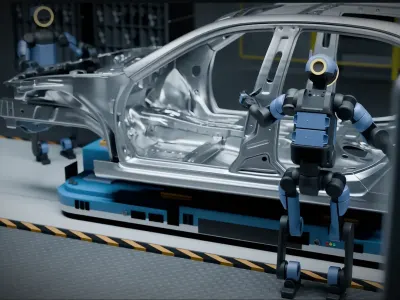
Atlas is better aligned with industrial manufacturing because its use cases explicitly include heavy automotive part sequencing, damper strut lifting, palletizing, machine tending, and autonomous sorting. Optimus is broader and more general-purpose, with manufacturing as one of several target sectors alongside research, logistics, infrastructure inspection, and remote operations. Atlas’s teleoperation supervision, larger frame, and higher sustained payload make it more production-ready for repetitive factory roles. For enterprise manufacturing deployment, Atlas is the safer recommendation.
Which robot fits general-purpose deployment better?
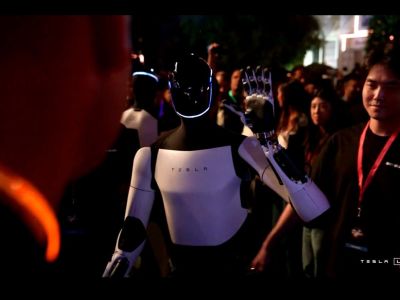
Optimus is better positioned for general-purpose deployment because it targets a wider mix of environments and tasks, including research, logistics, and remote operations. Atlas is more specialized for factory workflows and continuous industrial handling, so it is less broad in mission scope. Optimus also has a lighter body and a runtime spec that fits mixed operational environments more naturally. For organizations needing a flexible humanoid across multiple workstreams, Optimus is the better recommendation.
What do their software ecosystems and control models offer?
Optimus runs Tesla custom OS with AI and FSD integration, which suggests a vertically integrated software stack centered on autonomy and perception. Atlas uses a custom Boston Dynamics OS based on Linux, with ROS compatibility and APIs for Python and C++, which is more open for engineering integration. Atlas also includes Orbit fleet management and teleoperation supervision, making it easier to fit into industrial operations. Optimus appears more closed and vertically integrated, while Atlas offers a more conventional enterprise robotics software model.
How safe are these humanoids around humans?
Optimus includes emergency stop, obstacle detection, and compliant actuators, which are standard but important safeguards for human-adjacent work. Atlas adds emergency stop buttons, obstacle avoidance sensors, compliant actuators, and real-time environment monitoring, indicating a more layered industrial safety approach. Both are designed for human environments, but Atlas provides more explicit supervision-oriented safety tooling. For controlled enterprise deployment, Atlas offers the stronger safety instrumentation package.
Analysis Score Summary
Total Score
10
Optimus
VS
Based on Detailed Analysis
Total Score
8
Atlas (Electric Atlas, 2025)
📊 Win: 2 points | Trade-off: 1 point each
Scores are summed across every insight: a clear winner earns 2 points, while balanced trade-offs give each robot 1 point. The total reflects how often each robot outperforms the other (or shares the spotlight) throughout the detailed analysis sections.
Capabilities & Operational Tasks
Head-to-head comparison of what Optimus and Atlas (Electric Atlas, 2025) can do, their applications, and capabilities.
What Can Optimus & Atlas (Electric Atlas, 2025) Do?
15Core operational tasks, activities, and physical manipulation duties evaluated side-by-side.
| Task & Description | Model AOptimus8 supported | Model BAtlas (Electric Atlas, 2025)15 supported |
|---|---|---|
| Assembly | High | High |
| Autonomous task execution | High | High |
| Carrying and transport | — | High |
| Collaborative work | — | High |
| Inspection | High | High |
| Loading and unloading | High | High |
| Machine operation | — | High |
| Machine tending | — | High |
| Material handling | High | High |
| Move objects | High | High |
| Navigation | — | High |
| Obstacle traversal | — | High |
| Pick and place | High | High |
| Quality control | — | High |
| Repetitive physical tasks | High | High |
Technical Specifications
Head-to-head performance data and metrics
| Specification | Model AOptimus | Model BAtlas (Electric Atlas, 2025) |
|---|---|---|
Functional Utility & Use Cases4 Comparative Metrics | ||
Control Method | Fully autonomous with optional remote supervision | AI automation with options for remote control and manual operation via app or control station |
Use Cases | Manufacturing, research, logistics, infrastructure inspection, remote operations | Heavy automotive part sequencing, damper strut lifting, continuous palletizing, machine tending, autonomous sorting |
Multi Robot Coord | Multi-robot coordination via network | Supports multi-robot coordination and fleet management via Orbit platform |
Pet Friendly | designed to operate safely around humans | Not Applicable / No |
Manipulation & Load Capacity4 Comparative Metrics | ||
Carrying Capacity | 20 kg | 30 kg (66 lbs) sustained |
Deadlift Capacity | 68 kg (150 lbs) | 50 kg (110 lbs) |
Payload Type | Goods and tools; not designed for human transport | 30 kg (66 lbs) continuous carrying capacity, 50 kg (110 lbs) peak deadlift capacity |
Modular Attachments | Hands with 11 degrees of freedom; other attachments not specified | Interchangeable grippers, arms, sensors, and tool mounts for task-specific customization |
Kinematic Architecture & Dexterity4 Comparative Metrics | ||
Degrees of Freedom | 40+ DOF (full-body dexterity including hands) | 56 DoF with full 360° joint rotation |
Material | Aluminum frame, composite joints, polymer covers | Titanium, aluminum, composite plastics, and soft materials for joint covers |
Mobility Type | Bipedal (legged) | Legged (Advanced electric bipedal locomotion with 360° joint articulation) |
Hardware Interface | - | USB-C, Ethernet ports, GPIO expansion slots for custom hardware integration |
Functional Utility & Use Cases
4 Comparative Metrics
Manipulation & Load Capacity
4 Comparative Metrics
Kinematic Architecture & Dexterity
4 Comparative Metrics
Frequently Asked Questions
What is the payload capacity of Optimus by Tesla versus Atlas (Electric Atlas, 2025) by Boston Dynamics?
Optimus by Tesla carries 20 kg and deadlifts 68 kg. Atlas (Electric Atlas, 2025) by Boston Dynamics carries 30 kg sustained but deadlifts 50 kg.
How autonomous is Optimus by Tesla compared with Atlas (Electric Atlas, 2025) by Boston Dynamics in enterprise deployment?
Optimus by Tesla is semi-autonomous to fully autonomous. Atlas (Electric Atlas, 2025) by Boston Dynamics is semi-autonomous and uses Orbit fleet management with teleoperation supervision.
Which robot has better walking speed and locomotion stability, Optimus by Tesla or Atlas (Electric Atlas, 2025) by Boston Dynamics?
Atlas (Electric Atlas, 2025) by Boston Dynamics is faster at 9 km/h maximum running speed. Optimus by Tesla is lighter and specified at 8 km/h, which may suit tighter indoor movement.
Which humanoid robot has better hand dexterity for manipulation tasks, Optimus by Tesla or Atlas (Electric Atlas, 2025) by Boston Dynamics?
Optimus by Tesla has 40+ DoF with full-body dexterity including hands. Atlas (Electric Atlas, 2025) by Boston Dynamics has 56 DoF and more articulation overall for industrial manipulation.
Is Optimus by Tesla or Atlas (Electric Atlas, 2025) by Boston Dynamics more deployment-ready for automotive manufacturing?
Atlas (Electric Atlas, 2025) by Boston Dynamics is more deployment-ready for automotive manufacturing. Its listed use cases include heavy part sequencing, machine tending, palletizing, and autonomous sorting.
Which humanoid robot is better suited for research and remote operations, Optimus by Tesla or Atlas (Electric Atlas, 2025) by Boston Dynamics?
Optimus by Tesla is better suited for research and remote operations. Its broader use-case set includes research, infrastructure inspection, logistics, and remote operations.
Related Comparisons
Discover similar robot matchups to expand your knowledge and find the perfect solution
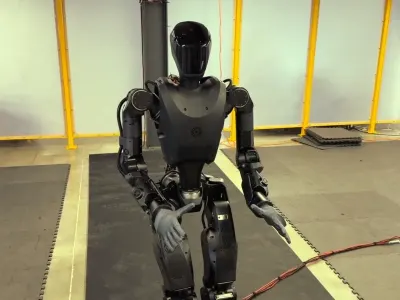
Optimus vs Phantom MK1
Optimus or Phantom MK1? See which humanoid robot performs better for manufacturing, logistics, defense, dexterity, autonomy, and payload in enterprise deployments.
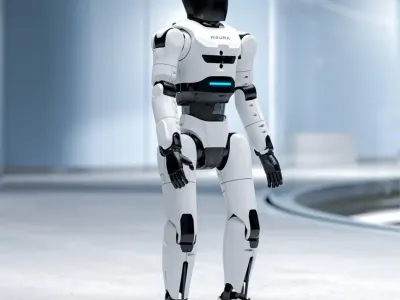
Optimus vs 4NE-1 Mini
Which humanoid robot is better? Optimus vs 4NE-1 Mini compared for dexterity, AI capabilities, payload, and industrial vs research use cases.
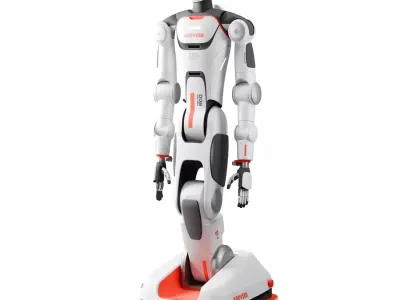
Optimus vs ELIXIS W
Which robot wins? Optimus vs ELIXIS W compared across sensors, battery, navigation, speed, and price for industrial applications.
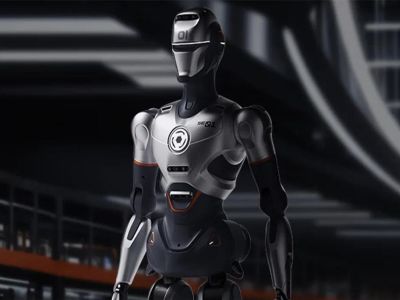
Optimus vs SE01
Head-to-head: Optimus vs SE01. Explore differences in sensors, battery, navigation, speed, and AI capabilities.
Disclaimer
All content, comparisons, and verdicts on this website are based on our research, testing, and opinion. While we strive for accuracy, we do not guarantee the completeness, reliability, or suitability of any information. Performance, specifications, and results may vary depending on usage and conditions. This website and its authors are not responsible for any decisions, actions, or outcomes based on the information provided. Always verify product details with the manufacturer before making purchase or operational decisions.