Tesla's Optimus is a bipedal humanoid robot positioned for general-purpose tasks across manufacturing, research, logistics, and infrastructure inspection. It leverages Tesla's Full Self-Driving (FSD) vision system and custom AI for fully autonomous operation with optional remote supervision. Key differentiators include its 8 km/h max speed, 57 kg weight, and 8-hour battery life, enabling versatile mobility in diverse environments compared to wheeled alternatives.
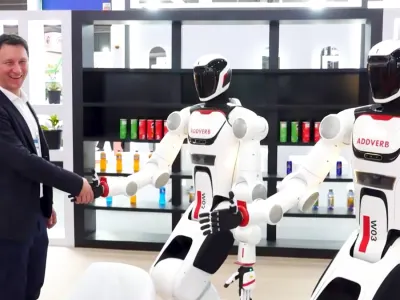
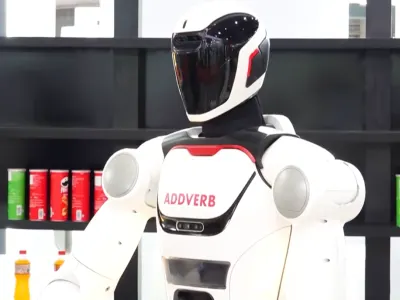
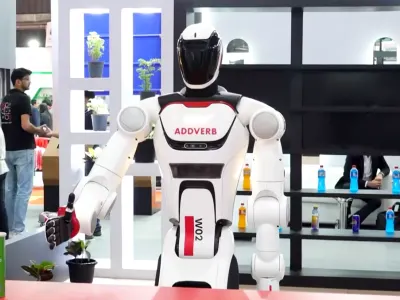
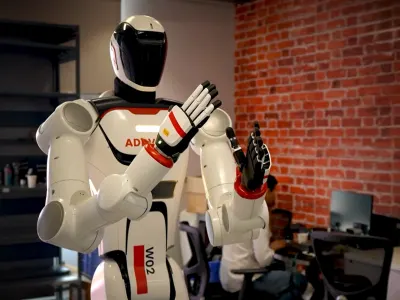
Addverb Technologies' ELIXIS W is India's first wheeled humanoid robot, designed for intralogistics, industrial inspection, warehouse handling, and collaborative assembly. Its wheeled base prioritizes stability, energy efficiency, and scalability in structured warehouse settings over bipedal locomotion. Standout features encompass a lower price range of $11,000-$16,000, 5.4 km/h speed, and 3-5 year battery health cycles, facilitating high-frequency industrial tasks.
Detailed Analysis
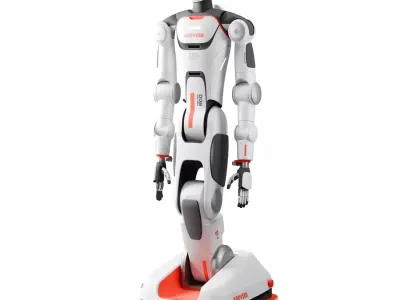
Design & Build Quality
Optimus features a bipedal design with dimensions of 173cm x 55cm x 38cm and 57 kg weight, optimized for human-like mobility in varied terrains. ELIXIS W employs a wheeled humanoid architecture at 175cm x 60cm x 50cm and 75 kg, emphasizing industrial stability and integration into warehouse infrastructure without structural changes. The wheeled base of ELIXIS W enhances energy efficiency for repetitive tasks, while Optimus prioritizes general-purpose versatility.
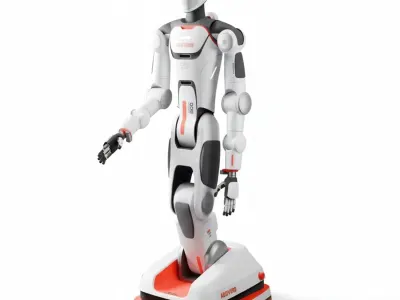
Mobility & Navigation
Optimus achieves a maximum speed of 8 km/h using Tesla FSD-based vision, stereo cameras, and internal proprioception for navigation. ELIXIS W reaches 5.4 km/h with Visual SLAM, LiDAR mapping, and Indoor SLAM, suited for precise movement in structured environments. Optimus offers higher speed for broader applications, whereas ELIXIS W's wheeled system improves uptime in warehouses.
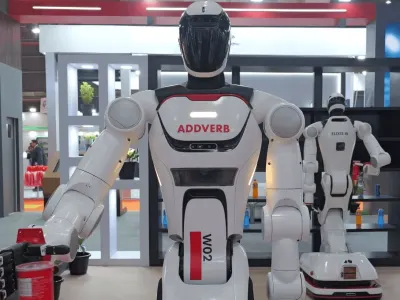
Sensors & Perception
Optimus integrates RGB cameras, depth camera, LiDAR, IMU, force/torque sensors, gyroscope, accelerometer, and joint encoders for comprehensive perception. ELIXIS W uses 4x stereo depth cameras, 1x 3D LiDAR, 2x 9-axis IMU, dual-encoders per joint, and optional tactile finger sensors. Both employ multi-modal sensing, but ELIXIS W emphasizes SLAM for indoor mapping, while Optimus focuses on FSD vision integration.
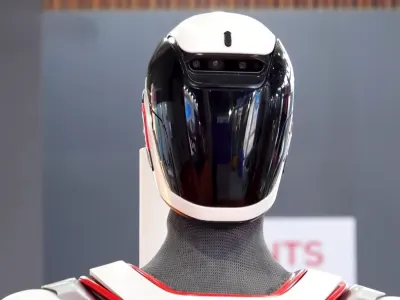
AI Capabilities
Optimus runs on Tesla's custom OS with AI and FSD integration, enabling fully autonomous control with remote supervision options. ELIXIS W supports autonomous operation, teleoperation, and learned behaviors via ROS2 and proprietary stack with Python APIs. Optimus leverages vehicle-derived AI for real-time planning, contrasting ELIXIS W's focus on ROS2 for industrial adaptability.
Battery & Power Efficiency
Optimus provides approximately 8 hours of operational use from its battery. ELIXIS W offers 3-5 years of battery health cycles, supporting extended industrial uptime. Wheeled design in ELIXIS W contributes to higher energy efficiency compared to Optimus's bipedal power demands.
Use-Case Suitability
Optimus targets manufacturing, research, logistics, infrastructure inspection, and remote operations with bipedal versatility. ELIXIS W excels in intralogistics, warehouse material handling, package sorting, and collaborative factory assembly. ELIXIS W's wheeled stability suits high-frequency warehouse tasks, while Optimus addresses broader, unstructured applications.
Pricing & Value
Optimus is priced at $20,000-$50,000, reflecting its advanced AI and bipedal capabilities for diverse uses. ELIXIS W costs $11,000-$16,000, offering affordability for enterprise warehouse deployments. The lower price of ELIXIS W provides better value for structured industrial settings.
Safety Features
Optimus includes emergency stop, obstacle detection, and compliant actuators. ELIXIS W features force limiting, collision detection, emergency stop, collaborative mode, and two-layer safety. ELIXIS W's collaborative emphasis supports human-robot interaction in factories.
Analysis Score Summary
Total Score
4
Optimus
VS
Based on Detailed Analysis
Total Score
12
ELIXIS W
📊 Win: 2 points | Trade-off: 1 point each
Scores are summed across every insight: a clear winner earns 2 points, while balanced trade-offs give each robot 1 point. The total reflects how often each robot outperforms the other (or shares the spotlight) throughout the detailed analysis sections.
Capabilities & Operational Tasks
Head-to-head comparison of what Optimus and ELIXIS W can do, their applications, and capabilities.
What Can Optimus & ELIXIS W Do?
12Core operational tasks, activities, and physical manipulation duties evaluated side-by-side.
| Task & Description | Model AOptimus8 supported | Model BELIXIS W11 supported |
|---|---|---|
| Assembly | High | — |
| Autonomous task execution | High | High |
| Carrying and transport | — | High |
| Collaborative work | — | High |
| Inspection | High | High |
| Loading and unloading | High | High |
| Machine tending | — | High |
| Material handling | High | High |
| Move objects | High | High |
| Navigation | — | High |
| Pick and place | High | High |
| Repetitive physical tasks | High | High |
Technical Specifications
Head-to-head performance data and metrics
| Specification | Model AOptimus | Model BELIXIS W |
|---|---|---|
Functional Utility & Use Cases4 Comparative Metrics | ||
Control Method | Fully autonomous with optional remote supervision | Autonomous, teleoperation, learned behaviors |
Use Cases | Manufacturing, research, logistics, infrastructure inspection, remote operations | Intralogistics, industrial inspection, warehouse material handling, package sorting, and collaborative assembly on factory floors. |
Multi Robot Coord | Multi-robot coordination via network | Yes |
Pet Friendly | designed to operate safely around humans | Yes, with safety protocols |
Manipulation & Load Capacity4 Comparative Metrics | ||
Carrying Capacity | 20 kg | 10 kg (Combined) |
Deadlift Capacity | 68 kg (150 lbs) | 15 kg (Momentary lift) |
Payload Type | Goods and tools; not designed for human transport | Packages, tools, precision instruments |
Modular Attachments | Hands with 11 degrees of freedom; other attachments not specified | Tool changers, end-effector options |
Kinematic Architecture & Dexterity4 Comparative Metrics | ||
Degrees of Freedom | 40+ DOF (full-body dexterity including hands) | 41 (Joints/Actuators) |
Material | Aluminum frame, composite joints, polymer covers | Aluminum, composite, plastic |
Mobility Type | Bipedal (legged) | Wheeled (Adaptive mobility) |
Hardware Interface | - | USB, GPIO, CAN bus, Ethernet |
Functional Utility & Use Cases
4 Comparative Metrics
Manipulation & Load Capacity
4 Comparative Metrics
Kinematic Architecture & Dexterity
4 Comparative Metrics
Related Comparisons
Discover similar robot matchups to expand your knowledge and find the perfect solution

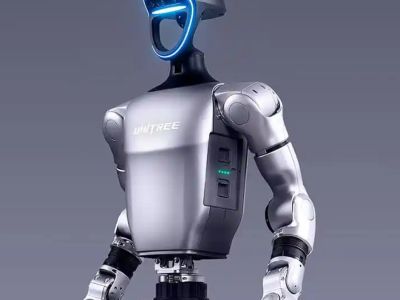
Optimus vs Unitree G1
Compare Optimus vs Unitree G1 for humanoid mobility, dexterity, autonomy, and payload capacity.
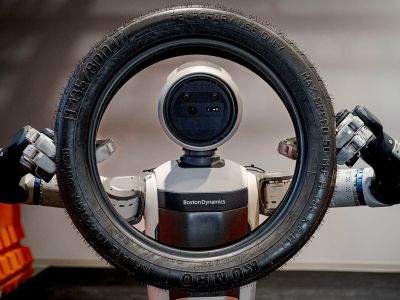
Optimus vs Atlas (Electric Atlas, 2025)
In-depth comparison of Optimus and Atlas (Electric Atlas, 2025), covering hardware capabilities, teleoperation, and enterprise readiness.
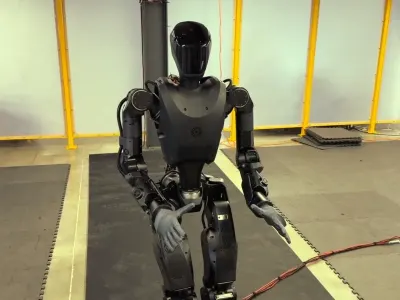
Optimus vs Phantom MK1
Optimus or Phantom MK1? See which humanoid robot performs better for manufacturing, logistics, defense, dexterity, autonomy, and payload in enterprise deployments.
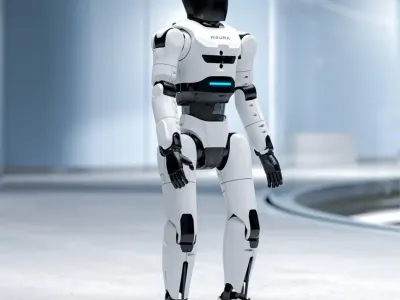
Optimus vs 4NE-1 Mini
Which humanoid robot is better? Optimus vs 4NE-1 Mini compared for dexterity, AI capabilities, payload, and industrial vs research use cases.
Disclaimer
All content, comparisons, and verdicts on this website are based on our research, testing, and opinion. While we strive for accuracy, we do not guarantee the completeness, reliability, or suitability of any information. Performance, specifications, and results may vary depending on usage and conditions. This website and its authors are not responsible for any decisions, actions, or outcomes based on the information provided. Always verify product details with the manufacturer before making purchase or operational decisions.