Aria - Robot Girlfriend by Realbotix is a high-end humanoid robot designed primarily for companionship and social interaction. Its lifelike facial expressions driven by 17 independent motors, modular face swapping, and AI tailored for meaningful conversations set it apart as a specialized social companion. Positioned at the premium end of the market, Aria’s design prioritizes realistic human features and emotional engagement rather than industrial or logistic applications.
Elf-Xuan 2.0 by AheadForm is a humanoid robot focused on versatile industrial and research applications like manufacturing, logistics, and remote operations. It distinguishes itself with advanced mobility through balance-assisted walking and visual SLAM-based navigation along with a robust sensor suite including LiDAR and depth cameras. Elf-Xuan 2.0 targets functional autonomy and operational utility, reflecting a different market focus compared to Aria’s social companion emphasis.
Detailed Analysis

Design & Build Quality
Aria presents a lifelike humanoid design with realistic facial features and a modular build allowing quick swapping of faces and body parts, focusing on aesthetic realism and social presence. In contrast, Elf-Xuan 2.0 features a more standard humanoid frame sized at 170cm by 55cm by 38cm, designed for durability and functionality in industrial environments, with less emphasis on detailed human likeness.

Mobility & Navigation
Aria moves on a manual motorized wheeled base at a modest speed of 2 km/h and uses waypoint navigation without advanced SLAM capabilities, suitable for controlled indoor environments. Elf-Xuan 2.0 supports faster walking speeds ranging from 1.5 to 3 m/s and employs sophisticated balance-assisted walking with visual SLAM and LiDAR mapping, enabling navigation in more complex, dynamic settings.

Sensors & Perception
Aria’s sensors focus on social interaction with 17 facial motors for expression, eye-embedded cameras, chest wide-angle camera, microphones, and proximity sensors, optimizing recognition and engagement with humans. Elf-Xuan 2.0 includes a broader sensor suite for operational tasks, with RGB, depth cameras, LiDAR, IMU, force/torque sensors, and inertial sensors, supporting environmental mapping and physical interaction.

AI Capabilities
Aria runs Realbotix OS and supports integration with external AI models such as ChatGPT-4 or ChatGPT-5 via REST APIs, focusing on deep-learning conversational AI tailored to companionship and emotional engagement. Elf-Xuan 2.0 operates on a Linux-based OS with ROS 2 support and a Python SDK, enabling teleoperation, autonomous behaviors, and learned task execution for industrial and research applications.

Battery & Power Efficiency
While Aria’s exact battery capacity and life are undisclosed, it operates on a wheeled base with an estimated 1.5 kWh lithium-ion pack and 4 to 8 hours runtime. Elf-Xuan 2.0’s battery is estimated to last 3 to 5 years depending on use, optimized for long-term industrial deployment, though specific runtime per charge is not explicitly detailed.

Use-Case Suitability
Aria targets personal companionship, hospitality greeting, entertainment, and human-AI interaction research, emphasizing emotional and social engagement. Elf-Xuan 2.0 is suited for manufacturing, logistics, infrastructure inspection, research, and remote operations, focusing on functional autonomy and versatile industrial tasks rather than social companionship.

Software Ecosystem
Aria’s Realbotix OS enables modular AI integrations and voice/app control, tailored for social and personalized user experiences. Elf-Xuan 2.0 relies on a Linux-based system with ROS 2 and Python SDK, supporting complex robotics development, autonomy, and integration into industrial workflows.

Safety Features
Both robots incorporate safety mechanisms including emergency stops and collision avoidance. Aria integrates collision avoidance thresholds and power cutoffs appropriate for social environments, whereas Elf-Xuan 2.0 adds force limiting, redundant sensors, and comprehensive collision detection, fitting its industrial operational contexts.
Pricing & Value
Aria’s pricing ranges from USD 135,000 for modular versions to over USD 175,000 for full-body models, reflecting its premium social companion niche. Elf-Xuan 2.0 is estimated between USD 50,000 and 150,000, offering a scalable solution for industrial and research applications with variable configurations.
Analysis Score Summary
Total Score
8
Aria - Robot Girlfriend
VS
Based on Detailed Analysis
Total Score
10
Elf-Xuan 2.0
📊 Win: 2 points | Trade-off: 1 point each
Scores are summed across every insight: a clear winner earns 2 points, while balanced trade-offs give each robot 1 point. The total reflects how often each robot outperforms the other (or shares the spotlight) throughout the detailed analysis sections.
Capabilities & Operational Tasks
Head-to-head comparison of what Aria - Robot Girlfriend and Elf-Xuan 2.0 can do, their applications, and capabilities.
What Can Aria - Robot Girlfriend & Elf-Xuan 2.0 Do?
3Core operational tasks, activities, and physical manipulation duties evaluated side-by-side.
| Task & Description | Model AAria - Robot Girlfriend3 supported | Model BElf-Xuan 2.03 supported |
|---|---|---|
| Autonomous task execution | High | High |
| Collaborative work | High | High |
| Human interaction | High | High |
Technical Specifications
Head-to-head performance data and metrics
| Specification | Model AAria - Robot Girlfriend | Model BElf-Xuan 2.0 |
|---|---|---|
Functional Utility & Use Cases4 Comparative Metrics | ||
Control Method | AI automation, remote app control, voice interaction | Teleoperation, autonomous, learned behaviors |
Use Cases | Multilingual conversational dialogue, facial expressions, customer greeting, telepresence interaction, social entertainment | Manufacturing, research, logistics, infrastructure inspection, remote operations |
Multi Robot Coord | Supported (Showcased inter-robot conversation at CES 2026) | Multi-robot coordination via network |
Pet Friendly | Not Applicable / Low | Yes, with safety protocols |
Manipulation & Load Capacity4 Comparative Metrics | ||
Carrying Capacity | 0 kg | - |
Deadlift Capacity | 0 kg | 1-2 Kg |
Payload Type | 0 kg payload (Social communication and biomimetic facial telepresence) | Tools, sensors, industrial equipment |
Modular Attachments | Yes – interchangeable faces, torso units | Tool changers, gripper interfaces, sensor mounts |
Kinematic Architecture & Dexterity4 Comparative Metrics | ||
Degrees of Freedom | 44 total DoF (including 17 facial micro-actuators) | 30 DOF concentrated in facial expression, head, neck, and upper-body actuation |
Material | Silicone skin, plastic-polymer body shell, aluminum internal structure | Aluminum frame, composite joints, polymer covers |
Mobility Type | Wheeled (Motorized wheeled mobile base navigation) | Stationary humanoid platform focused on upper-body and facial interaction |
Hardware Interface | USB (internal diagnostics), proprietary connectors | USB-C, Ethernet, GPIO, CAN bus |
Functional Utility & Use Cases
4 Comparative Metrics
Manipulation & Load Capacity
4 Comparative Metrics
Kinematic Architecture & Dexterity
4 Comparative Metrics
Related Comparisons
Discover similar robot matchups to expand your knowledge and find the perfect solution


Sophia vs Aria - Robot Girlfriend
Head-to-head: Sophia vs Aria - Robot Girlfriend compared on bipedal balance, AI learning, and real-world deployment.

Elf-Xuan 2.0 vs Moya
In-depth comparison of Elf-Xuan 2.0 and Moya, covering hardware capabilities, teleoperation, and enterprise readiness.
Aria - Robot Girlfriend vs Moya
In-depth comparison of Aria - Robot Girlfriend and Moya, covering hardware capabilities, teleoperation, and enterprise readiness for companionship and service applications.
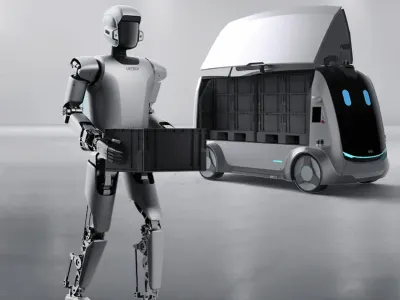
Walker S1 vs Elf-Xuan 2.0
Head-to-head: Walker S1 vs Elf-Xuan 2.0. Explore differences in navigation, battery life, and sensors.
Disclaimer
All content, comparisons, and verdicts on this website are based on our research, testing, and opinion. While we strive for accuracy, we do not guarantee the completeness, reliability, or suitability of any information. Performance, specifications, and results may vary depending on usage and conditions. This website and its authors are not responsible for any decisions, actions, or outcomes based on the information provided. Always verify product details with the manufacturer before making purchase or operational decisions.