The Dreame L50 Ultra is positioned as a premium home vacuum cleaner designed for larger homes and pet-heavy environments, featuring advanced AI-enhanced obstacle avoidance and longer battery life. It differentiates itself with a spinning LiDAR sensor, an RGB camera, and a 3D structured light sensor to improve navigation and cleaning efficiency. Its robust build and AI navigation software target users needing seamless autonomy with complex floor layouts.
The Dreame L40s Ultra AE is a more affordable vacuum that emphasizes smart navigation through AI-enhanced SLAM combined with RGB camera and 3D structured light sensors. It offers strong obstacle avoidance capabilities and effective cleaning with slightly lighter weight and smaller dimensions. This model suits users seeking capable performance at a friendlier price without sacrificing essential AI features.
Detailed Analysis
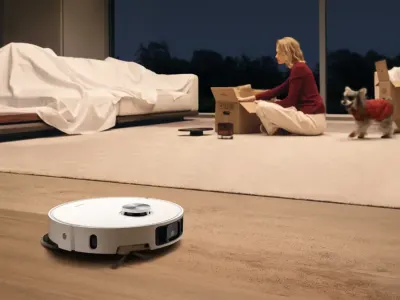
Design & Build Quality
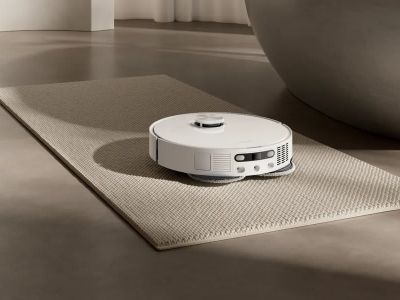
The L50 Ultra measures 34.8 x 35.2 x 9.7 cm and weighs 4.44 kg, slightly more compact and heavier than the 35 x 35 x 9.7 cm and 4.1 kg L40s Ultra AE. Both robots share a low-profile design suitable for under-furniture cleaning. The L50's slightly heavier build supports its advanced sensors and battery, while the L40s AE offers a lighter alternative maintaining durable construction.
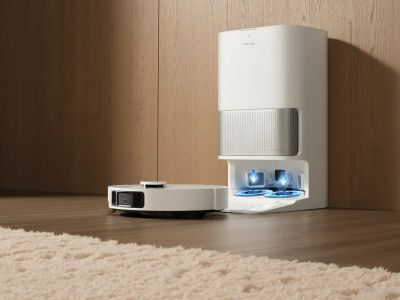
Mobility & Navigation
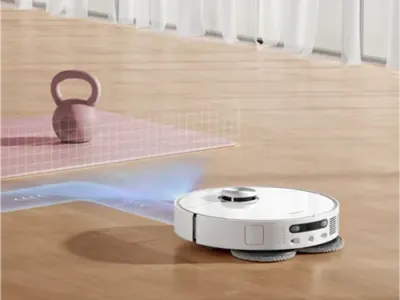
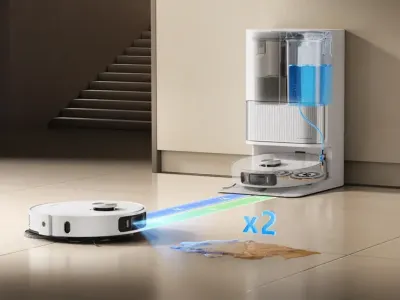
The L50 Ultra uses spinning LiDAR combined with AI-enhanced obstacle avoidance leveraging RGB and 3D structured light sensors, enabling it to detect and avoid up to 180 object types and handle complex multi-level thresholds. In contrast, the L40s Ultra AE relies on AI-enhanced SLAM with RGB camera and 3D structured light, delivering precise navigation with a fixed speed of 0.3 m/s but slightly less advanced obstacle recognition. The L50 Ultra excels in handling homes with door tracks and varied floor transitions.
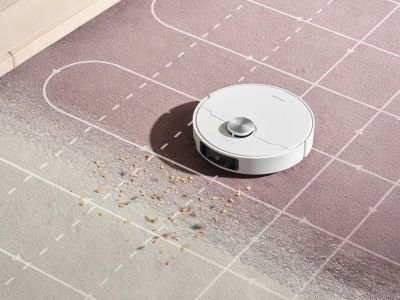
Sensors & Perception
Both models integrate LiDAR, RGB cameras, and 3D structured light sensors for mapping and obstacle detection. The L50 Ultra's spinning LiDAR and additional LED path illumination offer enhanced spatial awareness and object recognition. The L40s Ultra AE features a similar sensor suite but lacks the spinning LiDAR mechanism, resulting in competent but marginally less comprehensive environmental perception.
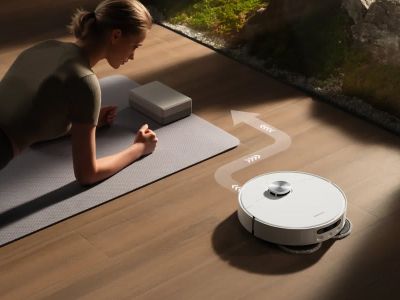
AI Capabilities
The L50 Ultra runs on Dreamehome OS with AI-enhanced navigation and cleaning algorithms that support autonomous obstacle avoidance, including child lock and pet-centric modes. The L40s Ultra AE operates on Dreame OS, which also supports AI navigation, firmware updates via smartphone app, and obstacle avoidance but with fewer object categories recognized. Overall, the L50 Ultra's AI system is more sophisticated, geared toward reducing user intervention.
Battery & Power Efficiency
Both robots feature batteries designed for a lifespan of 2–3 years; however, the L50 Ultra's battery capacity and charging technology enable longer runtime and faster charging cycles. This supports extended cleaning sessions for larger spaces with less downtime. The L40s Ultra AE offers sufficient battery performance suited for medium-sized homes, balancing power and efficiency at a lower price point.
Use-Case Suitability
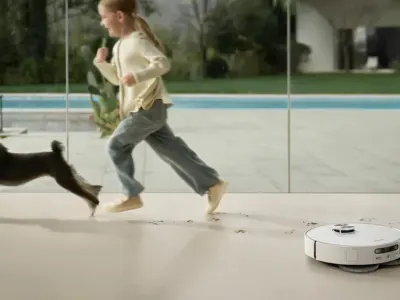
The L50 Ultra is optimized for complex, pet-heavy environments requiring robust obstacle avoidance and multi-level navigation capabilities. It is ideal for larger homes with difficult transitions and frequent obstacles. Conversely, the L40s Ultra AE suits medium-sized homes with moderate pet presence, offering strong cleaning performance with AI navigation at a more accessible price, making it a practical choice for general household use.
Safety Features
Both models include child lock, cliff detection, and anti-collision sensors to prevent accidents. The L50 Ultra enhances safety with more advanced AI obstacle avoidance, reducing collision risks with a wider range of objects. The L40s Ultra AE maintains essential safety features but with slightly less comprehensive AI recognition, adequate for typical household hazards.
Pricing & Value
The L50 Ultra retails between $800 and $1000, reflecting its advanced hardware and AI capabilities tuned for demanding home environments. The L40s Ultra AE is priced more affordably at $700 to $900, offering a competitive feature set with strong AI navigation and obstacle avoidance. Buyers balancing budget and advanced functionality may prefer the L40s Ultra AE for solid value, while those needing maximum autonomy may invest in the L50 Ultra.
Analysis Score Summary
Total Score
8
Dreame L50 Ultra
VS
Based on Detailed Analysis
Total Score
8
Dreame L40s Ultra AE
📊 Win: 2 points | Trade-off: 1 point each
Scores are summed across every insight: a clear winner earns 2 points, while balanced trade-offs give each robot 1 point. The total reflects how often each robot outperforms the other (or shares the spotlight) throughout the detailed analysis sections.
Technical Specifications
Head-to-head performance data and metrics
| Specification | Model ADreame L50 Ultra | Model BDreame L40s Ultra AE |
|---|---|---|
Functional Utility & Use Cases5 Comparative Metrics | ||
Control Method | Smartphone app (Dreamehome), voice control, autonomous operation | Smartphone app, voice control, autonomous operation |
Use Cases | - | Residential homes, pet owners, families, mixed floor environments |
Multi Robot Coord | Not specified | No multi-robot coordination |
Pet Friendly | Yes, designed to handle pet hair with detangling brush and pet-finding mode | Yes, designed with hair-cutting brush and anti-tangle features for pet hair |
control | Smartphone app (Dreamehome), voice control, autonomous operation | Smartphone app, voice control, autonomous operation |
Manipulation & Load Capacity1 Comparative Metrics | ||
Payload Type | - | Dust, debris, and liquid mopping solution |
Kinematic Architecture & Dexterity3 Comparative Metrics | ||
Material | High-quality plastic with metal components in chassis and brush assembly | ABS plastic, rubber, metal accents |
Mobility Type | Wheeled robot with brush roll and suction system | Wheeled with brush roll and suction |
Hardware Interface | Charging contacts, USB-C port for service | Charging contacts, no USB port |
Functional Utility & Use Cases
5 Comparative Metrics
Manipulation & Load Capacity
1 Comparative Metrics
Kinematic Architecture & Dexterity
3 Comparative Metrics
Related Comparisons
Discover similar robot matchups to expand your knowledge and find the perfect solution
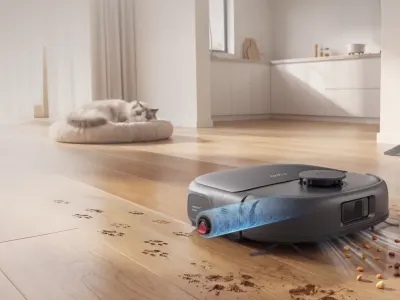
Dreame L40s Ultra AE vs Eufy C28
In-depth comparison of Dreame L40s Ultra AE and Eufy C28, covering cleaning results, app experience, and ownership costs.
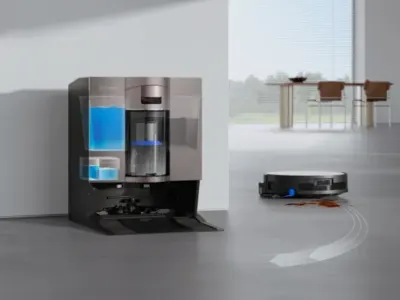
Dreame L40s Ultra AE vs DEEBOT X11 OmniCyclone
Dreame L40s Ultra AE or DEEBOT X11 OmniCyclone? Compare for pet hair handling, navigation in large homes, battery runtime, and maintenance ease.
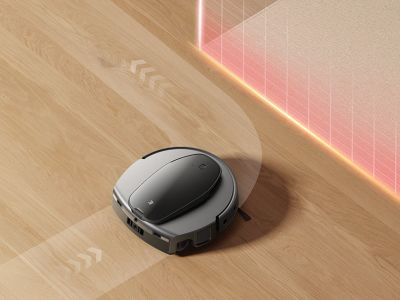
Dreame L40s Ultra AE vs 3i S10 Ultra
Dreame L40s Ultra AE or 3i S10 Ultra? Compare for pet hair handling, large home coverage, navigation accuracy, and long-term maintenance ease.
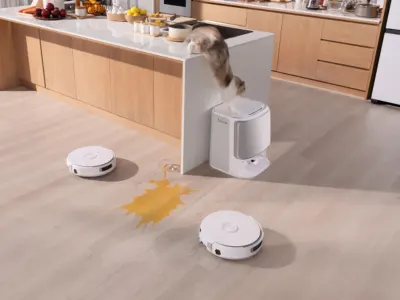
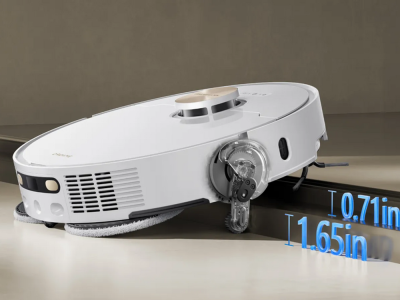
Narwal Flow vs Dreame L50 Ultra
Compare Narwal Flow vs Dreame L50 Ultra for cleaning performance, navigation accuracy, battery runtime, and pet hair handling in real homes.
Disclaimer
All content, comparisons, and verdicts on this website are based on our research, testing, and opinion. While we strive for accuracy, we do not guarantee the completeness, reliability, or suitability of any information. Performance, specifications, and results may vary depending on usage and conditions. This website and its authors are not responsible for any decisions, actions, or outcomes based on the information provided. Always verify product details with the manufacturer before making purchase or operational decisions.