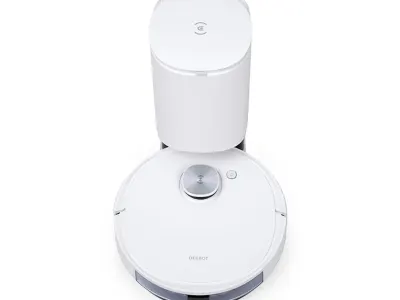
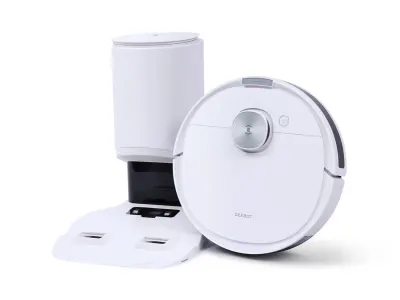
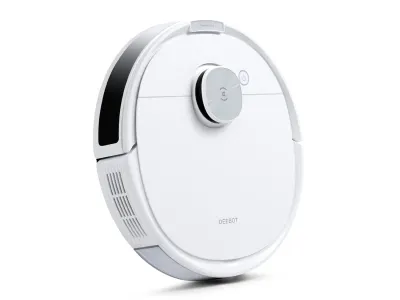
The Ecovacs Deebot N9+ represents an earlier generation in Ecovacs' mid-tier robot vacuum lineup, positioned as a capable solution for households seeking automated floor cleaning at a competitive price point. Featuring LDS SLAM navigation combined with Visual SLAM technology, the N9+ uses dual sensor fusion to map and clean living spaces efficiently. With a price range of $600-$800 and comparable dimensions to newer models, the N9+ delivers reliable performance for multi-room homes. Its integration with popular voice assistants and the ECOVACS Home app provides flexible control options for users seeking convenient automation.
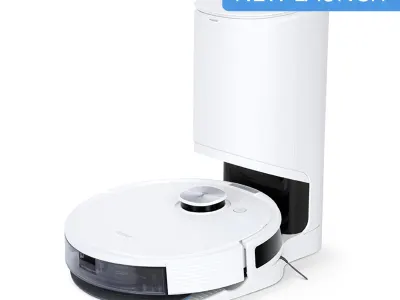
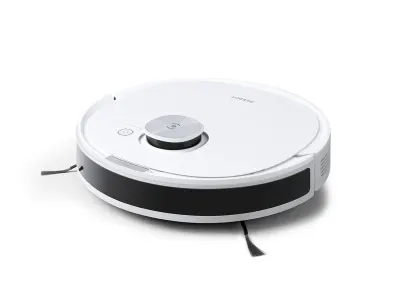
The Ecovacs Deebot N10 Pro+ builds upon the N9+ foundation with enhanced navigation technology and refined sensor capabilities, offering improved cleaning efficiency at a slightly lower price point of $600-$700. This model introduces TrueMapping 2.0 LiDAR-based SLAM navigation, which represents a technological advancement over the dual-camera approach of the N9+, enabling more precise mapping and optimized cleaning paths. The N10 Pro+ incorporates ultrasonic carpet detection alongside traditional cliff and collision sensors, allowing for more sophisticated floor type recognition during operation. Despite the similar form factor and battery specifications, the N10 Pro+ demonstrates Ecovacs' commitment to iterative improvements in navigation accuracy and sensor integration.
Detailed Analysis
Design & Build Quality
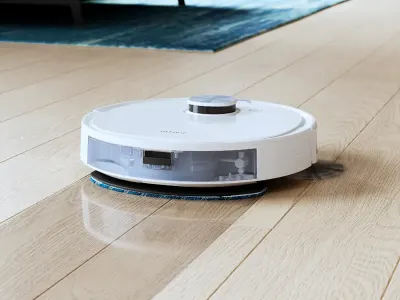
Both the Deebot N9+ and N10 Pro+ maintain nearly identical physical dimensions and weight specifications, with the N9+ measuring 35.3 cm diameter by 9.3 cm height and the N10 Pro+ at 35.0 x 35.0 x 9.3 cm, both weighing 3.8 kg. This consistency in form factor suggests that Ecovacs prioritized compatibility with existing docking stations and navigating standard household environments across both generations. The compact profile of both units enables them to fit under most furniture, facilitating comprehensive floor coverage. The structural similarity indicates that design improvements between these models focused on internal components and sensor arrays rather than external aesthetics or footprint optimization.
Mobility & Navigation
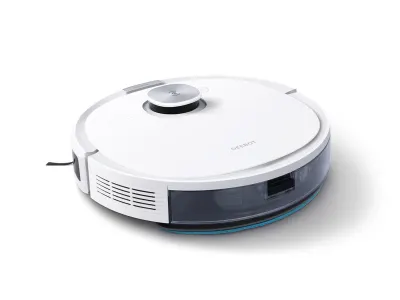
The primary distinction between these models lies in their navigation architectures: the N9+ employs LDS SLAM combined with Visual SLAM camera technology, while the N10 Pro+ utilizes the more advanced TrueMapping 2.0 LiDAR-based SLAM system. LiDAR-based navigation in the N10 Pro+ offers superior precision mapping through laser distance measurements, enabling more efficient cleaning paths and reduced redundant coverage compared to the camera-dependent approach in the N9+. The integration of ultrasonic carpet detection in the N10 Pro+ provides real-time floor type awareness, allowing the robot to optimize suction power when transitioning between hard floors and carpeted areas. These navigation improvements in the N10 Pro+ translate to more systematic coverage patterns and potentially faster cleaning cycles for equivalent floor plans.
Sensors & Perception
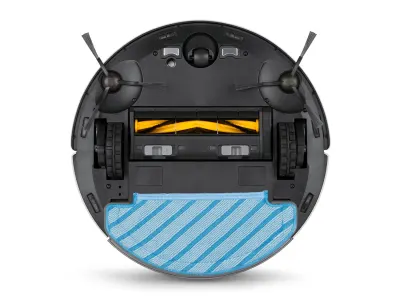
The N9+ relies on a sensor suite consisting of LDS laser distance sensors, visual SLAM cameras, cliff detection sensors, bump sensors, and obstacle detection capabilities for environmental awareness. The N10 Pro+ upgrades this configuration by replacing the LDS and visual camera combination with dedicated LiDAR technology, while adding ultrasonic carpet detection to the existing cliff and bump sensor array. This shift from dual-camera fusion to single-source LiDAR sensing simplifies the perception pipeline while improving accuracy and reliability in varied lighting conditions. The addition of ultrasonic sensors in the N10 Pro+ enables passive detection of carpet presence without requiring visual processing, providing redundant floor-type recognition that complements the LiDAR mapping system.
AI Capabilities
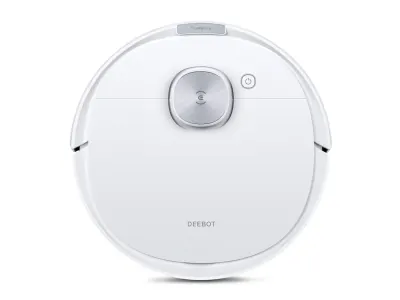
Both models operate on proprietary ECOVACS OS platforms with firmware update capabilities delivered through the ECOVACS Home app, enabling post-purchase improvements and feature enhancements. The N10 Pro+ benefits from more sophisticated environmental understanding through its TrueMapping 2.0 system, which can generate higher-fidelity maps and support more granular room-by-room cleaning schedules based on precise spatial data. The carpet detection capability in the N10 Pro+ enables autonomous decision-making regarding mopping operations, allowing the robot to avoid applying water-based cleaning to carpeted zones without user intervention. While both models support voice control through Alexa and Google Assistant, the N10 Pro+'s enhanced mapping precision likely enables more accurate room identification for voice-directed cleaning commands.
Battery & Power Efficiency
Both the Deebot N9+ and N10 Pro+ feature identical battery specifications with a 2-3 year lifespan expectancy, indicating equivalent power capacity and chemistry. The absence of published runtime specifications in the provided data prevents direct comparison of cleaning duration per charge cycle. The architectural differences in navigation—specifically the shift from multi-sensor fusion to dedicated LiDAR in the N10 Pro+—may influence power consumption patterns, though equivalent battery configurations suggest comparable overall operational duration. Both models support autonomous docking and charging, enabling continuous operation through multiple cleaning cycles across a 24-hour period.
Software Ecosystem
Both robots integrate with the ECOVACS Home smartphone application, providing remote scheduling, real-time monitoring, and autonomous operation configuration through a unified interface. Voice assistant compatibility with Amazon Alexa and Google Assistant is present on both models, enabling hands-free control and integration into broader smart home ecosystems. The N10 Pro+'s enhanced mapping capabilities through TrueMapping 2.0 likely translate to more detailed floor plan visualizations and zone-based cleaning customization within the app interface. Firmware updates delivered via the app maintain feature parity and security compliance across both generations, though the N10 Pro+ may benefit from algorithm refinements optimized for its LiDAR-based mapping system.
Safety Features
Both models implement comprehensive safety mechanisms including cliff detection sensors that prevent falls on stairs or elevated surfaces, anti-collision bump sensors that protect against furniture and obstacles, and child lock functionality for preventing unauthorized operation. The cliff detection systems in both units enable confident operation in multi-level homes where the robot must navigate stairways without risk of descent. The mechanical and sensor-based safety features are equivalent across both generations, reflecting Ecovacs' consistent approach to household robot safety standards. Neither model specification indicates advanced obstacle avoidance cameras, placing both units at similar capability levels for navigating around small objects like toys or debris.
Use-Case Suitability
The Deebot N9+ serves households requiring reliable, app-controlled automated vacuuming without premium pricing, making it suitable for budget-conscious consumers with standard floor layouts and moderate cleaning demands. The N10 Pro+ addresses similar use cases but with enhanced efficiency through superior mapping, making it better suited for larger homes with complex layouts where navigation precision directly impacts cleaning coverage. Both models accommodate mixed floor types, though the N10 Pro+ provides explicit carpet detection for integrated mopping operations where applicable. For households prioritizing navigation reliability and optimized cleaning paths over maximum feature sets, the N10 Pro+ represents a more capable choice despite minimal price differentiation.
Pricing & Value
The N9+ operates at the $600-$800 price range, while the N10 Pro+ is positioned slightly lower at $600-$700, suggesting potential market overlap or promotional pricing variations. The modest price differential—approximately $100 lower on the N10 Pro+ at the price range midpoints—reflects the value proposition of incremental navigation improvements without proportional cost increases. The N10 Pro+ delivers enhanced functionality in mapping precision and floor detection at equivalent or lower cost, representing improved value for consumers prioritizing navigation accuracy. Both models fall within the mid-tier segment of Ecovacs' product hierarchy, offering substantial feature sets relative to entry-level competitors while maintaining accessibility compared to premium flagship models.
Analysis Score Summary
Total Score
9
Ecovacs Deebot N9+
VS
Based on Detailed Analysis
Total Score
9
Ecovacs Deebot N10 Plus
📊 Win: 2 points | Trade-off: 1 point each
Scores are summed across every insight: a clear winner earns 2 points, while balanced trade-offs give each robot 1 point. The total reflects how often each robot outperforms the other (or shares the spotlight) throughout the detailed analysis sections.
Technical Specifications
Head-to-head performance data and metrics
| Specification | Model AEcovacs Deebot N9+ | Model BEcovacs Deebot N10 Plus |
|---|---|---|
Functional Utility & Use Cases4 Comparative Metrics | ||
Control Method | ECOVACS Home app, voice control (Alexa, Google Assistant), autonomous operation | Smartphone app, voice control (Alexa, Google Assistant), autonomous operation |
Use Cases | Residential homes, apartments, pet-owning households, mixed-floor environments | Residential homes, apartments, pet-owning households, mixed flooring environments |
Multi Robot Coord | No multi-robot coordination feature | No multi-robot coordination |
Pet Friendly | Yes, designed to handle pet hair with tangle-free brush system | Yes, designed for pet hair with rubber brush and antibacterial filter |
Manipulation & Load Capacity2 Comparative Metrics | ||
Payload Type | Dust, debris, and liquid mopping solution | Dust, debris, and liquid mopping solution |
Modular Attachments | Not supported | None |
Kinematic Architecture & Dexterity3 Comparative Metrics | ||
Material | High-quality ABS plastic with rubber components | High-quality ABS plastic |
Mobility Type | Wheeled with brush roll and suction system | Wheeled with brush roll and suction |
Hardware Interface | Charging contacts, no USB port | Charging contacts on base station, no USB |
Functional Utility & Use Cases
4 Comparative Metrics
Manipulation & Load Capacity
2 Comparative Metrics
Kinematic Architecture & Dexterity
3 Comparative Metrics
Related Comparisons
Discover similar robot matchups to expand your knowledge and find the perfect solution
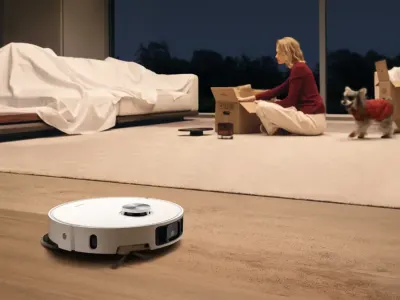
Dreame L40s Ultra AE vs Ecovacs Deebot N10 Plus
Dreame L40s Ultra AE or Ecovacs Deebot N10 Pro+? Compare for pet hair handling, navigation accuracy, battery runtime, and large home suitability.
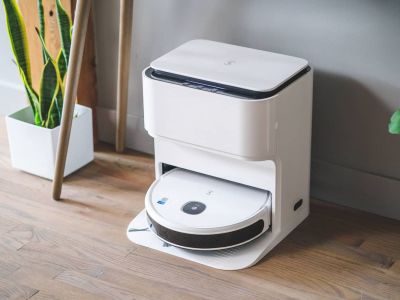
Dreame L40s Ultra AE vs Ecovacs Deebot N9+
Dreame L40s Ultra AE or Ecovacs Deebot N9+? Compare for pet hair handling, navigation accuracy, battery runtime, and large home suitability.

Ecovacs Deebot N10 Plus vs Roborock Q7 Max
Ecovacs Deebot N10 Pro+ or Roborock Q7 Max? Compare specs, navigation, sensors, and battery performance.
Ecovacs Deebot N9+ vs Roborock Q7 Max
Head-to-head: Ecovacs Deebot N9+ vs Roborock Q7 Max. Explore differences in navigation, sensors, dimensions, and software.
Disclaimer
All content, comparisons, and verdicts on this website are based on our research, testing, and opinion. While we strive for accuracy, we do not guarantee the completeness, reliability, or suitability of any information. Performance, specifications, and results may vary depending on usage and conditions. This website and its authors are not responsible for any decisions, actions, or outcomes based on the information provided. Always verify product details with the manufacturer before making purchase or operational decisions.