The Ecovacs Deebot N10 Pro+ is positioned in the mid-range home vacuum cleaner market at $600-$700, offering self-emptying capabilities via its Pro+ dock. It features TrueMapping 2.0 LiDAR-based SLAM navigation and sensors including ultrasonic carpet detection alongside standard cliff and bump sensors. This model stands out with compact dimensions of 35.0 x 35.0 x 9.3 cm and a lightweight 3.8 kg build, enabling efficient operation in varied home environments.
The Roborock Q7 Max targets the same $600-$750 price segment for home vacuum cleaners with strong cleaning performance and self-emptying options. It employs PreciSense™ LiDAR navigation with SLAM and includes wall sensors plus front sensors for docking. Key differentiators include slightly larger dimensions at 35.3 x 35 x 9.65 cm and a heavier 4.7 kg weight, paired with comprehensive sensor coverage for precise mapping.
Detailed Analysis

Design & Build Quality
Ecovacs Deebot N10 Pro+ measures 35.0 x 35.0 x 9.3 cm and weighs 3.8 kg, providing a slimmer profile compared to Roborock Q7 Max at 35.3 x 35 x 9.65 cm and 4.7 kg. Both feature durable construction suitable for home use, with the Ecovacs model offering a marginally lower height for under-furniture access. Weight differences may affect portability, with Ecovacs being lighter for manual repositioning.
Mobility & Navigation
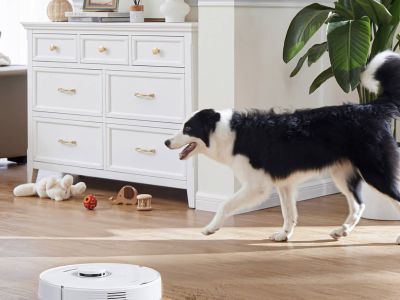
Ecovacs uses TrueMapping 2.0 LiDAR-based SLAM for mapping, while Roborock employs PreciSense™ LiDAR with SLAM, both enabling systematic path planning. Roborock's navigation includes front sensors for docking, potentially improving return accuracy. Ecovacs navigation supports ultrasonic carpet detection for adaptive mobility across floor types.
Sensors & Perception
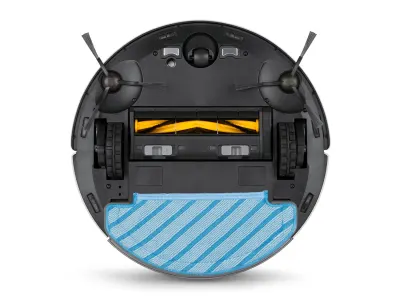
Ecovacs Deebot N10 Pro+ integrates LiDAR, ultrasonic carpet detection, cliff sensors, and bump sensors. Roborock Q7 Max features PreciSense™ LiDAR, cliff sensors, bump sensors, wall sensors, and front docking sensors. Roborock provides broader perimeter detection, while Ecovacs emphasizes carpet-specific perception.

AI Capabilities
Neither model specifies advanced AI features like object recognition in the provided specs; both rely on sensor-driven autonomous operation. Navigation systems incorporate SLAM algorithms for mapping efficiency. Firmware updates via proprietary OS suggest ongoing software enhancements for both.
Battery & Power Efficiency
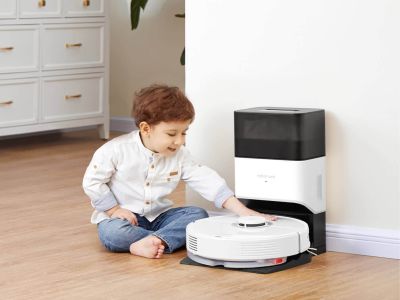
Both robots have a battery lifespan rated at 2-3 years, supporting extended cleaning sessions. Specific capacity and runtime details align with standard lithium-ion performance for mid-range models. Ecovacs and Roborock OS handle power management through app-monitored charging cycles.
Use-Case Suitability
Both serve general home vacuuming needs with no specialized use cases listed. Ecovacs suits spaces benefiting from carpet detection, while Roborock fits environments requiring wall-following precision. Price parity positions them for everyday residential cleaning.
Software Ecosystem
Ecovacs runs ECOVACS proprietary OS with app control, voice integration via Alexa and Google Assistant, and firmware updates. Roborock uses its proprietary OS, adding physical buttons alongside app and voice controls with the same assistants. Both enable autonomous scheduling and mapping customization.
Safety Features
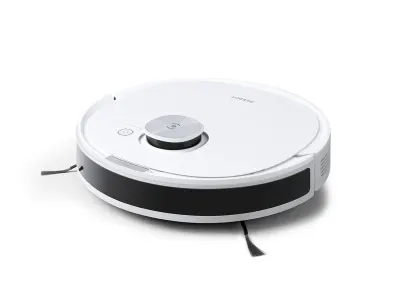
Safety includes cliff detection, anti-collision sensors, and child lock on both models. Ecovacs adds ultrasonic elements tied to carpet sensing. Roborock incorporates wall and front sensors enhancing boundary avoidance.
Analysis Score Summary
Total Score
10
Ecovacs Deebot N10 Plus
VS
Based on Detailed Analysis
Total Score
6
Roborock Q7 Max
📊 Win: 2 points | Trade-off: 1 point each
Scores are summed across every insight: a clear winner earns 2 points, while balanced trade-offs give each robot 1 point. The total reflects how often each robot outperforms the other (or shares the spotlight) throughout the detailed analysis sections.
Technical Specifications
Head-to-head performance data and metrics
| Specification | Model AEcovacs Deebot N10 Plus | Model BRoborock Q7 Max |
|---|---|---|
Functional Utility & Use Cases4 Comparative Metrics | ||
Control Method | Smartphone app, voice control (Alexa, Google Assistant), autonomous operation | Roborock app, voice control (Alexa, Google Assistant), physical buttons on device, autonomous operation |
Use Cases | Residential homes, apartments, pet-owning households, mixed flooring environments | Home cleaning, pet hair removal, mixed flooring |
Multi Robot Coord | No multi-robot coordination | Yes, multi-floor mapping |
Pet Friendly | Yes, designed for pet hair with rubber brush and antibacterial filter | Yes, designed to handle pet hair with anti-tangle brushes and strong suction |
Manipulation & Load Capacity2 Comparative Metrics | ||
Payload Type | Dust, debris, and liquid mopping solution | - |
Modular Attachments | None | - |
Kinematic Architecture & Dexterity3 Comparative Metrics | ||
Material | High-quality ABS plastic | ABS plastic, rubber brushes |
Mobility Type | Wheeled with brush roll and suction | Wheeled robot with brush roll and suction |
Hardware Interface | Charging contacts on base station, no USB | Charging contacts on dock, no USB interface |
Functional Utility & Use Cases
4 Comparative Metrics
Manipulation & Load Capacity
2 Comparative Metrics
Kinematic Architecture & Dexterity
3 Comparative Metrics
Related Comparisons
Discover similar robot matchups to expand your knowledge and find the perfect solution
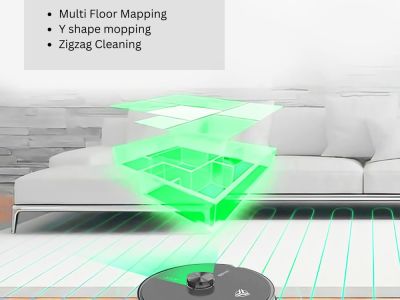
Laseron S9 Pro+ vs Roborock Q7 Max
Head-to-head: Laseron S9 Pro+ vs Roborock Q7 Max compared on cleaning performance, mapping accuracy, battery runtime, and pet hair handling.
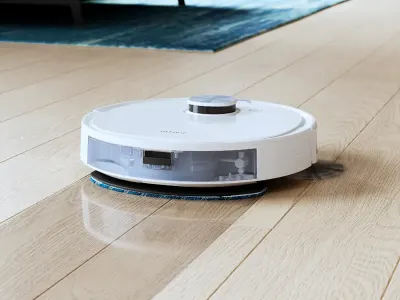
Dreame L40s Ultra AE vs Ecovacs Deebot N10 Plus
Dreame L40s Ultra AE or Ecovacs Deebot N10 Pro+? Compare for pet hair handling, navigation accuracy, battery runtime, and large home suitability.
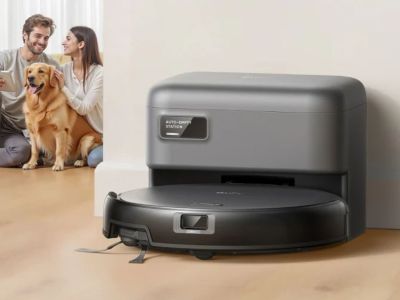
Roborock Q7 Max vs Eufy C10
Compare Roborock Q7 Max and Eufy C10. Detailed analysis of navigation efficiency, suction power, battery endurance, and price-to-performance value.
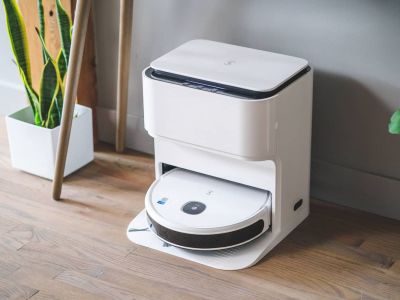
Ecovacs Deebot N9+ vs Roborock Q7 Max
Head-to-head: Ecovacs Deebot N9+ vs Roborock Q7 Max. Explore differences in navigation, sensors, dimensions, and software.
Disclaimer
All content, comparisons, and verdicts on this website are based on our research, testing, and opinion. While we strive for accuracy, we do not guarantee the completeness, reliability, or suitability of any information. Performance, specifications, and results may vary depending on usage and conditions. This website and its authors are not responsible for any decisions, actions, or outcomes based on the information provided. Always verify product details with the manufacturer before making purchase or operational decisions.