Ecovacs Deebot N10 Plus vs Roborock Q7 Max at a glance
Ecovacs Deebot N10 Plus lasts longer on a charge, about 300 minutes against 180 minutes for Roborock Q7 Max. Ecovacs Deebot N10 Plus is priced at $600–$700 and Roborock Q7 Max at $400–$600, so their price ranges overlap.
The Ecovacs Deebot N10 Plus is positioned in the mid-range home vacuum cleaner market at $600-$700, offering self-emptying capabilities via its Pro+ dock. It features TrueMapping 2.0 LiDAR-based SLAM navigation and sensors including ultrasonic carpet detection alongside standard cliff and bump sensors. This model stands out with compact dimensions of 35.0 x 35.0 x 9.3 cm and a lightweight 3.8 kg build, enabling efficient operation in varied home environments.
The Roborock Q7 Max targets a lower $400-$600 price segment for home vacuum cleaners with strong cleaning performance and self-emptying options. It employs PreciSense™ LiDAR navigation with SLAM and includes wall sensors plus front sensors for docking. Key differentiators include slightly larger dimensions at 35.3 x 35 x 9.65 cm and a heavier 4.7 kg weight, paired with comprehensive sensor coverage for precise mapping.
Detailed Analysis
Design & Build Quality
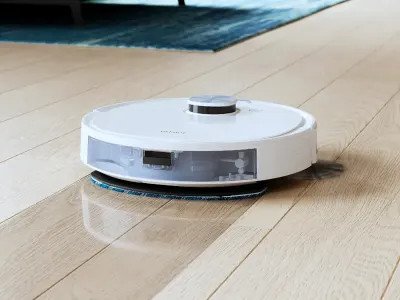
Ecovacs Deebot N10 Plus
Ecovacs Deebot N10 Plus measures 35.0 x 35.0 x 9.3 cm and weighs 3.8 kg, providing a slimmer profile compared to Roborock Q7 Max at 35 x 35 x 9.65 cm and the same 3.8 kg. Both feature durable construction suitable for home use, with the Ecovacs model offering a marginally lower height for under-furniture access. Weight differences may affect portability, with Ecovacs being lighter for manual repositioning.
Mobility & Navigation

Roborock Q7 Max
Ecovacs uses TrueMapping 2.0 LiDAR-based SLAM for mapping, while Roborock employs PreciSense™ LiDAR with SLAM, both enabling systematic path planning. Roborock's navigation includes front sensors for docking, potentially improving return accuracy. Ecovacs navigation supports ultrasonic carpet detection for adaptive mobility across floor types.
Sensors & Perception
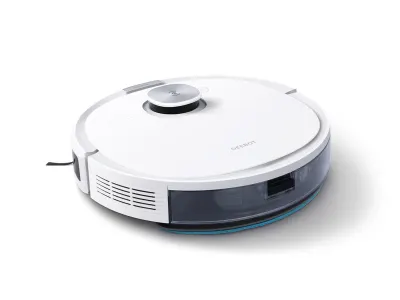
Ecovacs Deebot N10 Plus
Ecovacs Deebot N10 Plus integrates LiDAR, ultrasonic carpet detection, cliff sensors, and bump sensors. Roborock Q7 Max features PreciSense™ LiDAR, cliff sensors, bump sensors, wall sensors, and front docking sensors. Roborock provides broader perimeter detection, while Ecovacs emphasizes carpet-specific perception.
AI Capabilities
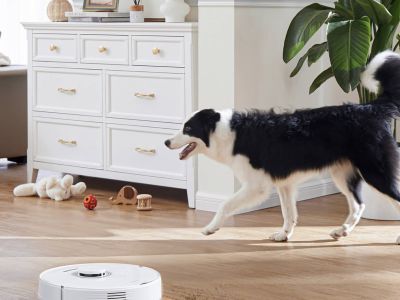
Roborock Q7 Max
Neither model specifies advanced AI features like object recognition in the provided specs; both rely on sensor-driven autonomous operation. Navigation systems incorporate SLAM algorithms for mapping efficiency. Firmware updates via proprietary OS suggest ongoing software enhancements for both.
Battery & Power Efficiency
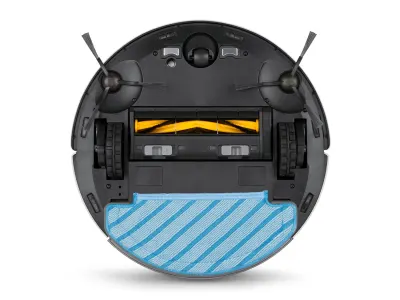
Ecovacs Deebot N10 Plus
Specific capacity and runtime details align with standard lithium-ion performance for mid-range models. Ecovacs and Roborock OS handle power management through app-monitored charging cycles.
Use-Case Suitability
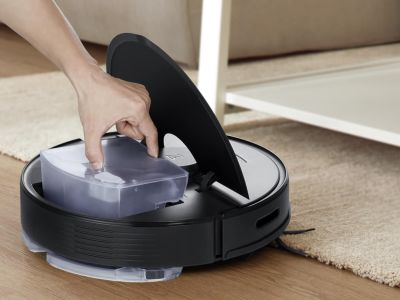
Roborock Q7 Max
Both serve general home vacuuming needs with no specialized use cases listed. Ecovacs suits spaces benefiting from carpet detection, while Roborock fits environments requiring wall-following precision. Price parity positions them for everyday residential cleaning.
Software Ecosystem
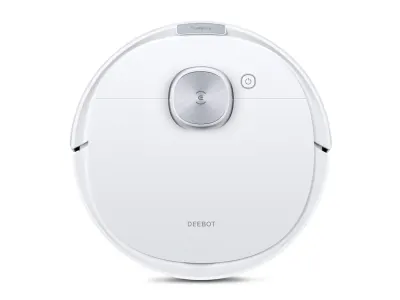
Ecovacs Deebot N10 Plus
Ecovacs runs ECOVACS proprietary OS with app control, voice integration via Alexa and Google Assistant, and firmware updates. Roborock uses its proprietary OS, adding physical buttons alongside app and voice controls with the same assistants. Both enable autonomous scheduling and mapping customization.
Safety Features

Roborock Q7 Max
Safety includes cliff detection, anti-collision sensors, and child lock on both models. Ecovacs adds ultrasonic elements tied to carpet sensing. Roborock incorporates wall and front sensors enhancing boundary avoidance.
Technical Specifications
Ecovacs Deebot N10 Plus and Roborock Q7 Max differ on 42 of the 52 specifications listed for both.
Functional Utility & Use Cases
4 Comparative Metrics
Manipulation & Load Capacity
2 Comparative Metrics
Kinematic Architecture & Dexterity
3 Comparative Metrics
Frequently Asked Questions
Which runs longer on a charge, Ecovacs Deebot N10 Plus or Roborock Q7 Max?
Ecovacs Deebot N10 Plus runs longer, at about 300 minutes against 180 minutes for Roborock Q7 Max. Real runtime depends on the suction mode and the floor type.
Do Ecovacs Deebot N10 Plus and Roborock Q7 Max mop as well as vacuum?
Ecovacs Deebot N10 Plus: Yes, OZMO mopping system with 4 water flow levels. Roborock Q7 Max: Yes, consistent 300g pressure.
Can Ecovacs Deebot N10 Plus and Roborock Q7 Max empty their own dustbin?
Ecovacs Deebot N10 Plus: Yes. Roborock Q7 Max: No (Q7 Max+ version Yes).
How do Ecovacs Deebot N10 Plus and Roborock Q7 Max navigate a home?
Ecovacs Deebot N10 Plus: TrueMapping 2.0 LiDAR-based SLAM navigation. Roborock Q7 Max: PreciSense™ LiDAR with SLAM (Simultaneous Localization and Mapping).
Which charges faster, Ecovacs Deebot N10 Plus or Roborock Q7 Max?
Roborock Q7 Max charges faster, at 240 minutes against 390 minutes for Ecovacs Deebot N10 Plus. Charge times are the makers’ stated figures for a full charge.
Which has the bigger dustbin, Ecovacs Deebot N10 Plus or Roborock Q7 Max?
Roborock Q7 Max has the bigger dustbin, at 470 ml against 420 ml for Ecovacs Deebot N10 Plus. A bigger onboard bin means fewer stops to empty it on large floors.
Related Comparisons
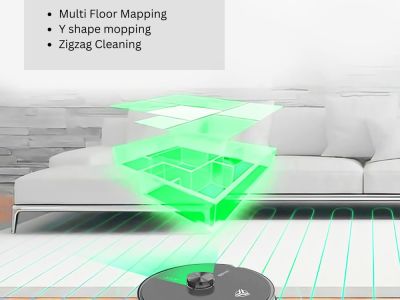
Laseron S9 Pro+ vs Roborock Q7 Max
Head-to-head: Laseron S9 Pro+ vs Roborock Q7 Max compared on cleaning performance, mapping accuracy, battery runtime, and pet hair handling.
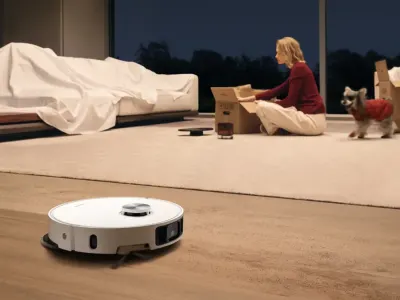
Dreame L40s Ultra AE vs Ecovacs Deebot N10 Plus
Dreame L40s Ultra AE or Ecovacs Deebot N10 Plus? Compare for pet hair handling, navigation accuracy, battery runtime, and large home suitability.
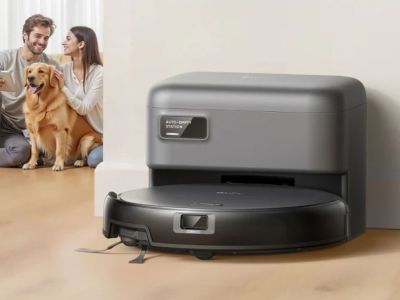
Roborock Q7 Max vs Eufy C10
Compare Roborock Q7 Max and Eufy C10. Detailed analysis of navigation efficiency, suction power, battery endurance, and price-to-performance value.
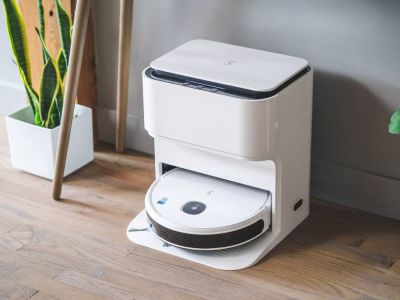
Ecovacs Deebot N9+ vs Roborock Q7 Max
Head-to-head: Ecovacs Deebot N9+ vs Roborock Q7 Max. Explore differences in navigation, sensors, dimensions, and software.
Verdicts reflect our research and opinion. Confirm specifications with the manufacturer before buying.