The Ecovacs T80 Omni is positioned as a premium home vacuum cleaner that balances advanced sensory technology and AI navigation at a mid-to-high price point of $700-$900. It differentiates itself with embedded dToF LiDAR, multi-level SLAM mapping, and the Ecovacs proprietary OS with Lingxi 2.0 AI, designed for precise obstacle avoidance and edge cleaning. Its compact dimensions and lighter weight support agile home cleaning. This model appeals to users seeking sophisticated vacuuming with advanced AI in a relatively compact and efficient package.
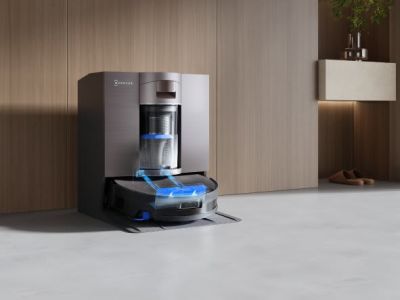
The DEEBOT X11 OmniCyclone targets users looking for the latest flagship vacuuming technology at a higher price range of $900-$1200. It includes enhanced navigation through WIN-SLAM 3.0 combining dToF and RGBD vision, powerful suction estimated at 19,500 Pa, and innovative self-emptying cyclone technology that eliminates the need for dust bags. Weighing more and slightly thicker, it emphasizes high suction power, advanced AI-driven cleaning strategies, and expanded multi-surface use cases including kitchens with grease buildup and large homes.
Detailed Analysis
Design & Build Quality
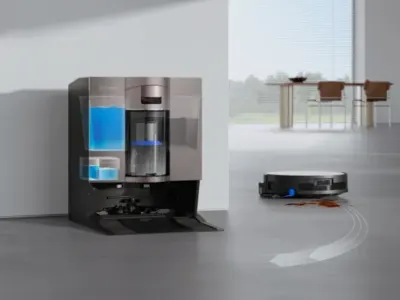
Both vacuums share a similar footprint with around 35 cm square dimensions, but the X11 OmniCyclone is slightly taller at 10.0 cm versus 9.8 cm for the T80 Omni. The X11 is heavier at 5.5 kg compared to 4.5 kg, reflecting its more robust build and additional hardware like the cyclone dustbin. Both are designed for home use with durable materials, but the T80 Omni's lighter form factor may aid in maneuverability and ease of handling.
Mobility & Navigation
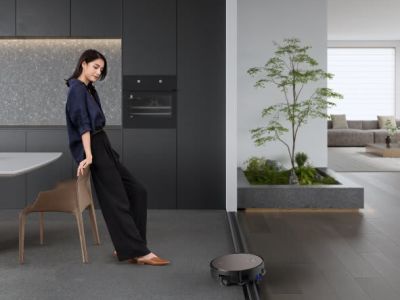
The T80 Omni uses embedded dToF LiDAR with AIVI 3D obstacle avoidance and multi-level SLAM mapping, enabling precise autonomous navigation and edge cleaning. The X11 OmniCyclone advances this with WIN-SLAM 3.0 integrating dToF and RGBD vision, plus AIVI 3D 3.0 Omni-Approach technology, offering superior environment mapping and multi-surface adaptability. Additionally, the X11's estimated speed of 0.3 m/s and enhanced obstacle scaling support larger area coverage and complex layouts.
Sensors & Perception
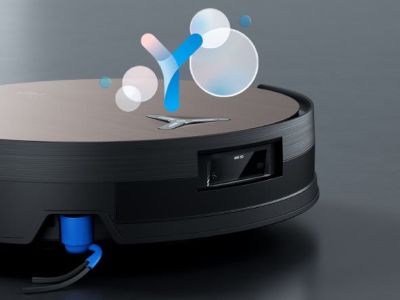
The T80 Omni employs a richer sensor suite including dToF LiDAR, a single camera, LED, 3D structured light sensor, and specialized sensors like TruEdge 3D edge and cliff sensors. The X11 OmniCyclone has a similar but slightly less diverse sensor array without dToF LiDAR; instead, it integrates RGBD vision combined with 3D structured light and standard cliff and bump sensors. Both models offer multi-dimensional obstacle detection but differ in sensing technologies that impact navigation precision and edge detection.
AI Capabilities
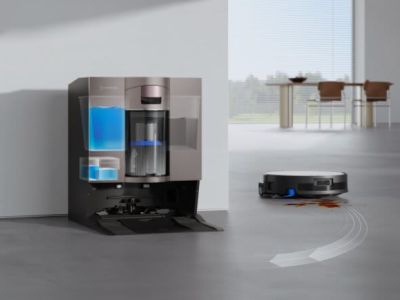
Ecovacs T80 Omni runs on its proprietary OS with Lingxi 2.0 AI and Lingchan 3.0 anti-tangle software, supporting efficient obstacle avoidance and autonomy. The X11 OmniCyclone enhances AI integration with AIVI 3D 3.0 Omni-Approach technology and supports voice control via YIKO and YIKO-GPT virtual assistants, enabling hands-free interaction. It also features smart lift systems for mop management on carpets and self-cleaning docking stations, reflecting a more evolved AI ecosystem.
Battery & Power Efficiency
Both models offer comparable battery longevity rated at 2-3 years of typical use. The X11 OmniCyclone has a slightly larger weight suggesting a potentially bigger battery or higher power consumption due to stronger motors and enhanced hardware. While explicit runtime figures are unavailable, the X11's GAN fast charging and 19,500 Pa suction power indicate a tradeoff between power and efficiency, whereas the T80 Omni emphasizes balanced operation suited for average household cleaning.
Use-Case Suitability
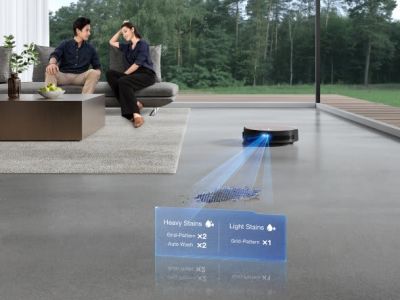
The T80 Omni serves as a versatile home vacuum with strong AI navigation, suitable for general residential cleaning with efficient edge and obstacle detection. The X11 OmniCyclone, with its higher suction, advanced mapping, and enhanced multi-surface adaptability, is aimed at larger homes, pet owners, and areas prone to greasy residues like kitchens and dining rooms. The cyclone bagless system further positions it for heavy-duty usage with minimal maintenance.
Functional Tools & Payload
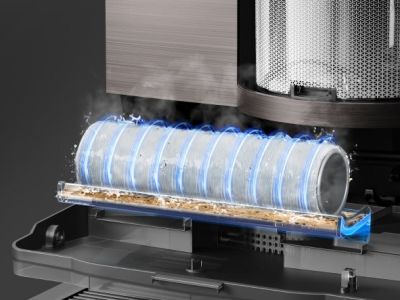
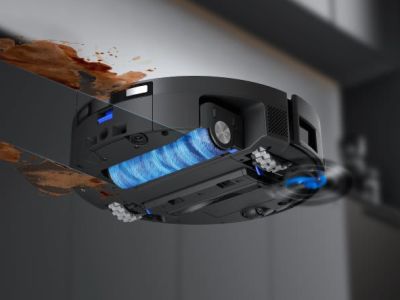
The X11 OmniCyclone includes an Omnicyclone dustbin system capable of holding up to 48 days of debris without bag replacements, a significant upgrade over the smaller dustbin system of the T80 Omni. Both offer mopping functions with Ozmo rollers, but the X11 features the improved Osmo Roller 2.0 with adaptive lift mechanisms for carpet detection, enhancing cleaning versatility across floor types.
Safety Features
Both robots incorporate essential safety elements such as cliff detection, anti-collision sensors, and child locks to prevent accidents during autonomous operation. The T80 Omni uniquely includes a virtual no-go zone feature for user-defined restricted areas, a capability not explicitly mentioned for the X11 OmniCyclone, suggesting more customizable safety controls in the T80 model.
Pricing & Value
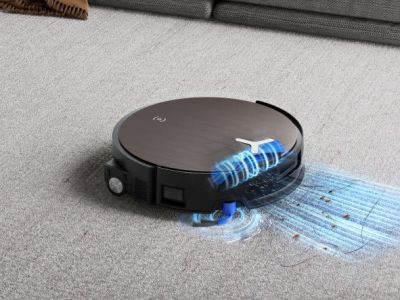
Priced between $700-$900, the T80 Omni offers advanced navigation and AI features at a relatively lower cost, making it accessible for users prioritizing efficient cleaning with robust technology. The X11 OmniCyclone, priced higher from $900-$1200, justifies its cost with stronger suction, advanced AI, innovative cyclone dustbin technology, and enhanced multi-surface suitability, targeting users needing premium performance and cutting-edge features.
Analysis Score Summary
Total Score
9
Ecovacs T80 Omni
VS
Based on Detailed Analysis
Total Score
9
DEEBOT X11 OmniCyclone
📊 Win: 2 points | Trade-off: 1 point each
Scores are summed across every insight: a clear winner earns 2 points, while balanced trade-offs give each robot 1 point. The total reflects how often each robot outperforms the other (or shares the spotlight) throughout the detailed analysis sections.
Technical Specifications
Head-to-head performance data and metrics
| Specification | Model AEcovacs T80 Omni | Model BDEEBOT X11 OmniCyclone |
|---|---|---|
Functional Utility & Use Cases4 Comparative Metrics | ||
Control Method | Mobile app, voice control (Alexa, Google Assistant), autonomous operation, virtual assistant | Mobile app, voice control (YIKO, YIKO-GPT), autonomous operation |
Use Cases | Automated vacuuming and mopping for mixed-floor homes, pet hair management, multi-level residences | Residential homes, pet owners, large area cleaning, mixed floor types, kitchens and dining rooms with grease buildup |
Multi Robot Coord | No multi-robot coordination features | Not specified (likely no multi-robot coordination) |
Pet Friendly | Yes, designed for pet hair with ZeroTangle 3.0 brush and high suction power | Yes, ZeroTangle 3.0 brush system minimizes hair tangling |
Manipulation & Load Capacity2 Comparative Metrics | ||
Payload Type | Dust, debris, and mopping residue (internal collection only) | Dust/debris, water for mopping, cleaning attachments (roller mop) |
Modular Attachments | - | None |
Kinematic Architecture & Dexterity3 Comparative Metrics | ||
Material | High-quality ABS plastic with metal components in brush and roller assemblies | High-quality plastic with metal components in motor and chassis |
Mobility Type | Wheeled robot with brush roll and suction system | Wheeled with brush roll and suction |
Hardware Interface | Charging contacts, USB-C port for service | Charging contacts, no USB |
Functional Utility & Use Cases
4 Comparative Metrics
Manipulation & Load Capacity
2 Comparative Metrics
Kinematic Architecture & Dexterity
3 Comparative Metrics
Related Comparisons
Discover similar robot matchups to expand your knowledge and find the perfect solution
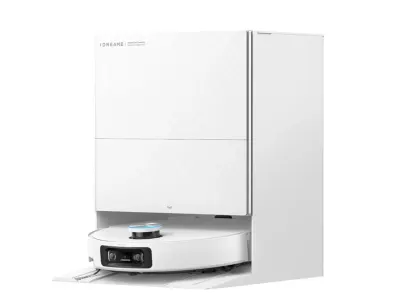
DEEBOT X11 OmniCyclone vs Dreame X60 Ultra
In-depth comparison of DEEBOT X11 OmniCyclone and Dreame X60 Ultra, covering cleaning performance, pet hair handling, navigation accuracy, and long-term ownership costs.
Roborock Saros 10R vs DEEBOT X11 OmniCyclone
Roborock Saros 10R or DEEBOT X11 OmniCyclone? Compare for pet hair handling, navigation in large homes, app usability, and long-term value.
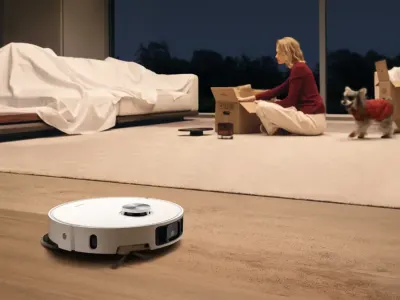
Dreame L40s Ultra AE vs DEEBOT X11 OmniCyclone
Dreame L40s Ultra AE or DEEBOT X11 OmniCyclone? Compare for pet hair handling, navigation in large homes, battery runtime, and maintenance ease.
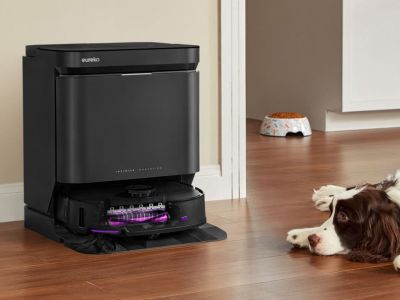
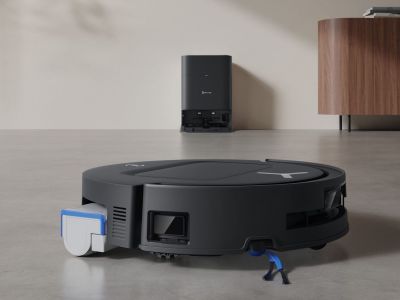
Eureka J15 Max Ultra vs Ecovacs T80 Omni
Eureka J15 Max Ultra or Ecovacs T80 Omni? Compare for pet hair handling, navigation accuracy, battery runtime, and value in daily home cleaning.
Disclaimer
All content, comparisons, and verdicts on this website are based on our research, testing, and opinion. While we strive for accuracy, we do not guarantee the completeness, reliability, or suitability of any information. Performance, specifications, and results may vary depending on usage and conditions. This website and its authors are not responsible for any decisions, actions, or outcomes based on the information provided. Always verify product details with the manufacturer before making purchase or operational decisions.