The Ecovacs T80 Omni positions itself in the mid-range home vacuum cleaner market with a price of $700-$900. It features embedded dToF LiDAR navigation combined with AIVI 3D obstacle avoidance and multi-level SLAM mapping, distinguishing it through advanced sensor fusion including TruEdge 3D edge sensor and Lingchan 3.0 anti-tangle technology. This setup supports precise mapping and edge cleaning in varied home environments.
The Dreame L40s Ultra AE targets the same $700-$900 price segment for home vacuum cleaners, emphasizing AI-enhanced SLAM navigation with RGB camera and 3D structured light. Its lighter 4.1 kg weight and 0.3 m/s speed provide efficient mobility, setting it apart with Dreame OS firmware updates via app. It maintains core functionalities like cliff detection while offering a compact 35 x 35 x 9.7 cm design.
Detailed Analysis
Design & Build Quality
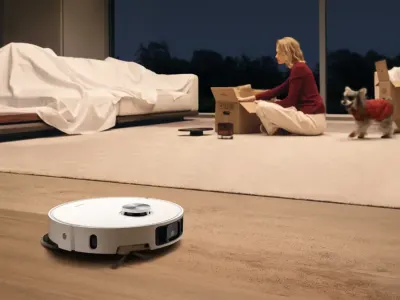
Ecovacs T80 Omni measures 35.0 x 35.0 x 9.8 cm and weighs 4.5 kg, slightly taller and heavier than Dreame L40s Ultra AE at 35 x 35 x 9.7 cm and 4.1 kg. Both share similar circular footprints suited for home navigation under furniture. The marginal size differences impact minimal on storage but Dreame's lighter build may ease manual handling.
Mobility & Navigation
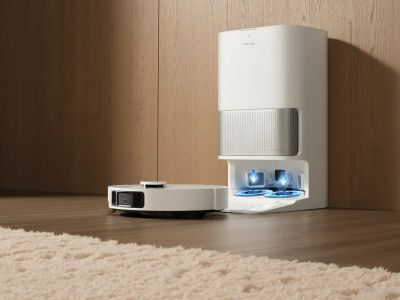
Ecovacs T80 Omni uses embedded dToF LiDAR with multi-level SLAM mapping for structured navigation. Dreame L40s Ultra AE employs AI-enhanced SLAM with RGB camera and 3D structured light at 0.3 m/s speed. Ecovacs emphasizes multi-floor mapping while Dreame focuses on precise obstacle handling in single-level homes.
Sensors & Perception
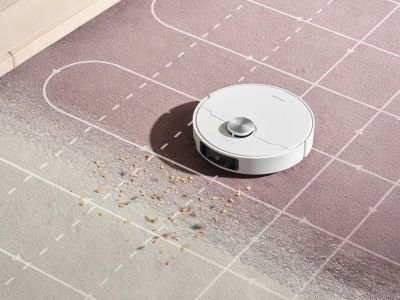
Ecovacs T80 Omni includes dToF LiDAR, single camera, LED, 3D structured light, cliff, bump, and TruEdge 3D edge sensors. Dreame L40s Ultra AE has LiDAR, RGB camera, 3D structured light, cliff, and bump sensors. Ecovacs offers more sensor types for edge detection, while Dreame prioritizes RGB for visual perception.
AI Capabilities
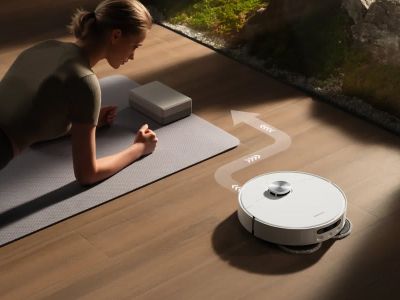
Ecovacs runs Proprietary Ecovacs OS with Lingxi 2.0 AI, Lingchan 3.0 anti-tangle, and AIVI 3D avoidance. Dreame uses Dreame OS with AI navigation and app firmware updates. Ecovacs integrates specialized anti-tangle and edge AI, contrasting Dreame's focus on SLAM enhancement.
Battery & Power Efficiency
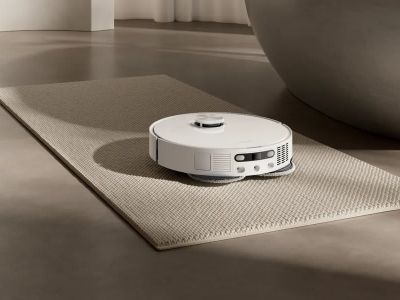
Both models specify 2-3 years battery life, indicating comparable longevity. Ecovacs lists speed as N/A, while Dreame operates at 0.3 m/s. No direct runtime data differs, suggesting similar efficiency for home cleaning cycles.

Use-Case Suitability
Both suit general home vacuuming with no specific use cases listed. Ecovacs targets multi-level homes via SLAM, while Dreame fits single-floor efficiency with defined speed. Shared price enables broad household deployment.
Safety Features
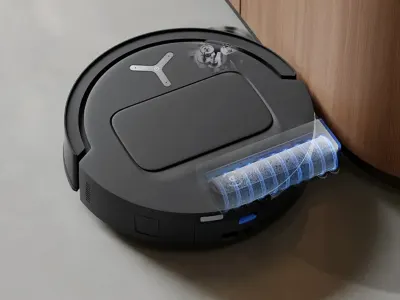
Ecovacs provides cliff detection, anti-collision, child lock, and virtual no-go zones. Dreame includes cliff detection, anti-collision sensors, and child lock. Ecovacs adds virtual boundaries for customized safety.
Software Ecosystem
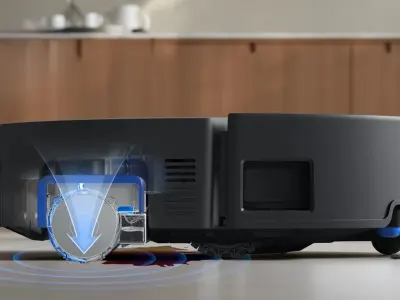
Ecovacs offers mobile app, voice control with Alexa/Google, autonomous operation, and virtual assistant. Dreame supports smartphone app, voice control, and autonomous operation. Ecovacs extends compatibility with more voice platforms.
Analysis Score Summary
Total Score
9
Ecovacs T80 Omni
VS
Based on Detailed Analysis
Total Score
7
Dreame L40s Ultra AE
📊 Win: 2 points | Trade-off: 1 point each
Scores are summed across every insight: a clear winner earns 2 points, while balanced trade-offs give each robot 1 point. The total reflects how often each robot outperforms the other (or shares the spotlight) throughout the detailed analysis sections.
Technical Specifications
Head-to-head performance data and metrics
| Specification | Model AEcovacs T80 Omni | Model BDreame L40s Ultra AE |
|---|---|---|
Functional Utility & Use Cases4 Comparative Metrics | ||
Control Method | Mobile app, voice control (Alexa, Google Assistant), autonomous operation, virtual assistant | Smartphone app, voice control, autonomous operation |
Use Cases | Automated vacuuming and mopping for mixed-floor homes, pet hair management, multi-level residences | Residential homes, pet owners, families, mixed floor environments |
Multi Robot Coord | No multi-robot coordination features | No multi-robot coordination |
Pet Friendly | Yes, designed for pet hair with ZeroTangle 3.0 brush and high suction power | Yes, designed with hair-cutting brush and anti-tangle features for pet hair |
Manipulation & Load Capacity1 Comparative Metrics | ||
Payload Type | Dust, debris, and mopping residue (internal collection only) | Dust, debris, and liquid mopping solution |
Kinematic Architecture & Dexterity3 Comparative Metrics | ||
Material | High-quality ABS plastic with metal components in brush and roller assemblies | ABS plastic, rubber, metal accents |
Mobility Type | Wheeled robot with brush roll and suction system | Wheeled with brush roll and suction |
Hardware Interface | Charging contacts, USB-C port for service | Charging contacts, no USB port |
Functional Utility & Use Cases
4 Comparative Metrics
Manipulation & Load Capacity
1 Comparative Metrics
Kinematic Architecture & Dexterity
3 Comparative Metrics
Related Comparisons
Discover similar robot matchups to expand your knowledge and find the perfect solution
Dreame L40s Ultra AE vs Eufy C28
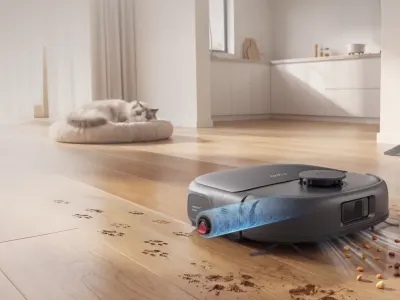
In-depth comparison of Dreame L40s Ultra AE and Eufy C28, covering cleaning results, app experience, and ownership costs.
Dreame L40s Ultra AE vs DEEBOT X11 OmniCyclone
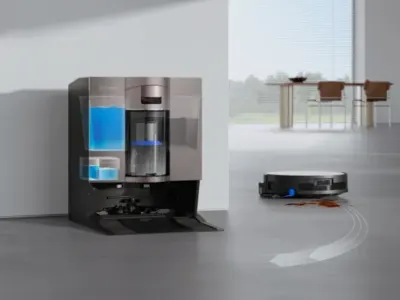
Dreame L40s Ultra AE or DEEBOT X11 OmniCyclone? Compare for pet hair handling, navigation in large homes, battery runtime, and maintenance ease.
Dreame L40s Ultra AE vs 3i S10 Ultra
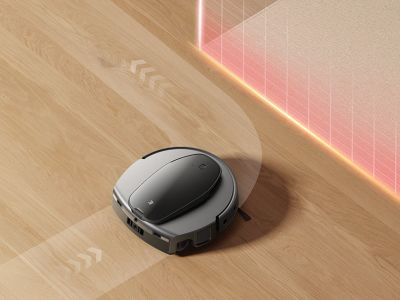
Dreame L40s Ultra AE or 3i S10 Ultra? Compare for pet hair handling, large home coverage, navigation accuracy, and long-term maintenance ease.
Eureka J15 Max Ultra vs Ecovacs T80 Omni
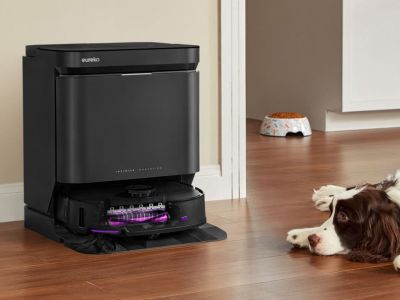
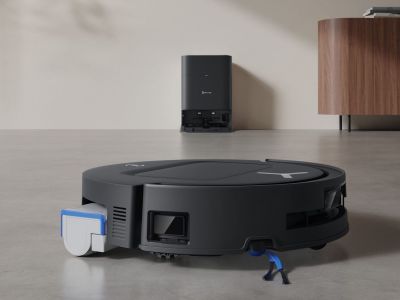
Eureka J15 Max Ultra or Ecovacs T80 Omni? Compare for pet hair handling, navigation accuracy, battery runtime, and value in daily home cleaning.
Disclaimer
All content, comparisons, and verdicts on this website are based on our research, testing, and opinion. While we strive for accuracy, we do not guarantee the completeness, reliability, or suitability of any information. Performance, specifications, and results may vary depending on usage and conditions. This website and its authors are not responsible for any decisions, actions, or outcomes based on the information provided. Always verify product details with the manufacturer before making purchase or operational decisions.