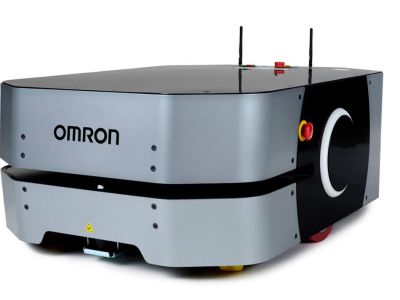
Omron LD-250 is a floor-based mobile industrial robot built for high-payload internal logistics, especially in automotive and plant-wide material transport. Its 250 kg standard payload, optional 500 kg cart transport configuration, and automatic charging dock position it for continuous intralogistics rather than precision manipulation. Compared with MiR250, Omron LD-250 emphasizes heavier transport capacity and Omron’s FLOW fleet management environment. It is best suited to facilities that need robust autonomous movement of bulky loads across production areas.
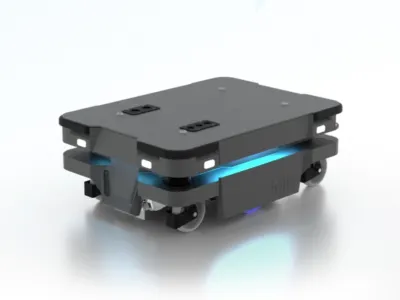
MiR250 is a compact autonomous mobile robot designed for transport tasks where maneuverability, software control, and docking precision matter more than maximum transport mass. With a 250 kg payload, 2.0 m/s speed, and repeatable docking performance, it is positioned as a flexible AMR for conveyor integration and mixed-fleet automation. Compared with Omron LD-250, MiR250 is smaller, lighter, and faster, which can improve navigation in constrained spaces. It is a strong fit for automotive and electronics operations that prioritize compact deployment and integration flexibility.
Detailed Analysis
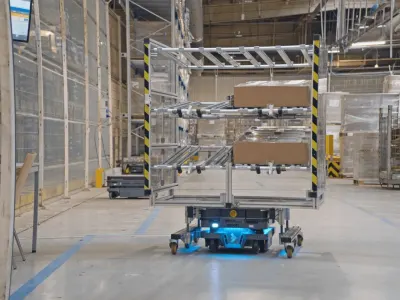
Which robot handles heavier payloads better?
Omron LD-250 has the advantage in load handling because it supports 250 kg in standard form and up to 500 kg in its Cart Transporter configuration. MiR250 is limited to 250 kg, which is sufficient for many transport tasks but not for the heavier cart-moving workflows Omron targets. Omron’s larger load capacity makes it more suitable for bulky assemblies, transmission blocks, and large packaging transport. MiR250 is better when payload needs are moderate and space constraints matter more than maximum carrying capability. For heavy internal logistics, Omron LD-250 is the stronger choice.
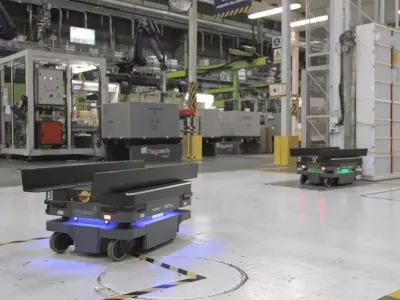
How do precision and repeatability compare?
MiR250 provides published positioning and docking accuracy values, including ±60 mm positioning and tighter docking figures of ±6 mm in X, ±3 mm in Y, and ±1° for repeatable station alignment. Omron LD-250 does not list repeatability or accuracy figures in the provided specifications, so its performance is harder to evaluate on precision-centric tasks. That makes MiR250 easier to specify for applications where dependable docking to conveyors or stations is important. Omron LD-250 may still be effective for transport-oriented duties, but the available data favors MiR250 for accuracy-focused integration. For precision at docking points, MiR250 is the clearer option.
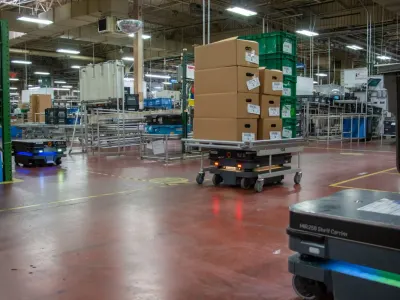
Which robot is faster for internal transport?
MiR250 reaches 2.0 m/s, while Omron LD-250 is listed at 1.2 m/s maximum. That speed difference favors MiR250 in short-cycle material movement and time-sensitive line feeding. Omron LD-250 can still provide efficient transport, especially where heavier payloads reduce the need for top speed. In practice, MiR250 is better for rapid point-to-point movement, while Omron LD-250 is better when capacity and sustained transport are the priority. For higher transport speed, MiR250 has the advantage.
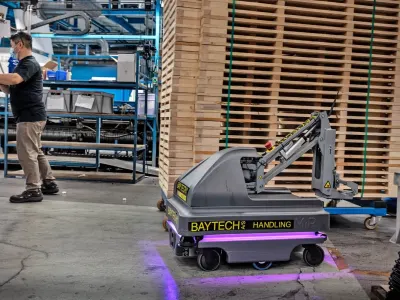
How do control systems affect integration?
Omron LD-250 uses Omron’s proprietary control system with Fleet Operations Workspace (FLOW), which aligns well with broader Omron automation environments. MiR250 runs on MiR Robot OS, a dedicated platform for autonomous mobile robot workflows and fleet operations. Omron’s stack may appeal to facilities already standardized on Omron equipment, while MiR250 can be attractive where AMR-specific configuration and fleet management are the main requirement. Both systems support industrial deployment, but the best choice depends on the surrounding automation architecture. For Omron-centric plants, LD-250 integrates more naturally; for AMR-focused deployments, MiR250 is more specialized.
Which robot has lower maintenance burden?
Both robots are mobile platforms with floor-based operation, which usually reduces mechanical complexity compared with articulated arms. Omron LD-250 includes an automatic charging dock, safety scanning lasers, bumpers, and sonar-based sensing, all of which support continuous operation but add system components that need monitoring. MiR250 also relies on multiple sensors, scanners, and docking systems, but its smaller footprint may simplify space-related upkeep. Neither robot’s maintenance profile can be judged fully from the provided data alone, but MiR250’s simpler payload profile may reduce strain in some deployments. For maintenance planning, both are industrial AMRs rather than high-wear manipulators.
Which robot fits automotive and packaging workflows?
Omron LD-250 is especially aligned with automotive assembly and large-volume packaging transport because of its higher transport capacity and ESD-safe variants for electronics manufacturing. MiR250 is also relevant to automotive and electronics, but its cited use case centers on conveyor integration rather than heavy cart movement. That makes Omron stronger for moving bulky components and MiR250 stronger for line-side feeding and precise station handoffs. In electronics, MiR250 can work well where compact transport and controlled docking are needed, while Omron suits larger interprocess moves. For heavy production logistics, Omron LD-250 is the better fit; for compact integration, MiR250 is the better fit.
Which robot is better for heavy manufacturing?
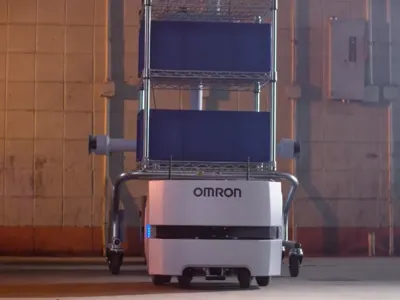
Omron LD-250 is better for heavy manufacturing because it offers the higher transport ceiling, including the 500 kg cart transporter option. MiR250 is better suited to lighter autonomous transport and controlled integration points, not the heaviest internal loads. If the workflow involves large assemblies, carts, or ESD-sensitive transport in a broader automotive plant, Omron provides more capacity margin. MiR250 remains valuable where space, speed, and docking precision are more important than maximum load. For heavy manufacturing logistics, Omron LD-250 is the recommended option.
Which robot is better for conveyor integration?
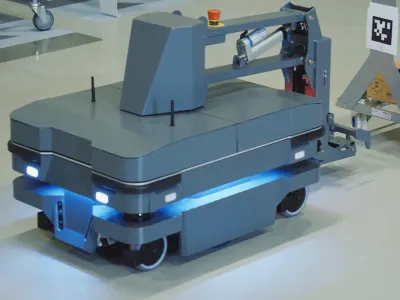
MiR250 is better for conveyor integration because its published docking accuracy is stronger and its software platform is built around repeatable AMR workflows. Omron LD-250 can still support transport between stations, but the supplied data does not show the same level of docking precision. For conveyor handoff tasks, MiR250’s tighter docking performance is a practical advantage. Omron remains the better choice if the conveyor workflow involves heavier loads or carts. For conveyor integration, MiR250 is the recommended option.
Analysis Score Summary
Total Score
6
Omron LD-250
VS
Based on Detailed Analysis
Total Score
10
MiR250
📊 Win: 2 points | Trade-off: 1 point each
Scores are summed across every insight: a clear winner earns 2 points, while balanced trade-offs give each robot 1 point. The total reflects how often each robot outperforms the other (or shares the spotlight) throughout the detailed analysis sections.
Technical Specifications
Head-to-head performance data and metrics
| Specification | Model AOmron LD-250 | Model BMiR250 |
|---|---|---|
Functional Utility & Use Cases4 Comparative Metrics | ||
Control Method | Tablet interface, Fleet Manager system, touch screen | Autonomous navigation, manual joystick, fleet software |
Use Cases | Automotive assembly (moving transmission blocks/seats), voluminous packaging transport in food/commodities, electronics manufacturing (ESD-safe models), and laboratory material delivery | Conveyor Integration |
Multi Robot Coord | Fleet Manager system enables centralized control and coordination of multiple robots with varying payloads | Yes, via MiR Fleet |
Pet Friendly | - | Yes (via 360° obstacle avoidance) |
Manipulation & Load Capacity3 Comparative Metrics | ||
Payload Capacity | 250 kg (standard), 500 kg (Cart Transporter configuration) | 250 kg |
Payload Type | Bulky materials, automotive components, finished goods, and industrial carts | Industrial crates, boxes, custom trolleys, and electronic sub-assemblies. |
Modular Attachments | Cart Transporter, custom topper modules, latch system for carts | Top modules (hooks, carriers, lifts, conveyors), traction kits |
Kinematic Architecture & Dexterity3 Comparative Metrics | ||
Material | Hardened metal construction with reinforced skins for industrial durability | Anodized aluminum top plate, Thermoplastic Polyurethane wheels |
Mobility Type | Wheeled (Differential Drive) | Wheeled (Differential Drive) |
Hardware Interface | Serial, digital I/O, audio, integrated charging contacts | Ethernet ports, USB, top module I/O |
Functional Utility & Use Cases
4 Comparative Metrics
Manipulation & Load Capacity
3 Comparative Metrics
Kinematic Architecture & Dexterity
3 Comparative Metrics
Frequently Asked Questions
What are the payload and transport limits of Omron LD-250 compared with MiR250 in industrial logistics?
Omron LD-250 carries 250 kg standard and up to 500 kg in Cart Transporter configuration. MiR250 carries 250 kg. Omron LD-250 is better for heavier carts and bulky loads.
How do Omron LD-250 and MiR250 compare for positioning accuracy and docking repeatability?
MiR250 provides published accuracy figures: ±60 mm positioning and ±6 mm X / ±3 mm Y / ±1° docking. Omron LD-250 does not list repeatability data in the provided specs.
Which robot is likely to have better maintenance planning for long-term autonomous transport operations, Omron LD-250 or MiR250?
Omron LD-250 and MiR250 are both mobile platforms, so wear is focused on navigation and charging systems. Omron LD-250 adds cart transport capability, while MiR250’s compact design may simplify some deployments.
How does Omron LD-250 integration compare with MiR250 software for fleet-based automation control?
Omron LD-250 uses Omron proprietary control with FLOW fleet operations. MiR250 uses MiR Robot OS. Omron LD-250 fits Omron-centric plants, while MiR250 is built for AMR-focused integration.
Is Omron LD-250 better than MiR250 for automotive assembly line material movement?
Omron LD-250 is better for automotive assembly when heavier transmission blocks, seats, or carts must move. MiR250 is better for lighter line-side transport and conveyor handoffs.
Which robot is more suitable for electronics manufacturing and ESD-sensitive transport tasks, Omron LD-250 or MiR250?
Omron LD-250 is specifically listed with ESD-safe models for electronics manufacturing. MiR250 can serve electronics transport, but Omron LD-250 is the clearer fit for ESD-sensitive logistics.
Disclaimer
All content, comparisons, and verdicts on this website are based on our research, testing, and opinion. While we strive for accuracy, we do not guarantee the completeness, reliability, or suitability of any information. Performance, specifications, and results may vary depending on usage and conditions. This website and its authors are not responsible for any decisions, actions, or outcomes based on the information provided. Always verify product details with the manufacturer before making purchase or operational decisions.