Roborock Qrevo S vs Dreame L50 Ultra at a glance
Dreame L50 Ultra has the stronger suction at 19,500 Pa, compared with 7,000 Pa for Roborock Qrevo S. Dreame L50 Ultra is lighter at 4.4 kg, compared with 12 kg for Roborock Qrevo S. Roborock Qrevo S is the more affordable option at $700–$900, while Dreame L50 Ultra costs $1,599.99. Dreame L50 Ultra lasts longer on a charge, about 200 minutes against 180 minutes for Roborock Qrevo S.
The Qrevo S by Roborock targets users who want a LiDAR-based home vacuum cleaner with app control and strong automation features in the mid-to-upper price range. Positioned for residential and small office environments, it emphasizes structured LiDAR navigation, multiple safety sensors, and AI automation for routine cleaning. Its combination of multi-type sensors, remote control via app, and voice assistant integration makes it suitable for homes that prioritize consistent mapped cleaning with collision avoidance.
The Dreame L50 Ultra by Dreame is aimed at buyers looking for a more camera-augmented robot vacuum that combines spinning LiDAR with RGB and 3D structured light for advanced obstacle handling. In a similar price band, it differentiates itself with AI-enhanced navigation, path illumination LEDs, and a dedicated Dreamehome OS focused on perception-rich cleaning. This model is designed for households that need detailed obstacle recognition, child lock safety, and robust app-based and voice-enabled control for autonomous operation.
Detailed Analysis
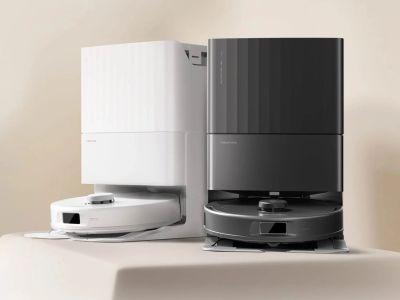
Roborock Qrevo S
Design & Build Quality
The Qrevo S has dimensions of 35.0 x 35.3 x 9.6 cm and a weight of 11.56 kg, indicating a relatively dense build that may reflect an integrated base or heavier internal components. The Dreame L50 Ultra measures 34.8 x 35.2 x 9.7 cm and weighs 4.44 kg for the robot unit, giving it similar footprint but substantially lower robot-only mass. The near-identical length and width suggest both can navigate typical household furniture spacing, while the sub-10 cm height on each allows passage under many low-clearance items. The higher stated weight for Qrevo S may influence how it interacts with thresholds and thick rugs, whereas the lighter Dreame L50 Ultra robot can be easier to handle when manually moving or maintaining the device.
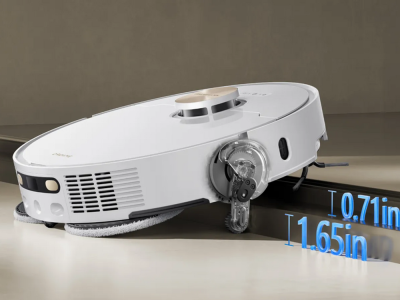
Dreame L50 Ultra
Mobility & Navigation
Both robots rely on LiDAR-based navigation, with the Qrevo S using LiDAR for mapping and path planning and the Dreame L50 Ultra employing a spinning LiDAR unit paired with AI algorithms. The Qrevo S lists a movement speed of 0.3 m/s, providing a reference for traversal rate during cleaning cycles. The Dreame L50 Ultra, while not specifying speed, supplements LiDAR with RGB camera and 3D structured light for more informed path decisions in complex environments. These differences mean that while both can produce structured maps, the Dreame model has additional sensing channels to refine path selection and obstacle routing, particularly in cluttered spaces.
Roborock Qrevo S
Sensors & Perception
The Qrevo S uses LiDAR, structured light, cliff sensors, bump sensors, wheel encoders, and a dust sensor, forming a multi-modal perception suite focused on distance measurement, floor-edge detection, contact feedback, motion tracking, and debris monitoring. The Dreame L50 Ultra includes spinning LiDAR, an RGB camera, a 3D structured light sensor, cliff and bump sensors, plus LED path illumination, combining depth sensing with visual information and enhanced low-light visibility. Both platforms rely on cliff and bump sensors for core safety and contact detection, but the Dreame L50 Ultra adds full-color visual context and 3D depth sensing for object classification and avoidance. The presence of a dust sensor on Qrevo S and an RGB camera on Dreame L50 Ultra indicates differing priorities: Qrevo S focuses on dirt level feedback, while Dreame emphasizes environment understanding.
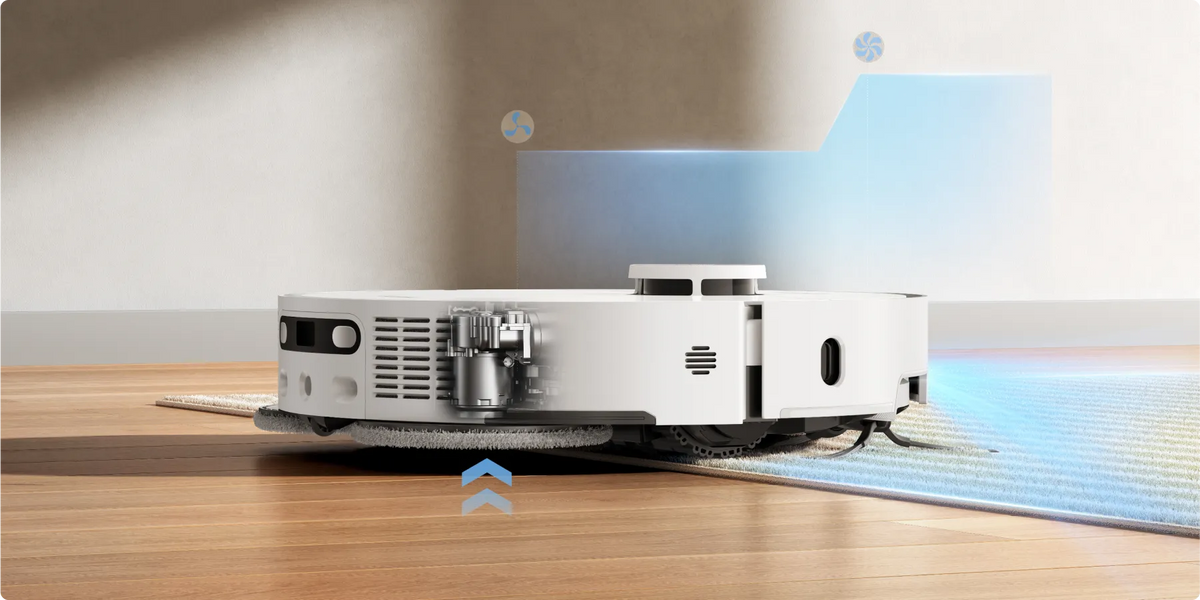
Dreame L50 Ultra
AI Capabilities
The Qrevo S advertises AI automation, primarily tied to its proprietary OS and app integration, enabling scheduled routines, map-based cleaning zones, and adaptive behavior based on sensor input. The Dreame L50 Ultra uses Dreamehome OS with AI navigation and cleaning algorithms, explicitly combining spinning LiDAR, RGB camera, and 3D structured light data for AI-enhanced obstacle avoidance. This means the Dreame L50 Ultra’s AI operates over richer sensor modalities, supporting more detailed object recognition and path adjustment. In both cases, AI is used for route optimization and collision avoidance, but the Dreame implementation is more closely linked to camera-driven perception, while the Qrevo S aligns AI with LiDAR and environmental sensing data.
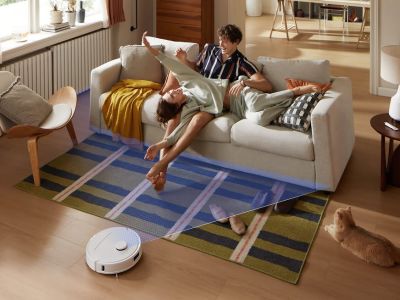
Roborock Qrevo S
Battery & Power Efficiency
The Qrevo S specifies a battery life expectancy of approximately 3–5 years depending on usage patterns, though capacity and runtime per charge are not listed in the provided data. The Dreame L50 Ultra indicates a battery lifespan of 2–3 years, with external comparisons showing it commonly uses a 6400 mAh pack and can run for up to about 200 minutes, versus 5200 mAh and about 180 minutes for comparable Qrevo models. These external figures suggest that Dreame’s platform is designed for longer single-charge operation, while Qrevo S is positioned for somewhat longer potential service life at the pack level. Practical efficiency will depend on cleaning modes and floor types, but nominally, the Dreame L50 Ultra provides greater runtime per charge, whereas Qrevo S emphasizes durability over a wider lifespan range.
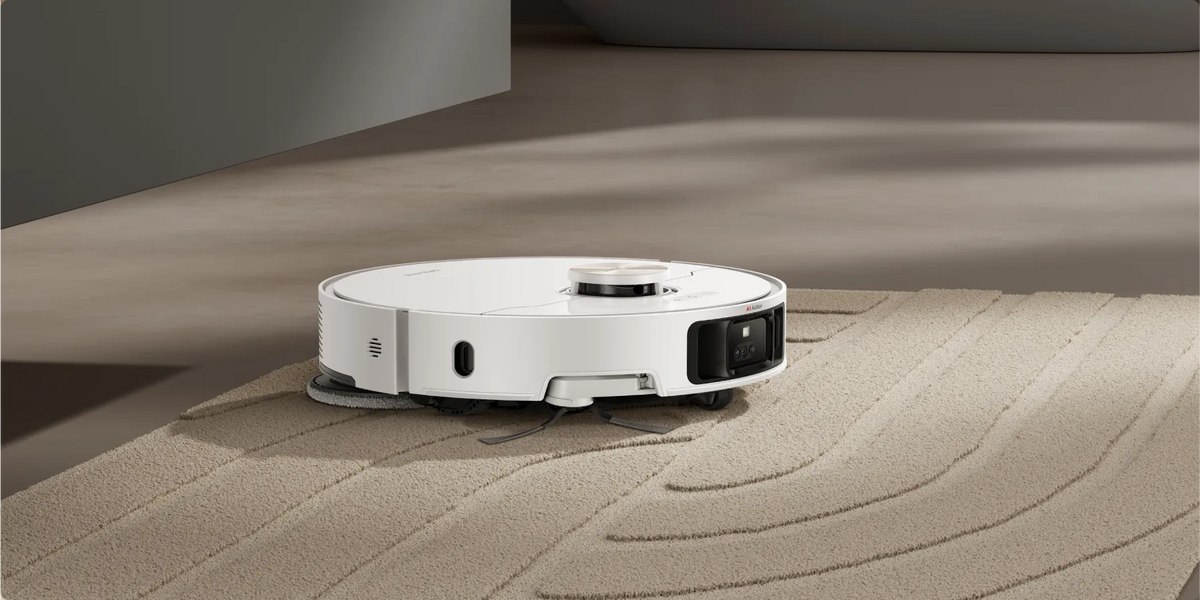
Dreame L50 Ultra
Use-Case Suitability
The Qrevo S is explicitly listed for residential and small office environments, indicating its feature set, mapping, and controls are tuned for mixed-use indoor spaces with repeatable layouts. With LiDAR navigation, multiple safety sensors, and app plus voice control, it suits users who need predictable coverage in homes or compact office areas. The Dreame L50 Ultra, while not given a formal use-case label in the provided data, combines AI obstacle avoidance, RGB camera, 3D structured light, and LED illumination, aligning well with households that have more clutter, varied objects on the floor, or dynamic environments. Both can operate autonomously, but Qrevo S aligns more with structured, map-focused cleaning, and Dreame L50 Ultra aligns with perception-heavy scenarios that require refined obstacle understanding.
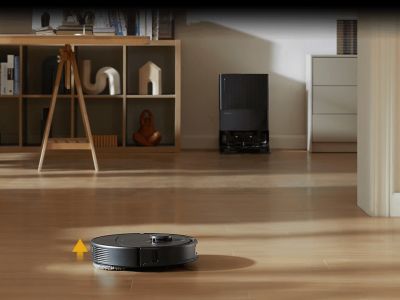
Roborock Qrevo S
Software Ecosystem
The Qrevo S runs a proprietary OS with app integration, enabling remote control, mapping access, and configuration via its dedicated mobile application, along with voice commands through Alexa and Google Home. This ecosystem focuses on scheduling, zone-based cleaning, and direct control while keeping processing on the robot and within the app’s management layer. The Dreame L50 Ultra uses Dreamehome OS, which is tightly integrated with the Dreamehome app and AI navigation stack, providing access to AI-driven obstacle maps, cleaning customization, and system status. Both ecosystems support voice control, but Dreamehome OS is structured around its AI perception stack, whereas the Qrevo S proprietary OS is centered on LiDAR mapping and automation routines.
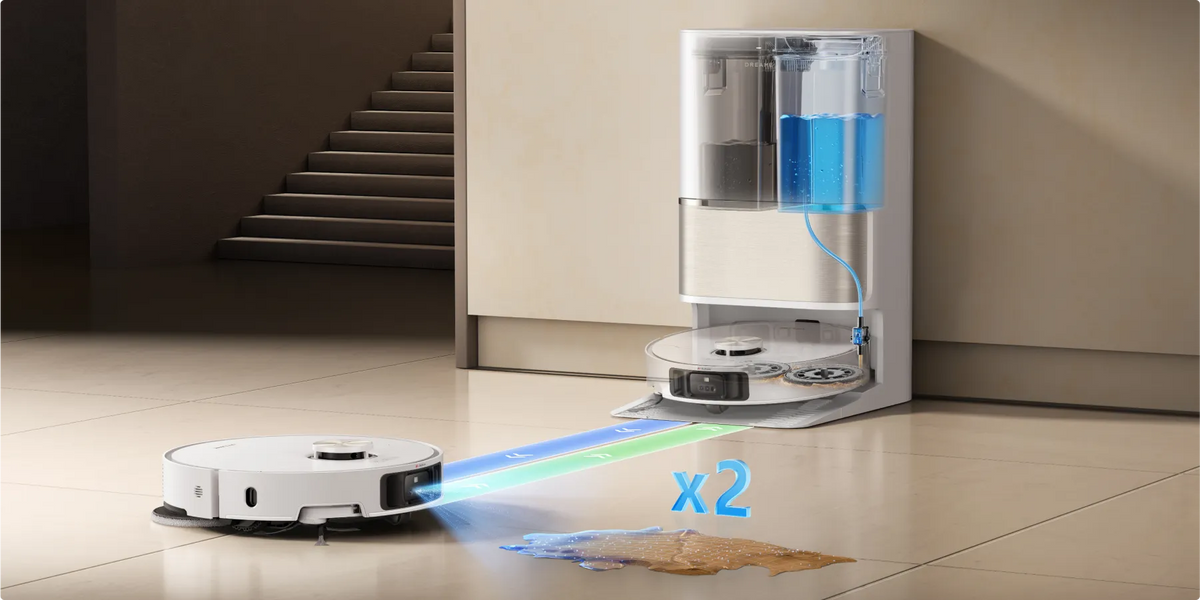
Dreame L50 Ultra
Pricing & Value
The Qrevo S is listed in the $700–$900 price range, placing it in the mid-to-upper segment for home robot vacuums with LiDAR navigation. The Dreame L50 Ultra is priced slightly higher at $800–$1000, reflecting the inclusion of RGB camera, 3D structured light, and LED illumination along with its AI-enhanced navigation suite. This means there is a partial overlap in pricing, and selection may depend on whether a buyer prioritizes extended sensor-based AI navigation or prefers a LiDAR-focused platform with broader lifespan expectations for the battery. Both sit in price brackets where navigation sophistication, safety mechanisms, and app-based control are baseline expectations rather than optional extras.
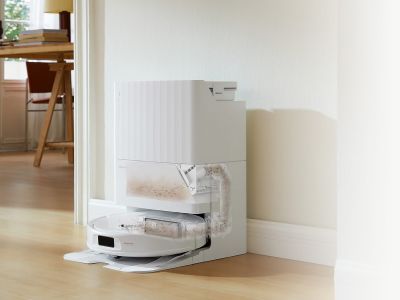
Roborock Qrevo S
Safety Features
The Qrevo S includes obstacle detection and collision avoidance as core safety functions, leveraging LiDAR, cliff sensors, and bump sensors to prevent falls and reduce impact with furniture. Its wheel encoders and structured light further assist in maintaining stable trajectories and avoiding unsafe edges. The Dreame L50 Ultra lists child lock functionality, cliff detection, and AI-based anti-collision with obstacle avoidance, combining hardware sensors with software constraints to prevent unintended operation. The addition of a child lock and visual AI obstacle recognition in the Dreame L50 Ultra provides extra safeguards in environments with children or sensitive objects on the floor, while Qrevo S focuses on robust basic avoidance and fall protection.
Technical Specifications
Roborock Qrevo S and Dreame L50 Ultra differ on 46 of the 50 specifications listed for both.
Functional Utility & Use Cases
4 Comparative Metrics
Manipulation & Load Capacity
2 Comparative Metrics
Kinematic Architecture & Dexterity
3 Comparative Metrics
Related Comparisons
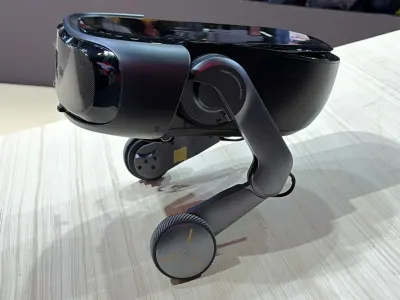
Roborock Qrevo S vs Roborock Saros Rover
Compare Qrevo S vs Saros Rover for navigation, battery runtime, app experience, and home suitability.
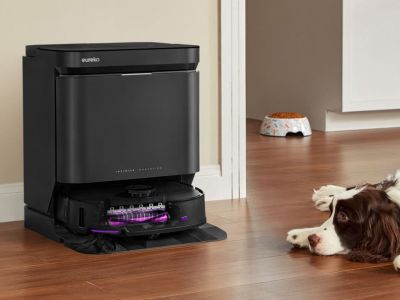
Roborock Qrevo S vs Eureka J15 Max Ultra
Qrevo S or Eureka J15 Max Ultra? Compare for pet hair handling, navigation accuracy, battery runtime, and home suitability to find your best clean.
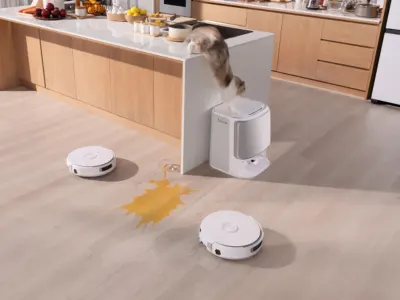
Narwal Flow vs Dreame L50 Ultra
Compare Narwal Flow vs Dreame L50 Ultra for cleaning performance, navigation accuracy, battery runtime, and pet hair handling in real homes.
Roborock Qrevo Curv vs Dreame L50 Ultra
Qrevo Curv or Dreame L50 Ultra? Compare cleaning performance, navigation accuracy, battery runtime, and pet hair handling for smarter ownership decisions.
Verdicts reflect our research and opinion. Confirm specifications with the manufacturer before buying.