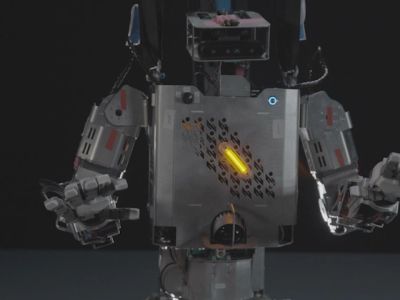
Minerva Humanoids
Minerva Humanoids is a San Francisco startup building Roger, a semi-autonomous humanoid robot for jobs too dangerous for people, such as oil and gas emergencies, explosive ordnance disposal and hazardous-material response. A trained specialist operates Roger from a safe distance, seeing through the robot's cameras with a VR headset, while the company's onboard Minerva Intelligence software handles balance, fall recovery and navigation, so the robot does not need a live cloud connection. Minerva was founded at the end of 2025 by CEO Sandor Felber, who worked on humanoid AI at MIT CSAIL and on Tesla's Optimus program, and CTO Maurice Rahme, who spent five and a half years at Boston Dynamics helping take Stretch to market. The team took Roger from a clean-sheet design in March 2026 to a walking prototype by August. Software is developed mainly in the US, while prototypes are built in Sindelfingen near Stuttgart, Germany, and the company also has an office in Cambridge, Massachusetts. In October 2026 Minerva came out of stealth with about $10 million in pre-seed funding led by General Catalyst and began its first paid pilots.
💡Notable Achievement: Minerva took Roger from a clean-sheet design in March 2026 to a walking humanoid prototype by August 2026, about five months.
What Does Minerva Humanoids Do?
Minerva Humanoids builds Roger, a rugged humanoid that lets a specialist handle bomb disposal, oil and gas emergencies and hazardous materials from a safe distance, with onboard AI keeping the robot balanced and moving.
“A humanoid avatar for the world's most dangerous jobs.”
Shared Autonomy
Minerva Intelligence handles balance, fall recovery and navigation onboard.
Human Judgment
A trained operator works through Roger with a VR headset.
Built for Hazards
Targets EOD, oil and gas, and hazmat response.
What Can Minerva Humanoids Robots Actually Do?
Cross-portfolio operational capabilities, manipulation tasks, and environmental competencies
Teleoperated humanoid for hazardous field work.
Explosive Ordnance Disposal
Remote render-safe work and bomb disposal by a specialist operating Roger.
Oil and Gas Operations
Emergency response, inspection rounds and valve operation on onshore and offshore sites.
Hazmat Response
Detection, sampling and casualty evacuation in contaminated zones.
Minerva Humanoids Robots
Showing 1 Humanoid Robots of 1 total model

Roger
Manufactured by Minerva Humanoids
Roger is a rugged, semi-autonomous humanoid robot from Minerva Humanoids, built to do the world's most dangerous jobs so that people do not have to. A trained specialist operates Roger from a safe location: a VR headset shows the view from the robot's cameras, trackers on the operator's body send their movements to the robot, and haptic gloves return a sense of touch from Roger's two five-fingered hands. Minerva's own software, Minerva Intelligence, takes care of balance, fall recovery and navigation, so the operator can focus on the skilled part of the job. Minerva says Roger weighs 220 lb (about 100 kg), walks at 4.5 mph over stairs, sand and rubble, carries 26.4 lb in each hand, runs for more than 4 hours, is sealed to IP66 and works from -20°C to +60°C. It is aimed at oil and gas inspection and valve work, explosive ordnance disposal (EOD), chemical and radiological (CBRN) response and casualty evacuation. Roger went from a blank sheet to a walking prototype in about five months in 2026 and was unveiled on October 6, 2026; it is still a prototype, with first paid pilots starting in fall 2026.
Minerva Humanoids Software & AI Ecosystem
Developer platforms, fleet management portals, autonomy intelligence, and enterprise integrations
Minerva Intelligence
Onboard shared autonomy
Runs on the robot without a cloud link and handles balance, fall recovery and waypoint navigation while the operator directs the task.
VR operator interface
See through Roger's eyes
Operators control Roger through a VR headset, with kinematics designed to match a human arm so control feels intuitive.
Minerva Humanoids Timeline & Milestones
Evolutionary history, landmark prototypes, major acquisitions, and commercial roadmap
Minerva Humanoids founded
Sandor Felber and Maurice Rahme found Minerva Humanoids at the end of 2025 to build humanoid robots for dangerous jobs.
Source: interestingengineering.com
Roger walking prototype
Roger reaches a walking prototype about five months after its clean-sheet design began in March 2026.
Source: humanoidsdaily.com
Out of stealth with $10 million pre-seed
Minerva emerges from stealth with about $10 million in pre-seed funding led by General Catalyst, co-led by Long Journey Ventures and Credo Ventures.
Source: theaiinsider.tech
Minerva Humanoids Competitors by Category
Direct industry rivals grouped by specific robotics domain
What Makes Minerva Humanoids Different?
Editorial AnalysisOrigin of Bots objective strategic assessment, engineering moats, and commercial hurdles
Key Strengths & Moats
- ✓Experienced founders from Tesla Optimus, MIT CSAIL and Boston Dynamics.
- ✓Clear high-value niche where human safety justifies a high price.
- ✓Fast hardware development: design to walking robot in about five months.
Core Strategic Focus
Teleoperated humanoid for hazardous field work.
Road Ahead & Challenges
- •Still a prototype that the company says is not yet as rugged as intended.
- •Pre-seed scale with pilots only.
- •Competes with established tracked EOD robots.
Minerva Humanoids vs Key Competitors
Strategic capability matrix across platform categories, commercial readiness, and target markets
Category / Focus
- Roger
- Hazardous-work humanoid avatar
- Fuxi
- Special-purpose teleoperated humanoid
- Alex
- Disaster-response research humanoid
- Persona
- Heavy-industry humanoid
Primary Use
- Roger
- Oil and gas response, bomb disposal
- Fuxi
- All-weather reconnaissance, patrols
- Alex
- Disaster response, avatar missions
- Persona
- Welding, grinding
Weight
- Roger
- About 100 kg
- Fuxi
- About 90 kg
- Alex
- About 85 kg
- Persona
- 85 kg
Release Year
- Roger
- 2026
- Fuxi
- 2026
- Alex
- 2025
- Persona
- 2026
| Strategic Dimension | Roger | Fuxi | Alex | Persona |
|---|---|---|---|---|
| Category / Focus | Hazardous-work humanoid avatar | Special-purpose teleoperated humanoid | Disaster-response research humanoid | Heavy-industry humanoid |
| Primary Use | Oil and gas response, bomb disposal | All-weather reconnaissance, patrols | Disaster response, avatar missions | Welding, grinding |
| Weight | About 100 kg | About 90 kg | About 85 kg | 85 kg |
| Release Year | 2026 | 2026 | 2025 | 2026 |
Corporate Ecosystem & Ownership Structure
Parent company relationships, historical acquisitions, and global operating facilities
General Catalyst
Led the roughly $10 million pre-seed round announced in October 2026.
Ownership & Acquisition History
Led the roughly $10 million pre-seed round announced in October 2026.
Co-led the October 2026 pre-seed round.
Co-led the October 2026 pre-seed round.
Co-founder and CEO; previously worked on humanoid AI at MIT CSAIL and on Tesla Optimus.
Co-founder and CTO; spent five and a half years at Boston Dynamics working on Stretch.
Global Facilities & Operating Hubs
Minerva Humanoids Headquarters
HQSan Francisco, California, United States
Headquarters; software and AI are developed mainly in the US.
Minerva Humanoids Cambridge Office
OfficeCambridge, Massachusetts, United States
Minerva Humanoids Germany
ManufacturingSindelfingen, Baden-Württemberg, Germany
Roger prototypes are engineered and assembled here, near Stuttgart.
Frequently Asked Questions
8 AnswersVerified answers, company specifications, and deployment details about Minerva Humanoids
What is Minerva Humanoids?
Minerva Humanoids is a San Francisco robotics startup founded at the end of 2025. It builds Roger, a semi-autonomous humanoid robot that lets specialists do dangerous jobs such as bomb disposal and oil and gas emergency work from a safe distance.
What is the Roger robot?
Roger is Minerva's rugged humanoid for hazardous work. A trained operator controls it remotely through a VR headset, while onboard software keeps it balanced, recovers from falls and navigates, so the person can focus on the task itself.
What is Minerva Intelligence?
Minerva Intelligence is the company's shared-autonomy software. It runs on the robot rather than in the cloud and handles balance, fall recovery and navigation to waypoints, while the human operator makes the judgment calls and performs fine manipulation.
What jobs is Roger designed for?
Minerva targets offshore and onshore oil and gas operations, high-voltage power sites, explosive ordnance disposal and hazardous-material response. It has also tested Roger for airport security incidents and discussed mine clearance and casualty evacuation.
Who founded Minerva Humanoids?
CEO Sandor Felber worked on humanoid AI research at MIT CSAIL and on Tesla's Optimus program. CTO Maurice Rahme spent five and a half years at Boston Dynamics, where he helped take the Stretch warehouse robot from early prototype to commercial product.
How much funding has Minerva Humanoids raised?
Minerva came out of stealth in October 2026 with about $10 million in pre-seed funding. General Catalyst led the round, Long Journey Ventures and Credo Ventures co-led it, and angels including Hugging Face co-founder Thomas Wolf took part.
Where are Minerva's robots built?
Minerva develops its software and AI mainly in the United States, while Roger prototypes are engineered and assembled in Sindelfingen, near Stuttgart in Germany. The company is headquartered in San Francisco and has an office in Cambridge, Massachusetts.
Is Roger available to buy?
Not yet. Roger is still a prototype, and Minerva began its first paid pilots in the fall of 2026, aiming to turn them into service contracts in 2027. It has not published a price, and the CEO has said Roger will be expensive.
Verified Data & Editorial Assurance
Compiled from verified corporate filings, official Minerva Humanoids datasheets, and robotics engineering registries. Data is monitored and audited on an ongoing basis for accuracy. For commercial procurement or proprietary integrations, contact the manufacturer directly.