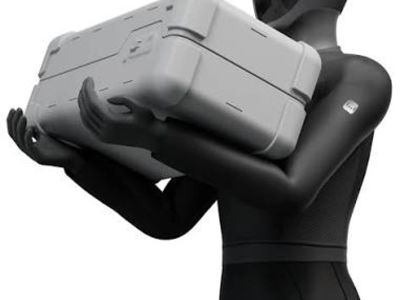
NineRay Technology
NineRay Technology (九光技术), registered in Shenzhen as 深圳九光控股有限公司, is a Chinese embodied-intelligence robotics company founded by Xu Zhigen. Rather than buying in key parts, it develops joints and control systems, high-density motors, drivers and reducers, collaborative arms, mobile platforms and intelligent operating systems, and it is building a wider ecosystem around humanoid robots. It has a regional base at Hong Kong Science Park, which Xu calls its base for globalization because of the city's access to global markets, talent, capital and university research. On August 17, 2026 it launched its third-generation humanoid, RayNex G3, in Hong Kong. The robot is 173 cm tall and weighs under 60 kg, with 32 degrees of freedom, including seven in each arm. NineRay says it can carry 30 kg while working, deadlift 100 to 200 kg and hold 60 kg with both arms, and it was demonstrated holding a 50 kg barbell. NineRay targets bulk conveyance, warehouse logistics and precision work, and says food, beverage and nuclear-power firms have approached it.
💡Notable Achievement: RayNex G3 weighs under 60 kg but NineRay says it can deadlift 100 to 200 kg; it held a 50 kg barbell at its Hong Kong launch.
What Does NineRay Technology Do?
NineRay builds humanoids and their core parts, and launched the 173 cm, under-60 kg RayNex G3 in Hong Kong in August 2026.
“Strong, light humanoids from Shenzhen.”
RayNex G3
32 DoF, carries 30 kg.
Core Parts
Joints, motors, drivers and reducers.
Hong Kong Base
Its base for globalization.
What Can NineRay Technology Robots Actually Do?
Cross-portfolio operational capabilities, manipulation tasks, and environmental competencies
Full-size humanoids.
Heavy Handling
Bulk conveyance and logistics with high payload.
NineRay Technology Robots
Showing 1 Humanoid Robots of 1 total model
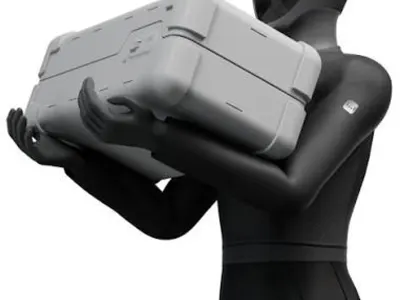
RayNex G3
Manufactured by NineRay Technology
RayNex G3 (小睿G3) is the third-generation full-size humanoid from NineRay Technology, unveiled at Hong Kong Science Park on August 17, 2026. It stands 173 cm tall, weighs under 60 kg and is built for heavy work: it can carry 30 kg in operation, deadlift 100–200 kg and hold 60 kg with both arms, using 32 degrees of freedom, linear and harmonic series-elastic joints and 44 force sensors across the body. NineRay says sales open in September 2026 at a unified global price.
NineRay Technology Timeline & Milestones
Evolutionary history, landmark prototypes, major acquisitions, and commercial roadmap
RayNex G3 launched in Hong Kong
NineRay unveils its third-generation humanoid, RayNex G3, at Hong Kong Science Park. It stands 173 cm, weighs under 60 kg and has 32 degrees of freedom.
Source: chinadailyhk.com
NineRay Technology Competitors by Category
Direct industry rivals grouped by specific robotics domain
What Makes NineRay Technology Different?
Editorial AnalysisOrigin of Bots objective strategic assessment, engineering moats, and commercial hurdles
Key Strengths & Moats
- ✓Vertically integrated components.
- ✓High strength-to-weight claims.
Core Strategic Focus
Industrial humanoid with in-house parts.
Road Ahead & Challenges
- •No public price.
- •Little independent verification.
- •Crowded Chinese humanoid market.
NineRay Technology vs Key Competitors
Strategic capability matrix across platform categories, commercial readiness, and target markets
Category / Focus
- RayNex G3
- Full-size humanoid
- Walker S2
- Industrial humanoid
- Forerunner K2
- Industrial humanoid
- Unitree H2
- Full-size humanoid
Primary Use
- RayNex G3
- Bulk conveyance, warehouse logistics
- Walker S2
- Factory floor automation
- Forerunner K2
- Materials handling, sample processing
- Unitree H2
- Service, collaboration
Weight
- RayNex G3
- Under 60 kg (published at launch)
- Walker S2
- 73 kg
- Forerunner K2
- 75 kg
- Unitree H2
- 70 kg
Release Year
- RayNex G3
- 2026
- Walker S2
- 2025
- Forerunner K2
- 2025
- Unitree H2
- 2025
| Strategic Dimension | RayNex G3 | Walker S2 | Forerunner K2 | Unitree H2 |
|---|---|---|---|---|
| Category / Focus | Full-size humanoid | Industrial humanoid | Industrial humanoid | Full-size humanoid |
| Primary Use | Bulk conveyance, warehouse logistics | Factory floor automation | Materials handling, sample processing | Service, collaboration |
| Weight | Under 60 kg (published at launch) | 73 kg | 75 kg | 70 kg |
| Release Year | 2026 | 2025 | 2025 | 2025 |
Corporate Ecosystem & Ownership Structure
Parent company relationships, historical acquisitions, and global operating facilities
Global Facilities & Operating Hubs
NineRay Technology Headquarters
HQShenzhen, China
Regional base at Hong Kong Science Park.
Hong Kong Science Park
OfficeHong Kong, Hong Kong
NineRay's launch venue and globalization base.
Frequently Asked Questions
8 AnswersVerified answers, company specifications, and deployment details about NineRay Technology
What is NineRay Technology?
NineRay Technology is a Shenzhen-registered embodied-intelligence robotics company founded by Xu Zhigen. It makes humanoid robots and their core parts, including joints, motors, control systems and operating systems.
What is RayNex G3?
RayNex G3 is NineRay's third-generation humanoid robot, launched at Hong Kong Science Park on August 17, 2026. It stands 173 cm tall and weighs under 60 kg.
How strong is RayNex G3?
NineRay says RayNex G3 can carry 30 kg while working, deadlift 100 to 200 kg and hold 60 kg with both arms. At its launch it was shown holding a 50 kg barbell.
How many degrees of freedom does RayNex G3 have?
RayNex G3 has 32 degrees of freedom: seven in each arm, six in each leg, three in the neck and three in the waist.
Why is NineRay based in Hong Kong?
Founder Xu Zhigen calls Hong Kong NineRay's base for globalization, citing the city's access to global markets, talent, capital and university research. The company has a base at Hong Kong Science Park.
What is RayNex G3 designed for?
NineRay targets bulk conveyance, warehouse logistics and precision tasks. It says companies from food and beverage production and nuclear power have approached it with possible applications.
What components does NineRay make?
NineRay develops joints and control systems, high-density motors, drivers and reducers, collaborative robot arms, mobile platforms and intelligent operating systems.
How much does RayNex G3 cost?
NineRay has not published a price. The catalogue lists an inferred estimate of $200,000 or more, in line with other full-size industrial humanoids.
Verified Data & Editorial Assurance
Compiled from verified corporate filings, official NineRay Technology datasheets, and robotics engineering registries. Data is monitored and audited on an ongoing basis for accuracy. For commercial procurement or proprietary integrations, contact the manufacturer directly.