Kepler Robotics
Kepler (Shanghai Kepler Robotics, 开普勒机器人) is a Shanghai humanoid robot company founded in 2023 and led by chief executive Hu Debo. It builds the Forerunner series of general-purpose humanoid robots for industrial work such as factory inspection, material handling, assembly support and logistics. Kepler showed its first Forerunner humanoids at CES 2024 in Las Vegas, and in October 2024 debuted the Forerunner K2 at GITEX Global in Dubai. The K2, which Kepler calls its fifth-generation design, has 52 degrees of freedom in its body, can carry up to 15 kg in each hand and works an eight-hour cycle on a one-hour charge. Kepler has said the mass-produced K2 would start at a base price of about US$30,000, among the lowest for a full-size humanoid. In April 2025 the K2 began real-world testing at the SAIC-GM car plant in Shanghai, handling inspection and assembly support tasks, as Kepler focuses on practical industrial deployment of embodied AI.
💡Notable Achievement: Kepler's Forerunner K2 debuted at GITEX Global in October 2024 and began real-world testing at the SAIC-GM Shanghai plant in April 2025, with a mass-production base price of about US$30,000.
What Does Kepler Robotics Do?
Kepler is a Shanghai humanoid company founded in 2023 that builds the Forerunner series of humanoids for factory inspection, handling and logistics.
“Affordable industrial humanoids tested in real car plants.”
K2
52 degrees of freedom, up to 15 kg per hand and an eight-hour cycle on a one-hour charge.
Real Testing
Tested at SAIC-GM's Shanghai plant from April 2025.
Price Target
Mass-produced K2 base price of about US$30,000.
What Can Kepler Robotics Robots Actually Do?
Cross-portfolio operational capabilities, manipulation tasks, and environmental competencies
Factory inspection, handling and assembly support.
Assembly Support
K2 supports inspection and assembly tasks in a car plant.
Material Handling
Carries loads up to 15 kg per hand.
Long Shifts
Eight-hour cycle on a one-hour charge.
Kepler Robotics Robots & Robot Hands
Showing 2 Humanoid Robots of 3 total models
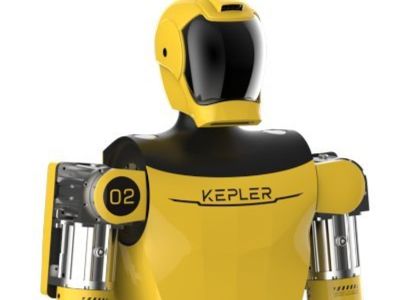
K2 Bumblebee
By: Kepler Robotics
Launched: 2025
The K2 Bumblebee is a next-generation bipedal humanoid robot from Kepler Robotics, standing 175 cm tall and weighing 75 kg, engineered for industrial applications like manufacturing, logistics, and retail. Featuring 52 degrees of freedom for human-like articulation, it boasts over 80 integrated sensors including tactile sensors in every finger, infrared binocular 3D cameras, and SLAM capabilities for real-time object recognition, gesture detection, and scene understanding. Powered by Kepler's proprietary Nebula AI platform with 100 TOPS onboard compute, it executes autonomous task sequences with millimeter-level precision using planetary roller screw actuators. Capable of 15 kg per arm payloads (30 kg dual-arm), up to 8 hours runtime on a 1-hour charge, and near-zero static power consumption, the K2 demonstrates straight-knee walking gaits for agile navigation on uneven terrain, stairs, and factory floors. Its hybrid architecture enables reinforcement learning for adaptive behaviors, making it ideal for sorti
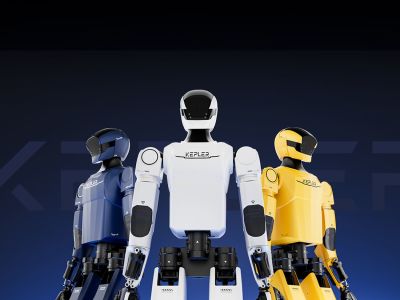
Forerunner K2
By: Kepler Robotics
Launched: 2025
The Forerunner K2 by Kepler Robotics is a fifth-generation general-purpose humanoid robot designed for industrial and collaborative applications. Standing at 175 cm tall and weighing 75 kg, it features 52 degrees of freedom for fluid, human-like movements, including a rotating/tilting head and rigid arms/legs with planetary roller screw actuators delivering up to 8,200 N peak force. Its dexterous rope-driven hands offer 11 DOF each, with 96 tactile contact points per fingertip for precise grasping up to 15 kg per hand and 25 kg total payload. Equipped with infrared binocular 3D cameras, over 80 sensors for tension/pressure/torque, and a 100 TOPS Nebula AI system, the K2 excels in visual SLAM navigation, autonomous task execution via imitation/reinforcement learning, and real-time environmental adaptation. With 8-hour runtime on a 2.33 kWh battery, improved gait stability, and cloud integration, it supports dual-arm handling in manufacturing, logistics, inspection, and high-risk operations, enabling seamless human-robot collaboration.
Kepler Robotics Timeline & Milestones
Evolutionary history, landmark prototypes, major acquisitions, and commercial roadmap
Kepler founded in Shanghai
Kepler is founded in Shanghai to develop general-purpose humanoid robots for industry.
Source: interestingengineering.com
Forerunner humanoids shown at CES 2024
Kepler presents its Forerunner humanoid robots to an international audience at CES 2024 in Las Vegas.
Source: prnewswire.com
Forerunner K2 debuts at GITEX Global
Kepler debuts the Forerunner K2 humanoid, with 52 degrees of freedom, at GITEX Global in Dubai.
Source: prnewswire.com
K2 testing at SAIC-GM plant
The Forerunner K2 begins real-world testing at SAIC-GM's Shanghai car plant for inspection and assembly support.
Source: inspenet.com
Focus on industrial deployment
Kepler outlines its strategy of focusing on industrial deployment of embodied AI in factories.
Source: equalocean.com
Kepler Robotics Competitors by Category
Direct industry rivals grouped by specific robotics domain
What Makes Kepler Robotics Different?
Editorial AnalysisOrigin of Bots objective strategic assessment, engineering moats, and commercial hurdles
Key Strengths & Moats
- ✓Very competitive price target.
- ✓Named factory testing site.
Core Strategic Focus
Scaling K2 production and deployments.
Road Ahead & Challenges
- •Price depends on configuration and volume.
- •Crowded Chinese humanoid market.
Kepler Robotics vs Key Competitors
Strategic capability matrix across platform categories, commercial readiness, and target markets
Actuator Design
- Kepler (Forerunner K2)
- Planetary Roller Screw Linear
- Boston Dynamics (Atlas)
- High-Torque Electric Rotary
- Apptronik (Apollo)
- Series Elastic Compliant Actuators
- UBTECH (Walker S1)
- High-Precision Servomotors
Environmental Ingress
- Kepler (Forerunner K2)
- IP65 Weatherproof Sealed
- Boston Dynamics (Atlas)
- Clean Industrial Plant Grade
- Apptronik (Apollo)
- Industrial Factory Grade
- UBTECH (Walker S1)
- Automotive Clean Assembly Grade
Robot Weight
- Kepler (Forerunner K2)
- 85 kg (Rugged Steel/Alloy)
- Boston Dynamics (Atlas)
- ~90 kg (Industrial Alloy)
- Apptronik (Apollo)
- 72 kg (Impact Polymer/Alloy)
- UBTECH (Walker S1)
- ~76 kg (Industrial Composite)
Target Operational Zone
- Kepler (Forerunner K2)
- Ports, Chemical Plants & Yards
- Boston Dynamics (Atlas)
- Smart Automotive Assembly
- Apptronik (Apollo)
- Warehouse Staging & Kitting
- UBTECH (Walker S1)
- Automotive Manufacturing Lines
| Strategic Dimension | Kepler (Forerunner K2) | Boston Dynamics (Atlas) | Apptronik (Apollo) | UBTECH (Walker S1) |
|---|---|---|---|---|
| Actuator Design | Planetary Roller Screw Linear | High-Torque Electric Rotary | Series Elastic Compliant Actuators | High-Precision Servomotors |
| Environmental Ingress | IP65 Weatherproof Sealed | Clean Industrial Plant Grade | Industrial Factory Grade | Automotive Clean Assembly Grade |
| Robot Weight | 85 kg (Rugged Steel/Alloy) | ~90 kg (Industrial Alloy) | 72 kg (Impact Polymer/Alloy) | ~76 kg (Industrial Composite) |
| Target Operational Zone | Ports, Chemical Plants & Yards | Smart Automotive Assembly | Warehouse Staging & Kitting | Automotive Manufacturing Lines |
Corporate Ecosystem & Ownership Structure
Parent company relationships, historical acquisitions, and global operating facilities
Global Facilities & Operating Hubs
Kepler Robotics Headquarters
HQShanghai, China
Articles & Industry News
Showing 4 recent articles and news updates about Kepler Robotics
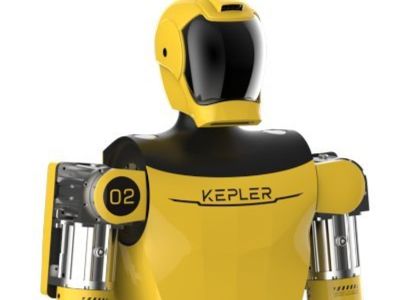
Kepler Robotics Launches Mass Production of K2 "Bumblebee," the First Commercial Hybrid-Architecture Humanoid
News about K2 Bumblebee
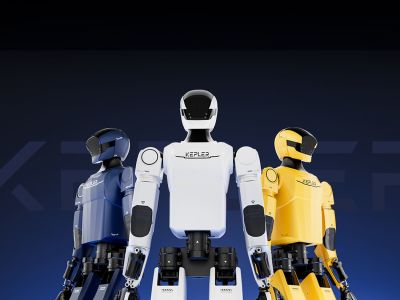
K2 Bumblebee Masters Quality Checks at SAIC-GM Plant
News about Forerunner K2
Kepler's K2 Bumblebee Conquers Factory Lines in Mass Production
News about K2 Bumblebee
Kepler Unveils Forerunner K2: The Future of Industrial Humanoids
News about Forerunner K2
Robot Comparisons
Showing 3 in-depth comparisons featuring Kepler Robotics — Explore all comparisons →
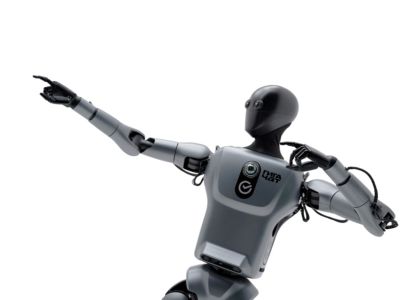
K2 Bumblebee by Kepler vs Green by Sberbank
K2 Bumblebee vs Green: Kepler's 52-DOF industrial humanoid against Sber's GigaChat-powered Green, compared on hands, sensors, battery and price.

K2 Bumblebee by Kepler vs T800 by EngineAI
Which robot wins? K2 Bumblebee vs T800 compared across speed, sensors, navigation, and price for industrial humanoid selection.
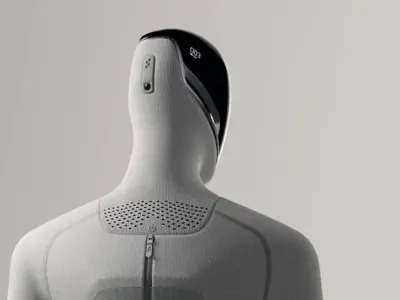
Figure 03 vs K2 Bumblebee by Kepler
Compare Figure 03 and K2 Bumblebee. Detailed analysis of navigation, battery, and sensors.
Frequently Asked Questions
8 AnswersVerified answers, company specifications, and deployment details about Kepler Robotics
What is Kepler Robotics?
Kepler is a Shanghai humanoid robot company, founded in 2023, that builds the Forerunner series of general-purpose humanoids for factory, inspection and logistics work.
Who is the CEO of Kepler Robotics?
Kepler's humanoid robot business is led by chief executive Hu Debo. The Shanghai company was founded in 2023 and builds the Forerunner series of general-purpose humanoid robots.
What is the Kepler Forerunner K2?
The Forerunner K2 is Kepler's fifth-generation humanoid, debuted in October 2024. It has 52 degrees of freedom, carries up to 15 kg per hand and works eight hours on a one-hour charge.
How much does the Kepler K2 cost?
Kepler has said the mass-produced version of the K2 would start at a base price of about US$30,000, with the final price depending on configuration.
Where is the Kepler K2 being used?
In April 2025 the K2 began real-world testing at the SAIC-GM car plant in Shanghai, handling inspection and assembly support tasks.
What is the battery life of the Kepler K2?
Kepler says the Forerunner K2 can work an eight-hour cycle on a one-hour charge, which is enough to cover a full factory shift with a short break for recharging.
Where did Kepler first show its robots?
Kepler presented its Forerunner humanoids at CES 2024 in Las Vegas and debuted the K2 at GITEX Global in Dubai in October 2024.
What tasks can Kepler humanoids do?
Kepler designs its robots for repetitive industrial tasks such as inspection, material handling, assembly support and logistics, where it says the K2 can match the output of more than one worker.
Verified Data & Editorial Assurance
Compiled from verified corporate filings, official Kepler Robotics datasheets, and robotics engineering registries. Information has been verified against official manufacturer documentation. For commercial procurement or proprietary integrations, contact the manufacturer directly.