Orbit Robotics
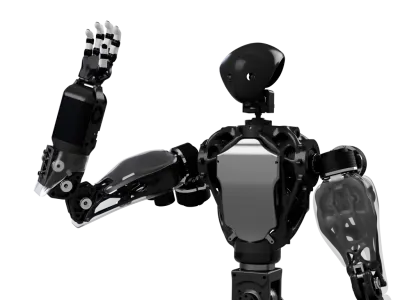
Orbit Robotics is a Zurich, Switzerland start-up building humanoid robots for use in space. In May 2026 it unveiled Helios, a four-armed robot without legs, designed to float freely inside space stations and take over routine work from astronauts. Helios has four arms driven by electric motors through belt-and-pulley tendon drives, which copy the way muscles move joints, and each hand has five fingers for delicate tasks. Orbit Robotics targets the roughly 35 percent of astronaut time spent on maintenance and inventory jobs and estimates that each astronaut hour saved is worth about US$140,000. Helios is still a prototype. It has been tested hanging from straps in a mock space station rather than in zero gravity, and the company has not disclosed pricing, production timelines or funding. Whether it reaches orbit will depend on partnerships with space agencies or commercial station operators such as Axiom Space.
💡Notable Achievement: Orbit Robotics unveiled Helios, a four-armed space humanoid, in May 2026 and estimates each astronaut hour saved is worth about US$140,000.
What Does Orbit Robotics Do?
Orbit Robotics is a Zurich start-up building Helios, a four-armed humanoid for space stations.
“Four arms and no legs for zero-gravity work.”
Four Arms
Extra arms let it hold itself while working.
Tendon Drive
Belt-and-pulley drives copy muscle-like motion.
Astronaut Time
Targets the roughly 35 percent of astronaut time spent on maintenance and inventory.
What Can Orbit Robotics Robots Actually Do?
Cross-portfolio operational capabilities, manipulation tasks, and environmental competencies
Maintenance and inventory work in space stations.
Station Maintenance
Takes over routine maintenance tasks.
Inventory Handling
Handles stock and supplies in orbit.
Orbit Robotics Robots
Showing 1 Humanoid Robots of 1 total model
HELIOS
Manufactured by Orbit Robotics
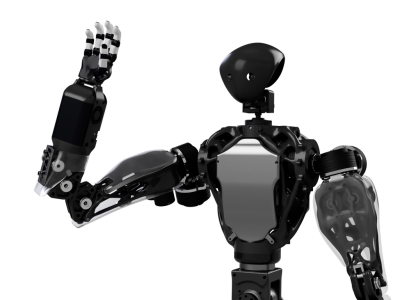
HELIOS is a groundbreaking four-armed humanoid robot prototype developed by Orbit Robotics in Switzerland, specifically engineered for space research and operations in microgravity environments. Unlike traditional bipedal humanoids, HELIOS replaces legs with two additional arms, utilizing four coordinated arms to navigate space station interiors, stabilize its body, and perform precise tasks in tight orbital spaces. The robot features a height of 160 centimeters, a top speed of 2 kilometers per hour, and a runtime of approximately 3 hours per charge. Its structure combines aluminum alloys and carbon fiber with electric actuators, a tendon-driven system, and rolling contact joints to minimize moving mass and enhance agility. Designed to reduce astronaut maintenance workload, HELIOS handles routine operational tasks like cargo sorting and satellite servicing, freeing crews to focus on scientific research. Currently in the prototype stage, it is not available for purchase.
Orbit Robotics Timeline & Milestones
Evolutionary history, landmark prototypes, major acquisitions, and commercial roadmap
Helios four-armed space robot unveiled
Orbit Robotics unveils Helios, a four-armed humanoid designed to work inside space stations, as a prototype tested on straps.
Source: heise.de
Orbit Robotics Competitors by Category
Direct industry rivals grouped by specific robotics domain
NASA & General Motors
Industry PeerModel: Robonaut 2
Focus: Astronaut assistant humanoid tested on the ISS
Gitai
Industry PeerModel: Gitai S1 / G1
Focus: Space robotics arms and lunar rovers
German Aerospace Center (DLR)
→Model: Rollin' Justin
Focus: Space tele-manipulation and satellite servicing humanoid
What Makes Orbit Robotics Different?
Editorial AnalysisOrigin of Bots objective strategic assessment, engineering moats, and commercial hurdles
Key Strengths & Moats
- ✓Clear value case for space agencies.
- ✓Zurich engineering base.
Core Strategic Focus
Securing space agency or station-operator partners.
Road Ahead & Challenges
- •Untested in zero gravity.
- •No funding, pricing or timeline disclosed.
Orbit Robotics vs Key Competitors
Strategic capability matrix across platform categories, commercial readiness, and target markets
Limb Configuration
- HELIOS (Orbit)
- Four Arms (Legless)
- Robonaut 2 (NASA)
- Two Arms & Two Climbing Legs
- Gitai S1
- Single Autonomous Arm
- Justin (DLR)
- Dual Arms on Wheeled Base
Target Operating Arena
- HELIOS (Orbit)
- Space Station Interiors
- Robonaut 2 (NASA)
- ISS Interior & EVA
- Gitai S1
- Spacecraft Exterior / Lunar
- Justin (DLR)
- Earth Lab & Space Teleop
Total Manipulator DoF
- HELIOS (Orbit)
- 28 DoF (7 per arm)
- Robonaut 2 (NASA)
- 42+ DoF
- Gitai S1
- 8 DoF
- Justin (DLR)
- 24+ DoF
Zero-G Optimization
- HELIOS (Orbit)
- Purpose-Built Microgravity
- Robonaut 2 (NASA)
- Adapted Terrestrial Frame
- Gitai S1
- Modular In-Space Arm
- Justin (DLR)
- Earth-Optimized Kinematics
| Strategic Dimension | HELIOS (Orbit) | Robonaut 2 (NASA) | Gitai S1 | Justin (DLR) |
|---|---|---|---|---|
| Limb Configuration | Four Arms (Legless) | Two Arms & Two Climbing Legs | Single Autonomous Arm | Dual Arms on Wheeled Base |
| Target Operating Arena | Space Station Interiors | ISS Interior & EVA | Spacecraft Exterior / Lunar | Earth Lab & Space Teleop |
| Total Manipulator DoF | 28 DoF (7 per arm) | 42+ DoF | 8 DoF | 24+ DoF |
| Zero-G Optimization | Purpose-Built Microgravity | Adapted Terrestrial Frame | Modular In-Space Arm | Earth-Optimized Kinematics |
Corporate Ecosystem & Ownership Structure
Parent company relationships, historical acquisitions, and global operating facilities
Global Facilities & Operating Hubs
Orbit Robotics Headquarters
HQZurich, Switzerland
Articles & Industry News
Showing 1 recent article and news updates about Orbit Robotics
Frequently Asked Questions
8 AnswersVerified answers, company specifications, and deployment details about Orbit Robotics
What is Orbit Robotics?
Orbit Robotics is a Zurich start-up developing humanoid robots for space stations, best known for Helios, a four-armed robot unveiled in May 2026.
What is the Helios robot?
Helios is a four-armed humanoid without legs, designed to float in zero gravity and do maintenance and inventory tasks inside space stations so astronauts have more time for science.
How does Helios move its arms?
Helios drives its four arms with electric motors through belt-and-pulley tendon drives, which copy how muscles move joints, and each arm ends in a five-fingered hand.
Why does a space robot have four arms?
Two extra arms let Helios hold itself or an object while working with the other pair in zero gravity, and let it take over maintenance and inventory work that uses about 35 percent of astronaut time.
Has Helios been tested in space?
No. Helios is a prototype that has only been tested hanging on straps in a test environment that simulates a space station, not yet in zero gravity or in orbit.
How much does Helios cost?
Orbit Robotics has not disclosed pricing, production timelines or funding for Helios, and says its value comes from saving astronaut time, worth about US$140,000 an hour.
Who will use Helios?
Orbit Robotics would need partnerships with space agencies or commercial station operators such as Axiom Space before Helios can fly, and none had been confirmed by May 2026.
Where is Orbit Robotics based?
Orbit Robotics is based in Zurich, Switzerland, one of Europe's strongest robotics engineering hubs, according to coverage of its Helios launch.
Verified Data & Editorial Assurance
Compiled from verified corporate filings, official Orbit Robotics datasheets, and robotics engineering registries. Information has been verified against official manufacturer documentation. For commercial procurement or proprietary integrations, contact the manufacturer directly.