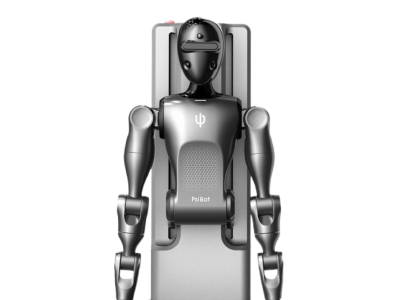
PsiBot
PsiBot (灵初智能 / Lingchu Intelligence) develops brain-inspired embodied AI foundation models and general-purpose humanoid robots. Its flagship platforms include the Psi R1 Vision-Language-Action (VLA) foundation model and the ψ-SynRobot (PsiBot V1 / Alpha), combining high-performance bipedal/wheeled mobility with dual dexterous arms. Incubated in collaboration with Peking University, PsiBot focuses on achieving generalized zero-shot physical manipulation across industrial, commercial, and household settings.
💡Notable Achievement: PsiBot reached a $1.48 billion valuation in 2026 after raising over 2 billion RMB (~$280M USD) from Chinese state funds and automotive giant Chery, powered by its breakthrough Psi R1 foundation model and PKU Joint Embodied Intelligence Lab.
What Does PsiBot Do?
PsiBot (灵初智能) is one of China's fastest-growing embodied AI unicorns, incubated in close partnership with Peking University. PsiBot believes the true bottleneck in robotics is the 'brain' rather than mechanical fabrication. By developing the Psi R1 foundation model, PsiBot provides general-purpose neural architectures that allow humanoid hardware to generalize across unseen objects and environments with zero-shot proficiency.
“PsiBot builds generalized brain-inspired VLA foundation models and humanoid robots that master complex physical tasks out of the box.”
Psi R1 VLA Model
Proprietary multimodal foundation model translating open-vocabulary language prompts and visual feeds directly into continuous motor commands.
PKU Joint Embodied AI Lab
World-class academic collaboration pushing the state-of-the-art in reinforcement learning and Sim2Real transfer.
Automotive Strategic Synergy
Backed by Chery Automobile and national funds to fast-track automotive gigafactory deployments.
What Can PsiBot Robots Actually Do?
Cross-portfolio operational capabilities, manipulation tasks, and environmental competencies
PsiBot provides the Psi R1 software foundation model, Psi Sim digital twin, and ψ-SynRobot humanoid hardware.
Psi R1 Embodied Brain
Large Vision-Language-Action model trained on billions of physical interaction tokens.
ψ-SynRobot Humanoid
Full-stack embodied robot featuring dual dexterous arms, tactile hands, and hybrid mobility.
Psi Sim Digital Twin
High-throughput GPU simulation environment for training reinforcement learning policies.
PsiBot Robots
Showing 1 Humanoid Robots of 1 total model
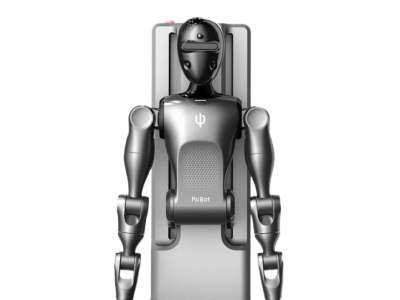
Psi V1
Manufactured by PsiBot
The Psi V1 Robot by PsiBot is an advanced wheeled humanoid platform blending mobility with sophisticated AI for autonomous task execution in dynamic environments. Standing at 175 cm tall and weighing 150 kg, it features 20 degrees of freedom in its core structure plus 11-DOF dexterous hands for precise manipulation. Equipped with 3 RGB-D cameras and 5 fisheye cameras for comprehensive perception, along with six-dimensional force sensors, it excels in object grasping, navigation, and multi-step reasoning. Powered by an Orin AGX 64GB edge computing unit delivering 275 TOPS, the robot supports hierarchical end-to-end AI, reinforcement learning, and APIs for research and industrial applications. Ideal for service robotics, warehouse tasks, and R&D, Psi V1 integrates with Psi H1 hands and Psi E1 exoskeletons, offering 5+ hours of runtime as a smart carrier for complex, reasoning-driven operations.
PsiBotSoftware & AI Ecosystem
Developer platforms, fleet management portals, autonomy intelligence, and enterprise integrations
Software Feature
What Makes PsiBot Different?
Editorial AnalysisOrigin of Bots objective strategic assessment, engineering moats, and commercial hurdles
Key Strengths & Moats
- ✓Massive capital backing surpassing $1.48B valuation
- ✓Top-tier AI research leadership from Peking University
- ✓Deep industrial pipeline with Chery Automobile
Core Strategic Focus
Scaling commercial shipments of ψ-SynRobot and open-sourcing developer interfaces for Psi R1.
Road Ahead & Challenges
- •Relatively recent incorporation in 2024 requires proving long-term hardware reliability
- •Balancing software foundation licensing with full-stack hardware production
PsiBot vs Key Competitors
Strategic capability matrix across platform categories, commercial readiness, and target markets
| Strategic Dimension | PsiBot ψ-SynRobot | Figure 02 | X Square Quanta X2 | Unitree G1 |
|---|---|---|---|---|
| Core Differentiator | Psi R1 VLA Foundation Model | OpenAI / In-House Neural Stack | WALL-A Foundation Model | Low-Cost Bipedal Hardware |
| Company Valuation | $1.48 Billion (2026) | $2.6+ Billion | $2.8 Billion | $1.5+ Billion |
| Mobility Type | Wheeled & Bipedal Variants | Bipedal Locomotion | Wheeled Humanoid Base | Bipedal Locomotion |
| Tactile Sensing | Multi-Array Optical Tactile | Integrated Hand Sensors | 20-DoF Tactile Hands | Basic Force Feedback |
Corporate Ecosystem & Ownership Structure
Parent company relationships, historical acquisitions, and global operating facilities
Articles & Industry News
Showing 1 recent article and news updates about PsiBot
Frequently Asked Questions
10 AnswersVerified answers, company specifications, and deployment details about PsiBot
What is the unit purchase price or RaaS lease pricing model for PsiBot humanoids?
PsiBot commercializes its ψ-SynRobot and PsiBot V1 platforms starting at approximately $75,000 to $90,000 USD (~530,000 to 640,000 RMB) for enterprise industrial configurations, alongside software licensing for its Psi R1 VLA model and cloud-managed RaaS subscriptions starting around $2,800 USD per month.
What is the commercial timeline and current availability status of PsiBot robots?
Founded in early 2024, PsiBot released the PsiR0.5 and PsiR1 models in late 2025 and announced mass production rollout of the ψ-SynRobot in April 2026, targeting full commercial delivery across automotive and logistics partners in mid-to-late 2026.
Where are PsiBot robots actively deployed in real-world facilities?
PsiBot platforms are deployed in pilot operations across Chery Automobile assembly lines in Anhui, state grid component inspection facilities in Beijing, and embodied intelligence research labs at Peking University.
What target industrial and everyday workflows does PsiBot automate?
PsiBot automates flexible bin picking, sub-assembly component installation, electrical connector insertion, warehouse sorting, and multi-step kitchen and household service tasks.
What mechanical drivetrain and actuator architecture powers ψ-SynRobot?
ψ-SynRobot features modular high-torque brushless servo actuators with integrated magnetic encoders and planetary reduction, providing up to 280 N·m of joint torque across 34 to 48 active degrees of freedom depending on the mobile base configuration.
What end-effector dexterity, hand degrees of freedom (DoF), and tactile sensing does PsiBot use?
The robot integrates dual 7-DoF arms paired with proprietary 11-DoF dexterous hands featuring high-density optical tactile sensor arrays at the fingertips for sub-millimeter grasp feedback.
What is PsiBot's continuous battery runtime, capacity, and charging mechanism?
Powered by a 48V 1.2 kWh lithium-ion battery pack, PsiBot achieves 4 to 6 hours of continuous operation on wheeled bases and 2.5 to 3.5 hours on bipedal frames, with automated contact docking.
What is PsiBot's operational autonomy level versus remote teleoperation dependency?
Operating primarily at Level 4 task autonomy, the Psi R1 model performs end-to-end multi-modal visual reasoning and execution from spoken prompts, using teleoperation strictly for edge-case demonstration gathering.
What sensory perception suite and foundation AI models govern PsiBot's spatial awareness?
The platform incorporates binocular stereo cameras, dual RGB-D depth sensors, base LiDAR, and an onboard neural computing engine running the Psi R1 Vision-Language-Action multimodal model.
What worker safety mechanisms, force compliance, and physical limits protect human collaborators?
Features joint-level compliant torque limits, automatic electronic braking, software collision avoidance bounding spheres, and hardware emergency-stop connectivity.
Verified Data & Editorial Assurance
Compiled from verified corporate filings, official PsiBot datasheets, and robotics engineering registries. Information has been verified against official manufacturer documentation. For commercial procurement or proprietary integrations, contact the manufacturer directly.