UCLA
UCLA, the University of California, Los Angeles, is a public research university founded in 1919 and one of the largest campuses in the University of California system. Its Robotics and Mechanisms Laboratory (RoMeLa), led by mechanical engineering professor Dennis Hong, is known for humanoid and legged robots built for research and competitions such as RoboCup. In October 2026 Hong's team of Ruochen Hou, Quanyou Wang, Daniel Koh and Dennis W. Hong published PhoneBot as an arXiv preprint. PhoneBot is a low-cost, fully open-source humanoid that uses an ordinary Android smartphone as its sensors, computer, communication link and face. A modular lower body with 13 actuators carries the phone, the robot stands about 48 cm tall and weighs about 1.8 kg, and the hardware costs around $400 without the phone. The team showed it walking, following people with vision, holding conversations, filming and acting as a mobile telepresence robot, and it aims PhoneBot at students, researchers and hobbyists who want an affordable way into humanoid robotics.
💡Notable Achievement: PhoneBot costs about $400 in hardware, not counting the phone, and builds on the earlier OpenBot idea of turning phones into robots.
What Does UCLA Do?
UCLA's RoMeLa lab built PhoneBot, an open-source humanoid that turns an old Android phone into a walking robot's brain for about $400 in parts.
“A walking robot built around your old phone.”
Phone as Brain
The smartphone handles sensing, compute and display.
Low Cost
About $400 in hardware, excluding the phone.
Open Source
Hardware and software released for education.
What Can UCLA Robots Actually Do?
Cross-portfolio operational capabilities, manipulation tasks, and environmental competencies
Open research humanoid.
Education and Research
Low-cost platform for humanoid locomotion and embodied-AI learning.
UCLA Robots
Showing 1 of 1 total model
PhoneBot
Manufactured by UCLA
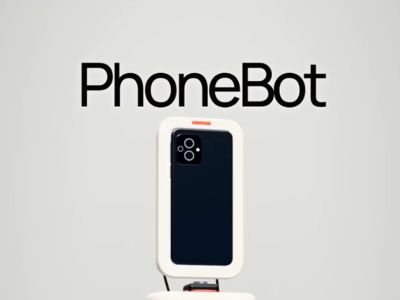
PhoneBot is a small, low-cost, open humanoid-style walking robot from researchers at UCLA that uses an ordinary Android smartphone as its brain. The robot is about 48 cm tall, weighs roughly 1.8 kg, and has two legs and a torso with 13 DYNAMIXEL servo motors (12 in the lower body plus one that rotates the torso) but no arms yet. The phone sits above the hips, runs the control software and neural networks, and supplies the camera, motion sensors and Wi-Fi, sending commands to a small onboard computer that drives the servos, so a phone can be swapped without changing the robot's electronics. Early demonstrations show walking, tracking a person with the camera and recovering from a face-down position. The hardware costs about $400 without the phone, and the team presents the platform as open for students, researchers and enthusiasts. The preprint, by Ruochen Hou, Quanyou Wang, Daniel Koh and Dennis W. Hong, appeared on arXiv on October 6, 2026.
UCLA Timeline & Milestones
Evolutionary history, landmark prototypes, major acquisitions, and commercial roadmap
UCLA founded
UCLA is founded in Los Angeles as the Southern Branch of the University of California.
Source: ucla.edu
PhoneBot preprint published
UCLA's RoMeLa team publishes PhoneBot, a low-cost open humanoid that runs on a reused Android smartphone, as an arXiv preprint.
Source: arxiv.org
UCLA Competitors by Category
Direct industry rivals grouped by specific robotics domain
What Makes UCLA Different?
Editorial AnalysisOrigin of Bots objective strategic assessment, engineering moats, and commercial hurdles
Key Strengths & Moats
- ✓Very low cost and fully open source.
- ✓Reuses phones that would otherwise be discarded.
- ✓Backed by an experienced humanoid lab.
Core Strategic Focus
Open education humanoid.
Road Ahead & Challenges
- •Research prototype, not a product.
- •Tiny size limits real-world tasks.
- •Preprint not yet peer reviewed.
UCLA vs Key Competitors
Strategic capability matrix across platform categories, commercial readiness, and target markets
Category / Focus
- PhoneBot
- Open smartphone humanoid
- Bumi
- Small education humanoid
- K1 Humanoid
- Education and research humanoid
- Unitree R1
- Low-cost humanoid
Primary Use
- PhoneBot
- Teaching and locomotion research
- Bumi
- STEM education, programming
- K1 Humanoid
- Education, research
- Unitree R1
- Acrobatic demos, STEM education
Weight
- PhoneBot
- 1.8 kg
- Bumi
- 12 kg
- K1 Humanoid
- 19.5 kg
- Unitree R1
- 27–29 kg
Release Year
- PhoneBot
- 2026
- Bumi
- 2025
- K1 Humanoid
- 2023
- Unitree R1
- 2025
| Strategic Dimension | PhoneBot | Bumi | K1 Humanoid | Unitree R1 |
|---|---|---|---|---|
| Category / Focus | Open smartphone humanoid | Small education humanoid | Education and research humanoid | Low-cost humanoid |
| Primary Use | Teaching and locomotion research | STEM education, programming | Education, research | Acrobatic demos, STEM education |
| Weight | 1.8 kg | 12 kg | 19.5 kg | 27–29 kg |
| Release Year | 2026 | 2025 | 2023 | 2025 |
Corporate Ecosystem & Ownership Structure
Parent company relationships, historical acquisitions, and global operating facilities
University of California
UCLA is one of the ten campuses of the University of California system.
Ownership & Acquisition History
UCLA is one of the ten campuses of the University of California system.
Global Facilities & Operating Hubs
UCLA
HQLos Angeles, California, United States
Westwood campus.
Robotics and Mechanisms Laboratory (RoMeLa)
R&DLos Angeles, California, United States
Dennis Hong's lab, where PhoneBot was developed.
Frequently Asked Questions
8 AnswersVerified answers, company specifications, and deployment details about UCLA
What does UCLA do in robotics?
UCLA, the University of California, Los Angeles, is a public research university. Its Robotics and Mechanisms Laboratory (RoMeLa), led by professor Dennis Hong, designs humanoid and legged robots for research and competitions.
What is PhoneBot?
PhoneBot is a small, low-cost open-source humanoid from UCLA's RoMeLa lab. It uses an ordinary Android smartphone as its sensors, computer, communication link and face, mounted on a 13-actuator walking body.
How much does PhoneBot cost to build?
The researchers estimate PhoneBot's hardware at about $400, not counting the smartphone. They tested several Android phones, including budget models costing roughly $50 to $80 and a 2017 Honor 9, and all could run it.
How big is PhoneBot?
PhoneBot stands about 48 cm tall and weighs about 1.8 kg, or roughly 4 pounds, including the phone, making it a tabletop-scale humanoid.
What can PhoneBot do?
In the researchers' experiments PhoneBot walked reliably, followed people using the phone's camera, held conversations, filmed video and worked as a mobile telepresence robot.
Who created PhoneBot?
PhoneBot was created by Ruochen Hou, Quanyou Wang, Daniel Koh and Dennis W. Hong at UCLA. They published it as an arXiv preprint on October 6, 2026.
Is PhoneBot open source?
Yes. The team released PhoneBot's hardware and software as open source for education and research, so students and hobbyists can build and modify their own.
When was UCLA founded?
UCLA was founded in 1919 as the Southern Branch of the University of California and is based in the Westwood neighbourhood of Los Angeles.
Verified Data & Editorial Assurance
Compiled from verified corporate filings, official UCLA datasheets, and robotics engineering registries. Data is monitored and audited on an ongoing basis for accuracy. For commercial procurement or proprietary integrations, contact the manufacturer directly.