Vulcan Robotics
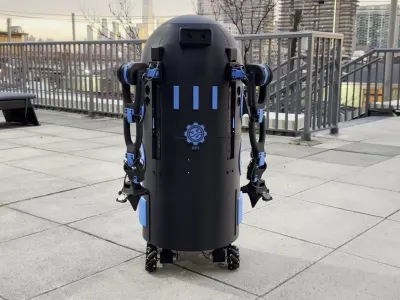
Vulcan Robotics is a US start-up founded by Nick Maselli that makes Sourccey, an open-source personal home robot that owners can 3D print and teach to do chores such as folding laundry. Sourccey is 1,030 mm tall and weighs just under 16 kg, with most of its body 3D printed in PLA on a desktop printer. It moves on four mecanum wheels, has two arms with five degrees of freedom each plus a gripper, and uses a Raspberry Pi 5 for onboard computing, four cameras and a 360-degree lidar, powered by a 12 V LiFePO4 battery rated for about 5,000 cycles. It can be controlled remotely with matching arm controllers or an Oculus Quest headset, and owners can record task demonstrations and train models, with pre-trained models for folding four types of clothing: T-shirts, shorts, jeans and long shirts. The hardware, electrical and software designs, including STL files, are on GitHub. Vulcan planned to open-source the platform in August 2026 and ship the first robots in September 2026.
💡Notable Achievement: Vulcan Robotics opened the designs of Sourccey, a 3D-printable home robot, in August 2026, with first shipments in September 2026.
What Does Vulcan Robotics Do?
Vulcan Robotics is a US start-up founded by Nick Maselli that makes Sourccey, an open-source, 3D-printable home robot.
“A home robot anyone can print and teach.”
Open Source
Designs, code and STL files on GitHub.
Low-Cost Build
3D-printed PLA body and Raspberry Pi 5.
Teachable
Owners record demonstrations and train models.
What Can Vulcan Robotics Robots Actually Do?
Cross-portfolio operational capabilities, manipulation tasks, and environmental competencies
Household tasks such as laundry folding.
Laundry Folding
Pre-trained to fold four clothing types.
Teleoperation
Remote control with arm controllers or a VR headset.
Vulcan Robotics Robots
Showing 1 Humanoid Robots of 1 total model
Sourccey
Manufactured by Vulcan Robotics
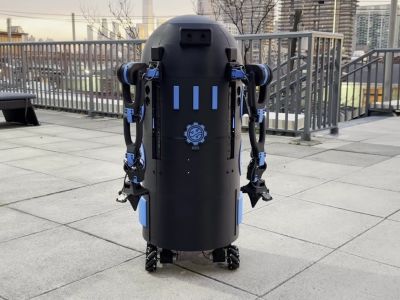
Sourccey is Vulcan Robotics' open-source personal home humanoid robot designed for builders, tinkerers, and learners. Standing 1030 mm tall with a 414 mm footprint, it features omnidirectional mobility via 4 mecanum wheels for agile navigation in home environments. Equipped with dual 5 DOF arms plus grippers (6 revolute joints per arm), it excels in manipulation tasks taught through demonstration using Lerobot-Vulcan framework. Powered by Raspberry Pi 5 compute, 120-degree FOV vision at 720p 30fps, and a 12V 10Ah LiFePO4 battery offering up to 5000 cycles, Sourccey supports teleoperation via 7-inch touchscreen, desktop software, or Oculus Quest controllers with inverse kinematics. Fully serviceable with public STLs for 3D printing parts and individually addressable smart servos, it enables real-world AI training in robotics, object handling, and interactive tasks while promoting community contributions via GitHub repositories.
Vulcan Robotics Timeline & Milestones
Evolutionary history, landmark prototypes, major acquisitions, and commercial roadmap
Sourccey open-source home robot released
Vulcan Robotics opens the designs of Sourccey, a 3D-printable home robot, with the first robots to ship in September 2026.
Source: opensourceforu.com
Vulcan Robotics Competitors by Category
Direct industry rivals grouped by specific robotics domain
1X Technologies
→Model: NEO
Focus: Consumer domestic humanoid with soft fabric exterior
Pollen Robotics
→Model: Reachy Mini
Focus: Open-source tabletop embodied research platforms
Enactic (Hello Robot)
Industry PeerModel: Stretch 3
Focus: Affordable mobile manipulators for academic and home research
What Makes Vulcan Robotics Different?
Editorial AnalysisOrigin of Bots objective strategic assessment, engineering moats, and commercial hurdles
Key Strengths & Moats
- ✓Fully open source.
- ✓Very low hardware cost.
Core Strategic Focus
First shipments in September 2026.
Road Ahead & Challenges
- •Small team.
- •Modest payload and reliability of 3D-printed parts.
Vulcan Robotics vs Key Competitors
Strategic capability matrix across platform categories, commercial readiness, and target markets
Open Source Level
- Vulcan Sourccey
- 100% Full Open Hardware & Code
- 1X NEO
- Proprietary Commercial
- Stretch 3 (Hello Robot)
- Open ROS2 API
- Unitree G1
- Partially Open SDK
Primary Environment
- Vulcan Sourccey
- Consumer Homes & Labs
- 1X NEO
- Private Residences
- Stretch 3 (Hello Robot)
- Research Universities
- Unitree G1
- Industrial / Academic Research
Weight
- Vulcan Sourccey
- ~16 kg
- 1X NEO
- ~30 kg
- Stretch 3 (Hello Robot)
- ~24 kg
- Unitree G1
- ~35 kg
| Strategic Dimension | Vulcan Sourccey | 1X NEO | Stretch 3 (Hello Robot) | Unitree G1 |
|---|---|---|---|---|
| Open Source Level | 100% Full Open Hardware & Code | Proprietary Commercial | Open ROS2 API | Partially Open SDK |
| Primary Environment | Consumer Homes & Labs | Private Residences | Research Universities | Industrial / Academic Research |
| Weight | ~16 kg | ~30 kg | ~24 kg | ~35 kg |
Articles & Industry News
Showing 1 recent article and news updates about Vulcan Robotics
Frequently Asked Questions
8 AnswersVerified answers, company specifications, and deployment details about Vulcan Robotics
What is Vulcan Robotics?
Vulcan Robotics is a US start-up founded by Nick Maselli that makes Sourccey, an open-source, 3D-printable personal home robot that can be taught chores such as folding laundry.
What is Sourccey?
Sourccey is Vulcan's open-source home robot, 1,030 mm tall and under 16 kg, with mecanum wheels, two five-degree-of-freedom arms and a gripper, made mostly of 3D-printed PLA.
Is Sourccey open source?
Yes. Its hardware, electrical and software designs, along with downloadable STL files for printing replacement parts, are published on GitHub.
What computer and sensors does Sourccey use?
Sourccey uses a Raspberry Pi 5 for onboard computing, four cameras and a 360-degree lidar, with a 12 V LiFePO4 battery rated for about 5,000 cycles.
What can Sourccey do?
Owners can record demonstrations and train models, and Sourccey includes pre-trained models for folding T-shirts, shorts, jeans and long shirts.
When does Sourccey ship?
Vulcan planned to release the open-source designs in August 2026 and ship the first Sourccey robots in September 2026, so early owners could start building and teaching them.
Who founded Vulcan Robotics?
Vulcan Robotics was founded by Nick Maselli, who set out to make an affordable, open home robot that people can build and improve themselves.
How much does Sourccey cost?
Vulcan Robotics has not published a fixed price in the launch coverage, but the robot is designed to be built from low-cost, 3D-printed and off-the-shelf parts.
Verified Data & Editorial Assurance
Compiled from verified corporate filings, official Vulcan Robotics datasheets, and robotics engineering registries. Information has been verified against official manufacturer documentation. For commercial procurement or proprietary integrations, contact the manufacturer directly.