Bank of America Global Research Reports Chinese Manufacturers Command 95% of Humanoid Hardware Supply Chain
Category
humanoidPublished
September 8, 2026
Reading Time
3 min read
Author
Origin Of Bots Editorial Team

Landmark Supply Chain Dominance Revealed by BofA Analysis
A comprehensive equity research report released by Bank of America Global Research has revealed a staggering concentration in the embodied robotics supply chain. According to the investment bank's analysis, manufacturers based in China currently command approximately 95 percent of global hardware production for commercial humanoid robots.
This overwhelming market concentration spans the foundational electro-mechanical layers of robotics, including brushless DC torque motors, precision planetary reducers, and sensory skin arrays. The revelation has sent shockwaves through Western technology sectors, highlighting an escalating dependency on Chinese industrial infrastructure.
Electric Vehicle Ecosystems as the Primary Growth Catalyst
The report identifies China’s world-leading electric vehicle manufacturing base as the decisive catalyst behind this swift hardware ascendancy. Automotive giants such as XPENG and BYD have seamlessly repurposed their massive battery, motor, and die-casting supply chains to produce humanoid structural components.
Because an electric car and a bipedal robot share nearly identical core subsystems—including lithium batteries, inverter drives, and neural processors—automakers scale robotics with minimal marginal tooling costs. This industrial cross-pollination has enabled Chinese suppliers to iterate hardware prototypes at speeds western standalone startups cannot match.
Unrivaled Cost Competitiveness Across Precision Actuators
The practical result of this integrated ecosystem is an insurmountable cost advantage across precision electro-mechanical actuators. While European and North American suppliers produce high-precision harmonic reducers for several thousand dollars per unit, Chinese suppliers have slashed unit costs to hundreds of dollars.
These dramatic price reductions allow Chinese humanoid manufacturers to target commercial unit pricing between $16,000 and $30,000 at production scale. Such aggressive pricing threatens to undercut Western robotics startups, whose higher production bills make broad commercial adoption difficult.
Western Strategic Vulnerability in Critical Subsystems
BofA analysts caution that Western software developers risk becoming entirely reliant on foreign hardware platforms for their embodied AI deployments. While American companies maintain a clear lead in frontier vision-language models and simulation environments, physical robot shells remain overwhelmingly manufactured abroad.
Technology policy experts warn that this structural imbalance leaves Western robotics ecosystems vulnerable to sudden geopolitical friction or export controls. A single disruption in the supply of specialized hollow-shaft joint motors or tactile end-effectors could paralyze Western humanoid assembly lines.
Intensifying Geopolitical Scrutiny and Dual-Use Concerns
The concentration of hardware manufacturing power is prompting intensified scrutiny from international defense and trade agencies. Because the same high-torque actuators and ruggedized bipedal chassis deployed in automotive warehouses can be adapted for tactical defense operations, national security concerns are mounting.
Western policymakers are weighing targeted tariffs and domestic manufacturing subsidies designed to onshore critical mechatronics capabilities. However, analysts acknowledge that recreating China's tightly integrated component ecosystem will require billions in capital and years of industrial development.
Corporate Strategies: Vertical Integration vs. Global Sourcing
In response to these supply chain realities, robotics developers worldwide are sharply dividing their hardware procurement strategies. Some Western pioneers, such as Figure AI and Tesla, are investing heavily in vertical integration, developing custom actuators and in-house assembly lines in the United States.
Conversely, dozens of tier-two robotics enterprises are fully embracing Chinese supply chains to accelerate commercial time-to-market. This strategic bifurcation reflects the high-stakes balancing act between minimizing near-term hardware costs and ensuring long-term supply chain sovereignty.
Defining the Industrial Landscape of the Next Decade
Bank of America's findings establish that the battle for humanoid robotics leadership will be decided as much on factory floors as in algorithmic training clusters. The possession of vast hardware manufacturing capacity provides an enduring competitive moat that accelerates physical AI iteration.
As global deployment accelerates toward millions of humanoid units over the coming decade, managing supply chain dependencies will become paramount. The nations and corporations that master both computational intelligence and precision hardware manufacturing will dictate the future of automated labor.
Sources
Related Articles
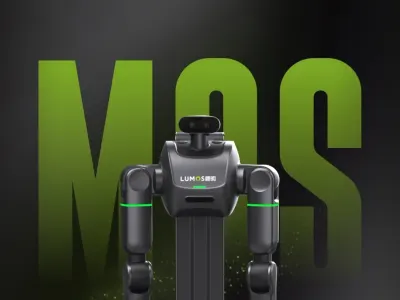
Lumos Robotics positions MOS 2 as a factory-ready humanoid built for teleoperation and heavy handling

Figure AI Signs Landmark $3.5B Cloud Compute Partnership with Nscale for 100,000 NVIDIA Vera Rubin GPUs

IFA 2026 Berlin Showcases Next-Gen Commercial Humanoids: AGIBOT A3 and Xiaomi CyberOne Make European Debuts