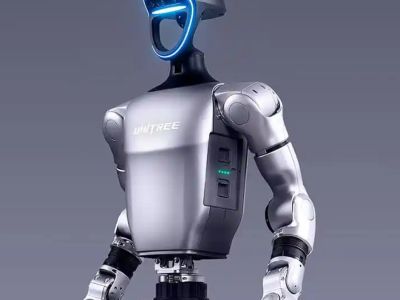
OpenAI Advances Generalized Physical AI Platform Strategy for Multi-Vendor Humanoid Deployment
Category
humanoidPublished
September 4, 2026
Reading Time
3 min read
Author
Origin Of Bots Editorial Team
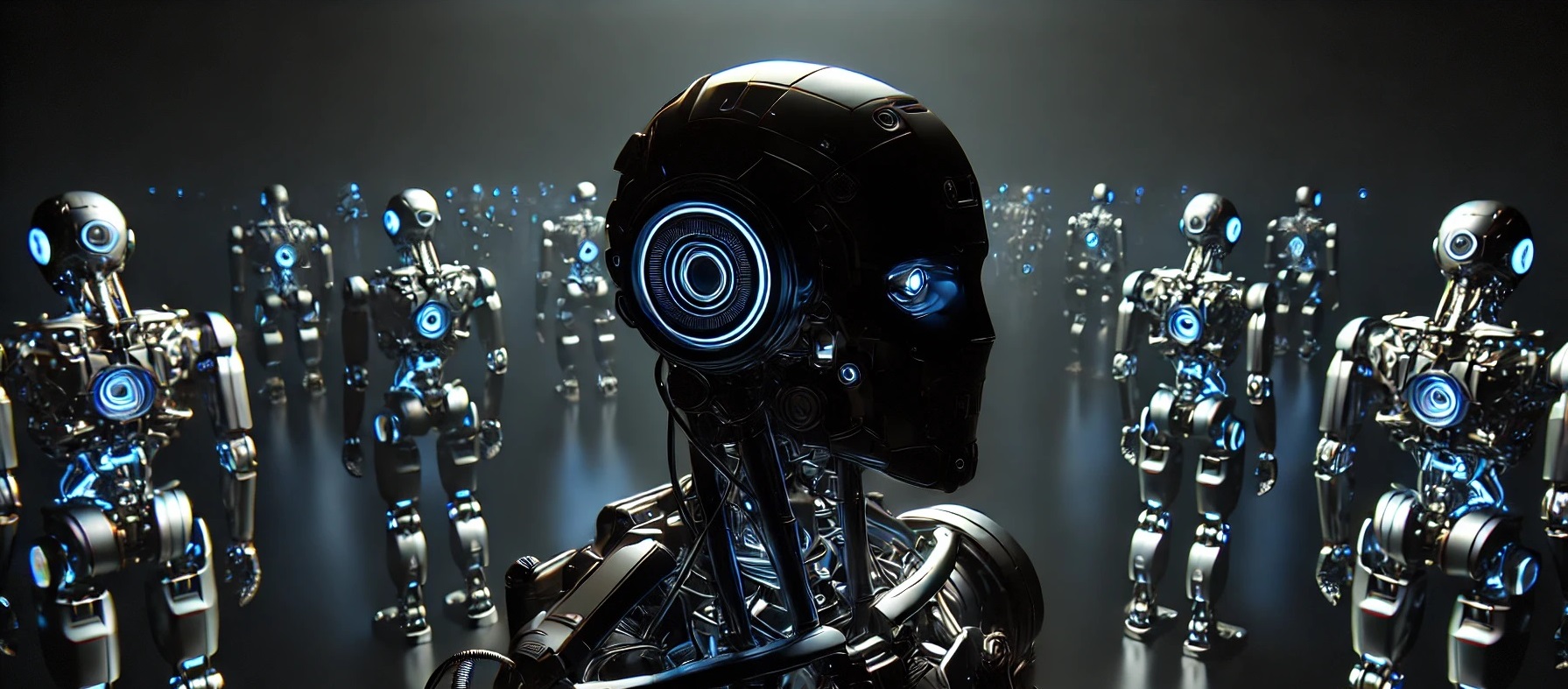
Strategic Pivot from Proprietary Hardware to Open Platform AI
OpenAI intensified its push into physical artificial intelligence by detailing a comprehensive platform strategy designed to power diverse humanoid robots. Rather than committing billions toward manufacturing a single proprietary metal chassis, OpenAI is positioning its neural models as the universal operating brain for robotics.
This strategic focus enables OpenAI to deploy its cognitive reasoning and multimodal vision stacks across dozens of third-party hardware manufacturers. By focusing on software generalization, the artificial intelligence pioneer avoids hardware manufacturing risks while capturing widespread platform adoption.
Multi-Vendor Embodied Foundation Model Architecture
At the center of OpenAI’s robotics stack is an embodied foundation model engineered to interface seamlessly with varied kinematic architectures. Whether controlling a 43-DoF bipedal runner or a stationary dual-arm sorting robot, the model maps visual input into abstract motor intents.
These high-level action intents are translated through hardware-specific driver layers that modulate joint torques to match exact motor specifications. This decoupling allows software updates to improve dexterity across multiple robot brands without requiring custom kinematic rewrites.
Neural World Models and Real-Time Spatial Common Sense
To overcome physical stumbling blocks, OpenAI’s architecture incorporates generative world models that predict environmental physics before initiating movement. When a robot observes an obstacle or an unfamiliar object, the model generates internal visual simulations of what will happen upon contact.
This spatial foresight allows humanoids to handle fragile glassware, manipulate unstable containers, and navigate slippery surfaces with inherent caution. Endowing robots with intuitive common sense dramatically reduces the error rates that currently restrict physical automation in unstructured environments.
Dedicated Edge Silicon and Low-Latency Neural Acceleration
Running massive world models directly on physical humanoids requires specialized edge silicon to maintain millisecond reaction times. OpenAI collaborated with leading chip designers to optimize neural network compilation for next-generation onboard robotics processors.
These dedicated edge processors execute quantized vision-action policies directly within the robot's torso, ensuring uninterrupted operation during cloud connectivity dropouts. Maintaining instantaneous local processing is essential for mission-critical balance recovery and immediate emergency obstacle avoidance.
Expanding Strategic Hardware Partnerships Across Global Makers
OpenAI is actively establishing integration partnerships with leading European, American, and Asian robotics manufacturers. Hardware makers provide high-precision mechanical platforms, sensor arrays, and manufacturing capacity, while OpenAI supplies the pre-trained embodied cognitive core.
This cooperative ecosystem mirrors the historical development of personal computing, where specialized operating systems unlocked vast hardware proliferation. Robotics startups partnering with OpenAI can accelerate development by years, bypassing the multi-billion-dollar cost of training foundational physical models.
Safety Alignment and Physical Constraint Enforcement
Because physical robots exert tangible forces in the real world, OpenAI implemented rigorous physical alignment and safety boundaries. The platform integrates deterministic hardware safety checks that override neural policy outputs whenever speed or torque limits are exceeded.
These hardcoded kinetic guardrails guarantee that a model hallucination or sensory glitch cannot translate into sudden aggressive movements. Proving robust physical safety is vital to winning regulatory approval for humanoids working near children, patients, and warehouse workers.
The Roadmap Toward Ubiquitous Embodied General Intelligence
OpenAI’s platform initiative marks a definitive inflection point in the journey toward Artificial General Intelligence operating in the physical world. By abstracting motor intelligence into a universal foundation layer, the company is accelerating the timeline toward machines that master everyday physical tasks.
As partner robots integrate this cognitive stack over the coming year, general-purpose robotics will transition from experimental pilots into ubiquitous physical assistants. The convergence of digital intelligence and physical actuation is rapidly creating a future where intelligent machines assist humanity across every facet of daily life.
Sources
Related Articles
Booster Robotics’ T1 Humanoid Targets Teleoperation and Human-Centric Research
Unitree’s H2 pushes humanoids toward teleoperation-first service work
Unitree’s Superman humanoid puts speed first as China’s robotics race accelerates