Figure AI Signs Landmark $3.5B Cloud Compute Partnership with Nscale for 100,000 NVIDIA Vera Rubin GPUs
Category
humanoidPublished
September 3, 2026
Reading Time
3 min read
Author
Origin Of Bots Editorial Team
Unprecedented Supercomputing Agreement for Embodied Intelligence
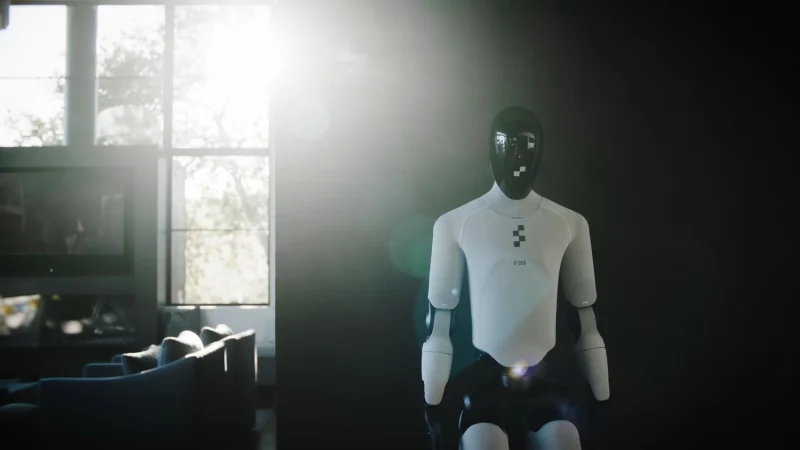
Figure AI took a monumental step toward solving physical artificial intelligence by announcing a strategic supercomputing agreement valued at $3.5 billion. The robotics pioneer partnered with AI cloud infrastructure provider Nscale to deploy up to 100,000 next-generation NVIDIA GPUs, marking the largest dedicated compute cluster in robotics history.
This massive deployment is engineered to overcome the chronic compute bottleneck currently constraining physical robot policy training. By securing immediate access to planetary-scale computing clusters, Figure aims to accelerate the transition from lab-trained task demonstrators to fully autonomous general-purpose humanoid workforces.
NVIDIA Vera Rubin GPU Architecture Capabilities
At the heart of this high-performance computing agreement lies NVIDIA’s revolutionary Vera Rubin GPU architecture. These cutting-edge accelerators provide multi-exanode throughput and extreme memory bandwidth specifically architected for multi-trillion parameter multimodal foundation models.
The Rubin architecture allows Figure to process thousands of hours of high-frame-rate tactile and visual demonstration data simultaneously. This processing power ensures low-latency gradient synchronization across distributed nodes, shrinking training iterations that previously required months down into a matter of days.
Scaling the Index Foundation Model to Trillions of Parameters
Fueling this supercomputing buildout is Figure’s newly introduced Index foundation model, designed to unite spatial perception and whole-body motor control. With 100,000 GPUs on line, Figure plans to scale Index into the world's first multi-trillion-parameter Vision-Language-Action architecture.
The expanded model will directly ingest raw sensory tokens and output coordinated joint torques across humanoid limbs in real time. This unified end-to-end processing eliminates traditional software latency, giving humanoids fluid physical instincts comparable to biological reflexes.
Planetary-Scale Synthetic Simulation and Physics Engines
To feed this massive neural backbone, Figure is dedicating substantial computing power toward running hyper-realistic physics simulations. The cluster will simulate millions of humanoid robots concurrently exploring diverse digital factory floors, assembly bays, and household rooms.
Through automated domain randomization, simulated humanoids encounter billions of rare edge cases without risking physical prototype damage. When policies transfer onto real robots, the machines already possess millions of simulated hours handling slippery tools and shifting payloads.
Accelerating Real-World Factory Work at BMW and Beyond
These simulation breakthroughs will funnel directly into Figure’s live automotive manufacturing trials at BMW’s Spartanburg facility. BMW manufacturing engineers have relied on Figure humanoids to transport sheet metal parts, but expanding tasks requires deeper autonomous reasoning.
With Rubin-powered policies deployed over the air, Figure humanoids will handle variable component geometries without requiring explicit re-programming. This cognitive adaptability directly accelerates customer rollout timelines across automotive, electronics, and parcel logistics sectors.
Strategic Decoupling from Traditional Hyperscaler Bottlenecks
Beyond sheer computing power, partnering with Nscale provides Figure with a dedicated, custom-built AI cloud network. By avoiding shared hyperscaler queues, Figure secures dedicated cluster topologies optimized specifically for high-throughput sensor telemetry and robotics training workloads.
This dedicated computing topology eliminates noisy-neighbor performance degradation and ensures consistent model convergence. Securing proprietary infrastructure gives Figure a vital defensive moat against rival robotics startups dependent on generic shared cloud compute.
Intensifying the Global Humanoid Arms Race
Figure’s multi-billion-dollar compute bet raises the competitive ante across the entire embodied artificial intelligence landscape. Competitors such as Tesla Optimus and Boston Dynamics must now contend with an independent robotics firm backed by unmatched computing resources.
Industry analysts emphasize that access to massive scale compute will ultimately separate enduring humanoid platforms from underfunded prototypes. By heavily capitalizing its AI backbone, Figure has positioned itself at the definitive forefront of the physical computing revolution.
Sources
Related Articles
Booster Robotics’ T1 Humanoid Targets Teleoperation and Human-Centric Research
Unitree’s H2 pushes humanoids toward teleoperation-first service work
Unitree’s Superman humanoid puts speed first as China’s robotics race accelerates